EXECUTIVE SUMMARY “Can you trust Enron? On stewardship issues and public benefit issues…the answer is, yes.”
- Ralph Cavanagh, Senior Attorney, Natural Resources Defense Council,
1997. Today, Cavanagh is chief “green” booster of a Western power trading market, which brings back a deregulation-era law that led to California’s energy crisis.
California’s three major investor-owned utilities are on track to generate half of their retail sales from green energy sources by 2020. However, an effort to turn the clock back to the deregulation-era scheme of a Western wholesale power trading market threatens ratepayers with speculative profiteering and derailment of California’s transition away from fossil fuels.
The pending legislation would reauthorize a part of the Enron-era law that allowed for arbitraging of electricity in the West. Besides spinning off utility power plants to independent owners, the legislation passed in 1996 envisioned expanding the power1 market beyond California by tying in Western neighbors. California’s energy crisis intervened and stopped that second step cold.
Resurrection of this regressive scheme would give California’s energy destiny back to the traders who took California to the cleaners once before—with oversight consolidated in the Federal Energy Regulatory Commission (FERC) controlled by pro-fossil fuels Trump appointees. California would be lumped together with up to ten Western states and the grids run by a regional transmission organization (RTO). FERC created RTOs in 1999 to ensure open access, efficiency and reliability of power transmission while reducing government oversight.
Why would Californians support such a plan? It’s backed by Governor Jerry Brown, a coterie of his former and current appointees, fixers for energy billionaires, and, remarkably, representatives of “mainstream” environmental groups such as the Natural Resources Defense Council’s Ralph Cavanagh that once promoted Enron.
Billionaire investors such as Warren Buffett, energy companies, and Wall Street banks see big profits off power exports to California, including coal power, that a regional power trading market would facilitate. They see big opportunities in Page 2! of 47 building expensive new transmission lines underwritten largely by Californians to vastly expand a speculative commodities market in which contracts for electricity, whether dirty or clean, are bought and sold like pork bellies.
But giving up control over California’s own power grid threatens new forms of Enron-style market manipulation that led to California’s disastrous energy crisis two decades ago, rolling blackouts, shrinking clean energy and efficiency investments, and a tab of some $40 billion to Californians.
Numerous companies including energy trader Enron, Wall Street’s JP Morgan, major investor-owned utility Sempra, and independent power producers pioneered ways to game the system after California deregulated electricity in 1996. They came up with unprecedented formulas for market manipulation to generate astonishing windfall profits.
Companies illegally shut down crucial pipelines, took power plants off-line during peak demand, and invented new scams. They specialized in “megawatt laundering,” commanding higher prices for power by lying that it came from out- of-state. They purposefully over-scheduled space on power transmission lines to extort state payments, so-called “congestion fees,” to free up the lines. In just eight months during 2000, the wholesale prices of electricity shot up 800 percent. The Department of Energy later found that retail prices for electricity rose far more2 from 1999 to 2007 in states that adopted deregulation than in those that didn’t. As this report describes below, in 2013 JP Morgan agreed to a federal settlement of $410 million for devising manipulative bidding schemes. JP Morgan’s chief scam architect was a young power broker hired away from Edison after he bragged about his talents. Sempra settled a lawsuit in 2010 for $400 million. California accused the company of making windfall profits by submitting false power-delivery schedules to make it look like the system was overloaded as well as sending its power out of state to increase demand, reduce supply, and spike prices. As of 2013, $4.2 billion had been refunded via dozens of lawsuits. At the time, experts such as Frank Lindh, the PUC’s then general counsel, told the L.A. Times that speculation had not been entirely eradicated. According to The Los Angeles Times: “Resolution of most of the cases left over from the energy crisis does not mean that California has escaped power pricing schemes devised by traders at3 major investment banks.” California’s disastrous energy deregulation two decades ago privatized fraudulent windfall profits while socializing the costs. California remains vulnerable to a repeat if the same traders and investment bankers are put Page 3! of 47 back in charge. Californians will get the short end of the stick yet again if power brokers start arbitraging electricity for professional gain and company profit in a vaster and more opaque Western power trading market unregulated by the state. When traders run the casino, the house always wins and consumers are left at great risk.
Horse Trading Over Western Power Trading
A bill, AB 813, to fold California’s electricity system into a wholesale power market stretching from Canada to Baja California died in September 2017 during backroom dealings in the last days of that legislative session amid a firestorm of opposition from labor groups, major newspapers, and public interest advocates that saw no upside for workers, ratepayers or the environment. But Brown remained adamant about pushing it through. “We will get it done,” Brown told Greentech News4 three months later. “There are just…a couple of deals that need to be made.” Now that legislation, sponsored by Assemblyman Chris Holden, is back and in search of end-of-the-session deals to make it law. Major investor-owned utilities have power trading divisions that would gain from expanded power trading, but also remember power starvation and extortion. They are currently grappling with the aftermath of the worst wildfire season in California history. Their CEOs are lobbying to pass a separate piece of legislation, SB 1088, sponsored by Senator Bill Dodd, absolving utilities’ shareholders of financial liability when their equipment is implicated in sparking fires. Union lobbyist Scott Wetch has thus far been a vocal critic of a Western power casino for threatening in-state jobs. To ensure that the utility retains jobs, he’s become Pacific Gas & Electric’s attack dog against attorneys5 representing fire victims who are fighting the bailout. If Wetch and the utilities are the beneficiaries of a Brown-backed deal, however, California consumers could be saddled with the worst of both proposals: a public bailout of the utilities for their role in the fires and a Western trading market that threatens ratepayers. Utilities’ largesse has greased the way for an end-of-the-session, screw-the-consumer moment. For example, Holden and Dodd are major recipients of utility contributions, according to Secretary of State filings. Chris Holden is the fourth-largest recipient in the Assembly of utility contributions for a total of $71,750 between 2011-2018. Bill Dodd received $37,658, placing him among the top 10 Senators for utility contributions in the same period.
Page 4! of 47 If the legislature shifts the costs of wildfires onto the public instead of the utilities responsible for starting them, the utilities will likely back a Western power trading casino. Californians will foot the bill, probably running in the tens of billions of dollars. But any deal to create a Western power-trading casino involves removing control from the California Independent System Operator (CAISO)—the state’s appointed traffic cop for dispatching power over the grid—and handing it to the Trump Administration. That could be the undoing of the state’s clean energy laws.
Trumping California
The Federal Power Act gives FERC exclusive power to regulate wholesale prices across state lines. An existing, limited electricity trading market between California and eight Western states, first joined in 2014 by PacifiCorp, Warren Buffett’s giant utility holding company, is used daily to balance supply with demand. If a full-scale Western power trading market is formed, coal-mining states such as Wyoming, Montana, New Mexico, Colorado, Utah and Arizona
Californians would
could turn to the courts and to FERC to preempt any California policies that raise the cost of dirty coal power
likely be forced to pay
imports. Utah’s legislature has already set aside funds to sue California over its clean energy laws.
for coal-fired plants
States’ control over their own energy laws and
in Utah or
regulations are already under attack. Maryland and
Wyoming, if FERC
New Jersey, which belong to a regional power trading organization, have already seen their own energy6
so chooses, and
procurement policies invalidated in court. New York, Connecticut, Illinois, Maine and Ohio have all been tied
watch helplessly as
up in litigation trying to preserve their own energy laws.
But Federal Power Act preemption cases have all gone
green jobs dry up
against states. Californians would likely be forced to pay
in-state.
for coal-fired plants in Utah or Wyoming, if FERC so chooses, and watch helplessly as green jobs dry up in-state.
A tape recording of a private 2017 briefing of environmental activists by former PacifiCorp executive Don Furman, head of the faux coalition to “Fix the Grid California,” shows that even the paid pushers of the Western market don’t deny it7 leaves California laws at the mercy of FERC appointees. “I love the idea of getting right in front of [FERC] and saying, ‘hey we are gonna build a low carbon grid and try and stop us.’ Because I think they will really struggle to do that,” said Furman. Page 5! of 47 “It doesn’t mean they are not going to, won’t fire back, and it doesn’t mean that we don’t have to be really really vigilant, but from my perspective….because I am running a campaign that is advocating for this, I just don’t see it as significantly different from where we are today.”
The policy reasons to oppose the Western market—which would indeed be a far cry from where California is today—are palpable and almost un-rebuttable:
- California would no longer run its own electricity market. Legal challenges
and any changes in federal policy could force California to buy dirty power generated in other states by coal-heavy utilities such as Warren Buffett’s, and invalidate California’s green policies or laws due to federal preemption over energy pricing.
- Wall Street will profit at the expense of Californians. Since 2009,
California ratepayers have paid $700 million for losses created via trading of an obscure financial instrument pegged to California power transmission8 rights. Natural gas prices have collapsed, but Californians pay 50 percent more for electricity than the average user elsewhere. A Western grid will only open up California to more sophisticated forms of the price-gouging that may already be occurring in California’s electricity market. FERC, as it did during California’s energy crisis, may not step in to stop the carnage until it is far too late to protect consumers.
- California ratepayers could represent 70 percent of a regional market’s
power demands, depending on how many Western states join. So, Californians could end up paying the lion’s share for multibillion-dollar transmission lines built in Wyoming, for example, to facilitate billionaires’ wind and coal power exports to California. Instead, these same investment dollars could fund renewable energy installations in California that are clean, local, and enhance the state’s energy security.
- Control of the board of the new regional grid will fall to self-appointed
energy industry insiders like those that ran California’s trading market during deregulation and turned a blind eye to price manipulation.
Accountability to California’s governor and legislature would vanish, and the possibility of such insiders personally profiting would rise.
- California utilities could profit by importing cheap, dirty coal power and
trading contracts for fossil-fuel power with distant Western states from vastly Page 6! of 47 overbuilt gas-fired power plants at the expense of ratepayers. They will also be able to avoid contracting for more in-state renewable energy in California on the theory that it will be cheaper to import it but with no guarantee it will ever materialize.
Utility fixers are working hard to turn a “green” face to the public as they try to make Sacramento believe the “regionalization” of the power market would grow renewable energy in California while lowering energy costs–without a shred of credible evidence. The effort includes appointees to the CAISO, some of whom have an interest in the power business and commoditization, as well as appointees at the California Public Utilities Commission, the California Energy Commission9 and the California Air Resources Board.
The Fixers
This report reveals that some of the same utility fixers and Enron allies that helped rip off California ratepayers and consumers around electricity deregulation are back at it again. Among them:
- Ralph Cavanagh, senior attorney at the Natural Resources Defense
Council (NRDC), vouches for a Western wholesale power market by asserting that it accelerates a shift to renewable energy. In 2015, he commended CAISO and PacifiCorp for spearheading “regional coordination of vital electricity systems, which is crucial to accelerating our10 clean energy programs.” History is repeating itself. Cavanagh also provided a prominent “green seal of approval” for Enron’s environmental stewardship when the company was a fraudulent market manipulator that brought on California’s energy crisis. “Can you trust Enron? On stewardship issues and public benefit issues, I’ve dealt with this company for a decade, often in the most contentious circumstances, and the answer is, yes,” he said to regulators of Enron’s bid to buy an Oregon utility in 199711 that it later pillaged for assets.
- Dana Williamson, Governor Brown’s former cabinet secretary, is his major
ace-in-the-hole pushing the legislation. Williamson was director of public affairs at Pacific Gas & Electric (PG&E) when Governor Brown brought her in as a senior staffer. She left his office in 2016 to run her own firm, Grace Public Affairs. Williamson has worked with CAISO lobbyists to push the legislation that would put CAISO in charge of a Western trading casino. PG&E itself backed deregulation efforts two decades ago, then foisted its Page 7! of 47 collateral damage onto ratepayers. Williamson worked as deputy political director on Governor Gray Davis’s re-election campaign in 2001-2002, on whose watch the energy crisis unfolded, and then his deputy communications director. Davis was recalled in 2003.
- CAISO board members could have a vested interest in running a Western
wholesale power market since some are energy industry insiders who have made money off of energy markets or businesses. No rules would prevent board members from profiting off of a Western market, much as they did during California’s deregulation debacle. Energy trader and former CEO of Deutsche Bank’s London global markets division during deregulation, Mark Ferron, is a Brown appointee to the CAISO. Another Brown appointee to CAISO, David Olsen, is a longtime energy industry businessman and advocate for a Western power trading market. He served as managing director of the pro-regionalization “Western Grid Group” which is a sponsored project of yet another non-profit called the Center for Energy Efficiency and Renewable Technologies (CEERT). CEERT, on whose board Olsen sat during deregulation, promotes a Western power trading market12 and is funded by pro-business foundations. Still others consult or run businesses that could profit from a Western power trading market.
- Warren Buffett has a vested interest in selling power produced from dirty
coal. His giant utility holding company, PacifiCorp, serves millions of customers in six Western states and generates two thirds of its power from coal. Buffett could use California as an export market to breathe new life into his old coal-fired power plants. Buffett donated $5,000 to Brown’s 2014 re-election campaign.
- Would-be green energy barons, such as billionaire Philip Anschutz, see
California as a way to justify exporting wind (and coal power) at inflated prices over new and expensive transmission lines that Californians would underwrite. Anschutz’s companies have donated $185,000 to Brown’s campaigns, causes, and the California Democratic Party between 2010 and 2014, according to filings at the California Secretary of State’s Office.
- Don Furman—former lieutenant for Warren Buffett’s coal-heavy power
companies owned by PacifiCorp—is selling the Western power market to environmentalists by peddling a slideshow claiming that a Western power market will expand clean energy and lower pollutants “because we stop13 burning things.” In a recorded presentation to environmental advocates, Page 8! of 47 Furman said something very different. “I do happen to believe that this actually reduces emissions, but I don’t know. At the end of the day, I was a guy who was a bunch of years in this area and I have some insights and so on, but you never know and there are all these unintended consequences,” he said in October 2017.
- Furman claims that FERC appointees can be trusted to honor California’s clean energy laws when Trump has stacked the commission with corporate lawyers and executives with former ties to J.P. Morgan and Goldman Sachs, both sued for denuding investors of billions of dollars during the energy crisis, Chevron and other big energy companies interested in making greenbacks, not making California green. Some previously worked as executives at companies now participating in the Fix the Grid campaign or as senior staffers pushing fossil fuel projects for conservative Republicans. Any legislation to restore the power of energy brokers over the power market in California is bound to come at the expense of consumers and the environment. Page 9! of 47 THE CAMPAIGN TO UNDERMINE CALIFORNIA’S CLEAN ENERGY FUTURE
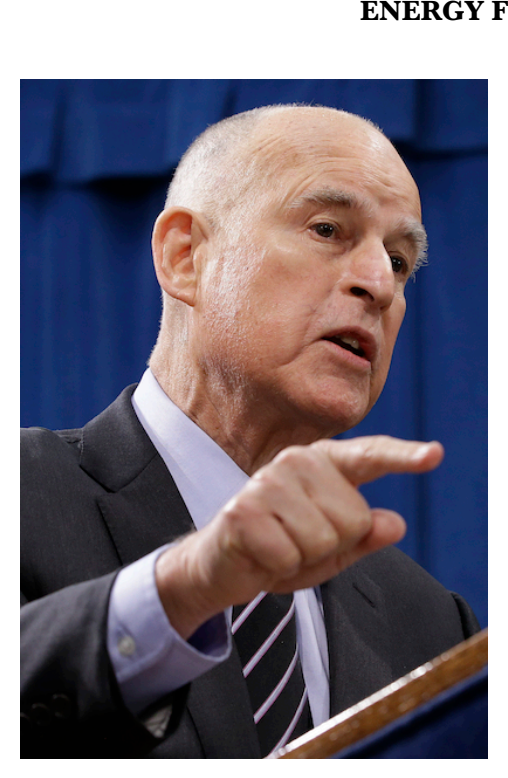
Governor Brown’s historical affinity for the energy industry, and his willingness to do its bidding, is reflected in the fixers who surround him and the actions taken to reward the companies that they represent or protect. Under Brown, major investor-owned utilities that manipulated energy markets during California’s energy crisis and other fossil fuel energy companies have benefitted from their connections to Brown, while family members have benefitted from business relationships with utilities. Environmentalists supporting deregulation have Brown’s ear and generate a steady stream of funding from pro-business foundations that support the idea of a Western power trading market.
Utilities and other energy companies have won the following under Governor Jerry Brown’s administration:
- Receiving administrative or legislative favors, at times in close proximity to
industry donations, in the wake of nearly $10 million dollars contributed by the state’s three major investor-owned utilities and 23 other energy companies between 2009 and 2014 to Brown’s campaigns, pet causes, ballot measures, and to the California State Democratic Party.
- Protection from public scrutiny of disasters such as what led to the biggest
methane well blowout in U.S. history at Sempra’s Aliso Canyon natural gas storage facility in LA County that sickened and caused thousands to flee, or who was responsible for Edison’s radioactive steam leaks at the San Onofre nuclear power plant that prematurely shut the facility down in 2013 while ratepayers foot most of the multibillion-dollar tab.
Page 1!0 of 47
- Protection of commercial business underwritten by ratepayers. Brown’s
sister, Kathleen Brown, sits on Sempra’s board and has collected more than $1 million in cash and stock from the company for her work since 2013. Brown’s Administration has taken extraordinary steps to keep open Sempra’s biggest natural gas storage asset in the West, Aliso Canyon, following the biggest methane gas leak from a well blowout in US history though the facility is used by other utilities and commercial businesses to speculate on the price of natural gas, not to ensure energy reliability. His regulators and Attorney General Xavier Becerra have turned a blind eye to Sempra’s market manipulation in Southern California to justify14 withdrawing gas from the still leaky facility in 2017.
- Removal of diligent regulators in response to industry complaints delivered
via fixers who are former Brown associates and Enron enablers. Former Governor Gray Davis, who allowed the energy crisis to happen and was recalled for it, served as Brown’s chief-of-staff in his first terms as California governor. Occidental Petroleum used Davis to pressure Brown to fire two oil and gas safety regulators in 2011 after they slowed down permitting in favor of protecting drinking water aquifers. A top aide to Brown, Cliff Rechstchaffen, fired them and brought back regulators who reverted to rubber-stamping permits. Brown appointed Rechschaffen, a tireless promoter of the Western power market, to the PUC last year, despite15 vociferous opposition.
- Installation of appointees who are favorable to the utility industry at the
expense of ratepayers. Brown appointed a London-based top Deutsche Bank energy trader, Mark Ferron, first to the PUC at the urging of Pacific Gas & Electric, and then to the California Independent System Operator (CAISO) that runs California’s wholesale energy market and grid. At the PUC, Ferron sat on a commission that went easy on PG&E over its 2010 San Bruno natural gas pipeline explosion that killed eight and leveled a16 neighborhood, which led to its criminal convictions for safety violations. Ferron and his Deutsche Bank division profited off of the energy crisis, as did Enron and other Wall Street banks.
- Support for deregulation from Enron booster Ralph Cavanagh of the
Natural Resources Defense Council (NRDC). Cavanagh vouched for deregulation two decades ago as good for everyone, and for Enron as a company that would bring public benefits. He is the current chief Page 1!1 of 47 environmental sponsor of efforts to push through the creation of a Western power trading market on the same specious argument he made for deregulation and Enron—that this will lead to increased clean energy and efficiency gains.
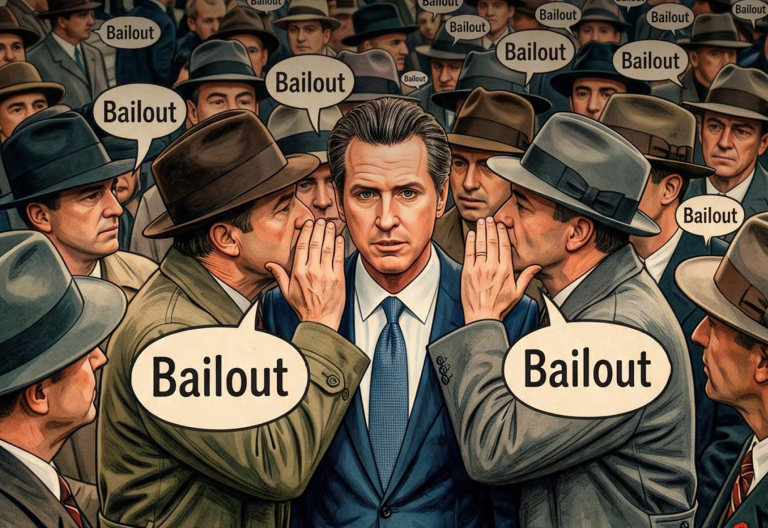
Associates, business executives, and sufficiently pro-business environmentalists who whisper in Governor Brown’s ear have apparently convinced him that California cannot achieve 100 percent renewable energy without belonging to a regional power trading market to absorb excess solar power. “Renewable energy is not going to really make sense beyond 30 to 40 percent without a regional grid,” he said in his Greentech interview.
But the data in the state’s own studies prove him wrong. According to modeling done by the California Energy Commission, California will consume virtually all of the electricity it generates at least through 2027, and will have to dump less than 117 percent of it through 2030. In addition, the Public Utilities Commission (PUC) has already planned for California to generate between 53 and 57 percent of its own energy from renewable energy sources by 2030 without belonging to any18 Western power trading market whatsoever. Currently, the state imports about a quarter of its renewable energy. The model says nothing about needing a Western power trading market to continue those imports.
“Brown has been convinced that we can’t change our systems enough to back off of fossil fuels and that there is an outer limit to renewables,” said one former PUC staffer. “Brown is wrong to think that we have too much renewable power. And he’s wrong to think that we will sell that into other markets and show them the way when California shackles itself to the five biggest coal states in the nation.” What eludes Brown is that capitalist jujitsu to force Western states to follow California’s lead on renewable energy will sooner be used to quash California’s clean energy goals via federal law and the courts and defeat any public benefits that would be derived from the state’s retention of control over its own energy destiny. The Utility Reform Network (TURN), a nonprofit public interest group, “has serious concerns that the regional expansion of CAISO could lead to higher costs for California consumers, greater utilization of coal and gas-fired power plants, higher in-state Greenhouse Gas emissions, fewer in-state jobs, and an increased risk that cutting-edge state policies will be subject to federal preemption,” wrote19 Matthew Freedman, staff attorney for TURN, in comments on the legislation.20 Nothing in current amendments to the legislation changes that.
Page 1!2 of 47 The Fix the Grid California Campaign, to which “mainstream” green groups, business associations, and businesses have lent their logos, argues the opposite. So does Secure California’s Energy Future, another campaign supported by21 businesses. Most prominent among environmental supporters of both these efforts is NRDC, which also helped craft and push through California’s disastrous energy deregulation law in 1996.
Ralph Cavanagh, National Resources Defense Council
“Vote yes…and in doing so maintain California’s momentum toward a truly sustainable energy future.” — Ralph Cavanagh exhorting lawmakers to authorize billions in consumer-backed bonds to pay for utilities’ white elephant nuclear power plants, 1997 “Regional coordination of vital electricity systems…is crucial to accelerating our clean energy programs.” — Ralph Cavanagh on efforts to make a giant regional power trading market out of California, 2015 Ralph Cavanagh was the chief “green” sponsor of legislation to deregulate electricity in California. “The Natural Resources Defense Council, through its chief energy spokesperson Ralph Cavanagh, and with support from the Energy Foundation, played a key role in drafting, passing and then defending that bill,”22 according to environmental activist and author Harvey Wasserman. This evangelist for deregulation in Sacramento, Washington, D.C. and states in between, also supported a utility-orchestrated deal to bail out their “stranded” California assets—monumentally expensive nuclear power plants—as part of the state’s deregulation package.
Today, Cavanagh has put the green seal of approval onto the latest effort to dilute California’s power in a new regional trading scheme, maintaining that a giant Western power market “is crucial to accelerating our clean energy progress,” just as he maintained in 1995 that a deregulation framework developed by the Public Utilities Commission would “work for both the economy and the environment— including in particular, the energy-efficiency and renewable energy resources that23 are crucial to a sustainable energy future.”
He also supports the utilities’ bid for a massive wildfire liability bailout of billions of dollars by state lawmakers, essentially absolving them of the need to mind their Page 1!3 of 47 maintenance of vegetation close to power lines that have sparked wildfires. He backs the bailout on the same grounds as the nuclear power plant bailout—because doing otherwise would jeopardize utilities’ investments in clean energy and efficiency programs. In a recent blog, Cavanagh argued that the utilities face24 “potentially ruinous financial liabilities” if they are held responsible for wildfires. “Energy efficiency, demand response, electricity storage, large-scale renewable power development and distributed energy resources are all threatened, if the state legislature doesn’t reform our wildfire liability doctrines,” he argues in his blog. But how can his position be trusted when his past support for deregulation went so drastically wrong?
Cavanagh’s brand of corporate environmentalism rested on the presumption that if utilities were unshackled from regulation, incentives to build fossil fuel plants would fall away and they would shift to clean energy and energy efficiency instead. “These green seals of approval were part of the neoliberal pitch, that fuddy-duddy regulation should yield to modern, ‘market-oriented solutions’ to environmental problems, which essentially means bribing corporations in the hope they’ll stop their polluting malpractices,” according to Jeffrey St. Clair and Alexander Cockburn writing in Counterpunch magazine. “Indeed, NRDC and EDF were
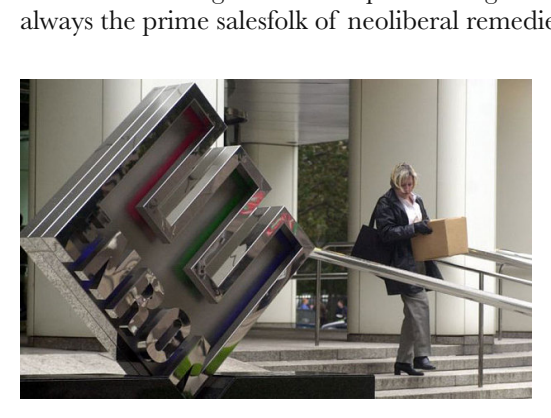
always the prime salesfolk of neoliberal remedies for environmental problems.” The remedies never worked. In 1997, for example, Cavanagh lobbied skeptical regulators and other opponents for the sale of Portland General Electric to Enron on grounds that it was a socially responsible company.
St. Clair and Cockburn described the scene as Cavanagh vouched for Enron before the Oregon Public Service Commission: “Cavanagh flaunted the delights of an Enron embrace: ‘What we’ve put before you with this company is, we believe, a robust assortment of public benefits for the citizens of Oregon which would not emerge, Mr. Chairman, without the merger.’ With a warble in his throat, Cavanagh moved into rhetorical high gear: ‘The Oregonian asks the question, Can you trust Enron? On stewardship issues and public benefit issues I’ve dealt with this company for a decade, often in the most contentious circumstances, and the answer is, yes.’” Page 1!4 of 47
But how can his position be trusted when his past support for deregulation went so drastically wrong? Cavanagh’s brand of corporate environmentalism rested on the presumption that if utilities were unshackled from regulation, incentives to build fossil fuel plants would fall away and they would shift to clean energy and energy efficiency instead. “These green seals of approval were part of the neoliberal pitch, that fuddy-duddy regulation should yield to modern, ‘market-oriented solutions’ to environmental problems, which essentially means bribing corporations in the hope they’ll stop their polluting malpractices,” according to Jeffrey St. Clair and Alexander Cockburn writing in Counterpunch magazine. “Indeed, NRDC and EDF were always the prime salesfolk of neoliberal remedies for environmental problems.”
Cavanagh had negotiated a carrot for Oregon environmental groups to go along—25 a $500,000 Enron donation, according to author Sharon Beder. Once the deal went through, advocates’ greatest fears came to pass. Enron cannibalized the utility by selling off some of its assets, exporting its cheap hydropower at big profit, and raising rates.
Infamous Enron leader Ken Lay coopted environmental movement leaders such as Cavanagh into proselytizing that deregulation would spark market competition and lower rates while stimulating the growth of renewable energy. Companies such as PG&E used NRDC to greenwash their images as promoters of energy efficiency programs while NRDC defended their rate hikes. Ironically, between 1994, two years before California passed its power deregulation law, Assembly Bill 1890 known as the Electric Utility Industry Restructuring Act, and 1998, major investor-owned utilities in California slashed budgets for achieving energy efficiency. According to Beder, PG&E cut its budget by 38 percent, Sempra’s San Diego Gas & Electric by 58 percent and SCE by 23 percent.
Cavanagh was one of the first environmentalists to support a $28 billion bailout package that utilities demanded as part of deregulation. An NRDC letter Cavanagh sent lawmakers a year after deregulation passed urged them to authorize billions of dollars in consumer-backed bonds to pay for nuclear power plants that utilities claimed would no longer be competitive in the deregulated marketplace. “Vote yes…and in doing so maintain California’s momentum toward a truly sustainable energy future,” the letter said, according to author Savannah26 Blackwell.
In 1998, a citizens’ initiative launched by Harvey Rosenfield, founder of the Foundation for Taxpayer and Consumer Rights (Consumer Watchdog today), and Ralph Nader would have overturned the nuclear bailout portion of the deregulation law if it had succeeded. The state’s biggest utilities spent $40 million to defeat Prop 9. Cavanagh served as their chief spokesman.
In a 1998 memorandum to “Friends and Colleagues,” Cavanagh argued that utilities should simply go on recovering nuclear plant costs already factored into 1996 rates. “The principal message of this initiative is that electricity costs too much in California and that a paramount public policy objective is to make it much27 cheaper,” he wrote. “We think that today’s electricity prices internalize too few costs, not too many.” In fact, the nuclear plant subsidies were not used to benefit ratepayers, but went instead into overseas and other investments, shareholder, dividends or stock repurchase programs. Worse, “by most accounts, the utilities Page 1!5 of 47 losses are billions less than the stranded cost bailouts they’ve laundered to their28 parent corporations,” wrote Wasserman.
The Energy Foundation was NRDC’s chief sponsor, giving it more than $3 million in grants between 1991 and 1997 alone as it backed deregulation of electricity, while Pew donated more than $1 million between 1993 and 1995, according to Sharon Beder.“Both foundations were set up with corporate money made in oil29 and other industries,” Beder wrote. “These foundations dominated the funding for activist groups, ensuring that their lobbying on energy issues took a pro-business, pro-deregulation and pro-private utility stance.”
In 2005, NRDC went on to support the rollback of the Public Utilities Holding Company Act that limited both the risks utilities could take with ratepayer money and their service territories. Deregulation “opened the door for hedge funds and investment banks to own utilities,” wrote Wenonah Hunter, founder of Food & Water Watch, in her book, Frackopoly: The Battle for the Future of Energy and the Environment. While putting a brake on the growth of renewable energy, this deregulation “created complex, unregulated energy powerhouses that provide energy services, produce petroleum products, and speculate on the energy market.” Unwitting California ratepayers bore the costs of that speculation during the energy crisis while FERC stood by doing nothing, and ratepayers are bearing the costs of speculation still.
NRDC, Its Board, & Their Interests
Some of the people who might be interested in the creation of a Western regional power market on behalf of their own clients and the development of future business can be found sitting on the board of NRDC.
These board members hail from the corporate law firm of Cravath, Swaine & Moore LLP, which has done business with Warren Buffett’s Berkshire Hathaway. Another board member represents D.E. Shaw Group, a global technology development firm investing in a wide range of companies and financial instruments. Yet another represents Simpson Thacher & Bartlett LLP, a law firm with ties to private equity firms and to JPMorgan Chase, Bank of America and Goldman Sachs. The Ayres Law Group, also represented on NRDC’s board, specializes in environmental and energy litigation, and clients include Calpine Page 1!6 of 47
“These foundations dominated the funding for activist groups, ensuring that their lobbying on energy issues took a pro-business, pro-deregulation and pro-private utility stance.”
Corporation, one of the country’s biggest retail providers of power generated from natural gas and geothermal resources.
Wall Street banks have had their hands slapped before for rigging markets in California and elsewhere. JPMorgan Chase hired John Howard Bartholomew from Southern California Edison (SCE) a decade ago for his unique ability to develop manipulative bidding strategies for electricity that could produce billions in windfall profits, a fact he advertised in the resume he fired off to JPMorgan.
A JPMorgan subsidiary used his talents to unfairly rig California and Midwestern markets in its favor, estimating JPMorgan would earn up to $2 billion in profits through 2018 that way. JPMorgan agreed to pay a total of $410 million in penalties and disgorgements, a pinprick for a company with $18 billion in profits that year, in a 2013 settlement with FERC.
Bartholomew’s winning strategies became the subject of an email sent off by another JPMorgan employee in 2010 to his colleagues in which he joked about the scheme with a photograph of Oliver Twist begging for more food in his empty bowl. He had edited the subject line to say, “Please sir!
More BCR!!!!.” Bartholomew had figured out how to game so-called “Bid Cost Recovery” payments that reimbursed energy providers for the costs of starting up and for generating minimum electricity loads, and for the costs of bidding that power into the market.
JPMorgan would bid electricity into the day-ahead wholesale market that CAISO30 managed at the lowest bid CAISO allowed. That ensured that CAISO would continue to secure JPMorgan’s day-ahead awards. JPMorgan then got a payment equal to twice its real costs, and also sold electricity to utilities at a higher prevailing market price, essentially getting paid three times for the same electricity, according to the U.S. Senate’s Permanent Subcommittee on Investigations 2014 report on Wall Street’s ownership of physical commodities and rigging of commodity31 markets.
The two-year U.S. Senate investigation found that as JPMorgan was being investigated, it continued to engage in various manipulative electricity schemes—a total of 11 in all. In fact, CAISO “had never before witnessed the degree of blatant rule manipulation and gaming strategies that JPMorgan used to win electricity awards and elicit…payments.”
Page 1!7 of 47 The Senate investigation looked at the “vast, secret holdings of physical industrial commodities, power plants, pipelines, oil storage terminals and aluminum warehouses owned variously by JPMorgan Chase, Goldman Sachs or Morgan Stanley; at how related commodity markets have been rigged or could potentially be rigged by owning these assets while making massive trades in financial instruments related to them; and why the Federal Reserve, charged with ensuring the safety and soundness of banks, had not seen the potential for catastrophic bank losses from pipeline ruptures or tanker oil spills or power plant explosions.” A sprawling Western power market is yet one more tent for these camels to nose under.
Warren Buffett
One of the biggest beneficiaries of a Western power market would be Warren Buffett, a billionaire investor and a King of Coal Power. According to filings with the California Secretary of State, PacifiCorp paid California Advisors more than $103,000 during 2017 to lobby for creating a Western power market out of CAISO, and other32 matters.
Through Berkshire Hathaway Energy, Warren Buffett has snapped up natural gas pipelines and utility companies. He owns three major utility companies, PacifiCorp, NV Energy, and MidAmerican Energy serving 4.7 million electricity and natural gas customers across 11 states, including in Utah, Nevada, Wyoming, Idaho, Oregon, Washington and parts of Northern California. PacifiCorp’s utilities currently generate roughly two-thirds of their power from coal. As of 2014, Oregon’s Public Utility Commission denied the utility some of its requests for rate increases to cover pollution control technology installed at coal plants because the utility did not adequately vet alternatives, including solar power, or prove that coal pollution33 controls were the least cost way to meet customer needs.
California has virtually no coal plants, but it still imports substantial amounts of coal power from Utah, New Mexico and Arizona while planning to be coal-free by34 2027. Entering a Western power trading casino risks increasing coal power imports. States in the Western region produce half of the nation’s coal and generate 500 times the coal electricity that California does. They would want to Page 1!8 of 47 expand their sales in a Western power trading market. Exporting coal power to California would breathe new life into Buffett’s coal plants, especially now that Trump is rolling back President Obama’s EPA Clean Power Plan that limited carbon dioxide emissions from power plants. It would also make it easier to justify finishing a $6 billion transmission project across the West at California’s expense when demand in Buffett’s neck of the woods hasn’t yet materialized.
Buffett’s sober-minded business philosophy is to
“You’re dealing with a
bet on sure things when everyone else is recklessly gambling. “You’re dealing with a lot of silly people
lot of silly people in
in the marketplace; it’s like a great big casino and
the marketplace; it’s
everyone else is boozing. If you can stick with Pepsi, you should be O.K.,” he told Forbes
35like a great big casino
Magazine in 1974. Buffett views utility investments as “recession resistant” because they
and everyone else is
provide “an essential service for which demand is remarkably steady,” according to his 2017 annual boozing. If you can letter to shareholders quoted by the Los Angeles
stick with Pepsi, you
Times.
should be O.K.”
PacifiCorp is already partnering with Berkshire Hathaway and Pinnacle West Capital—owner of the Phoenix-based utility Arizona Public Service— to build California transmission lines. Ultimately, this transmission capability, paid for by ratepayers, would aid in trading power in a Western power market and for exports of power. Jon Wellinghoff, former chairman of FERC who now heads a consulting firm, has talked up PacifiCorp’s renewable energy potential as he reportedly also helps to push through a Western power casino. “There are tremendous efficiencies to be squeezed out of the system,” Wellinghoff told the Los Angeles Times in its coverage of Buffett’s investment37 strategy. “I think Berkshire Hathaway’s strategy is to maximize the use of the transmission system. I also think it can be and ultimately will be a good use of renewable energy.”
PacifiCorp’s Power Plays
PacifiCorp, which already trades electricity with California to fill in small gaps in the state’s supply and demand, is not lily white when it comes to skirting rules or engaging in market manipulation. In 2007, FERC imposed $22.5 million in penalties against five companies, including PacifiCorp, for violating tariffs, rules, or Page 1!9 of 47 business practice standards. In 2016, FERC ordered almost two dozen Berkshire Hathaway subsidiaries to revise rates for power supplied to PacifiCorp East, PacifiCorp West, and Idaho Power over a 15-month period and offer those38 customers refunds because of excessive market power.
PacifiCorp utility customers saw rates rise steadily after Buffett bought that company in 2006. “From customers’ perspective, the most noticeable change under PacifiCorp may be the price of power,” according to a 2015 article on Oregonlive.com. “Rates have steadily increased—and more quickly than other utilities in the region—as PacifiCorp has invested in new gas-fired plants,39 transmission, pollution controls at its fleet of coal plants, and renewable energy.” Buffett’s push for a Western power trading casino is also a way to protect PacifiCorp assets and extend the longevity of big, centralized fossil fuel power plants in the face of accelerating advances in renewable energy generation and storage and the democratization of direct access to clean energy. Towns, commercial businesses, and individuals are starting to buy power from small-scale renewable energy systems or to install their own. “Berkshire Hathaway appears to be doing all it can to counter a purported death spiral of economic harm that power companies face because of growing energy efficiency regulations, consumers generating their own power with rooftop solar panels and the advent of electricity storage options in homeowners’ garages,” wrote the Los Angeles Times.
Philip Anschutz
Another would-be Titan of Transmission—in this case to bring wind and coal power from Wyoming to California—is Philip Anschutz. While Warren Buffett pitched in $5,000 for Brown’s 2014 re-election campaign, Anschutz has used donations to cultivate California more far more assiduously.
His Anschutz Entertainment Group and affiliated entities made a behested donation of $10,000 to Brown’s favored Oakland Military Institute in 2012, $25,000 to Brown’s 2014 re-election campaign, $30,000 to the California Democratic Party in 2016 and donated a total of $120,000 to the Democratic State Central Committee of California between 2010 and 2014, according to filings at the California Secretary of State’s Office.
Anschutz is a conservative billionaire entrepreneur who owns or controls companies in energy, railroads, real estate, sports, newspapers, movies, and Page 2!0 of 47 entertainment. He holds the biggest stake in the nation’s largest movie theater chain, Regal Entertainment, owns the Coachella Valley Music and Arts Festival, Los Angeles’s Staples Center, and other media and entertainment companies and sports teams. Described as a Christian conservative, he donates generously, and40 some of those donations have been criticized as supporting anti-LGBTQ causes. Greenpeace has noted that his media companies figure prominently in the denial of climate science and the promotion of climate-change skepticism. In 2012,41 Anschutz sued over Dryden, New York’s ban on horizontal fracking.
Anschutz’s interest in wind power stems from his
“A wind turbine
ownership of a vast Wyoming ranch likened to a Saudi Arabia of wind. The kind of green he sees has nothing to
is just an oil
do with green values and everything to do with greenbacks. One of his business lieutenants thought up
well turned
using the farm to export wind when Anschutz was considering its sale. According to Pacific Standard, an
upside down.”
online magazine, “I just look at it as energy, pure and simple,” said Anschutz’s employee, Bill Miller. “A wind
- Bill Miller, 42
turbine is just an oil well turned upside down.”
Entertainment Mogul Phil Anschutz’s But Anschutz faces a gauntlet of federal and state employee permitting, including permission to build across sensitive environmental areas. He also needs to raise $8 billion in financing first—and then bring that wind hundreds of miles to California. His team thought up a good financing scheme. “California’s electricity market is part freewheeling capitalism, part Soviet central planning,” wrote Gabriel Kahn, author of the Pacific Standard story. California’s mandate on utilities to buy green power got Anschutz thinking that he could offer green power that California would have no choice but to buy at high prices.
At the time that Arnold Schwarzenegger introduced California’s first requirement to generate green energy there was no way that California could produce enough of its renewable energy in-state to meet the quota, Kahn wrote. The legislature limited how much green power utilities could buy out of state to encourage green energy development in California, but added a loophole that allowed regulators to count any green electricity coming into the state via direct lines as homegrown. Anschutz’s grand plan is to build the Transwest Express, a dedicated, direct current line to take power from Wyoming across Nevada to a border substation that is technically part of California. Rolling in the cost of transmission, Anschutz would Page 2!1 of 47 then sell that power to California. Anschutz could also earn money by selling space on the line to other power providers, including of dirty power. But such a scheme, underwritten by California ratepayers, simply will not be as cost effective for California as the state tapping its own energy sources to meet its needs.
Dana Williamson, Brown’s Ace-In-The-Hole
Pushing legislation behind the scenes this year and last to create a Western power trading casino is Dana Williamson, PG&E’s former director of public affairs. Brown originally hired Williamson from PG&E as a senior advisor and later promoted her to cabinet secretary. In 2016, she left to run her own firm, Grace Public Affairs, with the governor’s office43 noting that she would continue to work for Brown.
Williamson has used the revolving door for years. She worked for former Governor Gray Davis as deputy communications director and deputy political director prior to taking a job with PG&E.
Williamson and Cavanagh lobbied hard last year to push through the last-minute legislation, legislative sources reported. She is not a registered lobbyist. Capitol sources said she was enlisted by CAISO’s registered lobbyists from Di Mare, Brown, Hicks & Kessler. According to lobbying reports filed with the Secretary of State, CAISO paid Di Mare, Brown, Hicks and Kessler half a million dollars from 2011 through 2017 to represent its interests in Sacramento, including on the building of a Western power market out of California. She and Cavanagh continue to push for the legislation, according to Sacramento sources.
Major Investor-Owned Utilities
According to Harvey Wasserman, SCE lawyers drafted California’s 1996 deregulation legislation for state lawmakers in their own offices under the watchful eye of John Bryson, then chairman of the board and CEO of both SCE and its parent, Edison International. Bryson, an attorney and a founder of NRDC before launching a corporate career, praised the law on the day it passed as “the best way to facilitate a smooth, timely transition to a competitive electricity market and maximize value for our shareholders and customers” while “giving customers44 choice.”
Though utilities remember the dark days of rolling blackouts and power extortion, expanding the West’s power trading market is attractive to them as all three have Page 2!2 of 47 power trading divisions. Just as they resisted deregulation the first time around, and knuckled under once they realized they could engineer themselves a multi-billion-dollar bailout, they are trying to engineer themselves a wildfire liability bailout in exchange for more deregulation.
Some of the utilities have been implicated in market gaming before. In 2010, Sempra paid $400 million to settle accusations that it engaged in “Enron-style gaming” of power markets and “a pervasive pattern of market manipulation and45 abuse” during the California energy crisis. The settlement was negotiated by State Attorney General Jerry Brown. According to a 2005 civil complaint, Sempra allegedly used the same fraudulent tactics that Enron did such as inducing payments to clear phony congestion on power lines.
In addition, Sempra and PG&E in particular have major natural gas storage assets. Their ownership of natural gas storage facilities, investments in natural gas pipelines and thus knowledge of who is withdrawing natural gas and when, gives them an inside edge on power trading and speculation on bets to do with congestion points on the transmission system.
According to Consumer Watchdog’s research, Governor Jerry Brown has46 maintained close relationships with the state’s utilities. He is also a longtime admirer of John Bryson, who caught his eye as an environmental advocate in the 1970s. Brown appointed Bryson to the State Water Resources Control Board in 1976, and in 1979 to run the California Public Utilities Commission. Bryson joined SCE in 1984, rising to president, chairman, and CEO of Edison International by 2000. Brown would later measure other PUC Presidents against Bryson.
Brown’s family members have had personal connections to utilities. Brown’s deceased sister Cynthia Brown was married to a top PG&E lawyer. Jerry Brown’s sister Kathleen Brown sits on Sempra’s board of directors and has received more than $1 million for her work. Brown’s PUC appointees have treated utilities exceedingly well, allowing hefty rate hikes and the overbuilding of natural gas power plant capacity. They have protected utilities from public scrutiny of disasters, including the biggest methane blowout in history at Sempra’s Aliso Canyon storage facility in Los Angeles County or who was ultimately responsible for radioactive leaks from steam generators at Edison and Sempra’s San Onofre nuclear power station.
All five of Brown’s current PUC commissioners were former top aides or appointees overseeing the energy sector. Former top aide Cliff Rechtschaffen, who Page 2!3 of 47 fired two diligent oil and gas safety regulators at the behest of Jerry Brown and Occidental Petroleum, tirelessly promoted a Western power trading market before47 his appointment to the PUC. He has continued to do so as a PUC48 commissioner.
Utilities have gotten a lot of mileage out of the Brown Administration. Undoubtedly, they would like to wring more money out of California ratepayers before the next governor is sworn in. Joining a big Western power trading market could be a jail break that takes them out from under state control and sends them into the full embrace of a laissez-faire-on-steroids Trump administration.
Don Furman, Executive Director, “Fix The Grid Coalition”
Don Furman is running the Fix the Grid CA campaign, which includes NRDC and EDF. They lent their logos together with business associations, utilities and transmission builders to the effort to build a Western power market on the pretext that it will flood California with renewable energy, lower carbon emissions and pollution in low income communities of color and also lower power rates. But his approach has fallen short with some skeptical environmentalists.
This former PacifiCorp executive who claims he’s got green religion worked as senior vice president of regulation and external affairs between 2001 and 2005. Furman also held positions including vice president of mergers and acquisitions and vice president of transmission. He later worked for Iberdrola, a giant Spanish gas and electric utility with wind power operations in the US, as senior vice president of49 external affairs.
Furman gave a taped telephone briefing to a group of environmentalists in October 2017 on the benefits of a Western power trading market based on a 20- page slideshow presentation that presented no empirical facts to back it up. What he said about the implications of the power market contradicted what his slideshow peddled.
According to his presentation, FERC’s goal in creating regional independent system operators like CAISO is to “reduce the market power of the big utilities for the benefit of the consumers.” This low-carbon grid will reduce pollutants Page 2!4 of 47 “because we stop burning things.” California’s digital and clean energy technology will
“An expanded Western
transform California’s power market, lowering grid will not only operating costs, and “drive jobs across the sector.”
increase reliability and
However, when pressed by environmentalists
lower energy costs, it will
during the presentation for proof that this also help reduce air Western power market would not increase pollution and greenhouse gas emissions from
pollution, which is
power plants in low-income communities of
critical to our most
color, Furman belied his own remarks.
vulnerable communities.”
In a letter to the Los Angeles Times last June, Furman maintained that, “An expanded Western grid will not only increase reliability —PacifiCorp fixer Don Furman’s and lower energy costs, it will also help reduce letter to the editor at the Los air pollution, which is critical to our most Angeles Times, June 29, 201750 vulnerable communities.” In his taped conversation with environmentalists, he said, “I do happen to believe that this [Western power market] actually reduces emissions, but I don’t know. At the end of the day, I was a guy who was a bunch of years in this area and I have some insights and so on, but you never know and there are all these unintended consequences,” he told them.
Furman sidestepped questions about whether the new market would crush green job growth in low-income California communities of color. “To make sure there are concrete jobs that will come from all this is important,” he said. “But having said that…by lowering electric costs from what they otherwise would be, it is a tax cut in a way, it does drive economic activity, it does drive jobs.”
Follow the Money Furman told environmental groups during his taped conversation that money for the campaign comes from big companies such as Portugal’s EDP Renewables; EDF Renewables, a subsidiary of Electricite de France managing 58 nuclear power reactors; and National Grid, a major builder of power transmission systems. But he said that the majority of the money behind Fix the Grid, according to Furman’s audiotape, comes from the Energy Foundation.
Page 2!5 of 47 The nonprofit Center for Energy Efficiency and Renewable Technologies (CEERT) is Fix the Grid’s sponsor, according to Furman, channeling money it gets from the Energy Foundation into the effort. In 2017, the Energy Foundation made a $75,000 donation to the Fix the Grid “Steering Committee,” according to the Energy Foundation’s form 645 filed with the CA Secretary of State to reflect money spent on influencing legislative or administrative
51“I do happen to believe
action. The Energy Foundation also donated $425,000 to CEERT and $220,400 to NRDC
that this [Western
for the same purposes.
power market] actually
PacifiCorp has an ally in CEERT. John V.
reduces emissions, but I
White, head of CEERT, along with NRDC’s
don’t know. At the end
Ralph Cavanagh, and Jonathan Weisgall, a lawyer and vice president of government
of the day, I was a guy
relations for Warren Buffett’s Berkshire Hathaway, which owns PacifiCorp, have all
who was a bunch of
been received in Sacramento legislative offices
years in this area and I
and are lobbying heavily for a Western power trading casino, according to Capitol sources.
have some insights and
John V. White served on the board of CAISO during deregulation decades ago together with
so on, but you never
former PUC commissioner Mike Florio.
Weisgall chairs the board of CEERT and know and there are all Cavanagh sits on it, according to CEERT’s
these unintended
website. Furman is said to operate out of CEERT’s offices.
consequences.”
Among the experts that Fix the Grid lists on its 53—Don Furman, October 2017 website are Furman, White, and Cavanagh.
If they are successful in their lobbying efforts, CAISO will serve as central control for a Western regional power market. CAISO will run a trading platform for buying and selling power throughout the Western region —while releasing it from answering to California and its renewable energy requirements.
Page 2!6 of 47
Trusting Trump’s FERC
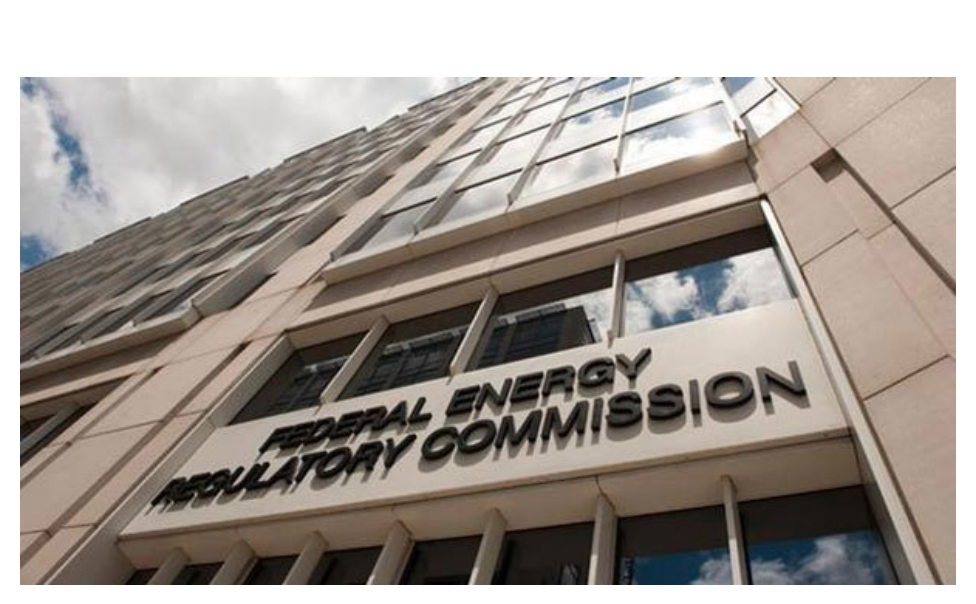
In his phone conference with environmentalists, Furman assured environmental advocates that they could trust Trump appointees to FERC, which is “populated with technocrats who are not very political.” But in the next breath, he admitted that “of course there is political influence in fact,” but that California is going to “resist” it.
“I love the idea of getting right in front of them and saying, ‘hey we are gonna build a low carbon grid and try and stop us.’ Because I think they will really struggle to do that,” he said on the call. “It doesn’t mean they are not going to, won’t fire back and it doesn’t mean that we don’t have to be really, really vigilant but from my perspective the only question, because I am running a campaign that is advocating for this. I just don’t see it as significantly different from where we are today. And we’re also not there anyway and so…they are probably going to come after us in some fashion anyway unless they get overly distracted.”
Environmentalists pressed Furman on Trump’s five FERC appointees and whether they could be trusted to preserve California’s clean energy laws.
Furman said one FERC commissioner, Richard Glick, was on California’s side. “He worked for me for 12 years, he’s a good friend…by the way, he is one of us. He is totally into renewables, a climate and environmental advocate, he comes from our background,” he assured the group. Before Trump appointed him to FERC, Page 2!7 of 47 Glick was general counsel for the Democrats on the Senate Energy and Natural Resources Committee. He is steeped in knowledge of energy regulatory issues having served as vice president of government affairs for the U.S. operations of Iberdrola. Glick also served as director of government affairs for Buffett’s54 PacifiCorp.
No matter how sympathetic Glick may be to California, he answered to bosses at companies that also have substantial interests in fossil fuels and today he answers to FERC’s chairman.
Trump’s pick for Chairman, Kevin McIntyre, formerly co- headed the global energy practice of major corporate law firm Jones Day. His FERC bio states, “At the firm, he had an expansive FERC practice, counseling and representing clients in nearly all industry sectors, including natural gas, conventional electricity, oil, hydropower, wind power and other renewable resources, and energy marketing and55 trading.” The roster of Jones Day clients, according to its website, includes: Chevron, Goldman Sachs, JPMorgan, and giant investor-owned utility First Energy Corp. with transmission lines crossing the mid-Atlantic to the mid- West.
On his phone call, Furman said McIntyre was the commissioner “who understands the trends and the desire of companies to grow out their current footprint.” He also said that McIntyre was “a Republican who’s an appointee with some marching orders.” It is hard to imagine someone steeped in the defense of clients participating in regional trading organizations declining to assert FERC’s power over interstate wholesale pricing of electricity, if California is legally challenged. Trump’s other pick for FERC—Neil Chatterjee—was best known as U.S. Senate Majority Leader Mitch McConnell’s energy policy advisor. A coalition of 135 environmental groups lined up to oppose Trump’s FERC nominees, including Chatterjee because of its view that FERC has long been a rubber stamp for oil and gas pipeline proposals. “Chatterjee’s record on these issues indicates that he would likely double down on the status quo at FERC,” according to the Energy and Policy Institute. In his years advising McConnell, Chatterjee advocated for “policies that56 squarely align with the agenda of fossil fuel and utility interests.”
Page 2!8 of 47 Chatterjee spearheaded the Republican push for Senate approval of the Keystone XL pipeline, tried to undermine US leadership on the Paris climate agreement, led McConnell’s campaign to convince states to “just say no” to the EPA’s Clean Power Plan, and has participated in galas featuring presentations by climate deniers.
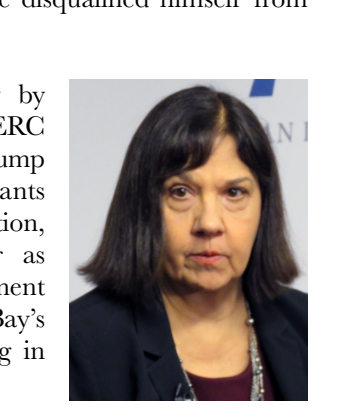
Chatterjee’s fellow appointee, former Pennsylvania PUC commissioner Rob Powelson, last year compared anti-pipeline activists to jihadists, sparking calls by57 environmental groups for his resignation. Eric Friedman, a board member of the Pipeline Safety Coalition, said that the remarks were unforgiveable. “When he called his constituents, the people who are raising safety concerns about pipelines, jihadists, he disqualified himself from
any further public office,” he said.
Commissioner Cheryl LaFleur, appointed originally by President Obama, took the temporary place of FERC Chairman Norman Bay who had resigned under Trump until McIntyre was appointed. Bay went after energy giants such as BP and Total SA for alleged market manipulation, according to Bloomberg, which assessed La Fleur as sympathetic to business interests. “LaFleur’s appointment could signal the end of current chairman Norman Bay’s efforts to more heavily regulate power and gas trading in58 the U.S.,” Bloomberg wrote a year ago.
Prior to joining the Commission in 2010, LaFleur spent more than 20 years in the electric and natural gas industry, including as executive vice president and acting CEO of National Grid USA, responsible for the delivery of electricity to 3.4 million customers across 9,000 miles of transmission lines spanning Massachusetts, New York and Rhode Island. “From a consumer protection stand point we have significant concerns,” Tyson Slocum, Washington-based director of energy at consumer advocacy group Public Citizen, told Bloomberg. “She’s definitely on the side of the generators and the transmission owners instead of consumers.” More pertinently, LaFleur was a top executive at National Grid USA and National Grid USA is one of the forces behind the Fix the Grid effort, according to Furman’s discussion with environmentalists. So is PacifiCorp, which has a de facto representative on FERC in the person of Richard Glick. That should give Page 2!9 of 47 California environmentalists and anyone else concerned about California’s control over its own energy destiny some serious pause.
Trusting CAISO CAISO’s board and its executive leadership team are largely composed of energy industry insiders. During deregulation, CAISO was supposed to run the wholesale market to ensure the power grid functioned reliably and smoothly. Insiders wrote the rules. Some of the rules they wrote benefitted companies with representatives on the board. For example, CAISO paid companies bidding into congested lines to desist. Some companies represented on the board possessed inside information on the congestion of power lines and transmission bottlenecks—and made millions off that information by engineering payments to themselves.
These sorts of scams could be an appetizer of what is to come if California loses control of its energy market. As it is, Californians are currently covering for losses created by bets that traders make on congestion over transmission lines, according to a Los Angeles Times interview with Eric Hildebrandt, CAISO’s top monitor of electricity markets. Since 2009, California ratepayers have covered losses of nearly $700 million via higher rates as a result of Wall Street speculation.
Currently, CAISO board members are appointed by, and answer to, California’s governor. But if CAISO becomes part of a regional, self-appointed board, nothing prevents CAISO board members and the professionals who run the organization from profiting off of a larger Western power trading market that they would run— from offering their consulting services to engineering side deals for energy and technology companies they may run. These board members include:
Mark Ferron
Brown named energy trader Mark Ferron to the PUC in 2011where he went easy on major investor-owned utilities.
The pro-utility appointment was engineered by then PUC President Michael Peevey together with a top PG&E lobbyist who fed candidate names to Brown’s then-chief of staff and former PG&E executive Nancy McFadden. Brown appointed Ferron to CAISO’s board in 2016. Ferron made his fortune at Deutsche Bank where he headed up its London global trading operations during59 the energy crisis and beyond.
Page 3!0 of 47
Richard Maullin
Richard Maullin is a founder, partner and principal at Fairbank, Maslin, Maullin, Metz & Associates, an opinion research and consulting firm. Brown met Maullin in Latin America during the 60s where Maullin was working for Rand Corporation. Maullin was California Deputy Secretary of State from 1971 to 1974, worked for Brown first as his fundraiser and pollster in Brown’s 1974 gubernatorial race, and then served as Brown’s chair of the California Energy Commission. In the 1980s he was president and CEO of a geothermal energy company, according to Bloomberg.com.
Maullin served to “round up the tough operatives and managers” that Brown60 needed for the campaign, according to a 1974 Rolling Stone spread on Brown. “He raises the money and is one of the two or three aides deep into strategies and tactics.” Those tactics involve careful study of the habits, desires and tastes of target audiences and then skillful use of electronic media to elicit a “programmed response to a previously selected alternative.” Maullin “writes off grass-roots movements with thousands of volunteers as a waste of time and money when media can be so much more effective,” according to the magazine.
Angelina Galiteva
Another CAISO board member is Angelina Galiteva, former executive director of the LA Department of Water & Power. She is currently the President of NEOptions, a renewable energy and new technology product design and project development firm she founded 15 years ago.
David Olsen
David Olsen describes himself as leading the development of solar, wind, hydro and geothermal power projects in more than 20 countries and provides a list of61 wind turbine, geothermal plant, and battery storage companies that he headed. Olsen served as managing director of the “Western Grid Group” from 2003-2013. The Western Grid Group is composed of “former Western state energy officials advocating grid modernization, transition to a clean energy economy and creation Page 3!1 of 47 of an Energy Imbalance Market in the western U.S.,” according to Olsen’s CAISO bio. The Western Grid Group operates as “a sponsored project” of CEERT, according to62 its website.
Olsen sat on the board of CEERT beginning in 1991 and chaired it in the mid-1990s as California’s deregulation legislation moved. He was a founding member of the Business Council for Sustainable Energy—which represents companies and trade associations from the natural gas as well as renewable energy sectors—and has served on numerous power industry trade associations.
Interestingly, CEERT funds the Western Grid Group, or WGG for short, that Olsen headed. “WGG is an unincorporated non-profit association,” its website reads. “We operate as a sponsored project of the Center For Energy Efficiency and Renewable Technologies (CEERT).”
CEERT has a direct phone line to David Olsen who is clearly on the same page on pushing through a Western power trading casino that is bound to provide further lucrative business opportunities.
Stephen Berberich
CAISO’s executive team is intimately involved with selling the idea of a giant trading platform to the California public.
This team of long-standing energy and utility industry professionals includes Stephen Berberich. Berberich was hired in 2005 as CAISO’s president and chief executive officer after decades with various utilities and utility consultancies such as CapGemini that specializes in management consulting, technology services, and outsourcing.
Berberich is gung-ho on a Western power trading casino.
“The elevator pitch is: It’s good for customers and it’s good for the environment,” he told the Desert Sun’s reporter Sammy Roth last year. “Here’s the catch: A lot of people don’t think so,” wrote Roth. Berberich argues that the state generates more solar than can be used. According to the Desert Sun, Berberich believes that a Western power market would enable California to “more easily sell excess solar Page 3!2 of 47
WGG is an unincorporated non-profit association,” its website reads. “We operate as a sponsored project of the Center For Energy Efficiency and Renewable Technologies (CEERT).” CEERT has a direct phone line to David Olsen who is clearly on the same page on pushing through a Western power trading casino that is bound to provide further lucrative business opportunities. Stephen Berberich
capacity across state lines,” an idea that on its face makes little sense since an existing market with neighbors enables such transactions right now.
Berberich peppers that argument with the scare tactic that energy prices will rise dramatically as renewable energy grows to 50 percent and more because costly natural gas plants will be needed to meet peak demand at times when solar energy isn’t available.
California’s average retail electricity rate is 15 cents per kilowatt-hour, according to the Energy Information Administration. “What happens when our retail rates go to 50 cents, to 60 cents, to 70 cents?” Berberich says. “Is there a potential that we would actually have a backlash against our environmental agenda? I would submit, very possible.” But totally improbable because of what Berberich has left out of the equation: plummeting prices for utility-scale battery storage that can soak up that solar and other energy and redirect it for use later—right here in-state. The name of the game for independent fossil fuel power plant builders and energy generators is in saving fossil fuel power plants that supply utilities making a tidy profit off of them via high guaranteed rates of return financed by ratepayers. If It Ain’t Broken, Don’t Fix It Furman’s name for the Western casino campaign, Fix the Grid, implies that California’s grid needs fixing to achieve going green. But it doesn’t. The California grid exists, operates, and facilitates utilities’ imports and exports of power. No physical expansion of the grid will take place if California is rolled into a giant regional power trading market. California initially formed an “Energy Imbalance Market” with Buffett’s PacifiCorp in 2014 to fill in small gaps in supply and demand on a daily basis. This coordination can be further improved without creating a vast power trading casino that cedes California’s governance of its own wholesale power market to the federal government.
Crucial things will change if California joins a Western power casino—California will risk the overturning of its green laws when it loses the legal authority over its own system of power transmission to the federal government. California utilities could be off the hook on meeting California’s strict standards for increasing the amount of green energy they sell.
FERC could ultimately force California to subsidize coal power plants elsewhere by ordering market reforms that effectively tax all the users of the Western power Page 3!3 of 47 market to pay for them. California utilities will be off the hook as far as building more renewable energy in California when natural gas is so abundant.
California spent three years in court with FERC to wrestle back control over the industry-represented CAISO during
California
the energy crisis. At the heart of regionalization is giving that control back to the federal government that exacerbated
will risk the
the energy crisis by preventing California from cracking
overturning of
down on manipulation of its market. Once that statute is changed, argues Loretta Lynch, President of the PUC
its green laws
during the energy crisis, there will be no going back. “The next Governor will be left without any weapons to fight the
when it loses
Trump FERC and the next generation of manipulators who63 will fleece California consumers.” the legal
authority over
FERC is where the buck stops on the regulation of energy
its own system
pricing and transmission across state lines. The Commerce Clause gives Congress the power to regulate commerce
of power.
between states and foreign nations. The Supreme Court has interpreted the Commerce Clause to mean that the states have limited authority to enact legislation affecting interstate commerce, including any laws that discriminate against interstate commerce in favor of in-state commerce. Some states have tried to use the clause to fight back against preemption of their state statutes but results in legal cases have been mixed. The Federal Power Act gives FERC exclusive jurisdiction to regulate wholesale sales and transmission of electrical power over state lines. Federal Power Act preemption cases have all gone against the states because courts have deferred to FERC. FERC defers to regional trading organizations protecting their larger interests.
California can’t bank on any deal it makes being honored by a regional trading organization after the state joins it. New Jersey and Maryland, for example, assumed the regional trading organization to which they belonged would honor their state energy procurement policies in the Hughes v. Talen case. In that case, FERC overturned Maryland state revenue guarantees to encourage the development of local generating capacity that would be auctioned in order to meet future regional demand. Maryland’s law was not to the regional trading organization’s liking and so it complained to FERC, which sided with it against the two states. In 2016, the U.S. Supreme Court upheld FERC’s decision.
Page 3!4 of 47 “The lesson is that conditions originally obtained by states in exchange for their support for a regional market can be eliminated after the market is operating even if the states protest these changes,” TURN wrote in its legal analysis. “Any deal to retain specific states’ rights is neither durable or enforceable once jurisdiction is transferred to FERC.”
That means California’s right to set requirements and supplemental carbon payments on power supplied by other states to California are likely to invite legal challenge. The implications are a potential increase in California’s import of dirty coal power and a slowing of its transition away from dangerous methane to a clean grid.
Utah’s utilities commission is investigating whether and to what extent PacifiCorp and its Utah ratepayers are being negatively affected by other states’ green laws and policies and are considering action at FERC or in the federal courts. Of particular concern are greenhouse gas emissions policies in California, and Oregon and California’s initiative to impose carbon pricing requirements on generators outside its borders participating in its energy imbalance market. Coal-heavy Utah’s governor is already saber-rattling against California on behalf of PacifiCorp. A Western power trading market under Trump’s FERC would give coal-heavy states a major leg up in forcing California to buy their cheap, carbon-laced power. Labor union attorney Marc Joseph has represented the California utility employees and construction and building trades. He told the Desert Sun’s Sammy Roth that he “can’t imagine why California would turn over writing the rules for its energy markets to Donald Trump. Since he would be able to set the rules and the Koch brothers and the coal companies will be in charge, there’s no scenario under which64 regionalization makes sense.”
Page 3!5 of 47
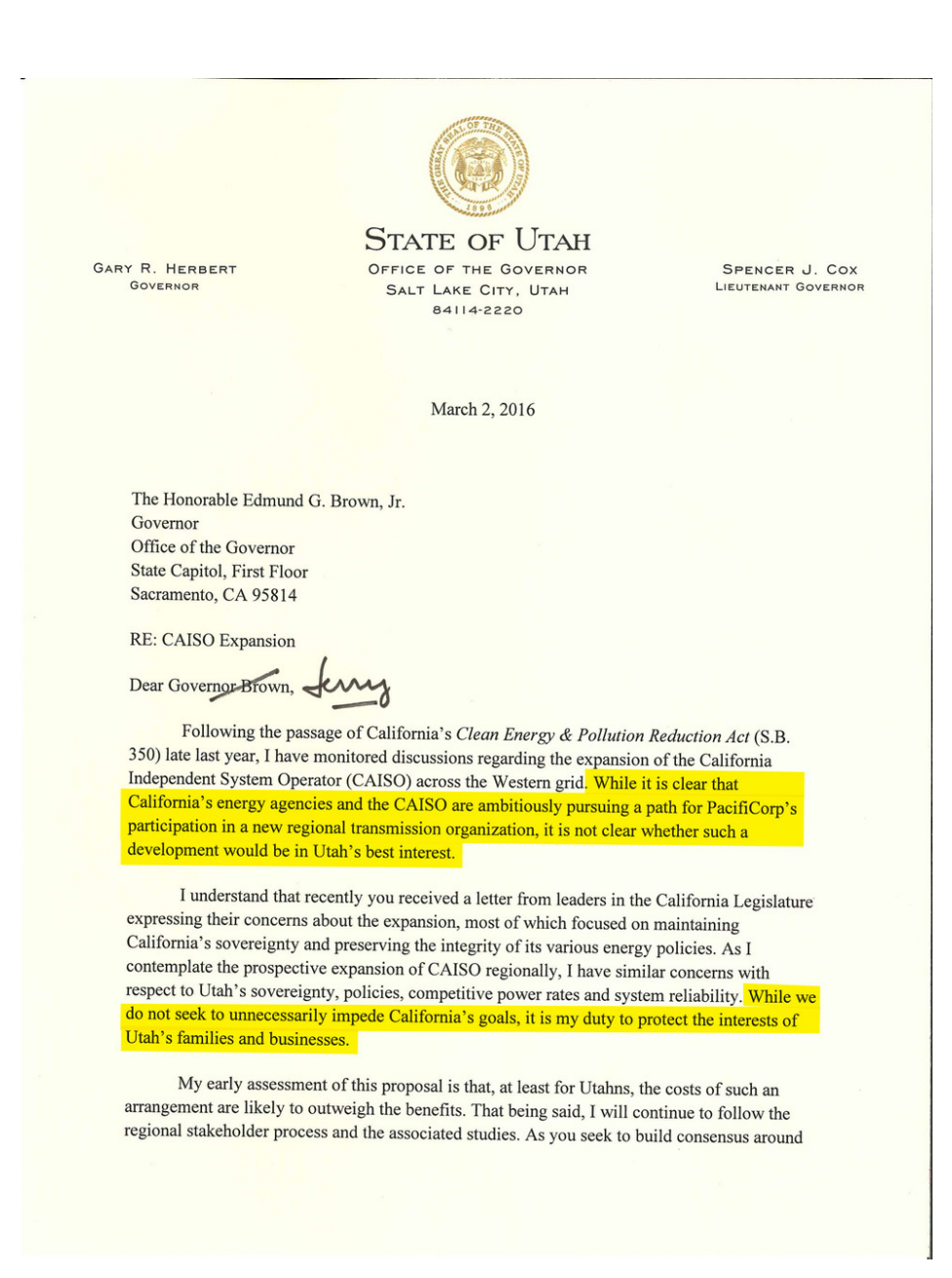
” Page 3!6 of 47
Selling CAISO’s Pie in the Sky
CAISO is selling a Western trading market on the basis of questionable cost savings. “A multi-state grid would use the California ISO’s state-of-the-art technology to coordinate and optimize electric systems across the western states65 and develop one clean, reliable and efficient grid,” CAISO touts on its website. It was coal-heavy PacifiCorp that first began preemptively lobbying for a Western casino in 2015 with a press release jointly issued with CAISO. PacifiCorp commissioned the Energy and Environmental Economics group (E3) to argue that integrating the biggest transmission grids in the West to create a regional trading market would produce between $3.4 billion and $9.1 billion in savings in the first 20 years through improvements in grid management and efficiency.
CAISO later repackaged those results under its stand-alone imprimatur—coming up with a study claiming far fewer savings of between $1 billion and $1.5 billion per year by 2030 from lower costs for everything from wholesale power to renewable generation. To put that number into perspective, it amounts to two to three percent of the $50 billion a year that Californians will be spending for electricity by 2030, according to CAISO’s own analysis. CAISO inflated the benefits by using assumptions that are not valid, and the study itself demonstrates66 that, said Robert Freehling, an energy policy consultant. Freehling has found data in CAISO’s own study that debunk its own top line claims of benefits to California:
- CAISO inaccurately concludes that folding California into a big Western
power casino provides up to $1.5 billion of “benefit” to California. In fact, one of the scenarios in its own study estimates that buying more out-of-state renewable power will cut about 23,000 green jobs in California and reduce state GDP by $500 million compared to keeping these renewable resources in-state. The CAISO study also concludes that jobs created in California will not be green, and will be generally located outside of disadvantaged communities, exacerbating the job disparity in these communities.
- CAISO in their top line analysis assumed that the cost of solar will not
drop. But buried further down in the analysis was the universally accepted assumption that the price of solar will indeed continue to drop in the future. In this accurate scenario, the CAISO study found that $150 million to $170 million per year in claimed benefits would disappear.
Page 3!7 of 47
- CAISO does not count all energy efficiency required by California law
into its projections, and assumes that the state’s legal requirement to double energy efficiency never happens. In fact, CAISO’s own analysis shows that if the mandated energy efficiency takes place, the benefits of a Western power market drop by $100 million a year.
- CAISO minimizes the potential for better coordination with California’s
neighbors under the current system. Nevertheless, its own analysis shows that high bilateral coordination cuts the benefits of a Western power market by $300 million a year.
- The CAISO report concludes that California will reach its 50 percent
renewable energy target for 2030 with or without a Western power market.
- The CAISO report shows that the creation of a Western power market
results in slightly higher greenhouse gas emissions by 2020, and then assumes that Western states will add enough renewable energy to decrease emissions by about 3.5 percent by 2030. There is no evidence that the creation of a Western market will encourage the building of more renewable energy into the system than would have been built in any case.
- By CAISO’s own admission, the creation of a Western power market is
projected to have virtually no effect on reducing Western coal generation by 2030. CAISO admits in its report that its estimates depend on iffy factors such as “the magnitude of future coal retirements” in the West, “mechanisms for complying with the EPA’s Clean Power Plan” and “the degree of renewable deployment” in Western states. Trump is rolling back the EPA plan, for example, and Warren Buffett wants to squeeze every dollar he can out of retrofitted coal power plants.
- According to CAISO’s own analysis, buying more out-of-state renewable
power will cut 23,800 green jobs in California by 2030 if California joins a Western trading market. State GDP will be cut by $500 million compared to keeping these renewable resources in-state. New jobs created in California will not be green, will exacerbate job disparity in low-income communities of color, and are predicated on increased economic activity from CAISO’s67 highly questionable projected savings on electricity bills.
Page 3!8 of 47 CONCLUSION At the height of the energy crisis, in 2000, a California Energy Commission economist named Paul Richins Jr. wrote that electricity deregulation was doomed from the start. “The very nature of the electric system—the dependency of generation on electric transmission, the capital-intense nature of the industry, the limited number of competitors and the commodity itself—is not suitable for market68 competition,” he wrote at the time.
Today, so-called “disruptive” technologies and business models, from rooftop solar panels to battery storage, localized microgrids, and the direct purchase of energy that bypasses major investor-owned utilities presents a major threat to the traditional, centralized and fossil-fuel based utility model. A 2014 report by Accenture estimated that by 2024, revenues for traditional utilities could fall by up69 to 15 percent, or $48 billion a year due to these trends.
Billionaire energy titans and energy traders see a Western power trading casino as a way to prolong profits from fossil fuel power and to lock in new markets for power trading. Contracts for electricity with out-of-state providers will not guarantee delivery of power to California consumers unless dedicated lines are built by the likes of Buffett or Anschutz. California consumers will be charged for imported power plus its transmission costs while drawing undifferentiated electrons off of California’s grid. Whether the source of the power is clean or dirty is of no interest to billionaire investors and speculators.
Authorizing a regional power trading market jeopardizes California’s clean energy future and takes California in a direction it ought not to go, encouraging a repeat of the sorts of scams and energy betting that deregulation in California unleashed in the first place on a grander scale. A new crop of speculators will come up with artificial schemes to generate windfall profits, placing bets on the transmission of electricity and raising rates to consumers.
California, under the control of the federal government, may see its plans to move to renewable energy thwarted for years to come, and even see its climate change laws nullified. Those who do not learn from history are bound to repeat the same mistakes. Building a bigger casino out of California’s power grid is one to avoid. Page 3!9 of 47
C1
ITATIONS For more on how creating a Western power market is an old idea, see: Brown Seeks to Expand Power Grid; Plan to Join Regional Electricity Market Raises Concerns Over Clean Energy Goals by Ivan Penn, The Los Angeles Times business section, June 15, 2016 Or https://www.wind-watch.org/news/2016/06/15/gov-jerry-browns-plan-to-expand-californias-power-grid-raises-questions/ (opens in new tab)2 For the scams energy traders played, see How the Energy Boys Took Down California: https:// m.huffpost.com/us/entry/us_58bf31aee4b070e55af9e8e0/amp (opens in new tab)3 For more on energy settlements, see: California to Get $750 Million in Energy Crisis Deal, Payment Will Settle Allegations A Canadian Firm Gamed The State’s Electricity Market by Marc Lifsher, The Los Angeles Times business section, August 17, 2013 or http://www.latimes.com/business/la-fi-energy-settlement-20130817-story.html (opens in new tab)4 For the Greentech Media interview with Brown, see: https://www.greentechmedia.com/ squared/read/california-100-renewables-2040-governor-brown#gs.zd4R_qI (opens in new tab)5 For more on Scott Wetch and PG&E lobbying for absolution from wildfire liability. See: http:// www.sacbee.com/news/politics-government/capitol-alert/article210308079.html (opens in new tab)6 For a review by Consumer Watchdog of the pitfalls from a Western regional power market contained in a letter to California lawmakers, and a legal analysis conducted by The Utility Reform Network (TURN), see: http://www.consumerwatchdog.org/sites/default/files/2017-12/CA_Energy_Laws.pdf (opens in new tab)7 To listen to the taped conversation between Don Furman and environmentalists, click here: https://bit.ly/2t9yPYe (opens in new tab)8 For more on how power trading is bilking California ratepayers, see: http:// enewspaper.latimes.com/infinity/article_popover_share.aspx?guid=d256fa7d-c699-47b2- a7b6-96183ce2383c (opens in new tab) Page 4!0 of 47 CAISO lists a chorus of positive statements made by Cavanagh and Brown appointees, including Michael Picker, president of the Public Utilities Commission; Robert Weisenmiller, head of the California Energy Commission; Mary Nichols, chairman of the California Air Resources Board; PG&E senior vice president Steven Malnight, and Governor Brown here: http://www.caiso.com/Documents/WhatOthersAreSaying- RegionalEffortConnectWesternGrid.pdf (opens in new tab)10 Cavanagh is quoted on the CAISO list cited above.11 Authors Jeffrey St. Clair and Alexander Cockburn, writing in Counterpunch Magazine, described how Cavanagh praised Enron to Oregon regulators here: https:// www.counterpunch.org/2001/12/21/enron-and-the-green-seal/ (opens in new tab)12 http://ceert.org/wp-content/uploads/2013/03/120601_CEERT-Annual-Report_2011.pdf (opens in new tab) For more about CEERT and David Olsen, see: http://daveolsen.net/CommunityService2.htm (opens in new tab) And http://ceert.org/wp-content/uploads/2013/03/120601_CEERT-Annual-Report_2011.pdf (opens in new tab) David Olsen has served these organizations and initiatives: Center for Energy Efficiency and Renewable Technologies (CEERT). Coalition of NGOs, power and energy service companies working to reduce impacts of the energy sector and establish new technologies. Director, 1991-present; chair, 1994-96.
The CEERT Board currently does not list him as a board member, and it looks like they stopped doing so in 2012—EXACTLY WHEN HE WAS FIRST APPOINTED TO CAISO—which is sleazy since the first footnote indicates he is still on the board.13 For Don Furman’s slideshow, see: https://bit.ly/2HMH0is (opens in new tab)14 For more on a petition urging Becerra to open an investigation into Sempra’s market manipulation of gas supplies in LA, see: http://consumerwatchdog.org/newsrelease/public-interest-advocates-urge-ca-attorney-general-and-la-city-attorney-investigate-natu (opens in new tab)15 For a detailed review of Cliff Rechtschaffen’s record as unfit to serve on the PUC, see: http:// consumerwatchdog.org/energy/public-interest-groups-urge-ca-senate-deny-govs-point-man-confirmation-puc-after-he-fired (opens in new tab) Page 4!1 of 47 For more on how Ferron went easy on utilities at ratepayer expense, see: https://napavalleyregister.com/news/opinion/columnists/thomas_d_elias/electric-agency-nod-a- reward-for-going-along-with-corruption/article_7bcc2587-4e14-53a7-9d6d-ae981bc6ff22.html (opens in new tab)17 For the CEC renewables curtailment forecast through 2030, see Figure C-1 on Page C-2: https://bit.ly/2sZExws (opens in new tab) (Automatic PDF download)18 For the PUC decision setting out requirements for renewable energy planning, see: https://bit.ly/2LRcM0c19 For TURN’s analysis of legislation enabling a Western regional power trading market, amendments to that legislation, and state studies promoting that market, see: https://bit.ly/2MrXoby (opens in new tab) and https://bit.ly/2l7QcFg (opens in new tab)20 To read proposed amendments to legislation authorizing a Western power trading market, see: https://bit.ly/2JDC0Ta (opens in new tab)21 To learn more about Secure California’s Energy Future, see: https://securecaenergyfuture.org/ (opens in new tab)22 For Harvey Wasserman’s “top 10 truths about the California energy crisis, see: https:// ratical.org/ratville/dereg/UnnaturalDisaster.html (opens in new tab)23 For Cavanagh’s remarks on the PUC’s deregulatory framework, see: http:// www.consumerwatchdog.org/sites/default/files/2018-05/Cavanagh-Right-Formula-Dereg.pdf (opens in new tab)24 For Cavanagh’s blog on utility wildfire liability absolution, see: https://www.nrdc.org/experts/ ralph-cavanagh/avoiding-another-type-electricity-crisis (opens in new tab)25 For more information about NRDC’s partnerships with power companies, support for deregulation, and lobbying against a renewable portfolio standard in the 1990s, see Sharon Beder’s analyses in: http://www.herinst.org/BusinessManagedDemocracy/environment/ environmentalists/NRDC2.html (opens in new tab) And http://www.oilempire.us/nrdc.html (opens in new tab) Page 4!2 of 47 For more on Cavanagh’s compromises with the utility industry and backing of deregulation efforts, see: https://savannahblackwell.wordpress.com/2010/04/17/the-private-energy-elite-october-8-1997/ (opens in new tab)27 For Cavanagh’s memorandum on Prop 9, see: http://www.consumerwatchdog.org/sites/default/files/2018-03/CavanaghVSProp9.pdf28 For Wasserman’s overview of the California energy crisis and the role of private utilities and Cavanagh, see: http://westgatehouse.com/art68.html (opens in new tab)29 See Beder here: http://www.oilempire.us/nrdc.html (opens in new tab)30 For an explanation of how electricity was bought and sold in California in 2012, see: https://bit.ly/2t5dMpu (opens in new tab)31 To read about JPMorgan and the Senate investigation, see: http://wallstreetonparade.com/ 2014/12/jpmorgan-rushed-to-hire-trader-who-suggested-on-his-resume-that-he-knew-how-to- game-electric-markets/ (opens in new tab)32 For PacifiCorp lobbying expenditures, see: http://www.consumerwatchdog.org/sites/default/ files/2018-04/PacifiCorpLobbyingCAISO.pdf (opens in new tab) and For California Advisors’ Form 625, see: http://cal-access.sos.ca.gov/PDFGen/pdfgen.prg? filingid=2208825&amendid=0 (opens in new tab)33 For more on PacifiCorp and extending the lives of its coal power plants, see: http:// www.oregonlive.com/business/index.ssf/2014/10/pacificorps_reliance_on_coal_c.html (opens in new tab)34 For more on California and coal power imports, see: http://instituteforenergyresearch.org/ analysis/californias-hidden-coal-use/ (opens in new tab)35 For Buffett’s famous sayings, including this one, see:: https://www.thestreet.com/story/ 13207512/1/the-15-greatest-warren-buffett-quotes-of-all-time.html (opens in new tab) Page 4!3 of 47 For more on Buffett’s investment strategies, see: http://www.latimes.com/business/la-fi-warren-buffett-energy-20170724-story.html (opens in new tab)37 For Wellinghoff’s remarks, see: http://www.theledger.com/news/20170727/warren-buffett-making-power-play (opens in new tab)38 For more on PacifiCorp penalties and revocation of Berkshire Hathaway market-based rate authority, see: https://www.law360.com/articles/16711 (opens in new tab) And https://www.utilitydive.com/news/ferc-revokes-market-based-rate-authority-for-berkshire-hathaway-companies/420835/ (opens in new tab)39 For more on PacifiCorp and utility rates, see: http://www.oregonlive.com/business/index.ssf/ 2015/08/buffett.html (opens in new tab)40 For a Billboard article on Anschutz’s donations, see: https://www.billboard.com/articles/ business/8097688/aeg-coachella-owner-anschutz-support-anti-lgbtq-groups (opens in new tab) And For a more complete list of Anschutz’s causes and activities, see: http://www.ucc.org/ justice_public-education_philip-anshutz (opens in new tab)41 For more on Anschutz and fracking, see: https://www.alternet.org/print/story/155381/ meet_the_christian_right-wing_multi-billionaire_out_to_frack_our_world (opens in new tab)42 For the Pacific Standard Magazine story, see: https://psmag.com/environment/how-a-conservative-billionaire-is-moving-heaven-and-earth-to- become-the-biggest-alternative-energy-giant-in-the-country (opens in new tab)43 For more on Williamson, see: http://www.sacbee.com/news/politics-government/capitol-alert/article58010138.html (opens in new tab)44 See Wasserman on Bryson’s comments here: http://westgatehouse.com/art68.html (opens in new tab) Page 4!4 of 47 For more on the Sempra settlement, see: http://articles.latimes.com/2010/apr/29/business/la-fi-sempra-20100429 (opens in new tab)46 For Jerry Brown’s close relationship to the utility industry and to oil and gas companies, and for Kathleen Brown’s relationship to Sempra, see: http://www.consumerwatchdog.org/report/ browns-dirty-hands (opens in new tab) And http://consumerwatchdog.org/index.php/PowerPlay (opens in new tab)47 For more on Rechtschaffen’s role promoting fossil fuels, see: http:// www.consumerwatchdog.org/energy/senate-completes-creation-brown-utility-commission- neutering-puc-independence (opens in new tab)48 For documents released under the Public Records Act on discussions between PUC commissioners and other California and Western officials, see: http:// www.consumerwatchdog.org/sites/default/files/2018-03/examples.pdf (opens in new tab)49 For more on Furman, see: https://law.lclark.edu/centers/green_energy_institute/speakers- panelists/ (opens in new tab)50 For Don Furman’s letter to the Los Angeles Times, see: http://www.latimes.com/opinion/ readersreact/la-ol-le-california-solar-energy-glut-20170629-story.html (opens in new tab)51 For the Energy Foundation’s Form 645 and other lobbying payments made between 2017-2018, see: http://cal-access.sos.ca.gov/PDFGen/pdfgen.prg?filingid=2176313&amendid=0 (opens in new tab) And http://cal-access.sos.ca.gov/Lobbying/Payments/Detail.aspx? id=1328927&view=activity&session=2017 (opens in new tab)52 For an internal memo listing who was on the CAISO board in the 1990s, see: http:// www.caiso.com/Documents/AttachmentP-November19_1998Board- GovernorsMeetingMinutes.pdf53 For a complete list of FixTheGridCA experts, see: https://www.fixthegridcalifornia.org/ experts/ (opens in new tab)54 For Glick’s FERC bio, see: https://www.ferc.gov/about/com-mem/glick/glick-bio.asp (opens in new tab) Page 4!5 of 47 For McIntyre’s FERC bio, see: https://ferc.gov/about/com-mem/mcIntyre/mcintyre-bio.asp (opens in new tab)56 For more on Chatterjee, see: http://www.energyandpolicy.org/neil-chatterjee-trumps-ferc-pick-rubber-stamp-fossil-fuel-utility-interests/ (opens in new tab)57 For more on Powelson, see: https://stateimpact.npr.org/pennsylvania/2017/05/09/trump- nominates-pa-puc-commissioner-rob-powelson-to-ferc/ (opens in new tab)58 For more on LaFleur, see: https://www.bloomberg.com/news/articles/2017-01-20/trump-said- to-pick-lafleur-as-chairman-of-u-s-energy-regulator (opens in new tab)59 For biographical detail about CAISO’s board and executive team, see: http://www.caiso.com/ about/Pages/OurLeadership/Default.aspx (opens in new tab)60 To read a 1974 Rolling Stone piece on Jerry Brown, see: https://www.rollingstone.com/ politics/news/the-mystic-and-the-machine-19741219 (opens in new tab)61 For more on Olsen, see: http://daveolsen.net/Policy2.htm (opens in new tab)62 For the Western Grid Group’s website, see: http://www.westerngrid.net/about/team/ (opens in new tab)63 For Loretta Lynch’s analysis of why CAISO legislative proposals should be rejected, see: https://bit.ly/2HR2FG7 (opens in new tab)64 For the Desert Sun article on Jerry Brown and Warren Buffett, see: https:// www.desertsun.com/story/tech/science/energy/2017/02/01/caiso-pacificorp-california-solar-wind/96201888/ (opens in new tab)65 For more on CAISO’s pro-Western power trading market propaganda, see: http:// www.caiso.com/informed/Pages/RegionalEnergyMarket.aspx (opens in new tab) And http://publications.caiso.com/StateOfTheGrid2014/ExtendingBenefits.htm (opens in new tab) Page 4!6 of 47 For Freehling’s in-depth analysis of CAISO’s study on a Western power trading market, see: https://bit.ly/2HR4nav (opens in new tab) and https://bit.ly/2JSrmHu (opens in new tab)67 For more detail on the SB 350 report on building a Western power market, see: https://bit.ly/ 2t9XeN5 (opens in new tab) and https://bit.ly/2JQUn69 (opens in new tab) (Automatic PDF downloads)68 See: December 21, 2000, Los Angeles Times home edition, “Electricity Deregulation Was Doomed From The Start,” by Paul Richins Jr. https://bit.ly/2JJoZmV (opens in new tab)69 For more on the Accenture report, see: https://www.utilitydive.com/news/accenture-distributed-generation-and-efficiency-could-slash-utility-revenu/341609/ (opens in new tab) Page 4!7 of 47