About Consumer Watchdog
Founded in 1985, Consumer Watchdog is a nonprofit public interest group dedicated to providing an effective voice for taxpayers and consumers in an era when special interests dominate public discourse, government and politics. We deploy an in-house team of public interest lawyers, policy experts, strategists, and grassroots activists to expose, confront, and change corporate and political injustice every day, saving Americans billions of dollars and improving countless lives.
Our energy work takes on the power of oil, gas and utility companies, fighting to end dangerous oil drilling, hold refiners accountable for price gouging, stop utility bailouts that shift corporate costs and liabilities onto consumers, and expose industry front groups. Learn more at ConsumerWatchdog.org (opens in new tab)” rel=”nofollow noopener” target=”_blank”>ConsumerWatchdog.org.
Executive Summary
As the United States Supreme Court is set to decide a bellwether climate deception case in Suncor v. Boulder, Consumer Watchdog has documented the fossil fuel companies, billionaires and climate-denial networks behind 25 organizations that filed briefs in the case supporting the oil companies ExxonMobil and Suncor. The high court will decide whether states and local governments can use state law to seek damages from fossil fuel companies for climate-change-related harms, or whether federal law precludes such claims. The case could ultimately decide who pays for the destruction wrought by climate change: will it be the public or the oil companies whose deceptive conduct exacerbated the climate crisis?
The City of Boulder and Boulder County, Colorado argue that Exxon and Suncor knew about the dangers of climate change and misled the public about those risks, so the companies should be responsible for the damage. Meanwhile, Exxon and Suncor argue that Boulder cannot use state tort law to hold selected fossil-fuel companies liable for harms arising from global climate change, and that such claims are governed or precluded by federal law.
The industry-siding amicus briefs in Suncor create the appearance of broad, independent support for Exxon and Suncor. Consumer Watchdog’s investigation found that most of the organizations are instead part of an interconnected funding network, linked by fossil fuel companies, industry-funded organizations, and foundations that have spent decades financing climate denial and opposition to climate regulation.
Of the 38 organizations supporting Suncor and Exxon with amicus briefs, 25 (66%) had documented financial ties to one or more of three overlapping funding networks: (1) the fossil fuel defendants themselves; (2) the broader fossil fuel industry, including Charles Koch’s network of foundations and affiliated organizations; and (3) major climate denial foundations and dark-money networks that have financed opposition to climate science and regulation for decades. Many organizations received funding from multiple categories simultaneously. 16 organizations received direct funding from ExxonMobil or from entities linked to billionaire Suncor investor Paul Singer.
Many of the amici in Suncor invoke public interest-branding such as “transparency,” “accountability,” and “fairness,” but are in fact part of a broader influence campaign funded and shaped by oil, gas, and coal companies that have contributed to the climate crisis. What the defendant-side amicus filers present as an independent network, is in reality, one giant feedback loop between fossil fuel companies, billionaires, and front groups.
Amicus Briefs — Fossil Fuel Funded
Financial Ties to Fossil Fuel Defendants and Their Investors Fossil Fuel Funded Exxon Paul Singer Singer funded National Philanthropic Trust KOCH – Donors Trust KOCH – Donors Capital Fund Charles Koch Foundatio n KOCH – Stand Together Trust KOCH – Claude R. Lambe Foundation KOCH – Other i.e. American Future Fund, Americans for Job Security Sarah Scaife Foundation Joe Craft Advancing American Freedom Foundation x American Petroleum Institute x American Tort Reform Association x Atlantic Legal Foundation x x x x x Breakthrough Institute x x x Buckeye Institute (OH) x x x x x Center for Environmental Accountability x x x x Center for Individual Freedom (CFIF) Center for Individual Rights x x x x Consumers’ Research x Frontier Institute x x Government Accountability and Oversight x Independence Institute x x x x x Landmark Legal Foundation x x x Manhattan Institute x x x x x x x x x National Association of Manufacturers x NFIB Small Business Legal Center x x Pacific Legal Foundation x x x x x x Pelican Institute x x x x x x Save Our States x Shell (Self funded fossil fuel company) Taxpayers Protection Alliance x U.S. Chamber of Commerce x Washington Legal Foundation x x x x x Yankee Institute x x
Climate Denial Foundations and Networks Leo – 85 Fund Leo – Concord Fund/ Judicial Crisis Network Leo – Freedom and Opportunity Fund Bradley Foundation Searle Freedom Trust Advancing American Freedom Foundation x x American Petroleum Institute American Tort Reform Association x x Atlantic Legal Foundation x Breakthrough Institute Buckeye Institute (OH) x x x Center for Environmental Accountability x Center for Individual Freedom (CFIF) x Center for Individual Rights x x Consumers’ Research x x Frontier Institute Government Accountability and Oversight Independence Institute x x Landmark Legal Foundation x x Manhattan Institute x x x National Association of Manufacturers NFIB Small Business Legal Center x Pacific Legal Foundation x x Pelican Institute x x Save Our States x x x Shell (Self funded fossil fuel company) Taxpayers Protection Alliance x U.S. Chamber of Commerce x Washington Legal Foundation x Yankee Institute x
Funding Matrix Overview (1) Financial Links to Fossil Fuel Defendants in the Case
ExxonMobil (11 Groups): ExxonMobil, the world’s largest investor-owned oil and gas company, is a defendant in the Suncor case and one of the central targets of the decades- long “Exxon Knew” investigations. Internal company documents and subsequent reporting revealed that Exxon scientists warned company executives about the risks of climate change decades before the company publicly cast doubt on the science. Those allegations of deception form a central basis for climate deception lawsuits like Suncor. Our analysis found ExxonMobil has financial or governance ties to eleven organizations
that filed amicus briefs.
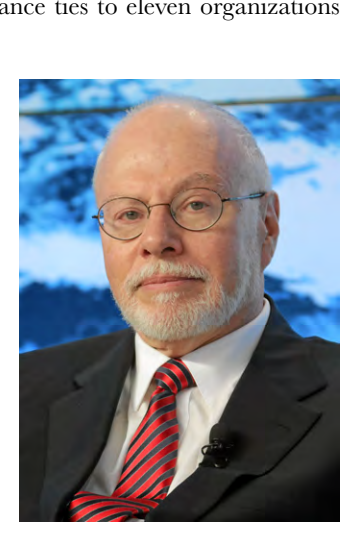
Suncor Investor Paul Singer (1 Group): Billionaire hedge fund manager Paul Singer, founder of Elliott Investment Management, is linked directly to one Suncor amicus filer. Singer is chairman emeritus of the Manhattan Institute, an amici filer, and Paul E. Singer Foundation has donated to the group. Meanwhile, Elliott holds shares worth approximately $1.58 billion in Suncor Energy, giving Singer a financial interest in the company’s performance. The Manhattan Institute has filed an amicus brief urging the Court to reject the climate accountability lawsuit against Suncor.
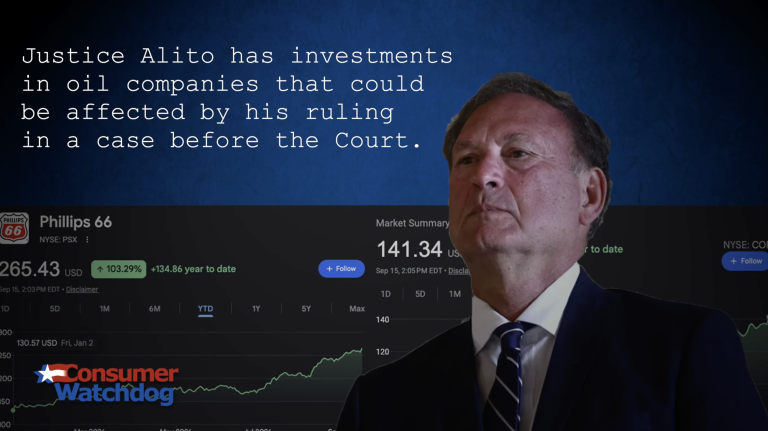
Singer previously flew on his private jet Supreme Court Justice Samuel Alito, who has gained almost $3 million in oil and gas assets since joining the high court over 20 years ago, according to a report from theguardian.com/us-news/2026/aug/11/samuel-alito-oil-gas-assets-su… (opens in new tab)” rel=”nofollow noopener” target=”_blank”>The Guardian. Alito did not disclose the trip, nor did he recuse himself from Billionaire hedge fund manager several subsequent cases involving Singer’s Elliott Management. Singer-connected companies also stand to compensate the Alitos. The justice’s wife holds a mineral interest regarding an Oklahoma property after she agreed to lease the plot of land to the private oil and gas company Citizen Energy. That company has since been acquired for more than $2 billion by Validus Energy, in which Elliott Investment Management holds a majority stake, theguardian.com/us-news/2026/aug/11/samuel-alito-oil-gas-assets-su… (opens in new tab)” rel=”nofollow noopener” target=”_blank”>The Guardian reported. Alito has not recused himself from the Suncor case. Suncor Investor Paul Singer & National Philanthropic Trust (9 Groups): The Paul E. Singer Foundation contributed approximately $477.5 million between 2018 and 2024 to the J.P. Morgan Charitable Giving Fund, a donor-advised dark-money fund administered by National Philanthropic Trust (NPT). During the same period, NPT awarded $12.4 million to nine organizations that later filed amicus briefs supporting Exxon and Suncor. Whether Singer’s specific donations financed those grants is hidden by the donor-advised fund structure. What is not hidden is that the charitable vehicle receiving nearly half a billion dollars from one of Suncor’s largest investors also emerged
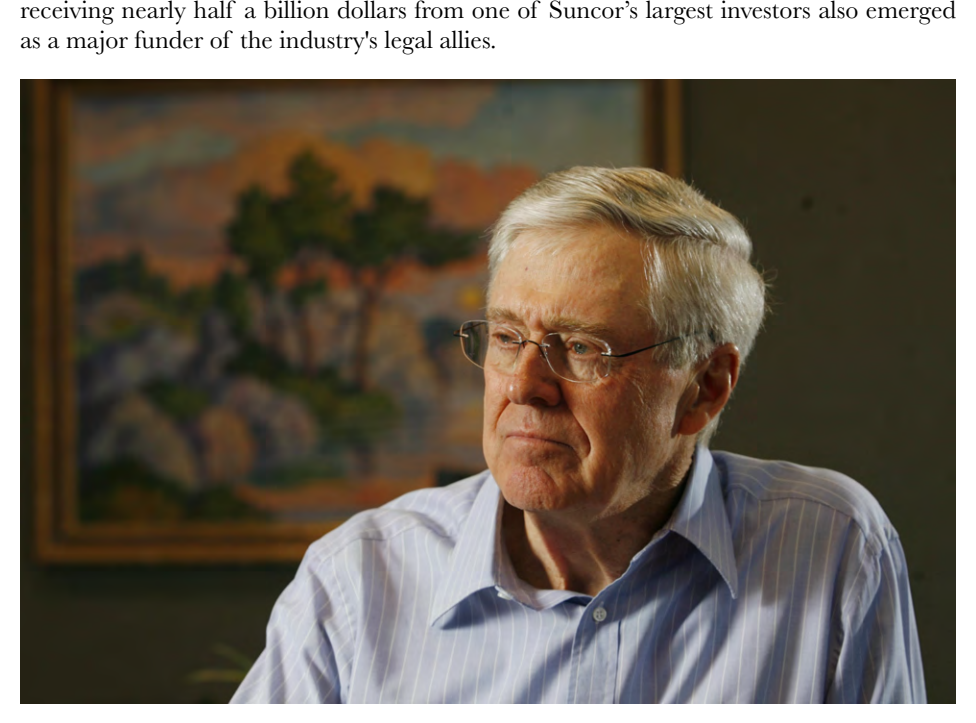
as a major funder of the industry’s legal allies.
(2) Fossil Fuel Funded Koch Family (16 Groups): Charles Koch oversees one of the world’s largest privately held fossil fuel, refining, pipeline, chemical, and commodities companies through Koch Industries. For decades, the Koch network has been one of the nation’s greenpeace.org/usa/fighting-climate-chaos/climate-deniers/koch-ind… (opens in new tab)” rel=”nofollow noopener” target=”_blank”>most influential financiers of climate denial, anti-environmental advocacy, and campaigns opposing climate regulation, funding hundreds of organizations through entities including the Charles G. Koch Foundation, Charles Koch Institute, Claude R. Lambe Charitable Foundation, Stand Together Trust, DonorsTrust, and Donors Capital Fund. Koch Industries and affiliated entities have also been named as defendants in climate accountability litigation outside the Suncor case. Sixteen organizations filing Suncor amicus briefs received direct or indirect support from the Koch network. Scaife Foundation (10 Groups): Heir to the Mellon family’s banking, oil, coal, and aluminum fortune, Richard Mellon Scaife transformed the Sarah Scaife Foundation into


one of the nation’s most influential financiers of climate denial and anti-environmental advocacy. For decades, the foundation has funded organizations that challenged climate science, opposed environmental regulation, and worked to roll back federal climate protections. The Institute for Policy Studies ips-dc.org/release-fossil-fuel-philanthropy/ (opens in new tab)” rel=”nofollow noopener” target=”_blank”>identified the Scaife family foundations as the largest private foundation supporters of climate disinformation organizations between 2020 and 2022. Ten Suncor amicus filers received Scaife funding.
Other Fossil Fuel Billionaires (2 Groups): Coal billionaire Joe Craft, through The Craft Foundation, gave funds to the nonprofit Government Accountability and Oversight (GAO) which filed a brief. Billionaire Harold G. Hamm, the founder and chair of oil Pittsburgh Post-Gazette. (Photo: Heritage producer Continental Resources, sits on the board of National Association of Manufacturers.
(3) Funded by Climate Denial Foundations or Networks
Leonard Leo (9 Groups): The conservative legal activist, who has had a hand in shaping the pro-corporate tilt of the U.S. Supreme Court, has built one of the nation’s most influential judicial advocacy networks through organizations including The Concord Fund and the 85 Fund. Leo’s network has become an increasingly propublica.org/article/climate-change-alec-leonard-leo-lawsuits-fo… (opens in new tab)” rel=”nofollow noopener” target=”_blank”>important force behind climate denial and opposition to climate regulation, funding organizations that challenge EPA authority, pressuring corporations to desmog.com/2026/07/14/leonard-leos-anti-climate-network-makes-a-eu… (opens in new tab)” rel=”nofollow noopener” target=”_blank”>abandon environmental investing, and supporting litigation designed to block climate accountability. Nine organizations filing Suncor amicus briefs received funding through Leo’s network.
Bradley Foundation (16 Groups): The Lynde and Harry Bradley Foundation has been one of the most significant ips-dc.org/release-fossil-fuel-philanthropy/ (opens in new tab)” rel=”nofollow noopener” target=”_blank”>institutional funders of organizations opposing climate regulation for decades. Public tax records show the foundation has financed think tanks, legal organizations, and advocacy groups that worked to roll back EPA protections, challenge climate science, weaken environmental regulations, and influence federal courts. Bradley funding reached 16 organizations that filed amicus briefs supporting the fossil fuel industry in Suncor, making it the most financially connected source within this report. Searle Freedom Trust (8 Groups): The Searle Freedom Trust has eenews.net/articles/meet-the-dead-industrialists-funding-climate-d… (opens in new tab)” rel=”nofollow noopener” target=”_blank”>long provided foundational support for organizations ips-dc.org/release-fossil-fuel-philanthropy/ (opens in new tab)” rel=”nofollow noopener” target=”_blank”>promoting climate denial, climate misinformation, and opposition to environmental regulation. Investigations have found the Trust financed groups that worked with the Trump administration to roll back climate protections, attack mainstream climate science, and oppose federal action on greenhouse gas emissions. It also supported media organizations that promoted misleading information about climate science. Eight organizations filing Suncor amicus briefs received funding from the Searle Freedom Trust.
Some of these ties appear not to have been reported before, and none have been reported within the Suncor context. Others, such as Shell, the American Petroleum Institute (API), and the U.S. Chamber of Commerce, are well-known and have titles that speak for themselves. ExxonMobil is a member and financial supporter of corporate.exxonmobil.com/-/media/global/files/policy/2023-advocacy… (opens in new tab)” rel=”nofollow noopener” target=”_blank”>both API and the U.S. Chamber of Commerce and Shell is a multinational oil company with its own vested interest in the case. They are not profiled here.
The groups have these elements in common: They are financially linked to fossil fuel companies or climate denial funders. • Many have denied or minimized climate science that shows global warming has • produced extreme weather conditions that have caused damage to local and state property.
They advance legal arguments that would restrict the use of state tort, consumer •
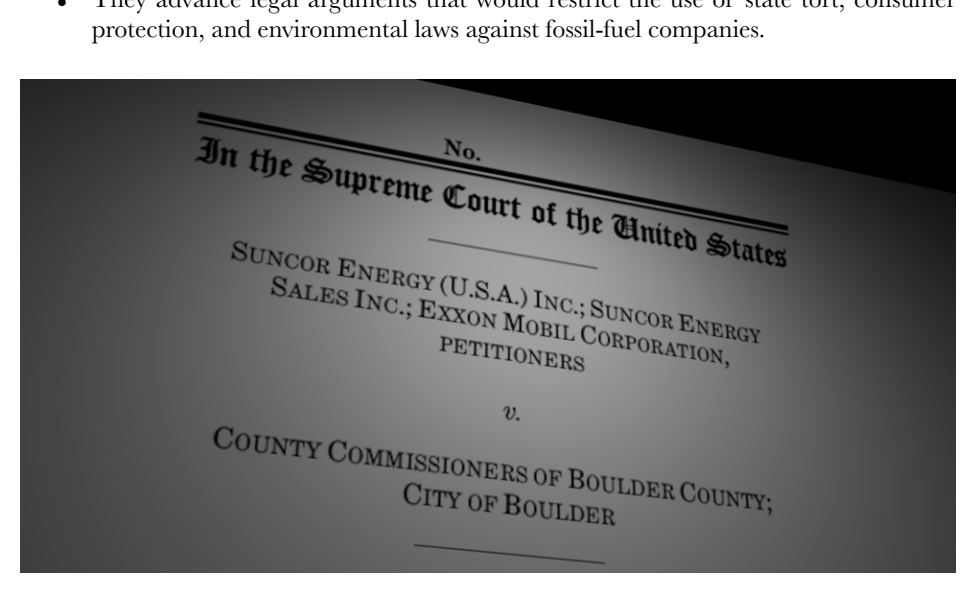
protection, and environmental laws against fossil-fuel companies.
Many of the groups make the same legal arguments, such as claiming that Boulder is using the lawsuit to regulate national energy policy, that a single state cannot address a global problem, or that pinning claims on one company is arbitrary. In many instances, multiple organizations signed onto the same amicus brief, underscoring the interconnected nature of this ideological and fossil fuel-funded network. What follows is a guide in alphabetical order for the organizations behind these briefs, the interests connected to them, and the arguments they are advancing before the Supreme Court.
The remaining amici largely consisted of business, insurance, legal, manufacturing, shipping, telecommunications, and ideological organizations that may have their own institutional or pecuniary interests in limiting corporate liability or expanding federal preemption. Because this report focuses specifically on fossil fuel funding networks and climate denial infrastructure, those organizations were not analyzed in detail but are listed here: Airbus SAS • American Free Enterprise Chamber of Commerce • American Property Casualty Insurance Association • Complex Insurance Claims Litigation Association • CTIA – The Wireless Association • Federation of Defense & Corporate Counsel • Hapag-Lloyd AG • International Conference of Evangelical Chaplain Endorsers • JCCWatch.org • National Association of Wholesaler-Distributors • Neutral Principles • Protect the First Foundation • Reinsurance Association of America •
Advancing American Freedom Foundation Origins and Fossil Fuel Ties
In its short five-year existence, Advancing American Freedom (AAF) has spent millions promoting oil and gas production and fighting clean energy policy. Through the Concord Fund, the group has accepted money linked to the conservative legal activist Leonard Leo, who has used his funding network to shield fossil fuel companies from climate change-related lawsuits. The organization has also received $325,000 from National Philanthropic Trust, connected back to billionaire investor Paul Singer, between 2023 and 2024, according to IRS Form 990 filings. AAF’s founder is Mike Pence, who has rejected
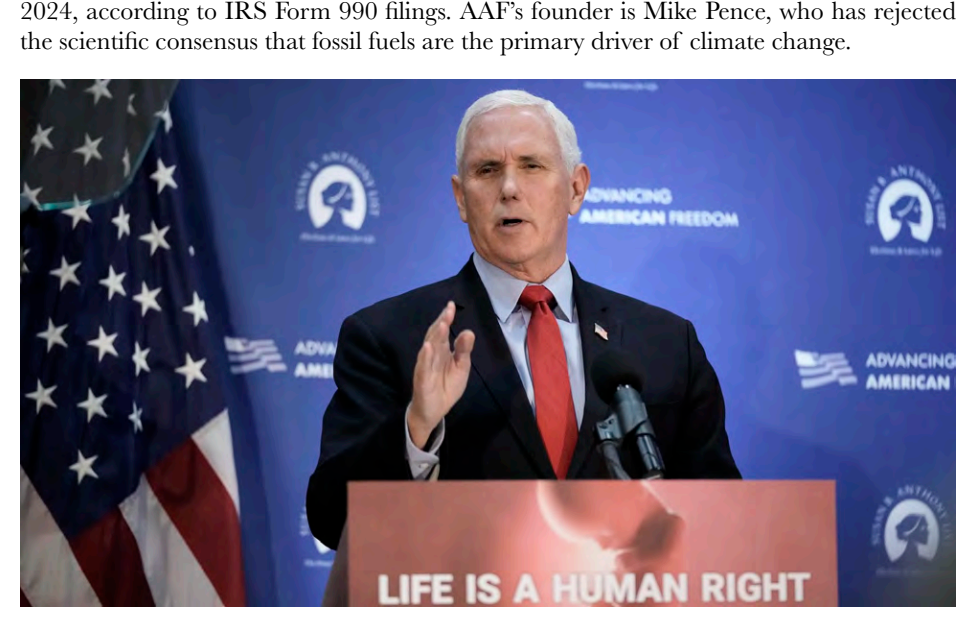
the scientific consensus that fossil fuels are the primary driver of climate change. The organization describes itself as a conservative policy and legal-advocacy organization defending traditional values, limited government, and economic freedom. Its current public leadership includes Pence as founder and Marc Short as board chairman. At its founding, Pence said the organization’s mission is to propose conservative policy solutions to economic, foreign policy, and Constitutional issues as it promotes Trump’s “successful” policies.
As governor of Indiana, Mike Pence consistently supported coal and expanded domestic fossil-fuel production, opposed the Obama administration’s Clean Power Plan, and declared that “ en.wikipedia.org/wiki/Mike_Pence?utm_ (opens in new tab)” rel=”nofollow noopener” target=”_blank”>Indiana is a pro-coal state.” Pence also has longstanding ties to the Koch political network, including through longtime adviser Marc Short—former president of the Koch-associated Freedom Partners—and through his repeated participation in insideclimatenews.org/news/31082020/candidate-profile-mike-pence-c… (opens in new tab)” rel=”nofollow noopener” target=”_blank”>Koch donor-network events. AAF operates through two legally distinct tax-exempt entities: Advancing American Freedom, Inc., an IRS-recognized advancingamericanfreedom.com/what-we-do (opens in new tab)” rel=”nofollow noopener” target=”_blank”>501(c)(4) whose contributions are not tax deductible, and advancingamericanfreedom.com/foundation (opens in new tab)” rel=”nofollow noopener” target=”_blank”>Advancing American Freedom Foundation, Inc., an IRS-recognized 501(c)(3) whose contributions are tax deductible. AAF itself describes the advancingamericanfreedom.com/what-we-do (opens in new tab)” rel=”nofollow noopener” target=”_blank”>foundation as the 501(c)(4) organization’s “sister 501(c)(3) foundation.” A review of the website shows that the entities are presented through the same Advancing American Freedom website and public brand and have overlapping officers and leadership. Because the website often attributes publications and legal activities simply to “AAF,” the public-facing material does not always specify which of the two legal entities is responsible. The 2024 IRS filings also show substantial leadership overlap. For example, the 2024 filings identify: projects.propublica.org/nonprofits/organizations/861778799/2025131… (opens in new tab)” rel=”nofollow noopener” target=”_blank”>Timothy Chapman as president of projects.propublica.org/nonprofits/organizations/861778799/2025131… (opens in new tab)” rel=”nofollow noopener” target=”_blank”>both entities; • Marc Short as projects.propublica.org/nonprofits/organizations/861778799/2025131… (opens in new tab)” rel=”nofollow noopener” target=”_blank”>foundation chairman and part of the advancingamericanfreedom.com/our-board (opens in new tab)” rel=”nofollow noopener” target=”_blank”>broader organization’s • advancingamericanfreedom.com/our-board (opens in new tab)” rel=”nofollow noopener” target=”_blank”>leadership; The same 2024 IRS filings show Chapman projects.propublica.org/nonprofits/organizations/861778799/2025131… (opens in new tab)” rel=”nofollow noopener” target=”_blank”>compensated by the projects.propublica.org/nonprofits/organizations/861778799/2025131… (opens in new tab)” rel=”nofollow noopener” target=”_blank”>two related • organizations.
History of Fronting for the Fossil Fuel Industry
AAF aggressively advances fossil fuel interests. In 2022, it spent $10 million on advertising and advocacy against the Biden Administration’s energy policy and promoting increased U.S. oil and gas production. The advancingamericanfreedom.com/press-releases/advancing-american-fre… (opens in new tab)” rel=”nofollow noopener” target=”_blank”>campaign blamed climate policies for driving up gas prices. In 2022-23, cdn.prod.website-files.com/6a3d74d3d45b5ee5b4388826/6a3f71e9c730bb… (opens in new tab)” rel=”nofollow noopener” target=”_blank”>AAF’s Freedom Agenda called for policies designed to increase domestic oil and gas leasing and permitting; expediting pipelines and energy infrastructure, weakening or reversing climate-related regulations, opposing restrictions on fossil fuel financing, curbing environmental review, eliminating subsidies for clean energy, and establishing “energy dominance.”
AAF has been a persistent opponent of environmental, social and governance (ESG) investing when such policies limit fossil-fuel investment. It advancingamericanfreedom.com/news-blog/aaf-applauds-vanguard-for-s… (opens in new tab)” rel=”nofollow noopener” target=”_blank”>applauded Vanguard’s withdrawal from the Net Zero Asset Managers initiative, declaring that climate-oriented asset managers were attempting to “destroy American energy companies and American jobs.” AAF has opposed allowing retirement-plan managers to use ESG considerations. AAF opposes any pressure on fossil-fuel companies to disclose climate risks, reduce emissions, or redirect investment away from carbon-intensive activities. A 2026 advancingamericanfreedom.com/memos/fifty-states-virtually-no-impac… (opens in new tab)” rel=”nofollow noopener” target=”_blank”>memo claims that eliminating all U.S. energy related fossil-fuel carbon dioxide emissions would have a “negligible” effect on global temperature.
In 2024, AAF received a $1.25 million Concord Fund grant, after receiving $500,000 from Concord the previous year. The fund was formed to support conservative judicial nominees and promote an originalist interpretation of the Constitution. AAF led a coalition and filed a cdn.prod.website-files.com/6a3ef6039c74f56643fb3084/6a40044a296943… (opens in new tab)” rel=”nofollow noopener” target=”_blank”>brief supporting Suncor Energy and ExxonMobil in Suncor Energy (U.S.A.) Inc. v. County Commissioners of Boulder County, Supreme Court No. 25-170. The coalition includes: International Conference of Evangelical Chaplain Endorsers, JCCWatch.org, Landmark Legal Foundation, Yankee Institute, Tim Jones, former speaker, Missouri House, and Founder, Leadership for America Institute, Jenny Beth Martin, Honorary Chairman, Tea Party Patriots Action, Taxpayers Protection Alliance, Hon. William Wagner (Ret), Distinguished professor of law Emeritus. The brief asks the court to prevent Boulder’s state-law case from proceeding. The brief argues that the Constitution does not allow Colorado to use state tort law to regulate interstate and international energy production and climate policy. Rather, only the advancingamericanfreedom.com/legal-filings/aaf-defends-federalism-… (opens in new tab)” rel=”nofollow noopener” target=”_blank”>federal government can do that.
Debunking Phony Fossil Fuel Claims
Claim: America needs energy dominance by advancingamericanfreedom.com/press-releases/advancing-american-fre… (opens in new tab)” rel=”nofollow noopener” target=”_blank”>expanding oil and gas production because climate policies are a war on American energy.
Fact: The claim falsely treats American energy as synonymous with fossil fuels. The United States already produces record amounts of wind, solar, battery storage, and nuclear power. Climate policies generally seek to change the energy mix, not eliminate energy production. iea.org/reports/net-zero-by-2050 (opens in new tab)” rel=”nofollow noopener” target=”_blank”>The International Energy Agency concludes that scaling up renewables, electrification and efficiency can deliver the majority of emissions reductions needed this decade while strengthening energy security.
Claim: ESG and climate investing hurt investors and American energy companies. Fact: Climate risk is increasingly viewed as a financial risk, not merely a political preference. Factors such as wildfire risk, flooding, heat, and stranded assets can materially affect company value. Having large institutional investors consider those risks is consistent with ordinary fiduciary analysis.
Claim: Government support for advancingamericanfreedom.com/memos/fifty-states-virtually-no-impac… (opens in new tab)” rel=”nofollow noopener” target=”_blank”>electric vehicles and clean energy merely distorts markets.
Fact: This argument ignores that fossil fuels themselves have long benefited—and continue to benefit—from public support. The policy debate therefore is not whether government influences energy markets—it already does—but how government support should be allocated among competing energy technologies.
Claim: AAF’s Suncor amicus brief argues that Boulder is attempting to regulate interstate energy production through state tort law rather than through Congress. Fact: Boulder’s lawsuit seeks damages under Colorado tort law for alleged deception and climate-related harms. State tort suits have long addressed harms involving interstate commerce including tobacco, asbestos, opioids, and PFAS. Just because a lawsuit can influence future corporate behavior does not make the lawsuit a federal regulation. Claim: Allowing Boulder to proceed would let one state dictate national energy policy. Fact: Colorado is not regulating emissions nationwide. Instead, Boulder seeks compensation for alleged injuries under generally applicable state-law causes of action. The Colorado Supreme Court concluded that the possibility a damages award may influence business conduct does not automatically transform a tort suit into unconstitutional regulation.
American Tort Reform Association Origins and Fossil Fuel Ties
The 40-year-old American Tort Reform Association, or ATRA, coordinates corporate efforts to restrict civil liability, damages awards, class actions, product liability suits and access to courts. atra.org (opens in new tab)” rel=”nofollow noopener” target=”_blank”>ATRA says it was founded by the American Council of Engineering Companies and joined soon afterward by the American Medical Association. It describes itself as a nationwide coalition of companies, trade associations, professional firms, and state-based tort reform organizations. It is organized as a 501(c)(6) business league, not a public charity.
Its central strategy has been to lobby for state and federal laws that restrict or reshape corporate liability, building atra.org/tort-reform/?utm_ (opens in new tab)” rel=”nofollow noopener” target=”_blank”>state-level “lawsuit reform” coalitions, running PR campaigns portraying courts and juries as hostile to business, and filing amicus briefs supporting corporate defendants. A 1996 citizen.org/wp-content/uploads/smokemirors.pdf?utm_ (opens in new tab)” rel=”nofollow noopener” target=”_blank”>Public Citizen investigation reported that ATRA worked closely with the public-relations firm APCO Associates to manufacture grassroots support for liability restrictions that tobacco companies wanted while concealing the real powers behind the movement and the true beneficiaries. According to the report, “The primary backer of the campaign, the American Tort Reform Association, includes several major tobacco companies, and the brains behind ATRA, APCO Associates, has a long history
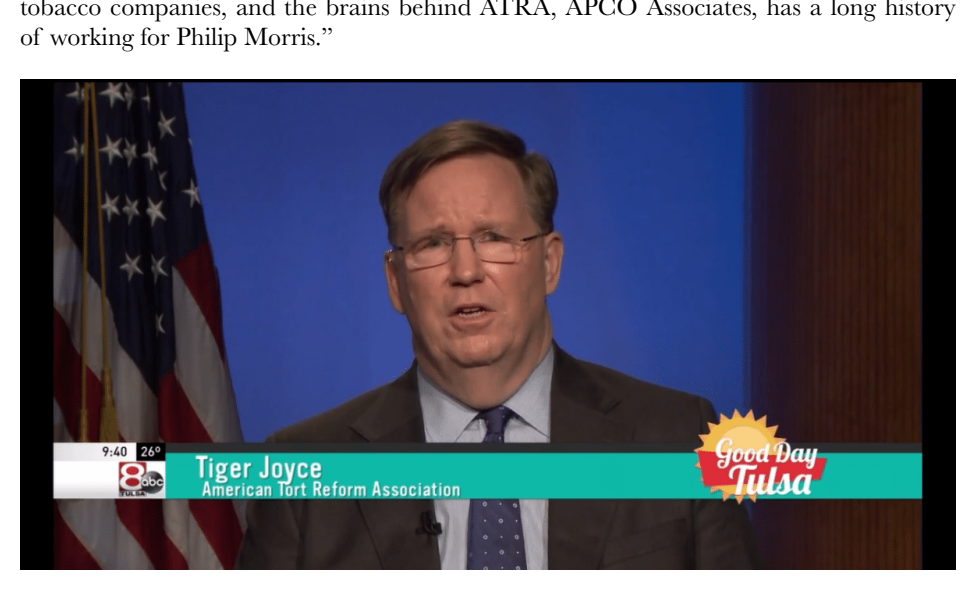
of working for Philip Morris.”
This history is relevant because climate-accountability cases consciously draw on legal lessons from tobacco litigation: alleged internal scientific knowledge, public misrepresentation, deceptive marketing and shifting the resulting public costs back to the companies involved. By at least the 2010s and early 2020s, ATRA had adapted its traditional mass-tort message to fossil-fuel litigation.
ATRA used to publish a “sample list” of members but removed the page sometime after 2015. At that time, the sample list, published as an exhibit in a July 2015 court uschamber.com/assets/documents/Motion20to20Strike20Amici20Curiae20… (opens in new tab)” rel=”nofollow noopener” target=”_blank”>filing, included ExxonMobil, Shell Oil, National Fuel Distribution (a natural gas distribution company), Koch Industries Inc., Caterpillar (a major supplier of equipment and engines to extractive industries) and CSX (historically a transporter of large amounts of coal and petroleum products). Corporate giants like Philip Morris, Dow Chemical, Exxon, G.E., Aetna, Geico, and Nationwide have all supported ATRA, according to the centerjd.org/content/archival-fact-sheet-american-tort-reform-asso… (opens in new tab)” rel=”nofollow noopener” target=”_blank”>Center for Justice and Democracy at New York Law School. Exxon’s own 2023 corporate advocacy corporate.exxonmobil.com/who-we-are/policy/exxonmobil-advocacy-rep… (opens in new tab)” rel=”nofollow noopener” target=”_blank”>disclosure lists a payment to the American Tort Reform Association of between $10,000 and $24,999 that is categorized as supporting “civil justice reform.” The modest contribution is particularly significant given that ExxonMobil is one of the defendants that ATRA is supporting in the Suncor case with ATRA having filed an supremecourt.gov/DocketPDF/25/25-170/409238/20260519131319600_25-1… (opens in new tab)” rel=”nofollow noopener” target=”_blank”>amicus brief before the Supreme Court. ATRA’s amicus brief says that no outside entity other than ATRA, “its members, or its counsel” financed the brief. It does not disclose whether ExxonMobil is currently an ATRA member or whether member dues supplied any portion of the resources used for the filing. ATRA has had desmog.com/robert-l-levy/?utm_ (opens in new tab)” rel=”nofollow noopener” target=”_blank”>ExxonMobil and desmog.com/2026/07/14/leonard-leos-anti-climate-network-makes-a-eu… (opens in new tab)” rel=”nofollow noopener” target=”_blank”>Koch-connected lawyers in its leadership. In addition, the Leonard Leo- linked Concord Fund, operating under the name Judicial Crisis Network, has also donated to ATRA, desmog.com/judicial-crisis-network/ (opens in new tab)” rel=”nofollow noopener” target=”_blank”>according to Desmog.
History of Fronting for the Fossil Fuel Industry
Neither ExxonMobil alone nor any other company controls ATRA. But the organization repeatedly serves as an industry-facing intermediary, including for fossil fuel companies, by converting the liability interests of identifiable corporate supporters into ostensibly broader arguments about civil-justice policy. In a 2022 report, ATRA described investigations and lawsuits concerning oil company climate representations as a coordinated campaign to “ atra.org/wp-content/uploads/2022/06/2022.06-AGs-and-Climate-Change… (opens in new tab)” rel=”nofollow noopener” target=”_blank”>destroy the U.S. oil and gas industry ” by activists, foundations, journalists and plaintiffs’ lawyers. It criticized the investigations commonly known as the “Exxon Knew” cases and argued that climate plaintiffs were using litigation to accomplish environmental policy objectives. Not a word was written about how fossil fuel companies themselves funded advocacy organizations, trade associations and PR campaigns casting doubt on climate science and climate policy.
ATRA also filed an supremecourt.gov/DocketPDF/25/25-170/409238/20260519131319600_25-1… (opens in new tab)” rel=”nofollow noopener” target=”_blank”>amicus brief before the Supreme Court supporting fossil fuel defendants seeking review of Honolulu’s climate deception lawsuit alleging that companies misrepresented and concealed the climate consequences of their products. ATRA has also atra.org/state-tort-laws-negatively-impacting-economies-outlined-f… (opens in new tab)” rel=”nofollow noopener” target=”_blank”>filed in litigation involving Louisiana local governments and oil-company liability, including Chevron U.S.A. Inc. v. Plaquemines Parish. ATRA itself groups the Louisiana and Boulder filings together as efforts to stop state-law suits against energy companies. ATRA’s recurring litigation strategy is to describe lawsuits alleging concealment, misrepresentation, failure to warn, nuisance and local damage as if the plaintiffs were directly asking state courts to regulate worldwide greenhouse gas emissions. That reframing serves fossil-fuel defendants because a direct judicial emissions cap would face stronger federal preemption and separation-of-powers objections than an ordinary state claim for damages caused by deception or wrongful conduct.
Boulder argues that Exxon and Suncor knew about the danger of climate change and misled the public about those risks, so the companies should be responsible for the damage. Exxon and Suncor argue they are not responsible for climate change and should not be responsible for its consequences.
Debunking Phony Fossil Fuel Claims
Claim: In the Boulder lawsuit against ExxonMobil and Suncor, ATRA argues that the local governments have disguised an attempt to establish national environmental and economic policy as a collection of state-law tort claims.
Fact: Boulder is not asking the court to establish an emissions ceiling, allocate national emissions or order the defendants to stop producing or selling fossil fuels. It seeks damages and other relief under Colorado law for alleged local harms, through claims including public and private nuisance, trespass, unjust enrichment and civil conspiracy. The possibility that a damages judgment could affect business practices nationally does not, by itself, transform a state tort action into federal economic regulation. Claim: ATRA argues that federal law exclusively governs, and preempts, state-law claims seeking damages attributed to climate change.
Fact: American Electric Power Co. v. Connecticut, supreme.justia.com/cases/federal/us/564/410/ (opens in new tab)” rel=”nofollow noopener” target=”_blank”>one of ATRA’s principal authorities, did not hold that all state-law climate claims are preempted. It held that the Clean Air Act displaced federal common-law nuisance claims seeking court-imposed emissions restrictions. The Court expressly left the availability of state-law claims to be determined under the Clean Air Act’s tile.loc.gov/storage-services/service/ll/usrep/usrep564/usrep56441… (opens in new tab)” rel=”nofollow noopener” target=”_blank”>preemptive effect. ATRA reads AEP more broadly than its express holding.
Claim: ATRA argues that “climate change is not a tort” (a civil wrong, other than a breach of contract, for which the law allows an injured person to seek compensation or another civil remedy from the party that caused the injury) and that state law provides no mechanism for recovering climate-related costs.
Fact: Boulder does not claim that climate change itself is a tort. It alleges that particular defendants engaged in conduct giving rise to recognized state-law claims, including nuisance, trespass, unjust enrichment and civil conspiracy.
Claim: ATRA argues that the lawsuits seek to impose “unprincipled liability” on companies providing lawful fossil-fuel products, regardless of fault, causation or whether the elements of a tort are satisfied.
Fact: A product’s lawful status does not categorically immunize its manufacturer or seller from liability for separate wrongful conduct. Lawful products such as cigarettes, properly prescribed opioids, asbestos-containing products and lead paint have generated liability when plaintiffs proved actionable concealment, deceptive promotion, failure to warn, defective design or nuisance. The lawfulness of fossil fuels may be relevant to particular claims, but it is not a complete defense to independently unlawful conduct.
Atlantic Legal Foundation Origins and Fossil Fuel Ties
The nonprofit group is a little less cagey about who it supports, stating that it seeks “fairness for corporate defendants” and “issues affecting the business community.” Growing out of the public interest movement of the 1970s, the Atlantic Legal Foundation’s (ALF) mission was to be big business’ answer to Ralph Nader and Public Citizen. Since inception, ALF has mostly operated in the legal space, filing amicus briefs in support of the oil and gas industry.
ExxonMobil’s role is not simply that of a company whose positions ALF supports. Exxon contributes capital to ALF, participates in ALF’s governance, and receives awards from ALF.
The group is open in its support for ExxonMobil. In the Fall of 2025, atlanticlegal.org/news/alf-honors-exxonmobil-chairman-ceo-darren-w… (opens in new tab)” rel=”nofollow noopener” target=”_blank”>ALF hosted a dinner and gave an award to Exxon’s Chairman and Chief Executive Officer, Darren W. Woods. The Exxon head was gifted with a reproduction of Frederic Remington’s sculpture Coming Through the Rye, which depicts a group of drunk cowboys shooting pistols.

It begs the question: Is this how they see themselves?
Exxon’s Chairman and Chief Executive Officer, Darren W. Woods. The Exxon head was gifted with a reproduction of Frederic Remington’s sculpture Coming Through the Rye, which depicts a group of drunk cowboys shooting pistols. It begs the question: Is this how they see themselves?
But aside from lauding the largest investor-owned oil and gas company in America, ALF also appointed ExxonMobil employees to its governing and advisory structure. One of ALF’s board of directors is atlanticlegal.org/directors/jeff-taylor/ (opens in new tab)” rel=”nofollow noopener” target=”_blank”>Jeffrey A. Taylor, the Vice President, General Counsel and Secretary of ExxonMobil. Prior to joining Exxon, Taylor worked for Fox, General Motors and Raytheon. And on its advisory council sits atlanticlegal.org/advisors/robert-l-levy/ (opens in new tab)” rel=”nofollow noopener” target=”_blank”>Robert L. Levy, a longtime Exxon lawyer who is now a lawyer at the Department of Justice. atlanticlegal.org/wp-content/uploads/2021/06/ALF-Annual-Report-201… (opens in new tab)” rel=”nofollow noopener” target=”_blank”>Throughout the years, ALF has also sourcewatch.org/images/6/6f/Public_policy1_2002.pdf?utm_source=cha… (opens in new tab)” rel=”nofollow noopener” target=”_blank”>accepted Exxon funding. Given the cross-pollination, it’s often hard to tell who is whom. In addition, ALF listed Chevron (opens in new tab) as a corporate supporter and as a platinum sponsor of its annual dinner host committee in 2025.
ALF’s biggest funder historically is the Mellon-Scaife fortune, which was built through oil, metals, and banking. desmog.com/atlantic-legal-foundation/ (opens in new tab)” rel=”nofollow noopener” target=”_blank”>According to Desmog, the Sarah Scaife Foundation has donated at least $2.5 million to ALF over the years. ALF has also taken money from funds linked to the fossil fuel billionaire desmog.com/atlantic-legal-foundation/ (opens in new tab)” rel=”nofollow noopener” target=”_blank”>Charles Koch.
History of Fronting for the Fossil Fuel Industry
If ExxonMobil is involved in a legal case, you can be sure ALF is never too far behind. The nonprofit was there to file amicus briefs in recent landmark climate liability suits originating in the cities of Baltimore, Honolulu, and Boulder, pushing the oil and gas industry’s federal preemption argument. There, industry defendants believe they are more likely to win their argument that federal law precludes state law for damages against fossil fuel companies for the effects of climate change. In 2025, atlanticlegal.org/wp-content/uploads/2021/06/ALF-Annual-Report-201… (opens in new tab)” rel=”nofollow noopener” target=”_blank”>ALF filed an amicus brief in support of ExxonMobil in Pennsylvania, seeking to overturn a verdict against the firm and in favor of a man who said he developed leukemia from breathing in benzene at a Mobil gas station over a period of years.
ALF has also supported other major fossil-fuel companies. In Chevron U.S.A. Inc. v. Plaquemines Parish, atlanticlegal.org/amicus-briefs/joint-amicus-brief-urges-supreme-c… (opens in new tab)” rel=”nofollow noopener” target=”_blank”>ALF joined the Washington Legal Foundation in urging the Supreme Court to reverse a decision in a case arising from legacy coastal damage litigation against Chevron.
Debunking Phony Fossil Fuel Claims
Claim: atlanticlegal.org/amicus-briefs/joint-amicus-brief-urges-supreme-c… (opens in new tab)” rel=”nofollow noopener” target=”_blank”>“The scope of the Clean Air Act is not a vehicle for EPA to address climate change.” Fact: ALF made this false argument before the Supreme Court 20 years ago, essentially adding that all the EPA could do was raise vehicle emission standards. The Supreme
But aside from lauding the largest investor-owned oil and gas company in America, ALF also appointed ExxonMobil employees to its governing and advisory structure. One of ALF’s board of directors is Jeffrey A. Taylor , the Vice President, General Counsel and Secretary of ExxonMobil. Prior to joining Exxon, Taylor worked for Fox, General Motors and Raytheon. And on its advisory council sits Robert L. Levy , a longtime Exxon lawyer who is now a lawyer at the Department of Justice. Throughout the years, ALF has also
Court, which was conservative even then, rejected ALF’s position, ruling that greenhouse gases qualify as “air pollutants” under the Clean Air Act.
Claim: “Boulder’s and every other climate-change tort suit also has a transparent political, as well as pecuniary, purpose: destroying the highly regulated oil and gas industry, or at least severely curtailing the entirely legal production, sale, and use of fossil fuels in the United States and abroad.”
Fact: That’s not what the lawsuit is about. The purpose of the Boulder case is clearly spelled out, and it’s the central question the court will consider right now: Does federal law preclude state-law claims seeking relief for injuries allegedly caused by the effects of interstate and international greenhouse-gas emissions on the global climate? Claim: Climate change is global and knows no boundaries, therefore states cannot seek redress in the courts for it.
Fact: Such as with the tobacco or opioid litigation, states have for a long time used state tort law to seek damages for harms within their borders, even when the conduct happens in multiple state or national jurisdictions.
Boulder’s and every other climate-change tort suit also has a transparent political, as well as pecuniary, purpose: destroying the highly regulated oil and gas industry, or at least severely curtailing the entirely legal production, sale, and use of fossil fuels in the United States and abroad.” Fact: That’s not what the lawsuit is about. The purpose of the Boulder case is clearly spelled out, and it’s the central question the court will consider right now:
The Breakthrough Institute Origins and Fossil Fuel Ties
Founded in 2007 by Ted Nordhaus and Michael Shellenberger, the thebreakthrough.org/about (opens in new tab)” rel=”nofollow noopener” target=”_blank”>Breakthrough Institute describes itself as an environmental research center promoting technological solutions to climate and development challenges. In practice, Breakthrough advocates an energy agenda centered on nuclear power, carbon capture, hydrogen, natural gas, expanded permitting, and other technologies that allow fossil fuel infrastructure and consumption to continue. Its research provides an environmental rationale for policies that thebreakthrough.org/issues/energy/against-climate-lawfare (opens in new tab)” rel=”nofollow noopener” target=”_blank”>preserve fossil fuel interests while supremecourt.gov/DocketPDF/25/25-170/409238/20260519131319600_25-1… (opens in new tab)” rel=”nofollow noopener” target=”_blank”>opposing efforts to make oil and gas companies pay
for decades of climate deception.
Breakthrough’s thebreakthrough.org/about (opens in new tab)” rel=”nofollow noopener” target=”_blank”>funding includes support from billionaire Charles Koch’s philanthropic network. documentcloud.org/documents/26493874-2024-stand-together-trust-990… (opens in new tab)” rel=”nofollow noopener” target=”_blank”>IRS filings show Stand Together Trust awarded the Breakthrough Institute a $250,000 grant in 2024. Breakthrough also lists Stand Together Trust among its institutional funders on its website. Stand Together Trust was standtogethertrust.org/about-us/ (opens in new tab)” rel=”nofollow noopener” target=”_blank”>founded by Charles Koch, chairman and co-CEO of Koch Industries, one of the nation’s largest privately held fossil fuel and petrochemical companies.
Breakthrough also lists Arnold Ventures among its institutional funders, and Arnold Ventures sponsored the Institute’s 2025 Abundance conference. arnoldventures.org/people/john-arnold (opens in new tab)” rel=”nofollow noopener” target=”_blank”>John Arnold, co-founder and co-chair of Arnold Ventures, built his fortune as a forbes.com/profile/john-arnold (opens in new tab)” rel=”nofollow noopener” target=”_blank”>natural gas trader at Enron. In 2001—the same year Enron collapsed after one of the largest corporate fraud scandals in American history—Arnold reportedly generated $750 million in profits for the company through energy trading. Enron’s sec.gov/enforcement-litigation/litigation-releases/lr-17500 (opens in new tab)” rel=”nofollow noopener” target=”_blank”>bankruptcy destroyed thousands of jobs, wiped out billions of dollars in employee retirement savings, and became a symbol of corporate greed and financial misconduct. After the company’s collapse, Arnold founded the energy-focused hedge fund Centaurus Advisors, becoming one of the country’s youngest self-made billionaires. Forbes now estimates his net worth at approximately $2.8 billion and reports that he has invested in both solar farms and deepwater oil developments in the Gulf of Mexico.
Breakthrough’s abundancedc.org/ (opens in new tab)” rel=”nofollow noopener” target=”_blank”>Abundance Conference expands these fossil-fuel connections into a broader Koch-funded policy network. One conference partner, the Property and Environment Research Center, or PERC, promotes “free-market environmentalism” and seeks to replace environmental regulation with property rights, voluntary incentives and market mechanisms. PERC does not disclose its donors, but sourcewatch.org/index.php?title=Property_and_Environment_Research_… (opens in new tab)” rel=”nofollow noopener” target=”_blank”>tax records compiled by SourceWatch identify at least $590,000 from the Charles Koch Foundation between 2013 and 2019. The same records show additional funding from Koch-linked donor-advised funds DonorsTrust and Donors Capital Fund, which allow the original donors behind grants to remain undisclosed. The Breakthrough Institute also received $340,000 from National Philanthropic Trust, connected to billionaire investor Paul Singer, between 2018 and 2024, according to IRS Form 990 filings.
Breakthrough’s Abundance Conference is also partnered with the Koch and Exxon- funded Pacific Legal Foundation, as documented in this report. These relationships show Breakthrough operating within an interconnected advocacy network financed by fossil- fuel fortunes and organizations that have spent decades fighting environmental regulation. Breakthrough provides that network with something particularly valuable: an organization presented as an environmental research institute that can advance fossil-fuel- friendly policies—and now arguments protecting Exxon and Suncor from climate- deception liability—under the banner of science, technological progress and environmental pragmatism. Further, a former Exxon executive who was with the company for 33 years, Jimmie James, currently sits on Breakthrough’s board.
History of Fronting for the Fossil Fuel Industry
Unlike many organizations that deny climate change outright, the Breakthrough Institute accepts the science while opposing efforts to hold fossil fuel companies legally accountable for it. The Institute has become one of the leading advocates against what it calls “ thebreakthrough.org/issues/energy/against-climate-lawfare (opens in new tab)” rel=”nofollow noopener” target=”_blank”>climate lawfare,” arguing that climate lawsuits are an improper attempt to regulate energy policy through the courts instead of legislatures. Breakthrough characterizes these lawsuits as anti-democratic and urges judges to reject them.
In 2026, it filed amicus briefs in courtlistener.com/docket/71742692/lighthiser-et-al-v-trump-et-al/ (opens in new tab)” rel=”nofollow noopener” target=”_blank”>Lighthiser v. Trump, a lawsuit brought by youth climate activists seeking to challenge the Trump administration’s executive orders expanding fossil fuel development, and supremecourt.gov/DocketPDF/25/25-170/409238/20260519131319600_25-1… (opens in new tab)” rel=”nofollow noopener” target=”_blank”>Suncor Energy v. Boulder County, a U.S. Supreme Court case in which Colorado communities seek to hold ExxonMobil, Suncor, and other fossil fuel companies accountable for allegedly deceiving the public about the dangers of climate change. In Suncor, Breakthrough sided with the fossil fuel companies, arguing that attribution science cannot reliably link individual companies’ emissions to specific climate harms and that state climate lawsuits improperly interfere with national energy policy. Breakthrough fellow Alex Trembath has gone even further, arguing that attribution science was developed with lawsuits against fossil fuel companies in mind and calling efforts to assign legal responsibility for climate damages to individual producers “methodologically impossible.” He argues climate liability lawsuits should be rejected— even as courts are considering evidence that many fossil fuel companies understood the dangers of climate change for decades while publicly downplaying or denying those risks. Beyond the courtroom, Breakthrough promotes an “all-of-the-above” energy strategy that explicitly includes continued oil and gas production alongside nuclear power, carbon capture, geothermal energy, and other technologies. Rather than supporting a rapid transition away from fossil fuels, the Institute argues industry will remain an essential part of the global energy system for decades.
Debunking Phony Fossil Fuel Claims
Claim: Climate lawsuits are an anti-democratic attempt to regulate energy policy through the courts.
Fact: Climate accountability lawsuits do not ask courts to write energy policy—they ask courts to determine whether fossil fuel companies violated existing state consumer protection, fraud, public nuisance, or other laws by allegedly deceiving the public about the climate risks of their products. Courts have long served as the proper venue for resolving claims that companies misled consumers or concealed known harms. If the plaintiffs prevail, the cases could require companies to pay damages or other remedies under existing law—not create new energy policy.
Claim: Climate attribution science cannot establish responsibility for climate damages. Fact: Attribution science is a well-established field of climate research used to measure how human-caused climate change influences specific extreme weather events and long- term climate impacts. While scientists cannot attribute an event to a single company, modern attribution methods can estimate how greenhouse gas emissions increased the likelihood or severity of particular disasters. Courts will ultimately determine how much weight to give that evidence, but dismissing attribution science outright ignores decades of peer-reviewed scientific research and its growing use in climate impact assessments.
Buckeye Institute Origins and Fossil Fuel Ties
Founded in 1989 and headquartered across from the Ohio Statehouse in Columbus, the Buckeye Institute is one of Ohio’s most influential conservative think tanks. While it presents itself as an independent, nonpartisan organization promoting free-market policies, the Institute is part of the State Policy Network (SPN)—a national coalition of state-based think tanks that has played a significant role in opposing renewable energy mandates, environmental regulations, and climate policies across the country. SPN affiliates have coordinated campaigns against wind and solar development while advancing policies aligned with fossil fuel interests.
Although the Buckeye Institute does not publicly disclose its donors, tax records reveal substantial financial support from organizations that have funded the broader climate-
opposition movement. influencewatch.org/non-profit/buckeye-institute/ (opens in new tab)” rel=”nofollow noopener” target=”_blank”>IRS filings show the Buckeye Institute received a $8,000 grant from National Philanthropic Trust in 2024, the dark-money fund connected to Suncor billionaire investor Paul Singer. IRS filings also show the Searle Freedom Trust, a drexel.edu/news/archive/2013/december/climate-change (opens in new tab)” rel=”nofollow noopener” target=”_blank”>well-documented funder of climate denial, provided $350,000 in 2018 and $671,500 total between 2009-2018. SourceWatch’s review of sourcewatch.org/index.php?title=Property_and_Environment_Research_… (opens in new tab)” rel=”nofollow noopener” target=”_blank”>IRS filings further found that between 2005 and 2016, two Koch-tied funds, the Donors Capital Fund and DonorsTrust, contributed approximately $1.67 million and $1.4 million, respectively between 2014 and 2018, while the Koch-funded Stand Together Trust gave $141,096 in 2022. The Charles Koch Foundation provided more than $408,000 between 2016 and 2018.
The Buckeye Institute also maintains direct leadership ties to Ohio’s oil and gas industry. buckeyeinstitute.org/experts/detail/mark-d-jordan (opens in new tab)” rel=”nofollow noopener” target=”_blank”>Vice Chair Mark Jordan serves as president of Knox Energy, is a member of both the Ohio Oil and Gas Association and the Independent Petroleum Association of America and sits on the board of the Kirkpatrick Jordan Foundation, which donated $35,000- $40,000 annually to the Buckeye Institute in recent years, according to projects.propublica.org/nonprofits/organizations/861778799/2025131… (opens in new tab)” rel=”nofollow noopener” target=”_blank”>IRS Form 990 filings. The group has also received about $1.5 million from foundations linked to the industrialist-era Bradley Family, which has long supported campaigns against holding companies accountable for climate change, as well as sourcewatch.org/index.php?title=Property_and_Environment_Research_… (opens in new tab)” rel=”nofollow noopener” target=”_blank”>$7,500 from Leonard Leo’s 85 Fund in 2023, influencewatch.org/non-profit/buckeye-institute/ (opens in new tab)” rel=”nofollow noopener” target=”_blank”>according to IRS filings.
History of Fronting for the Fossil Fuel Industry
The Buckeye Institute produces economic studies, legislative testimony, and litigation that consistently support policy outcomes favored by fossil fuel producers and utilities. For more than a decade, the Buckeye Institute has opposed Ohio’s renewable energy standards. In 2015, Buckeye researcher Greg Lawson testified in favor of freezing Ohio’s renewable portfolio standards, arguing that renewable energy mandates “distort” energy markets. That testimony was later energyandpolicy.org/murray-energy-vs-renewable-energy/ (opens in new tab)” rel=”nofollow noopener” target=”_blank”>circulated by Robert Murray, founder of Murray Energy, as supporting evidence in the coal industry’s campaign against Ohio’s clean energy requirements. Murray’s company has previously funded organizations such as the washingtonpost.com/investigations/a-two-decade-crusade-by-conserva… (opens in new tab)” rel=”nofollow noopener” target=”_blank”>Competitive Enterprise Institute and desmogblog.com/heartland-institute (opens in new tab)” rel=”nofollow noopener” target=”_blank”>Heartland Institute that similarly globalwarming.org/2014/02/15/ohio-legislature-mulls-repeal-of-gree… (opens in new tab)” rel=”nofollow noopener” target=”_blank”>opposed renewable energy standards. Buckeye has also published studies attacking Ohio’s renewable energy policies. A frequently cited midwestenergynews.com/2017/03/13/outlier-study-on-ohio-renewable-s… (opens in new tab)” rel=”nofollow noopener” target=”_blank”>2017 Buckeye Institute report argued that the state’s renewable energy standard increased electricity prices and recommended repealing the law. The energyandpolicy.org/ohio-supreme-court-firstenergy-campaign-contri… (opens in new tab)” rel=”nofollow noopener” target=”_blank”>misleading report overstated renewable energy compliance costs while ignoring market trends and declining renewable energy prices. The report nevertheless became a talking point for utilities and lawmakers seeking to dismantle Ohio’s clean energy standards. Buckeye has also been a leading opponent of utility-scale solar development. The organization has targeted buckeyeinstitute.org/blog/detail/buckeye-research-casts-doubt-on-v… (opens in new tab)” rel=”nofollow noopener” target=”_blank”>Ohio’s Payment in Lieu of Taxes (PILOT) program, which provides tax certainty for renewable energy projects while generating stable revenue for local governments and schools. Buckeye’s analysis was facebook.com/knoxsmartdevelopment/posts/pfbid0EseBVWqBrsWinetMz8G7… (opens in new tab)” rel=”nofollow noopener” target=”_blank”>used by knoxpages.com/2024/02/03/osu-report-confirms-frasier-solars-pilot-… (opens in new tab)” rel=”nofollow noopener” target=”_blank”>Knox Smart Development, an anti-solar organization energynews.us/2023/12/18/anonymously-funded-group-stokes-local-opp… (opens in new tab)” rel=”nofollow noopener” target=”_blank”>opposing the Frasier Solar project that has connections to the natural gas industry.
Recently, Buckeye has expanded its advocacy beyond state legislatures into the courts, filing amicus briefs in cases with major implications for climate accountability. In 2026, Buckeye filed an supremecourt.gov/DocketPDF/25/25-170/409238/20260519131319600_25-1… (opens in new tab)” rel=”nofollow noopener” target=”_blank”>amicus brief in Suncor Energy (U.S.A.) Inc. v. County Commissioners of Boulder County, urging the U.S. Supreme Court to block state-law climate lawsuits against oil companies. Buckeye argued that these lawsuits amount to a state trying to dictate and impose a federal climate tax—overriding federal constitutional power while saying these issues belong in federal, not state, courts. This position closely mirrors arguments advanced by the fossil fuel industry and its trade associations. If these arguments are successful, the case could limit the ability of states and local governments nationwide to hold fossil fuel companies accountable for climate damages.
Debunking Phony Fossil Fuel Claims
Claim: Buckeye is an independent, nonpartisan think tank providing objective policy analysis.
Fact: While Buckeye operates as an independent nonprofit, its funding has included grants from the Charles Koch Foundation, DonorsTrust, Donors Capital Fund, and Searle Freedom Trust—organizations that have financed a nationwide network opposing climate and environmental regulations. Its board also includes an Ohio natural gas executive, and its research consistently advances policy positions that align with fossil fuel industry priorities.
Claim: Renewable energy mandates distort free markets.
Fact: Buckeye frames renewable energy policies as government “picking winners and losers,” but overlooks the extensive imf.org/en/topics/climate-change/energy-subsidies (opens in new tab)” rel=”nofollow noopener” target=”_blank”>public subsidies and policy preferences that have long benefited fossil fuels. From tax incentives to below-market leasing and publicly funded infrastructure, government has shaped energy markets for decades. eia.gov/analysis/requests/subsidy/ (opens in new tab)” rel=”nofollow noopener” target=”_blank”>Renewable energy standards were adopted to level the playing field, not distort it. Calling for the repeal of clean energy incentives while leaving fossil fuel subsidies intact does not create a free market—it preserves one that has long favored incumbent fossil fuel interests. Claim: Renewable energy raises electricity prices.
Fact: Wind and solar are now the cheapest forms of new power generation, and studies show they are sciencedirect.com/science/article/abs/pii/S0306261920316561 (opens in new tab)” rel=”nofollow noopener” target=”_blank”>lowering wholesale costs by reducing fuel expenses. Claim: Local opposition proves renewable projects lack public support Fact: While communities may have legitimate questions about large-scale energy projects, opposition campaigns are not always purely grassroots. In Ohio, Buckeye’s research has been used by anti-solar groups with documented ties to the ohiocapitaljournal.com/2023/12/20/anonymously-funded-group-stokes-… (opens in new tab)” rel=”nofollow noopener” target=”_blank”>natural gas industry, illustrating how fossil fuel interests can amplify local opposition to competing energy sources.
Claim: Climate deception lawsuits are really a secret carbon tax, improperly seeking to use state courts to set national energy policy.
Fact: Climate accountability lawsuits do not seek to regulate national energy policy or impose a carbon tax. Instead, plaintiffs, including states and local governments, supremecourt.gov/search.aspx?filename=/docket/docketfiles/html/pub… (opens in new tab)” rel=”nofollow noopener” target=”_blank”>counter that these lawsuits are based on traditional state tort law and seek to hold companies accountable for decades of deception about the climate risks of their products, much like past litigation against tobacco or opioid companies.
Center for Environmental Accountability Origins and Fossil Fuel Ties
Founded in 2022, the Center for Environmental Accountability (CEA) describes itself as an organization “championing transparency and accountability in environmental and energy policy.” Despite that mission, the organization has little public infrastructure. It operates from a fieldnotes.co/reporting/cea-marie-brightbill-schwab-szabo-fotouhi-… (opens in new tab)” rel=”nofollow noopener” target=”_blank”>rented private mailbox in a suburban Texas strip mall, has no publicly identified staff beyond its officers, but has nevertheless emerged as an active participant in major federal regulatory proceedings and U.S. Supreme Court litigation challenging climate regulation and supporting fossil fuel interests. Its Suncor Energy v. Boulder County supremecourt.gov/DocketPDF/25/25-170/409238/20260519131319600_25-1… (opens in new tab)” rel=”nofollow noopener” target=”_blank”>amicus brief claims to offer independent expertise on environmental law and policy, despite the organization’s limited public footprint.
Tax records reveal direct financial ties to organizations with longstanding connections to the fossil fuel industry and the climate denial movement. In 2023, CEA received a $175,000 grant from the Institute for Energy Research (IER) for “program and supporting services.” According to Fieldnotes, it was the first grant IER reported making to another nonprofit in nearly a decade. Over the years, IER has received desmog.com/institute-energy-research/ (opens in new tab)” rel=”nofollow noopener” target=”_blank”>funding from ExxonMobil, the American Petroleum Institute (API), the Edison Electric Institute (EEI), Peabody Energy, the Charles G. Koch Charitable Foundation, the Claude R. Lambe Charitable Foundation, the Charles Koch Institute, DonorsTrust, Donors Capital Fund, and the Searle Freedom Trust, while consistently opposing climate regulation and clean energy policies. Between the three Koch entities alone—the Charles G. Koch Charitable Foundation, Claude R. Lambe Charitable Foundation, and Charles Koch Institute—IER received at least $702,742 in documented grants.
CEA also received a $500,000 grant from the Searle Freedom Trust in 2023—one of the largest grants awarded by the foundation that year—and nearly $1.45 million in 2024 from Greater Horizon, a donor-advised fund that does not publicly identify the individuals behind its contributions. Together, IRS filings show CEA received approximately $2.4 million between its founding and the end of 2024. The Searle Freedom Trust is one of the nation’s largest financial backers of organizations promoting climate science denial and opposition to climate policy. According to the Institute for Policy Studies, the Searle Freedom Trust provided $28.9 million to climate disinformation organizations between 2020 and 2022, making it the second-largest private foundation funder during that period, behind only the combined Scaife Foundations. The organization’s leadership and legal network reveal equally extensive ties to the fossil fuel industry. A 2026 Fieldnotes investigation identified at least nine current Trump administration officials who previously served as CEA directors or outside counsel. Eight simultaneously represented fossil fuel companies or industry trade associations, including clients such as Chevron, Energy Transfer, the American Petroleum Institute, the U.S. Chamber of Commerce, and the American Chemistry Council. The investigation further
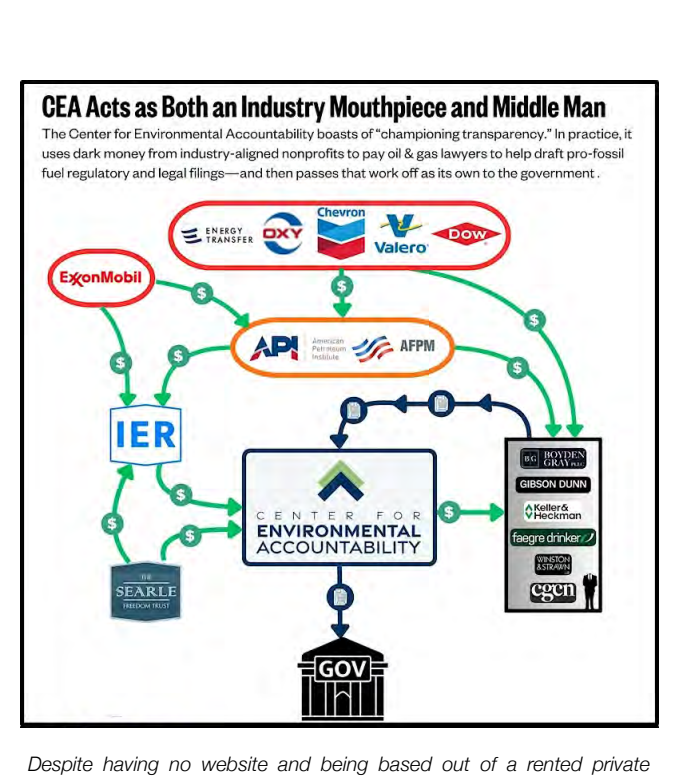
concluded that CEA functions as both a front and intermediary for oil and gas interests, using dark-money funding to hire outside law firms representing fossil fuel companies, then submitting those lawyers’ work under CEA’s own name. Metadata reviewed by Fieldnotes found that roughly half of more than two dozen regulatory comments, legal briefs, and filings were drafted in whole or in part by outside firms representing oil, gas, petrochemical companies, and their trade associations. CEA appeared to spend mailbox in a Texas strip mall, CEA submitted an amicus brief to the U.S. roughly $50,000 per regulatory filing, creating what Fieldnotes described as a pipeline between fossil fuel industry lawyers and government decision makers.
History of Fronting for the Fossil Fuel Industry
Since its founding in 2022, the Center for Environmental Accountability has consistently advanced legal and regulatory positions aligned with the fossil fuel industry. Rather than producing independent environmental research, CEA has focused on challenging climate regulations, weakening the Environmental Protection Agency’s authority, and opposing legal efforts to hold oil and gas companies accountable for climate harms. According to a 2026 Fieldnotes investigation, CEA acts as both “a front and intermediary” for fossil fuel interests, using dark-money funding to hire outside law firms representing oil and gas companies before submitting their work under CEA’s name. Metadata reviewed by Fieldnotes found that roughly half of more than two dozen regulatory comments, legal briefs, and filings were drafted in whole or in part by attorneys representing fossil fuel companies and their trade associations. CEA appeared to spend roughly $50,000 per regulatory filing.
CEA has also become an active participant in litigation designed to shield the fossil fuel industry from accountability. In Suncor Energy v. Boulder County, the organization filed an amicus brief urging the U.S. Supreme Court to block Colorado’s climate deception lawsuit against ExxonMobil, Suncor, and other fossil fuel companies. The brief argues that states cannot use their own laws to recover damages for climate-related harms because doing so would improperly regulate national and international energy policy—a legal theory advanced by the fossil fuel industry in climate accountability cases across the country.
Debunking Phony Fossil Fuel Claims
Claim: Climate lawsuits are really an attempt to let states control America’s energy policy.
Fact: These lawsuits don’t ask judges to decide how much oil or gas America should produce. They ask whether fossil fuel companies misled the public for decades about what they knew regarding climate change, and if so, whether they should help pay for some of the damage. Like lawsuits against the tobacco and opioid industries, the cases are about corporate conduct—not writing national energy policy.
Claim: If the EPA rolls back climate regulations, states shouldn’t be able to sue fossil fuel companies over climate damages.
Fact: EPA regulations and climate lawsuits serve two different purposes. EPA regulations set rules for pollution going forward. Climate lawsuits look backward, asking whether companies should be held responsible for allegedly misleading the public and contributing to costs communities are facing today. Even if the federal government weakens or repeals environmental regulations, states can still enforce their own laws against fraud, consumer deception, and other alleged misconduct. That’s why climate accountability lawsuits have continued even as federal climate policies have changed from one administration to the next.
Center For Individual Freedom Origins and Fossil Fuel Ties
The Center for Individual Freedom (CFIF) is a Virginia-based conservative advocacy organization that has become an active opponent of climate deception litigation. Although it describes itself as a defender of free markets and limited government, CFIF is financially connected to Leonard Leo’s judicial advocacy network and has repeatedly mediamatters.org/daily-caller/koch-funded-groups-mount-pr-and-medi… (opens in new tab)” rel=”nofollow noopener” target=”_blank”>partnered with Koch-funded organizations on campaigns opposing climate regulation
and carbon pricing.
Between 2016 and 2018, nytimes.com/2022/10/12/us/politics/leonard-leo-network.html (opens in new tab)” rel=”nofollow noopener” target=”_blank”>Leo’s Freedom & Opportunity Fund awarded sourcewatch.org/index.php?title=Property_and_Environment_Research_… (opens in new tab)” rel=”nofollow noopener” target=”_blank”>$915,500 to CFIF, according to IRS grant records. The Freedom & Opportunity Fund was one of the principal organizations in Leo’s dark-money network before its activities shifted to successor groups such as the 85 Fund and Concord Fund, which have continued financing conservative legal advocacy and litigation campaigns.
CFIF has also worked alongside the Koch political network on climate policy. In 2018, it joined a coalition of organizations supporting a congressional resolution opposing carbon pricing. According to Media Matters, 42 of the 51 organizations participating in that campaign had received funding from the Koch network.
History of Fronting for the Fossil Fuel Industry
In recent years, the Center for Individual Freedom (CFIF) has become an active advocate against climate accountability litigation, cfif.org/v/index.php/commentary/42-constitution-and-legal/7638-una… (opens in new tab)” rel=”nofollow noopener” target=”_blank”>portraying lawsuits seeking to hold fossil fuel companies accountable as a form of “climate lawfare” and “climate shakedowns.” Through articles, commentary, and litigation, CFIF argues that state consumer protection and tort lawsuits against oil companies are an illegitimate attempt to reshape national energy policy through the courts rather than through Congress.
CFIF has strongly backed federal legislation to block climate accountability lawsuits, including the Stop Climate Shakedowns Act, and has applauded court decisions limiting where those cases may be heard. On its website, the organization argues that lawsuits brought by states and local governments are designed to “extract massive settlements” from energy companies and characterizes them as ideological attacks on “law-abiding energy producers.”
CFIF advanced those same arguments before the U.S. Supreme Court by joining an supremecourt.gov/DocketPDF/25/25-170/409238/20260519131319600_25-1… (opens in new tab)” rel=”nofollow noopener” target=”_blank”>amicus brief supporting Exxon and Suncor in Suncor Energy Inc. v. Board of County Commissioners of Boulder County. The brief argues that state consumer protection laws should not be used to pursue climate deception claims because they allegedly interfere with national energy policy and interstate commerce. Rather than addressing the underlying allegations that fossil fuel companies misled the public about climate risks, CFIF argues that these lawsuits should be barred as a matter of constitutional and federal law.
Debunking Phony Fossil Fuel Claims
Claim: Climate accountability lawsuits are simply an attempt to use state courts to impose national energy policy.
Fact: Climate accountability lawsuits do not ask courts to write national energy policy or prohibit fossil fuel production. Instead, they rely on longstanding state consumer protection and tort laws to determine whether fossil fuel companies misled consumers, investors, and the public about the known climate risks of their products. Similar legal theories have long been used against the tobacco, opioid, and asbestos industries. Whether Exxon, Suncor, and other companies engaged in deception is a factual question for the courts—not an attempt by states to regulate the nation’s energy policy.
Center For Individual Rights Origins and Fossil Fuel Ties
The Center For Individual Rights (CIR) emerged at the end of the 1980s with the belief that conservative public interest organizations were not active enough. CIR was formed with the mission to bring constitutional lawsuits in areas of race and gender, religious liberty, and federal authority, but it has since broadened its work in the public policy and research.
Over the years, CIR has run on money from funds connected to pro-fossil fuel businessmen the Kochs and the Mellon-Scaife oil fortune, as well as the conservative legal activist Leonard Leo. During cir-usa.org/2002/12/center-ring/ (opens in new tab)” rel=”nofollow noopener” target=”_blank”>one period, nearly half of the group’s budget came from three of America’s richest industrial dynasties: Olin, Bradley and Scaife. Olin made money from chemicals and ammunition, Mellon-Scaife from oil and banking, and Bradley from manufacturing.
CIR, like most nonprofits, doesn’t disclose its funders. But according to philanthropy.org/990/who-funds/521600481/center-for-individual-rig… (opens in new tab)” rel=”nofollow noopener” target=”_blank”>IRS filings from
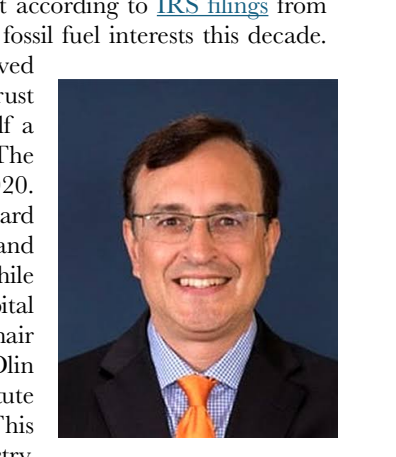
other foundations, CIR continues to take in money from fossil fuel interests this decade. IRS filings show the Center for Individual Rights received approximately $925,000 from National Philanthropic Trust between 2018 and 2024, which in turn received nearly half a billion dollars from billionaire investor Paul Singer. The Sarah Scaife Foundation has given CIR $785,000 since 2020.
The 85 Fund, which is an organization linked to Leonard Leo, has also contributed roughly $350,000. The Lynde and Harry Bradley Foundation has given about $435,000, while Koch-linked donor funds DonorsTrust and Donors Capital Fund have also contributed funding. In fact, former vice chair of Donors Trust, a former trustee of the John Olin Foundation, and a former fellow at the Manhattan Institute —James Piereson—is currently emeritus trustee at CIR. This highlights the revolving-door aspect of the energy industry.
Separately, they present a façade of independence when opining on legal cases and policy, but are all just working on the side of oligarchy and fossil fuel interests. CIR)
History of Fronting for the Fossil Fuel Industry
CIR is a legal cog of the greater fossil fuel wheelhouse, with a well-documented history of appearing when large companies end up in court and siding with big business. For example, cir-usa.org/wp-content/uploads/2026/05/1-Complaint.pdf (opens in new tab)” rel=”nofollow noopener” target=”_blank”>CIR filed a lawsuit on behalf of states against the state of New York over its greenhouse gas program aimed at curbing emissions. In a press release, CIR criticized New York’s “radical green agenda,” something it omitted saying in its cir-usa.org/wp-content/uploads/2026/05/1-Complaint.pdf (opens in new tab)” rel=”nofollow noopener” target=”_blank”>lawsuit filed with the court. The organization chose hyperbole in the media because it knew it wouldn’t fly in court.
In 2016, CIR supported the vanityfair.com/news/2007/05/skeptic200705 (opens in new tab)” rel=”nofollow noopener” target=”_blank”>Exxon-funded Competitive Enterprise Institute in resisting the consequences of a climate-investigation subpoena. The Virgin Islands attorney general subpoenaed the Competitive Enterprise Institute for roughly a decade of records concerning its climate-change work as part of an investigation connected to ExxonMobil. After the attorney general withdrew the subpoena, CEI sought its legal fees, and CIR cir-usa.org/cases/virgin-islands-v-exxonmobil/ (opens in new tab)” rel=”nofollow noopener” target=”_blank”>filed an amicus brief supporting CEI’s request for fees. CIR filed an amicus brief in Suncor v. Boulder that was similar to all the other industry- aligned fossil fuel briefs. CIR said that “Boulder, Colorado, wants to set climate-change policy for the United States of America,” in agreement with Suncor and ExxonMobil defendants.
Debunking Phony Fossil Fuel Claims “Any fossil fuel company supremecourt.gov/DocketPDF/25/25-170/409238/20260519131319600_25-1… (opens in new tab)” rel=”nofollow noopener” target=”_blank”>cannot avoid liability without shutting down operations Claim: in other states where operation is lawful and often desired.”
CIR’s brief in Boulder claims that liability can be avoided only by shutting down Fact: lawful operations also assumes that paying damages for proven tortious conduct is equivalent to shutting down fossil fuel production. But those aren’t the only options. Fossil Fuel defendants can still operate and still own up to what they are liable for under the law. Claim: CIR repeatedly asserts that state climate measures effectively regulate people with cir-usa.org/cases/virgin-islands-v-exxonmobil/ (opens in new tab)” rel=”nofollow noopener” target=”_blank”>“no meaningful connection” to the regulating state. For example, CIR complains that New York’s reporting rule imposes “unreasonable searches” on Iowa producers. CIR ignores the nation’s interconnected markets: producers who sell fuel into New Fact: York already operate under NY law because they do business there. By framing routine interstate regulation as unconstitutional, CIR’s briefs misrepresent settled legal standards and re-label standard compliance costs as “searches.”
Claim: CIR paints environmental lawsuits as a cir-usa.org/cases/virgin-islands-v-exxonmobil/ (opens in new tab)” rel=”nofollow noopener” target=”_blank”>“crusade against speech” and due process, such as in the Exxon case involving CEI.
Fact: CIR’s public statements often simplify or skew facts by conflating regulation with censorship to promote an anti-regulatory agenda.
Consumers’ Research Origins and Fossil Fuel Ties
Consumers’ Research began in 1929 as an early consumer-product testing organization with an offshoot later becoming Consumer Reports. In 1981, conservative journalist and activist M. Stanton Evans shifted consumersresearch.org/ (opens in new tab)” rel=”nofollow noopener” target=”_blank”>Consumers’ Research into regulatory and public-policy advocacy, including challenging links between tobacco smoke, lung cancer, and heart disease, according to sourcewatch.org/index.php?title=Property_and_Environment_Research_… (opens in new tab)” rel=”nofollow noopener” target=”_blank”>SourceWatch. Consumers’ Research bills itself as an independent nonprofit educational organization fighting “woke” corporations while supporting consumers’ research. In fact, it is an opaque conduit for conservative funders. Annual revenue from substantial conservative and donor support rose from about $835,000 in 2020 to more than $9 million in 2024 under executive director and free market advocate Will Hild, according to influencewatch.org/non-profit/buckeye-institute/ (opens in new tab)” rel=”nofollow noopener” target=”_blank”>InfluenceWatch. Funders over the years, according to Influence Watch’s review of IRS filings, include DonorsTrust, Donors Capital Fund, Lynde and Harry Bradley Foundation, National Philanthropic Trust ($2 million from 2020-2024), and Searle Freedom Trust. In 2024, DonorsTrust donated more than $6 million to Consumers’ Research for “general operations,” according to its pdf.guidestar.org/PDF_Images/2024/522/166/2024-522166327-202513179… (opens in new tab)” rel=”nofollow noopener” target=”_blank”>IRS filing. Between 2020 and 2024, InfluenceWatch reports that DonorsTrust grants totaled about $21 million.
DonorsTrust is a well-known intermediary for conservative funders, including those opposing climate regulation. Consumers’ Research is deeply tied to Leonard Leo, the conservative activist and lawyer known for his influential role in judicial nominations, particularly under Trump. Leo is the backer of coordinated efforts to pass state laws that shield oil and gas companies from legal claims that they are responsible for damages as a result of climate change, according to propublica.org/article/climate-change-alec-leonard-leo-lawsuits-fo… (opens in new tab)” rel=”nofollow noopener” target=”_blank”>ProPublica. projects.propublica.org/nonprofits/organizations/861778799/2025131… (opens in new tab)” rel=”nofollow noopener” target=”_blank”>IRS filings show that Consumers’ Research paid CRC Public Relations, a communications firm for many conservative organizations allied with Leo, more than $676,000 for “digital media” in 2024, and close to $600,000 in 2022 for “legal” services. Leo transformed the business into influencewatch.org/for-profit/crc-advisors/?utm_ (opens in new tab)” rel=”nofollow noopener” target=”_blank”>CRC Advisors that also incubates conservative organizations, coordinates donors, develops litigation strategies, and manages advocacy campaigns. CRC Advisors has coordinated a multimillion-dollar campaign against influencewatch.org/hub/esg-activism/ (opens in new tab)” rel=”nofollow noopener” target=”_blank”>ESG, an acronym for environmental, social and governance investment and activism practices, coordinating with influencewatch.org/non-profit/buckeye-institute/ (opens in new tab)” rel=”nofollow noopener” target=”_blank”>Marble Freedom Trust, a nonprofit run by Leo, influencewatch.org/for-profit/crc-advisors/?utm_ (opens in new tab)” rel=”nofollow noopener” target=”_blank”>InfluenceWatch reports. Consumers’ Research has substantial financial links to Leonard Leo’s network. DonorsTrust, which itself received more than philanthropy.org/990/who-funds/521600481/center-for-individual-rig… (opens in new tab)” rel=”nofollow noopener” target=”_blank”>$300 million from Leo-linked organizations, including the 85 Fund and Marble Freedom Trust, gave millions to Consumers’ Research. Separately, the Leo-linked Concord Fund projects.propublica.org/nonprofits/organizations/861778799/2025131… (opens in new tab)” rel=”nofollow noopener” target=”_blank”>gave $940,000 directly to Consumers’ Defense, the lobbying arm of Consumers’ Research. Last year, the news service reported that watchdog groups called for Justices Clarence Thomas and Samuel Alito to recuse themselves from a case disputing the regulatory authority of the Federal
Communications Commission. Tony Carrk, executive director of Accountable.US, spotlighted “alarmingly close personal and financial ties” between Justices Clarence Thomas and Samuel Alito with Leonard Leo, a major backer of one of the parties in the case. Leo reportedly arranged an Alaskan fishing trip involving Alito and billionaire hedge fund manager Paul Singer. propublica.org/article/climate-change-alec-leonard-leo-lawsuits-fo… (opens in new tab)” rel=”nofollow noopener” target=”_blank”>Leo himself joined Thomas on a trip to the Adirondacks.
History of Fronting for the Fossil Fuel Industry
Consumers’ Research established the Center for Energy Innovation and Independence (CEII) in 2013. The center monitors federal environmental regulations and seeds the ground for multi-state litigation against them. According to sourcewatch.org/index.php?title=Property_and_Environment_Research_… (opens in new tab)” rel=”nofollow noopener” target=”_blank”>SourceWatch, CEII worked with former Oklahoma AG Scott Pruitt, filing an amicus brief opposing federal carbon regulations. Consumers’ Research has spent millions attacking Black Rock, fedsoc.org/events/the-end-of-esg-collusion-a-conversation-on-the-v… (opens in new tab)” rel=”nofollow noopener” target=”_blank”>Vanguard and other investment managers over their ESG investment policies, arguing that pressure on corporations to cut emissions harms consumers by raising energy prices. In April 2026, propublica.org/article/climate-change-alec-leonard-leo-lawsuits-fo… (opens in new tab)” rel=”nofollow noopener” target=”_blank”>ProPublica reported that Will Hild promoted prewritten state legislation at an American Legislative Exchange Council (ALEC) conference, making it much harder for cities and states to sue oil and gas companies for climate-related damages. According to ProPublica, this was part of a coordinated strategy involving Consumers’ Research, ALEC, the Alliance for Consumers, and other organizations associated with Leonard Leo.
Consumers’ Research paid Fusion Law Firm over $7 million between 2022 and 2024. exposedbycmd.org/2024/12/07/top-leonard-leo-lieutenant-leads-alec-… (opens in new tab)” rel=”nofollow noopener” target=”_blank”>Paul Watkins of Fusion Law is a senior fellow at Consumers’ Research and regular speaker at the Federalist Society and ALEC on climate litigation and “woke” capitalism. He has advanced legal strategies shielding oil and gas companies from state-law claims. Consumers’ Research filed an supremecourt.gov/DocketPDF/25/25-170/409238/20260519131319600_25-1… (opens in new tab)” rel=”nofollow noopener” target=”_blank”>amicus brief in Suncor Energy (U.S.A.) Inc. v. County Commissioners of Boulder County, urging the Supreme Court to hold that federal law preempts state-law claims seeking damages from fossil fuel companies for climate-change related harms, and bars states from using tort litigation to set national climate policy.
Debunking Phony Fossil Fuel Claims
Claim: Consumers’ Research’s amicus brief argues that climate change is inherently interstate and international, so no single state should be able to regulate it through the courts.
Fact: Though climate change is global, states have long used state tort law to seek damages for harms within their borders even when the underlying conduct crossed state or national boundaries. Examples include naag.org/issues/tobacco/ (opens in new tab)” rel=”nofollow noopener” target=”_blank”>tobacco, epa.gov/pfas (opens in new tab)” rel=”nofollow noopener” target=”_blank”>PFAS, and congress.gov/crs-product/LSB10226 (opens in new tab)” rel=”nofollow noopener” target=”_blank”>opioid litigation. Claim: Consumers’ Research’s amicus brief argues such lawsuits let states set national climate policy.
Fact: Courts routinely decide cases that have nationwide economic consequences without thereby becoming national regulators.
Claim: Consumers’ Research’s amicus brief argues that balancing the benefits and costs of fossil fuels is a legislative decision committed to Congress and the federal government, not state courts.
Fact: The powers of Congress and the federal government do not erase states’ authority over consumer protection, fraud, public nuisance, property damage and failure to warn claims. The Supreme Court has repeatedly recognized that state tort law survives unless Congress clearly supreme.justia.com/cases/federal/us/564/410/ (opens in new tab)” rel=”nofollow noopener” target=”_blank”>preempts it. Claim: Blackrock pushes policies meant to “ consumersresearch.org/wp-content/uploads/2023/01/CW_BlackRock-to-B… (opens in new tab)” rel=”nofollow noopener” target=”_blank”>hobble ” U.S. energy production, causing higher energy costs, inflation and diminished energy infrastructure that is “crushing” consumers and businesses.
Fact: eia.gov/energyexplained/gasoline/factors-affecting-gasoline-prices… (opens in new tab)” rel=”nofollow noopener” target=”_blank”>The U.S. Energy Information Administration identifies crude oil prices set on the world market as the largest component of retail gasoline prices. Consumers’ Research claims climate-conscious investment has crippled the industry, but the U.S. has been a net total energy exporter since 2019 while its oil and gas production continues at very high levels.
Claim: ESG investing by companies such as Vanguard consumersresearch.org/woke-alert/woke-madness/?utm_ (opens in new tab)” rel=”nofollow noopener” target=”_blank”>denies capital to fossil-fuel producers, driving up consumer prices. Fact: The IEA estimates that global oil and gas producers received around iea.org/reports/net-zero-by-2050 (opens in new tab)” rel=”nofollow noopener” target=”_blank”>$4 trillion in income in 2022, around the time of Consumers’ Research claims, with net income from fossil-fuel sales more than doubling relative to recent averages. Lack of access to investment capital due to ESG investing was not a constraint.
Claim: Consumers’ Research has claimed that environmental litigation and climate change policy increase dependence on consumersresearch.org/consumers-research-honors-kansas-attorney-ge… (opens in new tab)” rel=”nofollow noopener” target=”_blank”>“expensive and unreliable ‘green energy.’” Fact: DOE and its energy.gov/sites/prod/files/2015/06/f22/QER%2520Analysis%2520-%252… (opens in new tab)” rel=”nofollow noopener” target=”_blank”>national laboratories have documented that grids can integrate substantial variable renewable generation through a portfolio of reliable operational and infrastructure measures. Renewable resources can also reduce fuel costs and exposure to natural gas price volatility.
Claim: Consumers’ Research claims that insurers such as consumersresearch.org/wp-content/uploads/2023/01/CW_BlackRock-to-B… (opens in new tab)” rel=”nofollow noopener” target=”_blank”>Chubb that restrict coal and oil coverage are improperly “weaponizing” insurance.
Fact: Consumers’ Research labels restrictions on fossil-fuel underwriting as strictly ideological. Climate, catastrophe, and transition risks, however, are financially relevant. Insurers are not obligated to underwrite every project, especially if they determine that continued underwriting of high-risk projects can transfer losses to other policyholders through higher premiums or diminished insurer capacity.
Frontier Institute Origins and Fossil Fuel Ties
“Founded in 2020, The Frontier Institute’s mission is to keep the spirit of the Western frontier alive with sound public policy and educational programs that ensure today’s pioneers are free to build, create, and innovate for years to come…To preserve our independence, the Frontier Institute does not accept any state or federal funding, nor do we perform contract research.”
However, what the nonprofit think tank does not mention is that it receives financial support from fossil fuel billionaires. According to InfluenceWatch, Frontier Institute has received almost influencewatch.org/non-profit/buckeye-institute/ (opens in new tab)” rel=”nofollow noopener” target=”_blank”>half a million dollars from the Stand Together Fellowships, the incognito “philanthropic” arm of energy oligarch Charles Koch. Put another way, Frontier Institute is the same billionaire-funded network, just on different letterhead.
History of Fronting for the Fossil Fuel Industry
In its short existence, the nonprofit pushed an energy-abundance message in favor of coal and gas. In the legal and legislative realm, it sought to discredit greenhouse gas regulations, working in tandem with utility, coal, oil and gas interests to achieve its aims. For example, Frontier, which is based in Montana, frontierinstitute.org/wp-content/uploads/2022/10/2022-Montana-Ener… (opens in new tab)” rel=”nofollow noopener” target=”_blank”>published an energy strategy in 2022
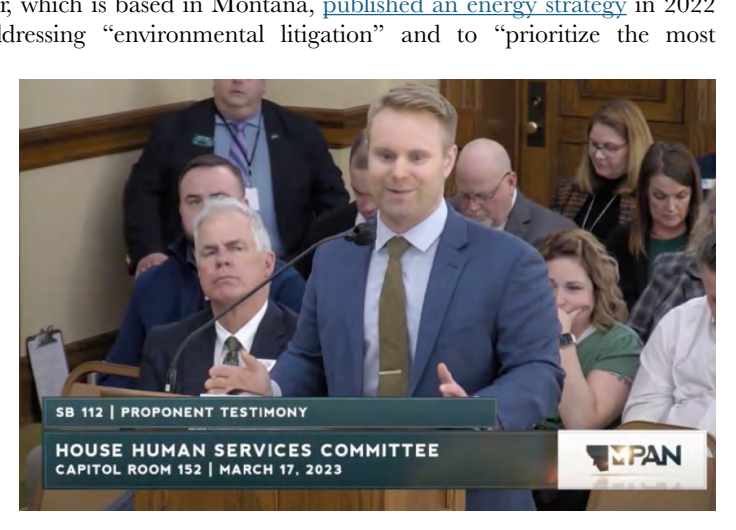
that emphasized addressing “environmental litigation” and to “prioritize the most affordable and reliable energy for the state’s businesses and consumers.”
The following year, a judge halted construction of a Montana gas plant, frontierinstitute.org/eminently-debatable-judge-mosess-reasoning-o… (opens in new tab)” rel=”nofollow noopener” target=”_blank”>and the group spoke out against the ruling. while simultaneously backing a state law that would get rid of the very legal review that applied to the gas plant closure.
In a letter to the state of Montana’s Department of Environmental Quality, Frontier argued the department should streamline the review process for natural gas energy projects because, in their words, they frontierinstitute.org/letter-recommending-4-principles-for-mepa-re… (opens in new tab)” rel=”nofollow noopener” target=”_blank”>“aid the rapid transition to clean energy.” An argument that burning fossil fuels will ultimately help the rollout of clean energy rather than actually harm the environment because of combustion and methane is a creative one, but also false.
In 2024, Frontier Institute, in alignment with oil and gas interests, frontierinstitute.org/frontier-institute-amicus-brief-filed-in-hel… (opens in new tab)” rel=”nofollow noopener” target=”_blank”>filed an amicus brief opposing changes to Montana environmental law that would allow entities to bring climate liability suits against the state of Montana. The group filed a similar amicus brief in 2026 regarding the U.S. Supreme Court’s case in Suncor v. Boulder.
Debunking Phony Fossil Fuel Claims
Claim: “The global energy crisis in 2022 has proven that wind and solar are not ready to replace more reliable energy sources.”
Fact: False. The International Energy Agency (IEA) iea.blob.core.windows.net/assets/63c14514-6833-4cd8-ac53-f9918c2e4… (opens in new tab)” rel=”nofollow noopener” target=”_blank”>found that Europe’s 2022 electricity- price surge was driven mostly by collapsing Russian gas supplies, soaring gas and coal prices, and unusually weak hydro and nuclear generation. It was not simply because of the expansion of renewable energy. Because gas-fired plants often set Europe’s wholesale electricity price, the tenfold rise in gas prices sharply increased power costs. The IEA estimated that recently added wind and solar capacity actually softened the crisis: without renewable capacity added since 2021, average EU wholesale electricity prices would have been about 8 percent higher in 2022. Frontier’s account is therefore selective. It treats a fossil-gas supply and price shock as evidence against clean energy, even though additional wind and solar reduced Europe’s exposure and lowered the resulting electricity costs. Claim: “Reliable energy sources that aid the rapid transition to clean energy.” Fact: False. By “reliable,” Frontier means “natural gas.” That is only defensible if one omits methane leakage and downstream CO2 emissions. The EPA says methane accounted for 12% of U.S. GHG emissions in 2022, and that leaks from natural gas systems are a human source of methane; EPA also describes the oil and gas sector as one of the largest methane-emitting sectors in the United States. EIA likewise notes that natural gas is mainly methane, that leaks occur across wells, storage, pipelines, and processing, and that these emissions matter in terms of the climate. So Frontier’s claim that natural gas is a climate solution is incomplete and misleading.
An argument that burning fossil fuels will ultimately help the rollout of clean energy rather than actually harm the environment because of combustion and methane is a creative one, but also false.
Government Accountability & Oversight
Origins and Fossil Fuel Ties Government Accountability & Oversight govoversight.org/#about (opens in new tab)” rel=”nofollow noopener” target=”_blank”>describes itself in vague terms, stating that it will fight for “transparency” in the public realm. It makes statements like this: “Institutions suffer from capture—including, increasingly, the public’s academic institutions, enlisted by donors and ideologues as weapons in legal, political and policy battles, almost universally on one side of the ideological divide.”
But GAO is precisely a front group for donors and ideologues of the coal industry. It has no employees, only three board members with ties to fossil fuel companies. And half of the nonprofit’s financing comes from one billionaire’s coal industry foundation that doesn’t believe in climate change.
The group, formed as a nonprofit in 2018, is led by Chris Horner, an attorney who denies climate change is real and has wsj.com/articles/BL-BANKB-21830 (opens in new tab)” rel=”nofollow noopener” target=”_blank”>worked for the coal industry. GAO’s three-member board of directors also has fossil fuel and climate denialism ties.
Matthew Hardin represented another similar libertarian front group, Energy • Policy Advocates, case-law.vlex.com/vid/energy-policy-advocates-v-934492325?utm_sour… (opens in new tab)” rel=”nofollow noopener” target=”_blank”>when it sued the state of Minnesota related to climate change litigation records.
Greg Garrison, in 2018, said that climate change, web.archive.org/web/20180509235547/http:/www.wibc.com/blogs/garris… (opens in new tab)” rel=”nofollow noopener” target=”_blank”>“has been a hoax, a snare and a • web.archive.org/web/20180509235547/http:/www.wibc.com/blogs/garris… (opens in new tab)” rel=”nofollow noopener” target=”_blank”>delusion always.” He also referred to former Vice President Mike Pence as a “longtime friend.”
Joe Thomas is a correspondent for dailysignal.com/2025/03/10/the-daily-signal-names-veteran-virginia… (opens in new tab)” rel=”nofollow noopener” target=”_blank”>The Daily Signal, a self-described “leading
• conservative news website.”
Meanwhile, it appears that half of GAO’s funding comes from the Joe Craft Foundation, according to projects.propublica.org/nonprofits/organizations/861778799/2025131… (opens in new tab)” rel=”nofollow noopener” target=”_blank”>IRS filings. Joe Craft is the billionaire president of Alliance Resource Partners LP, the 2nd- largest coal producer in the eastern US. This decade, GAO has received $1.5 million from the Craft Foundation, according to projects.propublica.org/nonprofits/organizations/861778799/2025131… (opens in new tab)” rel=”nofollow noopener” target=”_blank”>IRS filings. And when Craft’s wife, Kelly Craft, was a U.S. Ambassador, Joe Craft attended meetings his wife held with congress.gov/116/cprt/SPRT44821/CPRT-116SPRT44821.pdf (opens in new tab)” rel=”nofollow noopener” target=”_blank”>Suncor execs, prompting congressional concern. Suncor is now a party to a case before the U.S. Supreme Court—Suncor v. Boulder—that seeks to protect fossil fuel companies from paying for the damage wrought by climate change. The group has chimed in as a “friend of the court” in the landmark case, arguing the city of Boulder’s climate liability claims should not proceed in state court.
GAO funder The Craft Foundation also lists investments with the following fossil fuel companies: Alliance Resource Partners LP, Energy Transfer LP, Enterprise Products LP, Plains All American Pipeline LP, Western Gas Partners LP, law.justia.com/cases/hawaii/supreme-court/2023/scap-22-0000429.htm… (opens in new tab)” rel=”nofollow noopener” target=”_blank”>Sunoco LP, and USA Compression LP. Sunoco is a defendant in another similar climate liability fight, Honolulu v. Sunoco.
Murray Energy, the now-bankrupt coal mining company, also ceert.org/wp-content/uploads/2019/pdfs/191217_A-Coal-Baron-Funded-… (opens in new tab)” rel=”nofollow noopener” target=”_blank”>dispersed $300,000 to GAO, according to bankruptcy filings. The company was owned by climate crisis denier and Trump donor Robert Murray.
History of Fronting for the Fossil Fuel Industry
According to IRS disclosures, GAO spends almost all of its money on litigation. But looking at the cases it does weigh in on, its positions are in defense of the fossil fuel industry. For example, the govoversight.org/gao-files-amicus-brief-supporting-rescission-of-p… (opens in new tab)” rel=”nofollow noopener” target=”_blank”>GAO filed an amicus brief in 2026 supporting EPA’s rescission of a power-plant air toxics rule, arguing the prior rule was a pretext to force coal/power generation shifts. In Suncor, GAO is aligned with energy companies in opposition to the entities seeking damages from companies for the destruction wrought by climate change. The group also has a documented history of trying to roll back the EPA. In 2025, GAO govoversight.org/gao-submits-comments-on-epa-reconsideration-of-20… (opens in new tab)” rel=”nofollow noopener” target=”_blank”>submitted comments supporting reconsideration of EPA’s 2009 Endangerment Finding, arguing U.S. emissions reductions have minimal or undetectable climate effect.
Debunking Phony Fossil Fuel Claims
Claim: “U.S. policy actions are expected to have undetectably minimal, if any, direct impact on the global climate and any effects—which again are not expected to be detectable—will emerge if at all only with long delays.”
Fact: This was govoversight.org/gao-submits-comments-on-epa-reconsideration-of-20… (opens in new tab)” rel=”nofollow noopener” target=”_blank”>GAO’s response to the Clean Air Act’s Endangerment Finding, and whether greenhouse-gas pollution may reasonably be anticipated to endanger public health. It is not about whether one rule singlehandedly cools the planet. EPA’s 2009 finding determined that six greenhouse gases threaten current and future generations, and that motor vehicles contribute to that pollution. The National Climate Assessment says human-caused climate change is already “far-reaching and worsening” across every U.S. region, and that rapid emissions reductions can limit future warming and many risks. Claim: GAO told the Supreme Court that it’s an “independent” entity with no “direct interest” in the outcome of the climate liability case before the U.S. Supreme Court, Suncor v. Boulder.
Fact: GAO can’t argue that it is “distinct and independent” from the fossil fuel industry. Claim: GAO says there is “great reason” not to accept climate-model assumptions because “by design they bake in anthropogenic warming,” or human-caused warming. Fact: Climate models help test whether warming can be explained without human emissions, and the ipcc.ch/report/ar6/wg1/resources/spm-headline-statements/ (opens in new tab)” rel=”nofollow noopener” target=”_blank”>answer is no.
Independence Institute Origins and Fossil Fuel Ties
The Independence Institute was founded by a former Nixon speechwriter in 1985, and what began as a state-level think tank has since expanded outside of Colorado. It has a libertarian bent and consistently promotes “free market energy,” and opposition to renewable mandates and carbon regulation. It argues fossil fuels raise living standards, enable disaster response and food production, and that heavy reliance on renewables is high-risk and high-cost.
The think tank is also awash in corporate funding. It’s taken money from oil companies such as Chevron, Mobil, as well as fossil fuel interests Peabody Energy and Koch Industries, desmog.com/independence-institute/ (opens in new tab)” rel=”nofollow noopener” target=”_blank”>according to Desmog. It’s received money from foundations linked to the Koch family, and the Lynde and Harry Bradley Foundation.
The group has also received funding from DonorsTrust, a dark-money fund that obscures the identities of many original donors. DonorsTrust has been linked to conservative judicial activist Leonard Leo’s 85 Fund. IRS filings show the Independence Institute received more than $1.83 million from National Philanthropic Trust (NPT) between 2018 and 2024, connecting it back to billionaire investor Paul Singer, who donated nearly half a billion to the NPT in the same period. In addition, one of the Independence Institute’s top funders is the Adolph Coors Foundation, whose wealth is tied to the company behind Coors beer. The Coors family has been instrumental in shaping modern conservative politics.
History of Fronting for the Fossil Fuel Industry
From day one the Independence Institute spoke the language of liberty and limited government while quietly cashing checks from the usual suspects: Mobil, Chevron, Arco Coal, Lucas Oil & Gas, and Rocky Mountain Oil and Gas Association. The pitch was free-market gospel—keep government’s hands off energy markets—but the donors were the same large companies whose profits depended on exactly that outcome. At the turn of the century, the institute spent time attacking Colorado’s renewable electricity standards. For example, in 2012 it described legislation expanding a renewable requirement as a “ i2i.org/sb-178-sordid-tale-to-increase-renewable-mandate/ (opens in new tab)” rel=”nofollow noopener” target=”_blank”>sordid tale ” and asserted that renewable energy was “not competitive with traditional fossil fuels.” It also attributed much of Colorado’s electricity-rate growth to the state’s “New Energy Economy,” renewable mandates and policies moving generation away from coal.
In 2010, the Institute attacked Colorado’s Clean Air Clean Jobs Act, which accelerated retirement or conversion of aging coal plants. It alleged that Governor Bill Ritter, the Public Utilities Commission and Xcel Energy had “colluded,” exaggerated federal pollution requirements and used a regulatory “bogeyman” to force coal plants to switch to natural gas.
Over subsequent years it continued producing sympathetic coverage of coal mines and coal-dependent communities, including describing federal pollution policy as a “ i2i.org/the-war-on-coal-threatens-a-sleepy-colorado-mining-town/ (opens in new tab)” rel=”nofollow noopener” target=”_blank”>War on Coal.” Today the Independence Institute still calls itself a nonpartisan defender of freedom, yet its energy shop remains a reliable outpost for the same interests that bankrolled it at the start. For four decades the Institute has sold Colorado a version of liberty that just happens to keep the drilling rigs running and the billionaire donors smiling.
Debunking Phony Fossil Fuel Claims
Claim: “Green energy causes warming?”
Fact: Local microclimate effects from turbines are real but tiny, localized, and unrelated to the global radiative forcing from greenhouse gases. Peer-reviewed science attributes the overwhelming majority of recent warming to CO2 and other GHGs from fossil combustion. Treating a minor local effect as a serious counter to climate policy is apples- to-oranges and does not alter the energy balance of the planet.
Claim: The group’s supremecourt.gov/DocketPDF/25/25-170/409238/20260519131319600_25-1… (opens in new tab)” rel=”nofollow noopener” target=”_blank”>brief in the Suncor Supreme Court case states that the city of Boulder rejected a proposal to stop using fossil fuels despite its “professed fear” of climate change and “critical reliance” on those fuels.
Fact: This is essentially a flawed “you participate in society” argument, not a legal or factual rebuttal. Boulder’s lawsuit alleges that Exxon and Suncor knowingly contributed to climate harms, promoted fossil-fuel consumption and misrepresented material information while Boulder incurred local costs. Dependence on products supplied through an entrenched energy system does not eliminate the possibility that their sellers engaged in deception, or that they should bear part of the resulting damages.
Landmark Legal Foundation Origins and Fossil Fuel Ties
The Landmark Legal Foundation’s (LLF) beginnings date back to 1976 in Kansas City, MO, when big business began astroturfing its own public interest movements. Exxon and oil money are tied up with the group from inception. Richard Mellon Scaife, whose inheritance was comprised in part of Gulf Oil money, cpilj.law.uconn.edu/wp-content/uploads/sites/2515/2018/10/4.2-The-… (opens in new tab)” rel=”nofollow noopener” target=”_blank”>was a founder of the National Legal Center, which started setting up organizations at the state level. Exxon and Texaco were early funders, according to the cpilj.law.uconn.edu/wp-content/uploads/sites/2515/2018/10/4.2-The-… (opens in new tab)” rel=”nofollow noopener” target=”_blank”>Connecticut Public Interest Law Journal. One of the organizations National Legal Center went on to find was LLF, then known as the Great Plains Legal Foundation.
Over the years, LLF has received funding from ExxonMobil, climatefiles.com/bp/exxonmobil-funding-of-3rd-party-organizations-… (opens in new tab)” rel=”nofollow noopener” target=”_blank”>according to the Center for Climate Integrity. One Exxon grant sourcewatch.org/images/6/6f/Public_policy1_2002.pdf?utm_source=cha… (opens in new tab)” rel=”nofollow noopener” target=”_blank”>earmarked the money as being for “environmental accountability.” And at one point, longtime Exxon employee C. Kenneth Roberts, who over 30 years rose up to the rank of vice president, sat on Landmark’s board. Billionaire Koch money is also linked to LLF. The Charles Koch Foundation has given money to LLF, web.archive.org/web/20180509235547/http:/www.wibc.com/blogs/garris… (opens in new tab)” rel=”nofollow noopener” target=”_blank”>according to Desmog. Today, Landmark’s largest funder is the Sarah Scaife Foundation. The foundation is named for Sarah Mellon Scaife, an heiress to the Mellon family fortune who died more than 60 years ago. It has donated over $1 million since 2020, according to climatefiles.com/bp/exxonmobil-funding-of-3rd-party-organizations-… (opens in new tab)” rel=”nofollow noopener” target=”_blank”>Philanthropy.org.
History of Fronting for the Fossil Fuel Industry
For years while it’s received funding from oil and gas interests, Landmark Legal Foundation has sought to roll back greenhouse gas emissions, protect coal, and stop anyone seeking to hold fossil fuel companies liable for damages due to climate change. In 2010, the group challenged the EPA’s finding that greenhouse gases endanger public health and welfare, which became the scientific and legal foundation for federal climate regulation.
Landmark warned that regulating carbon pollution could have “ edf.org/sites/default/files/Endangerment%2520-%2520Atlantic%2520Le… (opens in new tab)” rel=”nofollow noopener” target=”_blank”>perhaps crippling” economic consequences, and urged the courts to toss the finding. It lost, but that did not stop the group from coming back again and again as a legal battering ram against climate rules.
When the Obama administration rolled out the Clean Power Plan, which sought to cut carbon pollution from power plants and accelerate a shift away from coal, edf.org/sites/default/files/Endangerment%2520-%2520Atlantic%2520Le… (opens in new tab)” rel=”nofollow noopener” target=”_blank”>Landmark sided with the states and industry interests trying to kill it. Years later, when the issue was back at the Supreme Court in West Virginia v. EPA, LLF argued that federal regulators lacked the authority to push utilities away from high polluting power sources. This time, the challengers won, and Landmark celebrated the ruling.
Now Landmark is helping oil companies fight a different threat: climate lawsuits that could force them to pay for the damage their products helped cause. In 2026, Landmark joined a Supreme Court brief backing ExxonMobil and Suncor in their battle with Boulder, Colorado, where local governments are seeking compensation for climate-related damages. landmarklegal.org/wp-content/uploads/2026/05/20260521141355180_202… (opens in new tab)” rel=”nofollow noopener” target=”_blank”>Landmark dismissed those suits as “regulation-by-litigation,” arguing that cities should not be allowed to use the courts to impose what it calls national energy policy.
Debunking Phony Fossil Fuel Claims
Claim: Global warming projections are a “low probability,” and the EPA’s concerns are based on a “ edf.org/sites/default/files/Endangerment%2520-%2520Atlantic%2520Le… (opens in new tab)” rel=”nofollow noopener” target=”_blank”>remote and unproven fear. ” Fact: Even at the time, that was an inaccurate description of the record. In 2012, the D.C. Circuit examined the Endangerment Finding and concluded that EPA had marshaled a “ law.justia.com/cases/hawaii/supreme-court/2023/scap-22-0000429.htm… (opens in new tab)” rel=”nofollow noopener” target=”_blank”>substantial ” body of scientific evidence showing that greenhouse gases trap heat, human activity was increasing their atmospheric concentrations, and that anthropogenic greenhouse gases were very likely the principal cause of the observed warming.
Claim: In 2011, it said that the EPA’s regulation of greenhouse gas emissions will have “sweeping” and “perhaps crippling economic effects.”
Fact: Automakers in subsequent years went on to outperform the standards for the first four years of the program, 19january2017snapshot.epa.gov/regulations-emissions-vehicles-and-e… (opens in new tab)” rel=”nofollow noopener” target=”_blank”>between 2012 and 2015. And manufacturers adopted fuel efficient technologies at unprecedented rates, all while vehicle sales increased for 7 consecutive years.
Manhattan Institute Origins and Fossil Fuel Ties
By now, nearly 50 years into existence, the Manhattan Institute (MI) isn’t fooling anyone. Although it may tell the U.S. Supreme Court and public that its aim is to “foster greater economic choice,” that choice is narrowed to a few oligopolies and billionaires, who have historically funded the think tank to do their bidding. Indeed, the Manhattan Institute is climatefiles.com/bp/exxonmobil-funding-of-3rd-party-organizations-… (opens in new tab)” rel=”nofollow noopener” target=”_blank”>funded by ExxonMobil, and funds linked to billionaires Charles Koch, Paul Singer, and causeiq.com/organizations/manhattan-institute-for-policy-research,… (opens in new tab)” rel=”nofollow noopener” target=”_blank”>John Paulson, according to financial records. Paul Singer has a substantial financial interest in the outcome of the Suncor v. Boulder U.S. Supreme Court case. Since 2022-23 fiscal years, Singer’s foundation, the Paul E. Singer Foundation, has given nearly $4 million to amici the Manhattan Institute, according to projects.propublica.org/nonprofits/organizations/861778799/2025131… (opens in new tab)” rel=”nofollow noopener” target=”_blank”>IRS projects.propublica.org/nonprofits/organizations/861778799/2025131… (opens in new tab)” rel=”nofollow noopener” target=”_blank”>disclosures. And aside from being chairman emeritus of Manhattan Institute, Singer is the founder and president of the hedge fund Elliott Management, which holds about
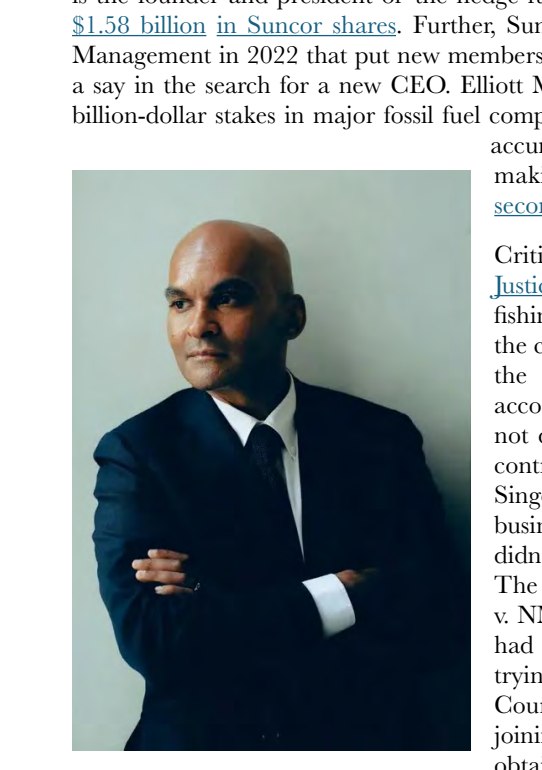
sec.gov/Archives/edgar/data/1791786/000101359426000613/xslForm13F_… (opens in new tab)” rel=”nofollow noopener” target=”_blank”>$1.58 billion sec.gov/Archives/edgar/data/1791786/000101359426000613/xslForm13F_… (opens in new tab)” rel=”nofollow noopener” target=”_blank”>in Suncor shares. Further, Suncor nasdaq.com/press-release/suncor-energy-enters-into-agreement-with-… (opens in new tab)” rel=”nofollow noopener” target=”_blank”>entered into an agreement with Elliott Management in 2022 that put new members on the Suncor board, as well as gave Elliott a say in the search for a new CEO. Elliott Management has a history of holding multi- billion-dollar stakes in major fossil fuel companies such as apnews.com/article/phillips-66-elliott-oil-activist-66c1eb5d11407c… (opens in new tab)” rel=”nofollow noopener” target=”_blank”>Phillips 66. In 2025, the fund accumulated around 5% of BP’s voting rights, making Elliott Management the company’s reuters.com/markets/deals/elliott-increases-bp-stake-just-over-5-2… (opens in new tab)” rel=”nofollow noopener” target=”_blank”>second-largest shareholder at the time. Critically, Singer propublica.org/article/climate-change-alec-leonard-leo-lawsuits-fo… (opens in new tab)” rel=”nofollow noopener” target=”_blank”>flew U.S. Supreme Court Justice Samuel Alito aboard his private jet for a fishing vacation that was reportedly arranged by the conservative activist Leonard Leo and held at the property of a major conservative donor, according to a ProPublica investigation. Alito did not disclose the jet travel or the lodge stay. The controversy was compounded by the fact that Singer’s Elliott Management had subsequent business before the Supreme Court, and Alito didn’t recuse himself from any of the matters.
The clearest example was Republic of Argentina v. NML Capital, involving an Elliott affiliate that had bought defaulted Argentine debt and was trying to force repayment. In 2014, the Supreme Court ruled 7–1 in Elliott’s favor, with Alito joining the majority. The ruling helped Elliott obtain leverage that eventually contributed to a $2.4 billion payout from Argentina.
The Manhattan Institute has also received approximately $1.61 million from National Philanthropic Trust between 2018 and 2024, according to IRS filings, connecting it back to the half a billion dollars contributed by Singer in the same period. The Manhattan Institute has sourcewatch.org/index.php?title=Property_and_Environment_Research_… (opens in new tab)” rel=”nofollow noopener” target=”_blank”>long been supported by the same overlapping funding networks that appear throughout this report. Its funders include the Searle Freedom Trust ($9.0 million), Lynde and Harry Bradley Foundation ($8.6 million), Sarah Scaife Foundation ($4.0 million), Koch-affiliated foundations (more than $3.4 million), DonorsTrust and Donors Capital Fund (more than $2.3 million combined), Leonard Leo’s 85 Fund ($450,000), and the Koch-backed Stand Together Trust ($495,000 in 2022). Together, these grants place the Manhattan Institute at the center of the interconnected network of climate denial, dark-money, and fossil fuel funding examined in this report.
History of Fronting for the Fossil Fuel Industry
The Institute used its platform to defend ExxonMobil during state investigations into whether the company misled the public about climate change. In 2016, MI published manhattan.institute/article/stifling-free-speech-on-climate-change? (opens in new tab)” rel=”nofollow noopener” target=”_blank”>“Stifling Free Speech on Climate Change,” casting the Exxon investigations as a threat to free debate and linking them to scrutiny of climate skeptics.
Robert Bryce, a former Manhattan Institute senior fellow, wrote a book called Power Hungry: The Myths of “Green” Energy and the Real Fuels of the Future. In it, he argues that renewables are ‘high cost’ and that the Gulf oil spill should not be used as an excuse to stop offshore drilling. The Manhattan Institute continues to pen a number of articles in favor of dirty energy. A 2019 manhattan.institute/article/stifling-free-speech-on-climate-change? (opens in new tab)” rel=”nofollow noopener” target=”_blank”>Wall Street Journal article by one of its energy fellows amplified arguments that blocking gas pipelines would hurt consumers, and that wind and solar were poor substitutes for more dispatchable generation. And it explicitly framed renewables as unrealistic and linked reliability concerns to the case for additional gas infrastructure.
The Manhattan Institute also published media4.manhattan-institute.org/pdf/eper_11.pdf (opens in new tab)” rel=”nofollow noopener” target=”_blank”>a report by the president of Continental Economics, “an economic and litigation consulting firm specializing in issues affecting the energy industry,” with experience working for “electric utilities, industry trade groups, and government energy policy and regulatory agencies.” The report attacks offshore wind economics and criticizes climate-oriented regulation.
Debunking Phony Fossil Fuel Claims
Claim: “Actions that erode the bedrock protections of the First Amendment are a clear and present danger, manhattan.institute/article/stifling-free-speech-on-climate-change? (opens in new tab)” rel=”nofollow noopener” target=”_blank”>something that climate change is not.” Fact: A lawsuit over whether a company knowingly misled consumers about the damages of climate change is not an infringement on speech. The claim uses free speech to avoid talking about climate change, which has been established as a clear and present danger. Claim: After Winter Storm Uri, a Manhattan Institute manhattan.institute/article/stifling-free-speech-on-climate-change? (opens in new tab)” rel=”nofollow noopener” target=”_blank”>article argued that the near- collapse of the Texas grid, “began with a near-total loss of output from that state’s mighty wind farms.”
Fact: Federal and independent assessments did not support that conclusion. FERC and NERC later found that ferc.gov/news-events/news/final-report-february-2021-freeze-unders… (opens in new tab)” rel=”nofollow noopener” target=”_blank”>87% of unplanned generation outages due to fuel issues were related to natural gas, and reuters.com/sustainability/boards-policy-regulation/trump-calls-wi… (opens in new tab)” rel=”nofollow noopener” target=”_blank”>AP and Reuters both published fact checks rejecting the claim that wind and solar were primarily to blame.
National Association of Manufacturers Origins and Fossil Fuel Ties
The National Association of Manufacturers, or NAM, has been around for almost 130 years to address regulation of manufacturing by the federal government. It says that it represents “small businesses to global leaders,” but nearly 75 percent of its board members represent large transnational companies, including major fossil fuel, petrochemical, pipeline, and utility interests.
These companies include ExxonMobil, BP, Shell, and ConocoPhillips, as well as other large companies Dow, Pfizer, Johnson & Johnson, Toyota, Microsoft, Eli Lilly, General Mills, Alcoa, and U.S. Steel. One of NAM’s nam.org/about/board-of-directors/ (opens in new tab)” rel=”nofollow noopener” target=”_blank”>board members is billionaire Harold G. Hamm, the founder and chair of oil producer Continental Resources. And the vice
president of Energy Transfer, a midstream energy company, sits on NAM’s board. NAM has filed an amicus brief in support of the fossil fuel industry ahead of the major Suncor v. Boulder U.S.
Supreme Court case. Formally, the case concerns whether federal law precludes state-law claims. Practically, the ruling could determine whether communities may use state courts to seek compensation from fossil-fuel companies for alleged climate deception and resulting harms. Ironically, Exxon is a defendant in the case, and corporate.exxonmobil.com/who-we-are/policy/exxonmobil-advocacy-rep… (opens in new tab)” rel=”nofollow noopener” target=”_blank”>Exxon itself disclosed between $100,000 to $499,999 in support to NAM—raising questions as to the independence of the trade group.
Does NAM really represent small business, or is it just a front for large oil companies like Exxon?
Association of Manufacturers. (Photo: NAM)Further, NAM created a project called the Manufacturers’ Accountability Project (MAP), mfgaccountabilityproject.org/about-us/ (opens in new tab)” rel=”nofollow noopener” target=”_blank”>whose stated goal was to “bring attention to and push back on” climateintegrity.org/lawsuits/P8 (opens in new tab)” rel=”nofollow noopener” target=”_blank”>more than two dozen lawsuits accusing the industry of desmog.com/2022/09/20/exxon-imperial-oil-climate-change-proprietar… (opens in new tab)” rel=”nofollow noopener” target=”_blank”>spreading doubt about rising global temperatures. But MAP took $550,000 from BP’s American subsidiary, according to the New Republic.
History of Fronting for the Fossil Fuel Industry
In 1989, NAM formed the Global Climate Coalition (GCC), cssn.org/wp-content/uploads/2022/04/GCC-Paper.pdf? (opens in new tab)” rel=”nofollow noopener” target=”_blank”>whose mission appears to be to oppose the very idea that climate change is happening because of the burning of fossil fuels. GCC was stacked with the largest burners of fossil fuels and its goal was to discredit the science behind climate change. When the GCC spun off “independently,’’ in 1992, Exxon was a founding member of the organization.
Throughout its history, NAM has been documents.nam.org/ERP/NAM_Comments_on_EPA_regulatory_reform_reques… (opens in new tab)” rel=”nofollow noopener” target=”_blank”>taking pro-fossil fuel positions such as opposing federal limits on carbon pollution, welcoming the Trump Administration’s reconsideration of the Clean Power Plan and questioned the Environmental Protection Agency’s authority in regulating greenhouse gases.
NAM also defended fracking, telling a U.S. senate subcommittee that the Obama Administration waged, “an all-out assault to shut down domestic production of American oil and natural gas and, in particular, targeting the use of hydraulic fracturing.” NAM also attacks lawsuits seeking to hold its backers ExxonMobil, BP, and Shell responsible for allegedly deceiving the public about the climate consequences of their products. nam.org/wp-content/uploads/2026/06/2025-Annual-Report.pdf (opens in new tab)” rel=”nofollow noopener” target=”_blank”>NAM’s own annual report says, “NAM is pushing back against politically motivated climate change litigation.”
Recently, the association filed briefs supporting fossil fuel defendants in cases brought by documents.nam.org/law/amicusbriefs/2021/BP_v_MayorCityBaltimore_4C… (opens in new tab)” rel=”nofollow noopener” target=”_blank”>Baltimore, Boulder and other communities. Its argument is that climate change must be addressed nationally, and not through state consumer-protection, nuisance or damages laws that could force individual companies to answer for their own conduct.
Debunking Phony Fossil Fuel Claims
Claim: “The narrative of this litigation—that there is some widespread ‘campaign of deception’—is undermined by the litigation itself. The complaints recognize the U.S. Government’s knowledge of and public discourse over climate change starting in the 1960s and increasing in the past 40 years.”
Fact: NAM in its amicus brief filed in the Suncor v. Boulder case says climate change is real and that people knew about it. But it says nothing to address the legal issue at hand, which is: what did companies know about climate change, and was what they said deceptive?
Claim: “Here, Boulder seeks to subject only two companies to liability for its climate change harms. This ever-changing list of defendants that engage in different aspects of the energy industry highlights the fact that imposing liability on any group of defendants that a city, state, or other local government chooses to name lacks any principled basis.” Fact: A lawsuit doesn’t have to go after every company for a liability claim. That’s not how the legal system works. A lawsuit depends on conduct and what can be proven. Just because two defendants are being sued does not mean the underlying conduct hasn’t occurred. Further, Suncor v. Boulder isn’t the only case where energy companies are being sued for damages associated with climate change.
Claim: “Indeed, the lawyers and other advocates orchestrating this litigation have acknowledged outside of court that the desired effect of the litigation is to impose costs on consumers for the worldwide production, promotion, sale and use of fuel.” Fact: The claim that holding polluters accountable for the costs of climate change is an attack on consumers is false. Companies often arbitrarily raise prices. And plaintiffs like Boulder are not suing people for driving cars or heating their homes. Even a little cost- transfer doesn’t erase the responsibility of a corporation. The real issue is: if companies do pass on costs to consumers because of something bad that they did, why don’t executives, who make lots of money at the expense of public health, pay for it instead?
Pacific Legal Foundation Origins and Fossil Fuel Ties
Around since the 1970s, Pacific Legal Foundation (PLF) has branded itself as defending everyday Americans against government abuse. It touts fighting for property rights, equality, opportunity, and liberty.
But one thing it’s not going to protect Americans from is corporate tyranny. Follow the money and a different picture emerges, one that Pacific Legal Foundation’s slick marketing doesn’t talk about: It seems to be owned by oligarchs and the energy industry. ExxonMobil has been contributing to PLF for around 30 years, according to climatefiles.com/bp/exxonmobil-funding-of-3rd-party-organizations-… (opens in new tab)” rel=”nofollow noopener” target=”_blank”>ClimateFiles. Pacific Legal Foundation is funded by virtually every major climate denial and conservative legal funding network identified in this report. Between 2015 and 2022, sourcewatch.org/index.php?title=Property_and_Environment_Research_… (opens in new tab)” rel=”nofollow noopener” target=”_blank”>IRS filings show the organization received more than $3.2 million from Koch-affiliated foundations, $3.0 million from the Koch-backed Stand Together Trust, $1.0 million from the Searle Freedom Trust, $625,000 from the Sarah Scaife Foundation, $310,000 from the Bradley Foundation, and additional funding from Koch-connected DonorsTrust and
Donors Capital Fund.
The group’s origins are rooted in the rise of Reaganism in 1970s California. Part of the founding circle included Ed Meese, future U.S. Attorney General under the Reagan Administration. Some of the earliest grants were made by billionaire Richard Scaife, heir to the Mellon fortune in banking, oil and aluminum. According to the Washington Post, “Since the mid-‘70s more than $20 million in Scaife money has gone to the conservative public interest law movement “on behalf of a market-oriented economics system, traditional property rights and limited government,” in the words of an internal memo written by a Scaife aide in December 1980.” To this day, PLF receives money from the Scaife foundation.
Since the mid-‘70s more than $20 million in Scaife money has gone to the conservative public interest law movement “on behalf of a market-oriented economics system, traditional property rights and limited government,” in the words of an internal memo written by a Scaife aide in December 1980.” To this day, PLF receives money from the Scaife foundation.
History of Fronting for the Fossil Fuel Industry
A look at PLF’s legal history gives the impression that the group’s purpose is to promote the destruction of the environment on behalf of large companies. This is illustrated in a number of US Supreme Court cases through the years. In Massachusetts v. EPA, supremecourt.gov/DocketPDF/25/25-170/409238/20260519131319600_25-1… (opens in new tab)” rel=”nofollow noopener” target=”_blank”>PLF argued that the EPA didn’t have the authority to regulate motor vehicle greenhouse gas emissions. In 2011, the group helped utility defendants in landmark climate liability litigation, American Electric Power v. Connecticut, by filing an amicus brief against public- nuisance claims over greenhouse gas emissions from major power companies. In a major win for coal and fossil fuel interests against carbon regulation, the Supreme Court limited in 2022 the EPA’s “Clean Power Plan” approach. PLF sided with industry on that matter. Today the group continues to challenge regulation surrounding greenhouse gas emissions, and promote gas extraction opportunities
Debunking Phony Fossil Fuel Claims
Claim: “The physics of fossil fuels are especially cost-effective because they have high ‘ pacificlegal.org/the-hill-freedom-will-keep-the-city-lights-shinin… (opens in new tab)” rel=”nofollow noopener” target=”_blank”>energy density ’ compared to renewables. Higher productivity ultimately leads to increased income, life expectancy, and higher population growth.”
Fact: Energy density does not by itself establish that fossil power is the cheapest, safest, or most socially efficient option once fuel costs, pollution, climate damages, and generation economics are considered. IRENA reported that renewables remained the most cost- competitive source of new electricity in 2024, and the IEA projects renewables will supply more than 90% of global electricity-demand growth through 2030. PLF’s framing quietly substitutes a single physical property for a full economic and public-health comparison. Claim: Leaked climate-scientist emails suggest data might have been pacificlegal.org/plf-petitions-epa-to-reconsider-endangerment-find… (opens in new tab)” rel=”nofollow noopener” target=”_blank”>“falsified or manipulated,” and therefore called the validity of EPA’s 2009 greenhouse-gas endangerment finding into question.
Fact: PLF treated a controversy involving selected emails from one research institution as though EPA’s finding rested on that institution’s data alone. But it did not. epa.gov/climate-change/technical-support-document-endangerment-and… (opens in new tab)” rel=”nofollow noopener” target=”_blank”>EPA’s technical assessment synthesized extensive evidence from multiple federal and international scientific bodies, covering rising temperatures, sea-level rise, extreme heat, air quality, disease risks and other harms.
The physics of fossil fuels are especially cost-effective because they have high ’ compared to renewables. Higher productivity ultimately leads to
Pelican Institute Origins and Fossil Fuel Ties
Since its founding in 2008, the Pelican Institute has been intertwined with the energy industry in terms of governance, finances and the positions it has taken in the legal and policy space. While its marketing to the general public swims in the language of vagueness such as “fairness” and “opportunity” for “consumers,” a look at its history suggests the opposite.
The Louisiana-based Pelican Institute has received extensive financial support from the same overlapping fossil fuel and climate denial funding networks identified throughout this report. IRS filings show the organization received nearly $940,000 from Koch- affiliated organizations—including the Charles G. Koch Foundation, Charles Koch Institute, Stand Together Fellowships, and the Stand Together Trust—along with $464,500 from DonorsTrust, $226,500 from Donors Capital Fund, $400,000 from the Sarah Scaife Foundation, $120,000 from the Lynde and Harry Bradley Foundation, and $95,000 from the Searle Freedom Trust. Together, these grants place the Pelican Institute
squarely within the network of organizations funded by the fossil fuel industry and major climate denial foundations.
The Institute’s leadership also reflects those connections.
President and CEO Daniel Erspamer previously held senior positions at the State Policy Network and Americans for Prosperity, two organizations heavily financed by the Koch network. Americans for Prosperity has spent decades opposing climate regulations, renewable energy standards, and carbon pricing, while the State Policy Network has coordinated state-level campaigns challenging clean energy and environmental policies across the country.
The group’s staff and affiliated fellows also include individuals connected to energy-policy organizations. For example, economic Fellow Vance Ginn is americanenergyinstitute.com/about/ (opens in new tab)” rel=”nofollow noopener” target=”_blank”>also a fellow at the American Energy Institute.
History of Fronting for the Fossil Fuel Industry
Pelican’s pattern of legal and policy activity benefits the oil and gas industry. In 2016, Pelican argued that the Clean Power Plan pelicanpolicy.org/opportunity-policy/louisiana-need-not-rush-imple… (opens in new tab)” rel=”nofollow noopener” target=”_blank”>would do almost nothing to reduce global warming by 2100, and claimed that even eliminating all U.S. carbon emissions would make essentially no difference.
In 2024, Pelican and the Liberty Justice Center challenged the rule on behalf of petitioners, including the Oil & Gas Workers Association to overturn the agency’s climate disclosure rule. Pelican argued that the rule exceeded the SEC’s authority, compelled speech and would burden companies.
Pelican has waged sustained campaigns against Louisiana lawsuits seeking coastal- restoration damages from oil and gas companies. In 2021 and 2022, it called the cases “ pelicanpolicy.org/press-release/pelican-responds-to-settlement-in-… (opens in new tab)” rel=”nofollow noopener” target=”_blank”>frivolous ” and argued that they were driving jobs and investment out of Louisiana. In 2025, Pelican announced that it had filed amicus briefs in Chevron v. Plaquemines Parish and Suncor v. Boulder County, pelicanpolicy.org/press-release/pelican-responds-to-settlement-in-… (opens in new tab)” rel=”nofollow noopener” target=”_blank”>describing the cases as “trial-lawyer driven lawfare against American energy production.” After the Supreme Court ruled in 2026 that the case, Chevron v. Plaquemines, could proceed in federal court, Pelican called the coastal cases “ pelicanpolicy.org/press-release/pelican-responds-to-settlement-in-… (opens in new tab)” rel=”nofollow noopener” target=”_blank”>meritless lawsuits.” And after a Louisiana jury ordered Chevron to pay approximately $745 million in 2025, Pelican pelicanpolicy.org/legal-regulatory/pelican-institute-statement-in-… (opens in new tab)” rel=”nofollow noopener” target=”_blank”>said the judgment meant “hundreds of millions less for energy production, drilling investments and the jobs they create.”
Debunking Phony Fossil Fuel Claims
Claim: The Clean Power Plan would prevent only about 0.018°C of warming by 2100 and that even eliminating all U.S. carbon emissions would make essentially no difference. Fact: Pelican isolates one policy and treats its inability to solve global warming alone as proof that it is worthless. The reality is that combating climate change is a multi-front approach not isolated to one policy. The EPA evaluated the plan based on emissions reductions, public-health benefits, and avoided damages due to climate change. archive.epa.gov/epa/cleanpowerplan/fact-sheet-clean-power-plan-num… (opens in new tab)” rel=”nofollow noopener” target=”_blank”>It projected that the Clean Power Plan would reduce power-sector carbon pollution in 2030 by approximately 870 million tons annually, leaving emissions 32 percent below 2005 levels. EPA also estimated that the plan would produce $34 billion to $54 billion in annual climate and public-health benefits in 2030, compared with approximately $8.4 billion in compliance costs.
Claim: “The SEC didn’t enact these rules to protect investors’ financial interests—it enacted them to pursue an ideological agenda and influence companies’ decisions to favor that agenda.”
Fact: Pelican confuses disclosure with regulation. The SEC rule did not require companies to cut emissions or adopt climate policies. What it did was it required disclosure of financial risks such as storm losses, transition costs, and exposure to climate related regulation. It just gave investors information so they could make their own decisions rather than forcing companies to follow an agenda.
Save our States Origins and Fossil Fuel Ties
Save Our States presents itself as a nonpartisan organization dedicated to protecting the Electoral College and preserving the role of states in presidential elections. Founded in 2009, the organization advocates for the Electoral College, opposes the National Popular Vote Interstate Compact, and promotes a constitutional vision emphasizing state sovereignty and federalism. Nothing in its public mission suggests expertise in climate science, energy policy, or environmental law. Yet in 2026, Save Our States entered one of the nation’s most consequential climate accountability cases, filing a U.S. Supreme Court supremecourt.gov/DocketPDF/25/25-170/409238/20260519131319600_25-1… (opens in new tab)” rel=”nofollow noopener” target=”_blank”>amicus brief supporting ExxonMobil, Suncor Energy, and other fossil fuel companies in
Suncor Energy v. Boulder County.
The Supreme Court brief identifies Save Our States as a project of People for Opportunity, a 501(c)(4) nonprofit that does not publicly disclose its donors. Tax filings show that People for Opportunity has received substantial financial support from The Concord Fund, a principal grant-making organization within the conservative legal network led by longtime Federalist Society strategist Leonard Leo. The Concord Fund reported grants of $450,000 in 2023 and $590,000 in 2024 to People for Opportunity. Those grants are especially significant given that People for Opportunity reported approximately $1.08 million in total revenue in its 2023 IRS filing, meaning Concord funding represented a substantial share of the organization’s financial support.
The Bradley Foundation provides another link to the Leonard Leo network. Its 2023 tax filings report a $200,000 grant to the Judicial Education Project—an embed.documentcloud.org/documents/6889358-Articles-of-Amedment-Jud… (opens in new tab)” rel=”nofollow noopener” target=”_blank”>earlier name for the 85 Fund—for a “Save Our States initiative.” While available records do not conclusively establish that the grant supported the Save Our States project that later filed the Suncor brief, the connection is notable. A Mother Jones motherjones.com/politics/2026/06/supreme-court-amicus-briefs-inves… (opens in new tab)” rel=”nofollow noopener” target=”_blank”>investigation found that Bradley provided $75.6 million to 62 organizations filing conservative-side amicus briefs and reported that foundation staff documentcloud.org/documents/26493874-2024-stand-together-trust-990… (opens in new tab)” rel=”nofollow noopener” target=”_blank”>emailed with Leonard Leo about routing tax-exempt funding through one of his organizations to support Supreme Court amicus projects.
History of Fronting for the Fossil Fuel Industry
Save Our States has no public record of conducting climate, environmental, or energy policy research. Its stated mission is protecting the Electoral College and promoting federalism. Yet in 2026, the organization filed an amicus brief urging the U.S. Supreme Court to side with ExxonMobil, Suncor Energy, and other fossil fuel companies in Suncor Energy v. Boulder County—one of the nation’s most significant climate deception lawsuits.
Rather than addressing allegations that fossil fuel companies deceived the public for decades about the climate risks of their products, Save Our States reframed the case as an attack on state sovereignty. The brief argues that Colorado is improperly attempting to regulate global greenhouse gas emissions through state courts and asks the Supreme Court to block the lawsuit before it can proceed.
Debunking Phony Fossil Fuel Claims
Claim: Colorado’s lawsuit is an attempt to regulate global greenhouse gas emissions and national energy policy through state courts.
Fact: Colorado’s lawsuit does not seek to regulate national energy policy or prohibit fossil fuel production. Instead, Boulder County and other plaintiffs argue that ExxonMobil, Suncor, and other fossil fuel companies violated longstanding state consumer protection and tort laws by allegedly deceiving the public about the climate risks of their products. Like lawsuits against the tobacco and opioid industries, the case asks whether companies can be held financially accountable under existing state law for alleged misconduct—not whether a state can set national energy policy.
Claim: Allowing Colorado’s lawsuit to proceed would violate the sovereignty of other states.
Fact: States have long applied their own consumer protection and tort laws to companies alleged to have caused harm within their borders. The Colorado plaintiffs argue they are seeking damages for injuries suffered in Colorado under Colorado law—not attempting to regulate conduct in other states. The Supreme Court is being asked to determine where those jurisdictional limits lie.
Taxpayers Protection Alliance Origins and Fossil Fuel Ties
Founded in 2002, the Taxpayers Protection Alliance (TPA) is a Washington, D.C.-based advocacy organization that has become a prominent opponent of renewable energy and climate policies. Although TPA portrays itself as an independent taxpayer watchdog, energyandpolicy.org/taxpayer-protection-alliance/ (opens in new tab)” rel=”nofollow noopener” target=”_blank”>investigations have identified it as part of the broader Koch political network, supported through a web of Koch-connected organizations and dark-money groups, as well as the Leonard Leo network.
Public records show TPA has received funding from numerous organizations tied to the Koch network, including Americans for Job Security, which provided factcheck.org/2014/03/americans-for-job-security-3/ (opens in new tab)” rel=”nofollow noopener” target=”_blank”>$1.1 million in 2013, the American Future Fund, which contributed $350,700 in 2021, and other Koch- connected entities including Freedom Partners and America Encore (formerly the Center to Protect Patient Rights). According to the Energy & Policy Institute, Americans for Job Security also funneled at least $24 million into the Center to Protect Patient Rights, creating an interconnected funding network that ultimately supported organizations such
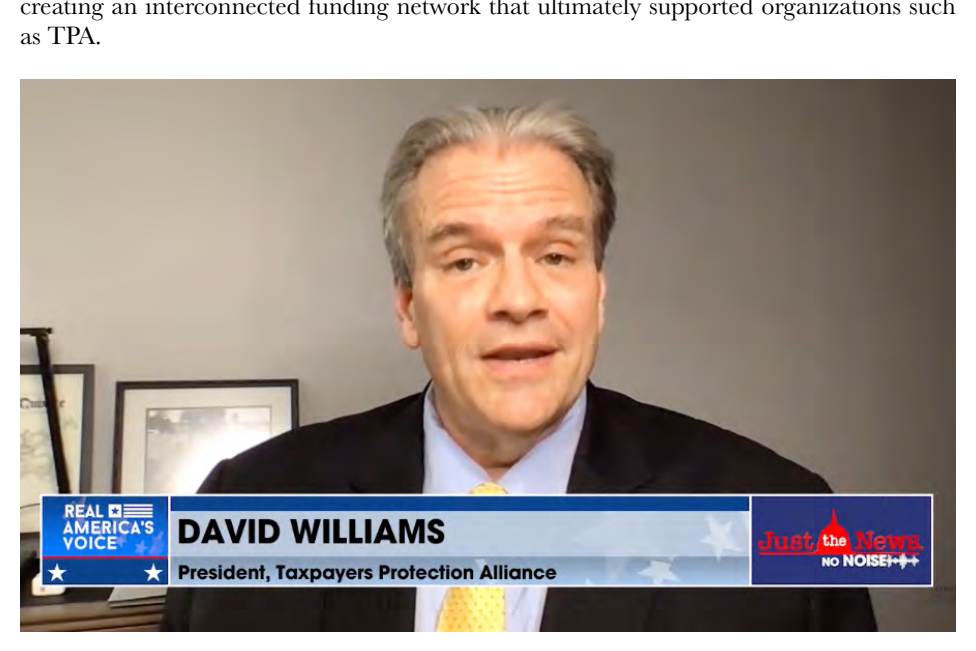
as TPA.
TPA’s leadership also reflects these ties. Board member Stephen DeMaura serves as president of Americans for Job Security, one of the Koch network’s principal funding vehicles. The organization’s operations are similarly intertwined with its leadership. According to TPA’s IRS Form 990 filings, nearly all management responsibilities are contracted to MLM Consulting LLC, a firm wholly owned by TPA President David Williams, which manages the organization’s day-to-day operations and advocacy. In 2018, Leonard Leo’s Freedom and Opportunity Fund awarded sourcewatch.org/index.php?title=Property_and_Environment_Research_… (opens in new tab)” rel=”nofollow noopener” target=”_blank”>$70,000 to the Taxpayers Protection Alliance. According to reporting, the Fund nytimes.com/2022/10/12/us/politics/leonard-leo-network.html (opens in new tab)” rel=”nofollow noopener” target=”_blank”>operated as a pass- through organization that directed donor money to a network of politically active nonprofits. It was dissolved at the end of 2018 after Leo shifted his operations to a new nonprofit, a precursor to the broader network that later included the 85 Fund and Concord Fund.
History of Fronting for the Fossil Fuel Industry
For more than a decade, the Taxpayers Protection Alliance has energyandpolicy.org/taxpayer-protection-alliance/ (opens in new tab)” rel=”nofollow noopener” target=”_blank”>promoted policy positions that align closely with the interests of the fossil fuel industry by attacking renewable energy, opposing electric vehicle incentives, and working alongside Koch-funded advocacy organizations to slow the transition away from fossil fuels.
In 2014, TPA launched SolarSecrets.org, a website dedicated to portraying the solar industry as dependent on government subsidies and financially unsustainable. The project cited reports from fossil fuel-funded advocacy organizations and was created by Sean Paige, a former Americans for Prosperity staff member who also worked at the Competitive Enterprise Institute. TPA reinforced the campaign by publishing its own report, A House of Cards: Solar Energy’s Subsidy-Based Business Model, which argued that public support for solar energy distorted markets while overlooking the longstanding government subsidies and tax preferences that have benefited the fossil fuel industry. TPA has also opposed policies designed to reduce petroleum consumption. In 2018, it joined a coalition led by the American Energy Alliance—the advocacy arm of the Institute for Energy Research, another organization with longstanding fossil fuel funding —to oppose federal tax credits for electric vehicles. The coalition included numerous Koch-network organizations, including Americans for Prosperity, the American Legislative Exchange Council (ALEC), the Competitive Enterprise Institute, FreedomWorks, and Americans for Tax Reform. TPA has similarly supported efforts to repeal state renewable energy standards and opposed policies expanding access to rooftop solar.
Together, these campaigns have consistently advanced a policy agenda that slows the adoption of renewable energy and electric vehicles while preserving demand for oil, natural gas, and other fossil fuels.
Debunking Phony Fossil Fuel Claims
Claim: Climate accountability lawsuits are an attempt by states and local governments to regulate national energy policy through the courts.
Fact: Climate accountability lawsuits do not ask courts to set national energy policy or ban fossil fuels. Instead, they rely on longstanding state consumer protection and tort laws to determine whether fossil fuel companies deceived the public about the climate risks of their products and should bear some responsibility for the resulting damages. Similar legal theories have long been used to hold the tobacco, opioid, asbestos, and other industries accountable for deceptive conduct. Whether Exxon, Suncor, and other companies engaged in deception is a factual question for the courts—not an effort by states to rewrite national energy policy.
NFIB Small Business Legal Center Origins and Fossil Fuel Ties
The organization grew out of the National Federation of Independent Business in the year 2000 as a way for the organization to do legal work on behalf of small businesses. But the nonprofit has taken money from big business over the years. Funding has come from the Koch-linked 990s.foundationcenter.org/990_pdf_archive/541/541934032/541934032_… (opens in new tab)” rel=”nofollow noopener” target=”_blank”>Claude R. Lambe Foundation, as well as 990s.foundationcenter.org/990_pdf_archive/541/541934032/541934032_… (opens in new tab)” rel=”nofollow noopener” target=”_blank”>Donors Capital Fund and businessinsider.com/donors-trust-capital-fund-conservative-dark-mo… (opens in new tab)” rel=”nofollow noopener” target=”_blank”>DonorsTrust, according to IRS records. The nonprofit has also accepted money from the familyvaluesatwork.org/wp-content/uploads/2012/05/NFIB-backgrounde… (opens in new tab)” rel=”nofollow noopener” target=”_blank”>Lynde and Harry Bradley Foundation, money tied to an Industrial Era fortune which has spent decades financing organizations
challenging climate science and opposing environmental regulation.
History of Fronting for the Fossil Fuel Industry
Within months of the Small Business Legal Center’s launch, nfib.com/news/press-release/nfib-celebrates-25-years-of-small-busi… (opens in new tab)” rel=”nofollow noopener” target=”_blank”>it brought its first major lawsuit against the U.S. Army Corps of Engineers, challenging changes to permitting under the Clean Water Act. Its argument was that the Corps had failed to comply with the Regulatory Flexibility Act, which requires agencies to consider impacts on small businesses and less burdensome alternatives.
The nonprofit also signed onto an amicus brief filed by the Washington Legal Foundation, which sided with industry in the Suncor v. Boulder case. The groups argued that Boulder’s lawsuit is really an attempt to regulate global greenhouse-gas emissions through state tort law, something they say Colorado has no constitutional authority to do.
Debunking Phony Fossil Fuel Claims
Claim: “The City and County of Boulder, Colorado wlf.org/2026/05/21/communicating/wlf-urges-supreme-court-to-stop-b… (opens in new tab)” rel=”nofollow noopener” target=”_blank”>wants to regulate greenhouse-gas emissions and ‘tax’ the energy industry by obtaining a multi-billion-dollar verdict under Colorado tort law against the targeted companies for contributing to global climate change.”
Fact: That’s not actually the legal argument the city and county in Boulder are making. WLF is trying to make a clever assertion that is a distraction from the legal issue at hand. The core claims are for damages under state tort or consumer-protection law, based on alleged deception, nuisance, and unjust enrichment. Plaintiffs in Suncor v. Boulder seek damages for harms caused by the companies’ alleged role in exacerbating climate change; and that oil companies misled consumers about the climate impacts of their products. Those are not the same thing as a state emissions cap, fuel tax, or regulatory standard. WLF’s framing collapses the distinction and overstates what the suits are asking the courts to do.
Claim: Boulder’s legal theory in Suncor effectively treats “the fossil-fuel industry itself” as illegal and could eventually make fossil-fuel production and distribution unprofitable. Fact: That claim overstates what Boulder is actually asking for. Boulder is not seeking to outlaw fossil fuels, shut down oil production, or impose emissions limits. It seeks damages and remediation for alleged local harms tied to the companies’ production, promotion and sale of fossil fuels. The brief actually says it does not seek to enjoin oil-and-gas operations.
Washington Legal Foundation Origins and Fossil Fuel Ties
The Washington D.C.-based think tank has been helping large companies and billionaires rise to power since it formed in 1977. Over nearly 50 years, Washington Legal Foundation (WLF) has been funded and ideologically aligned with ExxonMobil, Chevron, and billionaire energy magnates the Koch brothers and the Mellon-Scaife family,
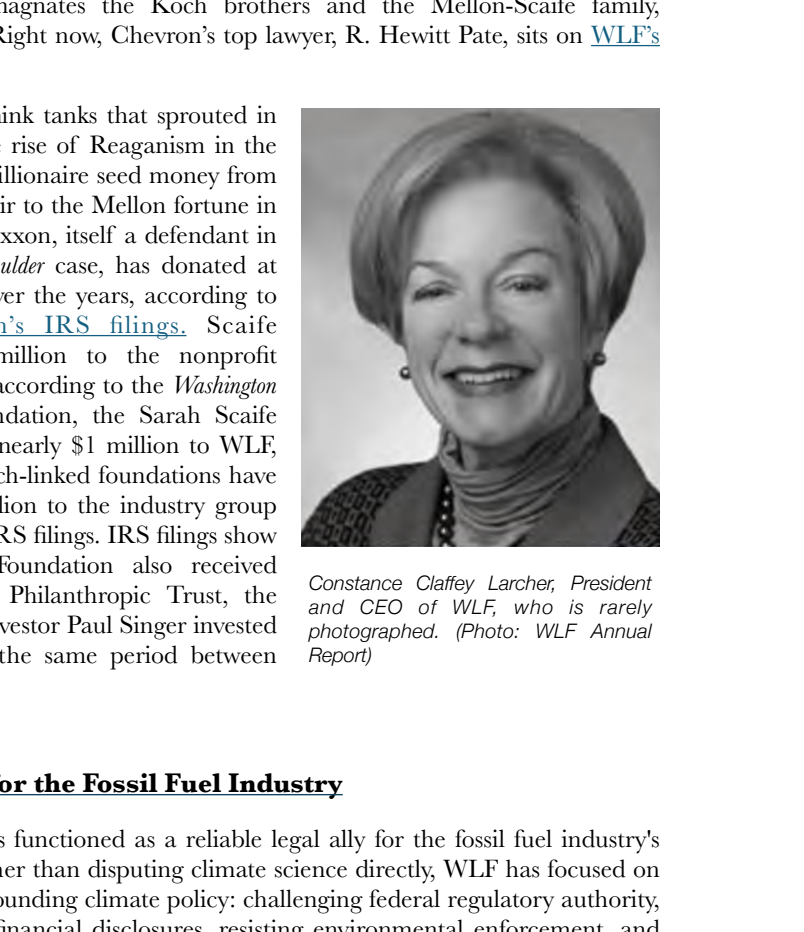
according to IRS filings. Right now, Chevron’s top lawyer, R. Hewitt Pate, sits on chevron.com/who-we-are/leadership/r-hewitt-pate (opens in new tab)” rel=”nofollow noopener” target=”_blank”>WLF’s advisory board. Like other conservative think tanks that sprouted in the 1970s and primed the rise of Reaganism in the 1980s, WLF began with billionaire seed money from Richard Mellon Scaife, heir to the Mellon fortune in oil, banking and metals. Exxon, itself a defendant in the landmark Suncor v. Boulder case, has donated at least $600,000 to WLF over the years, according to the projects.propublica.org/nonprofits/organizations/861778799/2025131… (opens in new tab)” rel=”nofollow noopener” target=”_blank”>Exxon Foundation’s IRS filings. Scaife foundations sent $3.9 million to the nonprofit between 1979 and 1998, according to the Washington Post. Another Scaife foundation, the Sarah Scaife Foundation, has donated nearly $1 million to WLF, desmog.com/washington-legal-foundation/ (opens in new tab)” rel=”nofollow noopener” target=”_blank”>according to Desmog. Koch-linked foundations have also given about $1.6 million to the industry group since 1998, projects.propublica.org/nonprofits/organizations/861778799/2025131… (opens in new tab)” rel=”nofollow noopener” target=”_blank”>according to IRS filings. IRS filings show the Washington Legal Foundation also received $180,000 from National Philanthropic Trust, the dark money fund where investor Paul Singer invested half a billion dollars in the same period between 2018 and 2024.
History of Fronting for the Fossil Fuel Industry
For decades, the WLF has functioned as a reliable legal ally for the fossil fuel industry’s deregulatory agenda. Rather than disputing climate science directly, WLF has focused on the legal architecture surrounding climate policy: challenging federal regulatory authority, wlf.org/2023/02/13/communicating/wlf-asks-biden-administration-to-… (opens in new tab)” rel=”nofollow noopener” target=”_blank”>opposing climate-related financial disclosures, resisting environmental enforcement, and filing amicus briefs in cases that could shield oil and gas companies from liability. Branding its work as a defense of constitutional limits, free enterprise, and private property, WLF has repeatedly advanced legal arguments that aim to make it substantially more difficult for governments to regulate greenhouse gas emissions, or hold fossil fuel companies accountable for the costs of climate change.
That strategy has become especially visible as climate litigation has expanded. WLF has weighed in on behalf of fossil fuel interests in cases involving companies such as ExxonMobil, wlf.org/case/suncor-v-county-of-boulder/ (opens in new tab)” rel=”nofollow noopener” target=”_blank”>Suncor, wlf.org/case/suncor-v-county-of-boulder/ (opens in new tab)” rel=”nofollow noopener” target=”_blank”>Chevron, BP, and other major producers facing lawsuits from states and municipalities seeking compensation for climate damages. In these cases, WLF has argued that climate change is a matter reserved for Congress or the federal government, not state courts, and has urged courts to dismiss or relocate lawsuits that could expose the industry to billions of dollars in liability. The organization has similarly opposed Securities and Exchange Commission climate disclosure rules, arguing that requiring companies to disclose climate-related financial risks exceeds the agency’s authority and compels corporate speech. It has also wlf.org/case/suncor-v-county-of-boulder/ (opens in new tab)” rel=”nofollow noopener” target=”_blank”>challenged Environmental Protection Agency regulations that limit greenhouse gas emissions, portraying them as unlawful expansions of federal power.
The pattern is difficult to ignore. WLF intervenes in precedent-setting cases where the legal outcome could reshape the regulatory environment for the entire fossil fuel industry. Its litigation strategy emphasizes constitutional doctrines, administrative law, and procedural objections over explicit defenses of fossil fuels themselves. The result is a sophisticated form of advocacy that seeks to weaken the legal tools available to regulators and plaintiffs rather than debate the underlying science of climate change. That approach allows WLF to present itself as a neutral defender of limited government while consistently supporting outcomes aligned with the interests of major oil and gas producers.
So whatever its stated constitutional rationale, WLF’s litigation record has consistently placed it on the same side as the country’s largest fossil fuel companies in many of the most consequential climate cases of the past two decades.
Debunking Phony Fossil Fuel Claims
Claim: “There is no way to determine the effects of greenhouse-gas emissions wlf.org/2024/04/01/communicating/wlf-urges-supreme-court-to-hear-c… (opens in new tab)” rel=”nofollow noopener” target=”_blank”>caused by one company, much less one company in one small jurisdiction.” Fact: Researchers have quantified the historical emissions associated with major fossil- fuel producers and have begun attributing portions of climate-related harms to those emissions. A nature.com/articles/s41586-025-09450-9? (opens in new tab)” rel=”nofollow noopener” target=”_blank”>2025 peer-reviewed study published in Nature found that emissions from 180 carbon majors account for roughly half of the increase in heatwave intensity since the preindustrial period. Together they represent about 57% of CO2 emissions, and 75% of cumulative fossil fuel and cement CO2 emissions since 1850.
Claim: “Consumers might soon be spending wlf.org/wp-content/uploads/2024/04/WLF-Amicus-Honolulu-cases.pdf (opens in new tab)” rel=”nofollow noopener” target=”_blank”>over $200 to fill their gas tanks if politically vulnerable state-court judges can award billions in damages in these suits.” Fact: This is pure hyperbole with no data or analysis to back it up. It’s simply a number WLF threw out there to scare people. WLF mentioned the number in a legal brief in the Sunoco v. Honolulu case, a detail that has no relevance to the legal question at hand, which is: Does federal law preempt state-law claims seeking redress for injuries allegedly caused by the effects of interstate and international greenhouse-gas emissions? But if gas prices do go up, companies like Exxon have a choice: they can pass on the cost to hardworking, everyday people, or they can let their CEOs eat the cost. Exxon’s CEO Darren Woods made marketscreener.com/news/exxonmobil-ceo-s-compensation-fell-25-in-2… (opens in new tab)” rel=”nofollow noopener” target=”_blank”>$33 million in 2025, and he has an estimated net worth of over benzinga.com/sec/insider-trades/0001555145/darren-w-woods (opens in new tab)” rel=”nofollow noopener” target=”_blank”>$300 million. They can afford it. Claim: “The City and County of Boulder, Colorado wlf.org/2026/05/21/communicating/wlf-urges-supreme-court-to-stop-b… (opens in new tab)” rel=”nofollow noopener” target=”_blank”>wants to regulate greenhouse-gas emissions and ‘tax’ the energy industry by obtaining a multi-billion-dollar verdict under Colorado tort law against the targeted companies for contributing to global climate change.”
Fact: Maybe they do, but that’s not actually the legal argument the city and county in Boulder are making. WLF is trying to make a clever assertion that is a distraction from the legal issue at hand. The core claims are for damages under state tort or consumer- protection law, based on alleged deception, nuisance, and unjust enrichment. Plaintiff in Suncor v. Boulder seek damages for harms caused by the companies’ alleged role in exacerbating climate change; and that oil companies misled consumers about the climate impacts of their products. Those are not the same thing as a state emissions cap, fuel tax, or regulatory standard. WLF’s framing collapses the distinction and overstates what the suits are asking the courts to do.
But if gas prices do go up, companies like Exxon have a choice: they can pass on the cost to hardworking, everyday people, or they can let their CEOs eat the cost. Exxon’s CEO Darren Woods made $33 million in 2025, and he has an estimated net worth of over
Yankee Institute History and Fossil Fuel Ties
Founded in 1984, the Yankee Institute is a Connecticut-based free-market think tank and an affiliate of the State Policy Network (SPN), a national coalition of state-based organizations that has coordinated campaigns opposing renewable energy standards, environmental regulations, and other climate policies across the country. SPN and its affiliates have received extensive support from fossil fuel interests and conservative foundations that have financed the climate denial movement for decades. IRS records show the Yankee Institute has been supported by many of the same funding networks identified throughout this report. Between 2004 and 2018, the organization received more than $3.7 million from DonorsTrust and Donors Capital Fund, two donor- advised funds that have long served as major conduits for anonymous contributions to
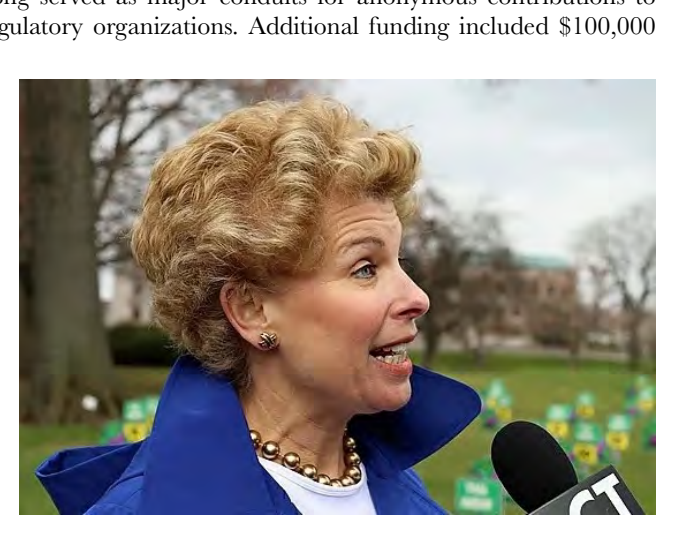
climate denial and anti-regulatory organizations. Additional funding included $100,000 from the Searle Freedom Trust and $50,000 from the Lynde and Harry Bradley Foundation, two foundations that have spent decades financing organizations challenging climate science and opposing environmental regulation.
The Institute’s affiliation with the State Policy Network further connects it to one of the nation’s largest state-based advocacy networks advancing free-market policies, including opposition to clean energy mandates and environmental regulation. Through SPN, the Yankee Institute is linked to the same ecosystem of conservative think tanks, fossil fuel interests, and climate denial funders that supported numerous organizations filing amicus briefs in Suncor Energy v. Boulder County.
History of Fronting for the Fossil Fuel Industry
As Connecticut’s affiliate of the State Policy Network, the Yankee Institute has consistently opposed state climate and clean energy policies while promoting an expanded role for fossil fuels and other alternatives to renewable energy. The organization argues Connecticut should reject policies designed to accelerate the transition away from gasoline-powered vehicles, opposes proposals to strengthen environmental protections through a state constitutional “Green Amendment,” and advocates expanding fossil fuel energy development.
The Institute frames these positions as promoting affordable and reliable energy, arguing that Connecticut’s climate policies contribute to higher electricity prices. At the same time, it has opposed many of the state’s signature clean energy initiatives, including restrictions on gas-powered vehicles and other policies intended to reduce greenhouse gas emissions. These positions closely align with broader campaigns by the State Policy Network and other organizations funded by the Koch network and climate denial foundations to challenge state climate policies and slow the transition away from fossil fuels.
Debunking Phony Fossil Fuel Claims
Claim: Climate accountability lawsuits are really an attempt by states and local governments to set national energy policy through the courts.
Fact: Climate accountability lawsuits do not seek to regulate national energy policy or ban fossil fuels. Instead, they rely on longstanding state consumer protection and tort laws to determine whether fossil fuel companies misled the public about the climate risks of their products and should help pay for resulting damages. Similar legal theories have long been used against the tobacco, opioid, and asbestos industries. Whether companies engaged in deception is a question for the courts—not a new energy policy. Claim: Climate lawsuits will raise energy prices and threaten the U.S. economy. Fact: The purpose of these lawsuits is to determine legal responsibility for decades of alleged deception—not to dictate fuel prices or shut down energy production. The brief assumes that any financial liability will inevitably reduce domestic energy production and increase costs, but that prediction is speculative. Courts routinely hear cases involving major industries without eliminating the products they manufacture. If fossil fuel companies are ultimately found liable, they can continue operating while being held financially accountable for unlawful conduct, just as occurred in litigation involving tobacco, opioids, and other industries.