By Katie Buehler, LAW360
U.S. Supreme Court Justice Samuel Alito said this week he “reluctantly” recused himself from a dispute that could decide whether state and local government can sue Big Oil in state courts for damages related to greenhouse gas emissions, while suggesting the high court’s members shouldn’t make a practice of explaining their reasons for stepping away from cases.
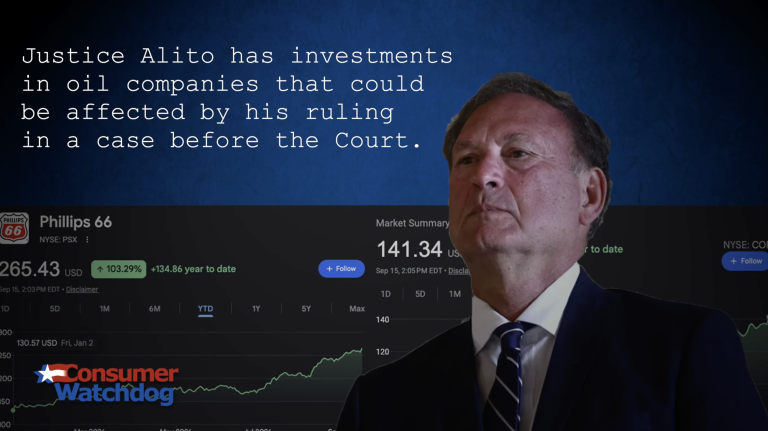
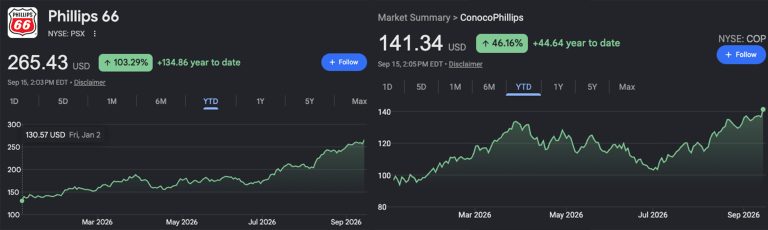
Justice Alito said in a Tuesday episode of a Wall Street Journal podcast that he ultimately decided to bow out of considering Suncor Energy Inc. and Exxon Mobil Corp.’s bid to escape a lawsuit filed by the city and county of Boulder, Colorado, because of his financial stakes in other oil and gas companies. The justice and his wife, Martha Ann, don’t own stock in either of the companies directly involved in the dispute, but they do hold shares in ConocoPhillips Co. and Phillips 66 Co., according to Justice Alito’s latest financial disclosure.
Two provisions of the high court’s Code of Conduct, which the justices adopted in November 2023, speak to whether justices should recuse because of stock ownership, Justice Alito told The Wall Street Journal on an episode of its “Potomac Watch” podcast. The first asks if a justice or their spouse owns stock in a party to the case — a question the Supreme Court made easier to answer in February when it adopted a requirement that litigants include their companies’ stock ticker symbols in court documents.
The answer to that first question was “No” in this case, Justice Alito said. But he said the second provision, which advises justices to recuse in cases that could “substantially” affect their financial interests, was a sticking point.
“Usually, when it involves the ownership of stock, that’s a pretty easy question to answer ‘No,’ because its very, very rare for one of our decisions to have an effect on the price of publicly traded stock,” Justice Alito said. “And that’s why I did not recuse when we decided to take the case” in February.
“However, as the date of the argument approaches and I immerse myself in the arguments that were being made on both sides, I thought through the question again,” he continued. “The question is what would a reasonable person, aware of all the relevant circumstances, think, and, ultimately, I came to the conclusion that a reasonable person, aware of the fact that my wife and I have a substantial investment in some companies in the oil and gas field and … [that] the petition and petitioner’s amici are arguing that a decision against them would start a snowball rolling down a hill which could ultimately lead to devastating consequences for the oil and gas industry, that under those circumstances … I should recuse.”
Justice Alito said he did so “reluctantly” but because he thought it “was what I ought to do under those particular circumstances.”
The interview with the WSJ, which is one of several public appearances Justice Alito is participating in to promote his new book “So Ordered: An Originalist’s View of the Constitution, the Court and Our Country,” created one of the rare times Justice Alito has explained the reasoning behind a recusal.
Justice Alito said he believes there are a few instances in which it’s “wise” for a justice to explain their recusal decision, but that that’s usually limited to times when a justice decides to stay on a case. In May 2024, for example, Justice Alito published a letter to explain that he would not recuse himself from cases related to the Jan. 6, 2021, insurrection at the U.S. Capitol or President Donald Trump’s criminal immunity following reports that two flags used by protesters of Trump’s 2020 election loss were flown outside his houses.
He also rebuffed later calls for recusal from a case involving Trump’s bid to stay sentencing in his New York hush money case after ABC reported that the justice and president had a phone call. Justice Alito ultimately joined three other colleagues in dissenting from the court’s decision not to stay the sentencing.
“Determining whether to recuse is a very serious responsibility,” Justice Alito told the Journal. “We have an obligation to sit unless we are disqualified because, unlike a court of appeals where the recusal of a judge doesn’t change the number of jurists who are sitting on the matter, here it does, and it’s unfortunate.”
The nonprofit Consumer Watchdog was one of several organizations that had called on Justice Alito to recuse in the Boulder case, and it told Law360 on Wednesday that it believes its research pushed the justice to finally recuse.
On Sept. 17, the organization released a report stating that ConocoPhillips and Phillips 66 had both warned investors that a Supreme Court decision allowing Boulder’s climate tort suit to proceed could adversely affect their investments.
“It’s a reminder to speak up when you have something to say,” Consumer Watchdog President Jamie Court wrote in a blog post following Justice Alito’s interview.
Justice Alito said the justices shouldn’t make it a “precedent” to explain their reasoning in every case they bow out of.
Since the court adopted its Code of Conduct, only Justices Elena Kagan and Kentaji Brown Jackson have routinely explained their reasons for not participating in cases. Both of the Democrat-appointed justices include a brief citation to the specific canon that requires their recusal whenever they don’t participate in a decision. None of the Republican-appointed justices have adopted a similar practice.
“It would be an unfortunate precedent for us to explain in every instance why we are recusing,” Justice Alito told the WSJ.
Gabe Roth, executive director of the advocacy group Fix the Court, pushed back on that notion in a statement to Law360 on Wednesday.
“Explaining recuses not only makes sense from a transparency perspective, but it’s also a useful exercise for the justice,” Roth said. “If they must clearly state why they’re stepping aside, it may help them think more about whether holding on to that stock or attending that event hosted by a frequent litigant is worth it.”
–Editing by Janice Carter Brown.