By Noah Austin, POLITICO
Gavin Newsom swept into office as a Tesla-driving Democrat who rejected donations from the oil industry and touted his plans to end the “fossil fuel era.” Once in power, he put the state on track to ban the sale of new gas cars, and convened multiple legislative special sessions targeting oil refiners.
When he leaves in four months, though, he’ll have signed legislation to increase oil drilling, supported agency changes that eased regulations on refineries and ultimately been far friendlier to the industry than his earlier stance suggested.
It’s not the swan song environmentalists hoped for.
The governor hasn’t done a complete 180. But over the last eight years, as political headwinds have shifted, Newsom has sought a more nuanced, middle ground where he can continue to push California beyond its reliance on fossil fuels, while also accepting there would be disastrous consequences if the state’s oil and gas system suddenly collapsed. Much of this shift has come in response to intense political pressure.
As oil companies began to withdraw from the state, the governor ratcheted back his rhetoric and made concessions to the industry (opens in new tab). But when the war in Iran put a spotlight on nationwide surging fuel costs, and affordability became a national rallying cry, Newsom returned to his old ways, accusing Big Oil of profiting (opens in new tab) off the conflict and ripping off Californians.
The governor continued that balancing act in his final legislative session.
First, in a win for oil companies, he vetoed an industry-opposed bill (opens in new tab) which would have created a task force to study how to maintain sufficient staffing at oil refineries that announce plans to close (opens in new tab). Then on Tuesday, in what will likely be his final legislative action on oil, he signed a bill (opens in new tab) that will make it more difficult for any drillers who the Trump administration leases territory off the coast to get their product to market.
The governor’s winding path on oil policy means he’s entering his final months in office having angered nearly everyone involved.
Newsom has upset his environmentalist supporters, who see him as having backtracked on his commitment to usher out the fossil fuel era. Meanwhile, his shift won him some begrudging grace from the oil industry, but not nearly enough to erase the widespread distrust he earned during his years of attacks on their firms. That unsatisfactory dynamic could make him vulnerable to attacks across the political spectrum as he gears up for a likely 2028 presidential campaign.
Newsom’s energy experts, not surprisingly, see things differently.
“We’ve adaptively managed,” said Wade Crowfoot, who has been Newsom’s Natural Resources Secretary for his entire governorship. “And that does mean working closer with these companies as it relates to keeping refineries in state … but at the same time, being really clear that the north star, the end goal, is reducing and phasing out our reliance on fossil fuels.”
An oil industry critic from day one
Even before he became governor, Newsom positioned himself firmly in the environmentalists’ camp on oil issues. “California is not interested in the boom-or-bust oil economy,” he wrote in a 2018 letter to federal regulators a month before his term began. Then, he came into the office swinging.
During Newsom’s first year, the new governor asked his energy regulators to look into the state’s gas prices. The resulting report suggested “big oil companies are misleading and overcharging customers,” Newsom wrote in a 2019 letter (opens in new tab) to Xavier Becerra, then California’s Attorney General. Newsom asked Becerra to investigate whether there was any price fixing, and Becerra later sued two energy firms for allegedly manipulating gas markets (the companies paid $50 million (opens in new tab) to settle the case).
Things went downhill from there for fossil fuel firms.
In 2020, Newsom ordered the state (opens in new tab) to ban the sale of new gasoline vehicles by 2035, a move that promised to eviscerate the oil industry’s customer base. In 2021, he announced a fracking ban (opens in new tab). In 2022, he signed bills enshrining the state’s 2045 goal to hit carbon neutrality and creating a buffer (opens in new tab) between new oil wells and homes.
To cap it all off, he convened a 2022 special legislative session on gas prices that culminated in new oil refinery regulations. He also created an agency to investigate oil companies.
“For decades, oil companies have gotten away with ripping off California families while making record profits and hiding their books from public view,” Newsom said at the time.
The governor convened a second special session in 2024 and signed another refinery rules bill, which sparked a slew of industry criticism.
Shortly after the governor signed that bill, the CEO of refiner PBF Energy, Matthew Lucey, slammed Newsom (opens in new tab) during an earnings call, blaming the state for high gas prices.
“[Newsom] essentially vilified, attacked our integrity, called me, all my colleagues and everyone else in the industry liars and accused us of stealing from people in California,” Lucey said.
The backlash didn’t stop with fiery talk.
Finding balance
A California oil industry contraction began in 2024.
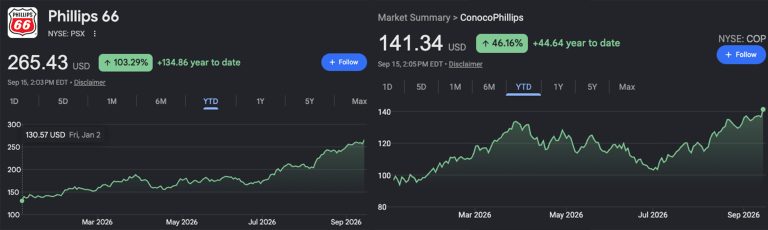
First, Chevron announced that it was relocating its headquarters (opens in new tab) from California to Texas. And then, in less than a year, both Phillips 66 (opens in new tab) and Valero announced their intention to idle California refineries.
Facing the spectre of the state losing nearly 18 percent of its oil refining capacity, Newsom snapped into action.
He tasked one of his top energy appointees with tackling the issue, and that official began traveling to Texas (opens in new tab) to meet with oil executives in the hopes of staving off the closures. By summer 2025, Newsom’s office was circulating a bill proposal that would pave the way to increasing oil production in the state.
And in sharp contrast to his antagonism of years past, the governor shifted to a tone of compromise.
“As someone [who] drove here, as someone [who] flies around the state … we are all … the beneficiaries of oil and gas, no one’s naive about that,” Newsom said during a July 2025 press conference. He added that he was still pushing toward a “low-carbon, green-growth future,” but also making sure that there was sufficient fuel supply in the state. “We are trying to find some balance,” Newsom said.
He ultimately signed the bill (opens in new tab) to increase oil output. His administration also supported lowering costs for refineries (opens in new tab) on California’s carbon market and promised not to implement a threatened refinery profit cap.
Oil industry leaders have appreciated the recent change in course.
“Things are shifting quite a bit in Sacramento, we see those green shoots,” Omar Hayat, the COO of California Resources Corporation, the state’s largest oil producer, said during a December panel discussion (opens in new tab).
Michelle Burkett, a Chevron executive, said during that same event that Newsom’s oil drilling bill was “a very encouraging step in the right direction.”
“It’s potentially starting to open the door to this … relationship, and help us get to where we want to be,” Burkett said.
But it hasn’t been nearly enough to turn all the governor’s fossil fuel detractors into supporters. After years of unfavorable decisions and insults, plenty in the industry aren’t ready to turn over a new leaf.
“The governor did it because he was looking to the oil industry to save his bacon … Gavin Newsom saw that his pathway to the White House was going to be destroyed by his energy legacy,” said longtime oil man Dave Noerr, the mayor of the oil-hub city of Taft. “It doesn’t change my opinion of him and it doesn’t change his attitude.”
Noerr is far from alone with his too-little-too-late mentality. “There’s been a pull back from Newsom in terms of the demagoguery,” Rob Stutzman, a veteran conservative strategist who has worked with the oil industry, said. “But I don’t think anyone thinks he’s changed his tune or somehow become a rational actor on oil and gas policy.”
The scorn doesn’t phase Crowfoot, the Newsom cabinet secretary. “There’s a natural tension here between a government that’s driving towards a future that’s phasing out a product that this sector’s built around,” he said.
Some of the green supporters of the governor’s early crackdown on the oil industry, meanwhile, feel burned by Newsom’s shift.
“He stood up to the oil refiners, called them bullies, and then backed off at the very last minute,” Jamie Court, president of advocacy group Consumer Watchdog said. “That kind of inconsistency doesn’t look good when you’re running for president.”
Many others, however, have been willing to forgive Newsom for his more recent oil-friendly decisions. Or, at least, grin and bear it.
“There have been missteps, don’t get me wrong,” said Katelyn Roedner Sutter, California senior director for the Environmental Defense Fund. “But on the whole, we have seen eight years of forward progress on climate action.”
Crowfoot takes a similarly sanguine stance regarding the fact that Newsom has faced criticism from environmentalists (opens in new tab), in many ways his natural allies, in addition to oil groups.
“To me, it reflects balance,” Crowfoot said. “We’re not making decisions based on who’s criticizing or supporting us. We’re really trying to track forward.”
Looking ahead to 2028
California’s fossil fuel future is still very much in flux.
The refinery closures have had a slew of ripple effects, leading to an increase in the amount of gasoline California imports and straining the pipeline network (opens in new tab) that carries oil from inland fields to coastal refineries.
But a proposal to set up the first-ever pipeline (opens in new tab) carrying gasoline into California, and Newsom’s recent commitment (opens in new tab) to double down on electric vehicle incentives after the Trump administration killed federal EV credits, could reduce the state’s reliance on the refineries.
Unlike last year, Newsom did not take the lead on driving oil legislation in the last weeks of his final legislative session, choosing instead to focus on the electricity (opens in new tab) grid. That disappointed some environmental advocates who wanted the governor to throw his weight behind creating structural change.
“He has put things in place that are going to better equip the state to respond to crises … but I also think there was an opportunity this year to really say, ‘Here’s the things that we found out, here’s some proposals that could solve the issues and we’re going to move those forward urgently,’” said Daniel Barad, western states associate director for the Union of Concerned Scientists. “He has left that more urgent action to the next administration.”
In the end, four of the five measures which oil companies opposed (and which the Western States Petroleum Association, an industry group, dubbed the “refinery exodus package,”) failed to pass the Legislature. Newsom vetoed the only one that did, a measure (opens in new tab) which aimed to prevent staffing shortages ahead of impending refinery closures.
With his legislative record on oil now set, Newsom will likely kick off a presidential run with a fossil fuel resume that gives his opponents on both right and left fodder for attack. Conservatives who believe the nation should strive to boost its oil production will no doubt thumb their nose at Newsom’s years of fossil fuel antagonism. And progressives will see space to needle Newsom on his oil-friendly decisions of late.
But with the threatened refinery closures in the rear-view mirror and talks of a possible national campaign heating up, Newsom has signaled a return to his tough-on-oil rhetoric. It provides him with an opportunity to present himself as a top antagonist of President Donald Trump and his “Drill, baby, drill” philosophy.
In August, the governor said to reporters that fossil fuels are an “inferior product” to renewable energy and that “Big Oil” is the “polluted heart of the climate crisis.”
“They’re so desperate to hold onto what they’ve got, and they’ve got a bird in the hand by the name of Donald Trump,” Newsom said. “We’re not going to cede the future, and we’re not going to sacrifice our children to those policies.”