C
alifornia’s bottle deposit system is in disrepair. The rate at which consumers redeem their California Redemption Value (CRV) deposits is 58%, the third lowest among bottle deposit states. Too few redemption centers exist for a state of nearly 40 million people. Un-refunded deposits are accumulating in state coffers at an alarming rate expected to exceed $635 million by the end of June 2022. CalRecycle, the state’s recycling regulator, has pushed city and county-based pilot projects as an “innovative” solution to the redemption crisis. A review of these state-funded pilot projects shows they do not create a new, financially viable model for redemption or improve the rate at which consumers turn in bottles and cans for CRV refunds. In at least one case, the pilot created a self-dealing relationship that enriched grocers and their consultants at the expense of taxpayers and consumers.
Consumer Watchdog has reviewed the results from four bottle return pilots in San Francisco, San Mateo, Culver City and Irvine that CalRecycle funded with $5 million in grant money appropriated by the legislature in 2019. A fifth pilot program in Sonoma County that kicked off at the beginning of April has too little data to perform a review. The data show that ‘mobile’ recycling being tried in three of the pilots is not working, nor1 is it financially justified. A fourth pilot that is stationary is working but not likely to survive. Nevertheless, despite the failure of mobile recycling in every area, CalRecycle recently proposed $70 million to create new mobile recycling projects in underserved areas.
This report finds:
- Pilots approved by CalRecycle restrict consumer access to redemption because they exempt all retailers in a jurisdiction from in-store redemption obligations or paying state fines to get out of recycling. In San Francisco, over 400 stores stopped redeeming bottles and cans when the pilot was deemed operational. But the pilot has not delivered mobile, citywide convenience, as promised.
- Conflicts of interest in the San Francisco Department of the Environment’s “BottleBank” pilot enriched connected consultants. Between 2017 and November 2021, more than $700,000 in CalRecycle grant money was paid to consultants for a grocers association. They met retailers’ primary objective—exempting them from redemption responsibilities—but failed to produce a viable pilot program. Consumer Watchdog has requested an investigation by City and State officials based on these findings.
- None of the pilots are taking in enough container volume for sale as scrap to cover operational costs and stay afloat once grant money runs out. Two pilots, one in San Francisco and one in Irvine, are proving to be a financial bust. The pilots rely on grant funds to cover operating costs such as labor, rent, and transportation of scrap to buyers, and still spend far more money than they refund per container. In San Francisco, it is costing the pilot operator $1.25 per container to hand a nickel back to a consumer. In Irvine, where customers schedule container pickup from their homes, it is costing $.14 cents per container to refund a consumer a nickel.
- The San Mateo and Culver City pilots are also not likely to make it once the grant money runs out. In San Mateo, it currently costs a little more than half a nickel to refund a nickel deposit. In Culver City, it is costing the pilot a penny and a half to return a nickel. Grant money is currently covering all expenses. But in the real world, a recycling center depends on generating a lot of CRV container volume for scrap sales because state subsidies are inadequate. In high cost areas such as these, even more volume must be generated for sale to stay afloat. It is unlikely that these two pilots will generate enough volume to turn a profit, which means they will fail without outside financial support over the long term.
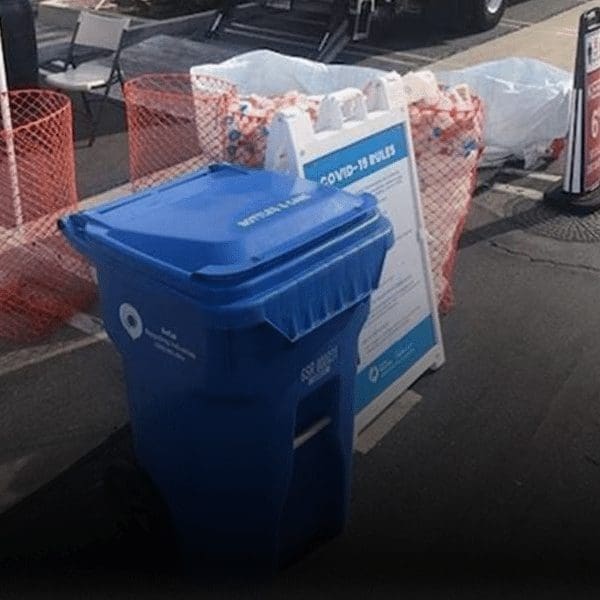
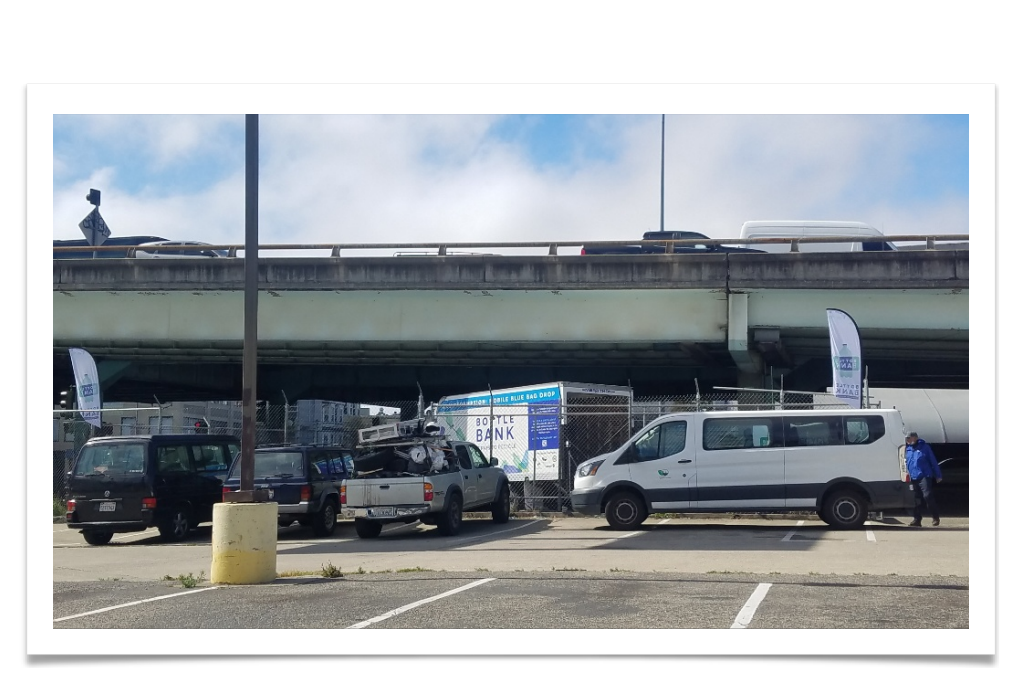
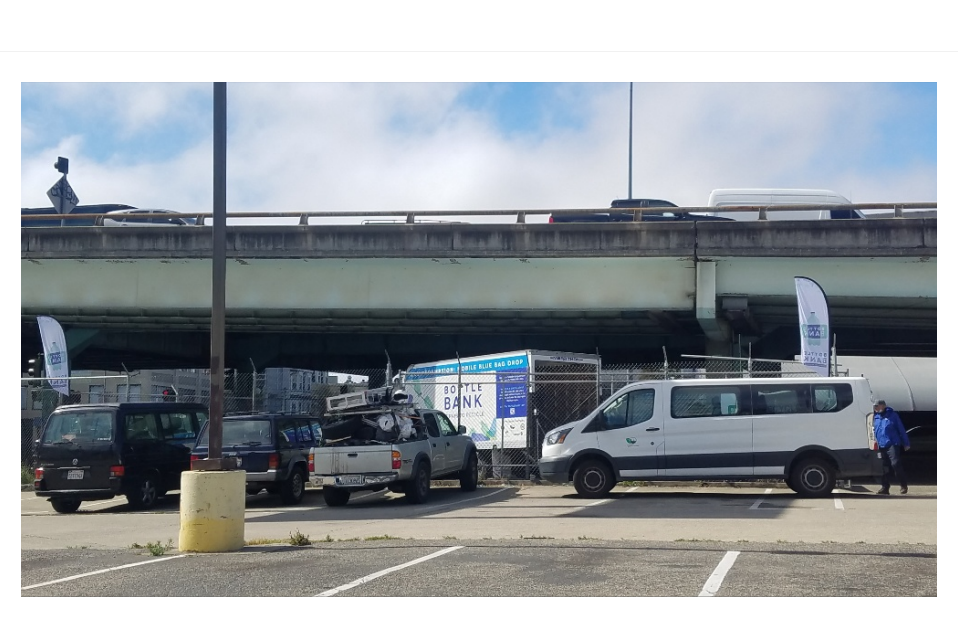
- Mobile recycling is largely an illusion. CalRecycle pilots in San Francisco and Culver City are in fact stationary recycling centers. For example, San Francisco’s “mobile” project consists of two trucks parked in three different parking lot for four hours a day six days a week. Culver City uses the same model. It consists of one truck called a “mobile redemption center” that goes between two grocery store parking lots less than one quarter of a mile apart to provide stationary redemption service.
- Irvine is the one city whose recycling program is in fact mobile: it picks up bottles and cans from people’s homes. However, it is serving roughly 10 to 15 customers a day in a city with a population of 273,000 and thus has no prospects of financial success.
- Pilots in San Francisco, San Mateo and Culver City are not convenient. They offer either part-time or full-time redemption service mainly on weekdays and only during regular work hours. This means that the pilots take in very limited container volumes nowhere near the potential amount of CRV containers available for return.
- Pilots would be more financially stable if they received financial support and donated parking lot space from beverage retailers, producers and distributors. Yet there is no requirement that retailers donate any parking lot space or give direct financial support in exchange for comprehensive exemptions from recycling. Experimentation with pilot projects has proven only that a Band-Aid approach to reform will not work. Pilots will not lead to a new model of container redemption that broadly and conveniently serves 40 million California consumers. Only a systemic overhaul of the redemption system with widespread convenience will increase redemption rates. In general, reverse vending machines and bag drop technologies in use at or near supermarkets in most other bottle deposit states are far more convenient, available during and after work hours, and stimulate far higher participation rates. This brings the cost of collection and processing of empty containers down to a sustainable and acceptable minimum. The Administration must acknowledge that only increasing the number of redemption opportunities by requiring retailers to provide greater redemption, not less, will increase the redemption rate.
SAN FRANCISCO’S BOTTLEBANK PILOT San Francisco’s “mobile” pilot is the most egregious example of a pilot run amok. The program was not designed by anyone with recycling experience, nor with consumer convenience in mind. Rather the pilot was spearheaded primarily by a retail consultant, ostensibly to expand consumer redemption service. But its real purpose appears to have been to help relieve grocers of the responsibility to redeem consumer deposits paid on
CRV beverages.
Kevin Drew, Senior Zero Waste Coordinator at the San Francisco Department of the Environment, and Tom Wright, a retail consultant and President of the “SF CRV Convenience Alliance”—a consortium of stores from Safeway to Whole Foods Markets, Trader Joe’s, Lucky’s, Costco and the Rainbow Grocery Co-op—conceived the program as one that would serve eight of San Francisco’s districts where consumers had no redemption options. The pilot program would start with one truck going between two parking lots but work up to serving two to three sites a day for up to 30 sites per week much like a “food truck” does, according to a project description2 written up for a state Senator. It would take through 2022 “to fulfill citywide convenience,” by taking in 8 million containers the first year and 16 million in the second year of operation.
What was promised was a far cry from what was delivered.
For six months, beginning July 1, 2021 when CalRecycle determined the pilot program “operational,” all San Francisco residents were denied the option of redeeming containers at more than 400 retail stores selling deposit beverages. Also, on that date, roughly 70 stores opting out of recycling by paying fines of $3,000 a piece per month for a collective monthly total of $210,000 were exempted from paying the fines. At one stroke, the state was denied $2.5 million per year paid by San Francisco retailers for the recycling they don’t want to do. Between July 1, 2021 and January 5, 2022, when the pilot was supposed to launch with “full service,” a city with nearly one million residents could redeem deposits at only two redemption centers on the edge of town that existed before the pilot program ever began.
In December 2021, an SF Department of the Environment press release trumpeted the launch of the pilot. “Today, the BottleBank program effectively relieves businesses of their collection
“The pilot
obligations and financial penalties because there is now an operating, viable alternative for participants to recycle3 and redeem.” The department described the program
program is
as “entirely funded by CalRecycle” and as relying “on technology and homegrown ingenuity to make it easy for residents to get their CRV cash deposit back by
a ghost
redeeming and recycling uncrushed CRV-eligible containers at mobile drop-off sites throughout the City.”
Six months later, the pilot program is a ghost pilot, not a
pilot
mobile pilot. Two trucks rotate between three different
.”
stationary locations Monday through Saturday between 9 am and 1 pm. Only one location has part-time Saturday hours available. The trucks appear when most people are at work, then disappear when most consumers can recycle. Thirty-five stores were supposed to carry specially barcoded recycling bags but most do not. As consumers complained to KGO, the pilot sites provide no consumer4 convenience whatsoever, especially for anyone without a car.
The BottleBank website has not been updated in at least three months. It still claims that sites “will be located throughout San Francisco County on a rotating basis at school parking lots on weekends, to community group properties, and church parking lots during5 off hours.” But besides the three part-time locations, the BottleBank website only lists one more location as “Coming Soon!”
BOTTLEBANK FINANCIALLY DEAD ON ARRIVAL The conceivers of the pilot promised the moon but delivered a disastrous, money-losing operation that has restricted consumer access to redemption still further in a city whose redemption rate had already plunged in 2020 to a dismal 25% from 44% a year earlier. A comparison of the costs of the pilot against the containers collected shows that it is costing the pilot $1.25 per container to hand a consumer a nickel refund, based on the results of Public Records Act requests to the SF Department of the Environment. Costs for labor, rent, technology licensing fees, and two trucks are totaling over $75,000 a month, including $8,200 in “consulting” fees to retail consultant Tom Wright. All of that is red ink with no breakeven point in sight.
SF Department of the Environment Data on SF BottleBank Pilot Parking Lot Rent$12,000 Technology Rental/Licensing$30,000 Labor$20,000 Two SF Conservation Corps Trucks $5,000 Waiting For Bags Retail Consultant$8,200 Total Costs$75,200 Total Per Container To Collect 60,000 $1.25 containers Per Month In March 2022, during the 20 days that the pilot ran, 352 consumers turned in less than 50,000 containers for a refund payout of $2,730, according to CalRecycle’s data on the San Francisco pilot. In April, 398 customers visited the trucks in the 23 days that redemption service was offered. That comes to 17 customers a day. Only 60,000 containers were returned with a payout of $3,341 for the month. That is an abysmal showing for 900,000 city residents that pay roughly $30 million a year in refundable bottle6 deposits.
For context, small recycling center sites in California are handling about 250,000 containers per month and might average $6,115 per month in operating revenue from selling the scrap and from state subsidies for handling and processing containers. Medium sites are handling about 600,000 containers per month and might average $14,700 per month. Large sites are handling over 1.2 million containers a month and might bring in close to $30,625 in revenue. Whether sites are financially sustainable
| Expenses | Monthly Costs |
|---|---|
| Parking Lot Rent | $12,000 |
| Technology Rental/Licensing | $30,000 |
| Labor | $20,000 |
| Two SF Conservation Corps Trucks Waiting For Bags | $5,000 |
| Retail Consultant | $8,200 |
| Total Costs | $75,200 |
| Total Per Container To Collect 60,000 containers Per Month | $1.25 |
depends on a number of factors such as local rental costs, labor costs, and proximity to scrap buyers. In both the Bay Area and Culver City in LA County, low volume sites are simply not sustainable because rent and labor costs are far more expensive and processors who buy scrap are located further away, which means the costs of transportation of the CRV material are higher.
Fewer than 20 customers a day are using the SF pilot program. If the program adds additional sites as advertised, costs will increase and cause the program to be an even bigger failure.
If instead, 100 big supermarkets in San Francisco selling CRV beverages provided redemption service to a few customers a day bringing in an average of 40 containers each, that would be a much better showing. Assuming the stores were open seven days a week, they would process 240,000 containers. If store personnel did not want to interact with consumers, then reverse vending machines or stationary bag drop technology would spare cashiers from taking in containers. All this could be done without the added costs of the current pilot program.
PAY DAY FOR CONSULTANTS, GET OUT OF JAIL FREE CARD FOR RETAILERS, NOTHING FOR CONSUMERS Retail consultants who sold the pilot idea netted more than $700,000 in payments from the SF Department of the Environment to establish an unworkable program. The “SF CRV Convenience Alliance” was formed in November 2017 by three individuals —Tom Wright, its president; Ruth Abbe, Agent of the Alliance; and John Katovich, consultant and lawyer. It appears that the Alliance concocted the pilot program, according to the SF Department of the Environment documents obtained by Consumer Watchdog under the Public Records Act.
In addition to these three individuals, Alliance board members include Paul Knowles of7 the Rainbow Grocery Cooperative, Steve Gaines of SaveMart, and Ron Lee of Safeway. Abbe is also a contractor for the City paying the Alliance and other vendors with city funds. In addition, she sits on the board of Californians Against Waste whose donors include major beverage makers and distributors and large, for profit waste haulers8 collecting CVR deposits from the state for containers thrown into their curbside bins. According to invoices obtained, the City of San Francisco began paying retail consultants Tom Wright, John Katovich and others in 2017. Payments to consultants totaled over $754,000 from 2017 through November 2021, including more than $410,000 to Tom9 Wright. The $754,000 paid was strictly for consulting and separate and apart from grants made to purchase equipment, pay personnel, and for software development to run the pilot. The City provided total financial payments exceeding $1.1 million for the pilot program through November 2021—before it ever got off the ground.
The SF Department of the Environment paid consultants up front with CalRecycle grant money awarded earlier under a separate annual grant program before receiving CalRecycle grant money to operate the pilot, according to emails obtained from the City10 via Consumer Watchdog PRA requests.
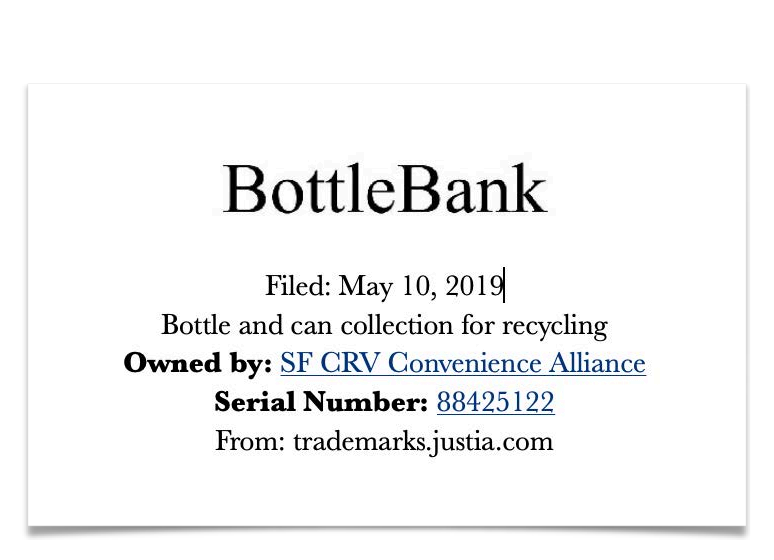
The Alliance trademarked the pilot name of BottleBank in May 2019. That year, the Alliance sent an email to Senator Scott Wiener, author of SB 458 authorizing CalRecycle pilot programs, describing the SF-CRV Convenience Alliance as a California nonprofit. “The Alliance was formed by a group of retailers to address the significant lack of any convenient solution for recycling bottles and cans in the City of San Francisco,” they wrote. “Following its formation, the Alliance began to work with the City of San Francisco and with CalRecycle to determine how recycling centers might be created that can sustain themselves.”
“The chain was not going to lift a finger to help the pilot succeed.”
In the letter, they indicated that CalRecyle pilot grant money, authorized by legislation, was critical. “Based on our collective efforts in researching and budgeting, we now know that for such a pilot to be successful in SF, it will require a firm commitment of at least $3m [$3 million] and will need a full three-year period to prove that it can be successful12 and sustainable.” The email to Wiener and officials in the SF Department of the Environment was signed by Katovich, Wright, and by retail executives Paul Knowles (Rainbow Grocery Cooperative), Steve Gaines (The SaveMart), and Ron Lee (Safeway). City emails obtained by Consumer Watchdog under the Public Records Act show that retailers were not on board in terms of providing any real support for the San Francisco pilot program, from donating parking lot space to helping to provide consumer “cash out” options via bag drop sites and reverse vending machines at or near Alliance stores,13 according to SF Department of the Environment emails.
In February 2020, Safeway representative Wendy Gutshall wrote to Kevin Drew at the SF Department of the Environment and to Safeway, SaveMart, and Rainbow coop representatives that the chain was not going to lift a finger to help the pilot succeed. “We strongly believe the pilot investment should come from CalRecycle to build and sustain operations in order to fully vet the long-term viability of the strategy,” she wrote. “Post pilot, all stakeholders, including retailers and the City, need to have a ‘fair & equitable’ role in the program. We agree with the direction to secure as much state funds as available to support the pilot.” Further, she wrote, “Retail parking in the City is a critical competitive element of a successful operation and we do not support hosting14 mobile recycling sites in our parking lots,” she wrote. Steve Gaines of SaveMart emailed back, “Wendy, Thank you for clearly articulating Safeway’s position, which is in sync with SaveMart/Lucky and the Alliance.”
Just a month later, Kevin Drew of the SF Department of the Environment emailed his then director saying that the role and membership of the Alliance was “an open question.” Who the Alliance members were and what roles they were to play were unknown. “It does not seem practical to draw energy and resources away from pilot implementation to develop and implement a sector-wide membership and funding15 scheme for all beverage dealer (sic) in SF. This will wait until pilot operations succeed.” The pilot has not succeeded and will not without beverage industry support. Based on the program’s costs versus the number of containers collected and CRV refunded, industry sources estimate the only way for this pilot to make money is for between 70 and 100 grocers to pay $1,000 a piece every month to support it. Yet, grocers aren’t even providing free parking lot space for the pilot’s two trucks.
Consumer Watchdog is calling for an audit and has written City and state officials as well as the State Attorney General, the San Francisco City Attorney and the Director of CalRecycle for a thorough investigation of what exactly $754,000 bought San Francisco16 consumers.
Consumer Watchdog has also requested that the City be ordered to produce within 90 days a written plan outlining how the pilot program will be financially sustainable through June 30, 2026–when State pilot program support ends– without additional assistance from the City or CalRecycle– or to close the program and reinstate all store requirements for in-store redemption services and for payments from all stores opting out of recycling responsibilities.
SAN MATEO PILOT San Mateo County has suffered a wave of recycling center closings in the last decade and was down to three recycling centers before its pilot started. CalRecycle awarded a $1 million grant to cover equipment and operating costs to a recycler running one of the
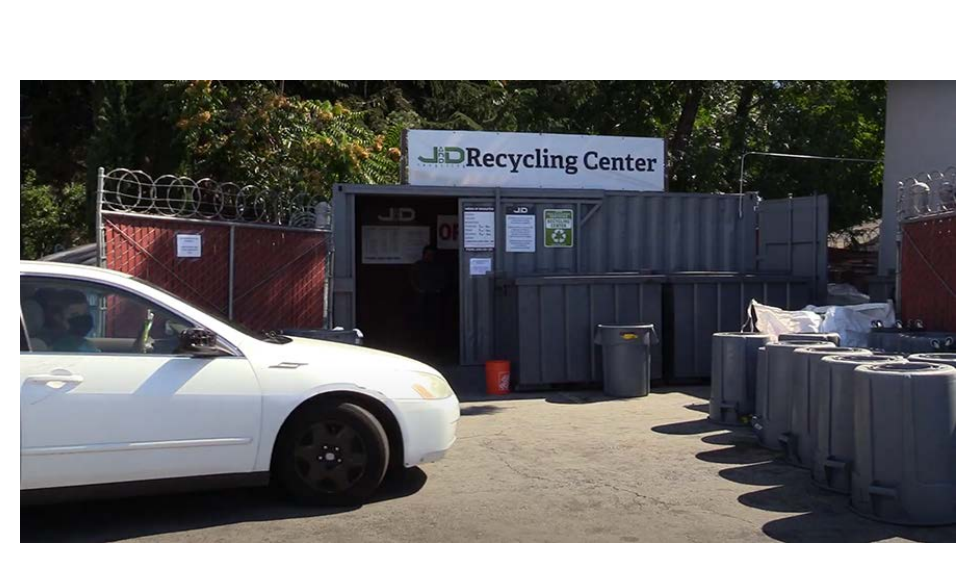
San Mateo County’s Pilot Program: Three stationary CRV takeback locations with expanded hours and on-site cash payments in three cities three remaining centers to open three new recycling locations. Out of the four pilot programs reviewed, these San Mateo pilot locations are the most successful at collecting the largest quantity of empty containers.
The pilot has spent less than half of its money and the sites are generating the most customers serving one of the most underserved areas in the state where consumers really need their CRV money refunded. The success of these locations is due to the hours of operation. Between them, the sites offer redemption service for seven hours a day, six days a week, including weekends. The only day redemption is not available is Monday. These are stationary locations open the longest hours on the most days of any of the pilots. Nevertheless, the San Mateo sites are averaging 50 customers a day, which puts them in the category of very low volume and high cost sites. It is currently costing a little more than two and a half cents to refund a nickel deposit on a container to consumers. This means the pilot locations are treading water but without ongoing financial support from retailers, beverage makers, or distributors, they are highly unlikely to be self-sustaining once the grant money runs out due to operating costs and insufficient state subsidies. San Mateo County is home to 760,000 people. According to statewide averages, they buy about 510 million deposit beverages every year. The three pilot locations took in a total of 43,000 containers between the months of December 2021 and January 2022. At the same time, the approval of the San Mateo pilot exempted about 20 supermarkets from redemption thereby reducing consumer convenience in the county overall. The redemption rate in San Mateo fell to 18% in 2020 and the exemption of 20 more stores will only restrict consumer redemption access still further.
This pilot demonstrates that a substantial chunk of CalRecycle’s built up unredeemed deposits of $635 million should go towards developing permanent, stationary recycling center infrastructure open full-time, including weekends, during hours convenient for working consumers.
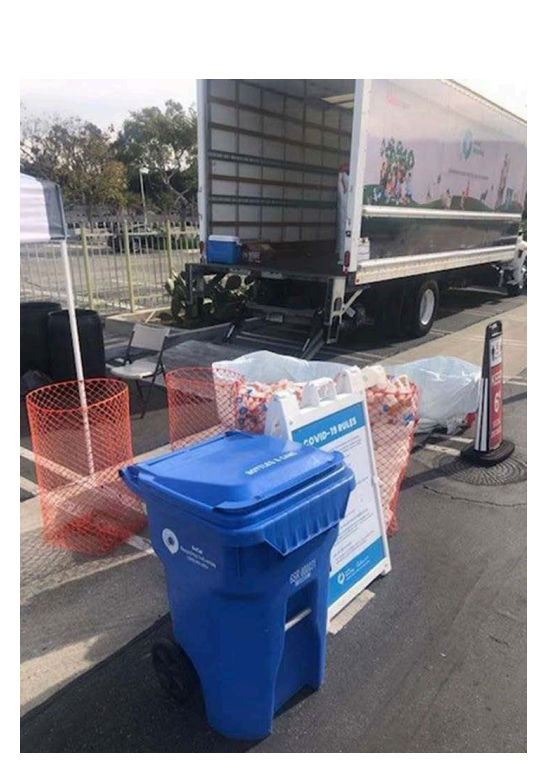
CULVER CITY PILOT The Culver City pilot in Los Angeles has spent about half of its $1 million grant through October 2021, according to CalRecycle data. It consists of one truck called a “mobile redemption center” that goes between two grocery store parking lots less than one quarter of a mile apart to provide stationary redemption service.
There is nothing “mobile” about the pilot.
An attendant redeems deposits and takes containers, When the truck is full, the material is sold to a local processor that bundles it and sells to manufacturers.
This pilot exempted 104 beverage retailers from providing redemption service in-store in Culver City, according to CalRecycle. The effect on the redemption rate in Los Angeles has to be a negative one, but redemption rates are not broken out by city. Los Angeles’s redemption rate was 81% in 2020, down from 85%, but Culver City’s Pilot Program (opens in new tab): A truck parks in Southern California is home to large different locations on different days. amounts of redemption fraud that skew17 the redemption rate.
Between January and June 2021, the pilot doubled its customer base to about 800 customers a month. The pilot is currently on track to handle just over three million containers a year, making it a low volume site. Customer numbers and volume are growing as people find out about the pilot, based on CalRecycle data. But the truck’s two sites are still challenged by lack of convenience. The sites are each open on alternating days except Sundays from 8 am to 4:30 PM when most people are at work. The only day most people can come is Saturday.
Factually, the Culver pilot replaces only one lost redemption center while eliminating in-store redemption service in the area altogether. Moreover, the truck owner is keeping track of his containers with a pencil and calculator. As Consumer Watchdog reported in “Cash for Trash: Recycling Fraud in California,” paper-based accounting opens the bottle18
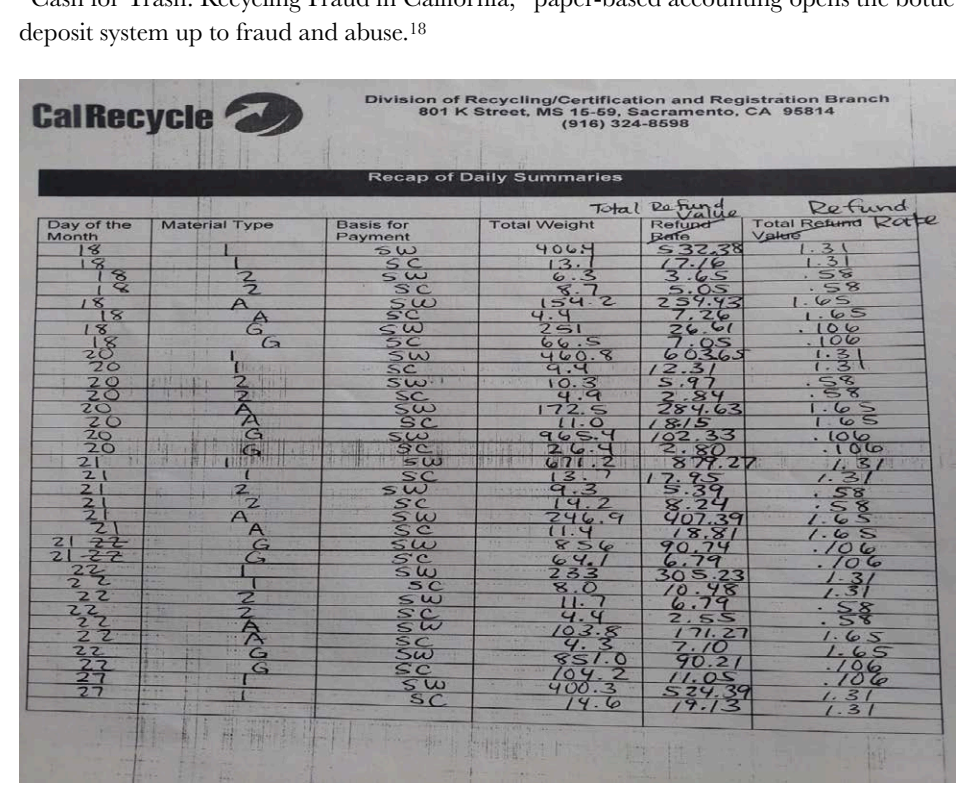
deposit system up to fraud and abuse.
ABOVE: Paper-based accounting opens the bottle deposit system up to fraud and abuse.
It is costing the pilot a penny and a half to return a nickel. Judging by the 2019 failure of the popular statewide redemption network rePlanet, the Culver City pilot will not make it once the grant money runs out. This pilot takes in less than two thirds of the volume that rePlanet’s worst performing sites took in. Nevertheless, rePlanet—with many far larger sites by volume—could not make it due to high operating costs and insufficient state subsidies. Thus, to stay open, the Culver City pilot will need additional financial support from supermarkets, beverage producers or distributors.
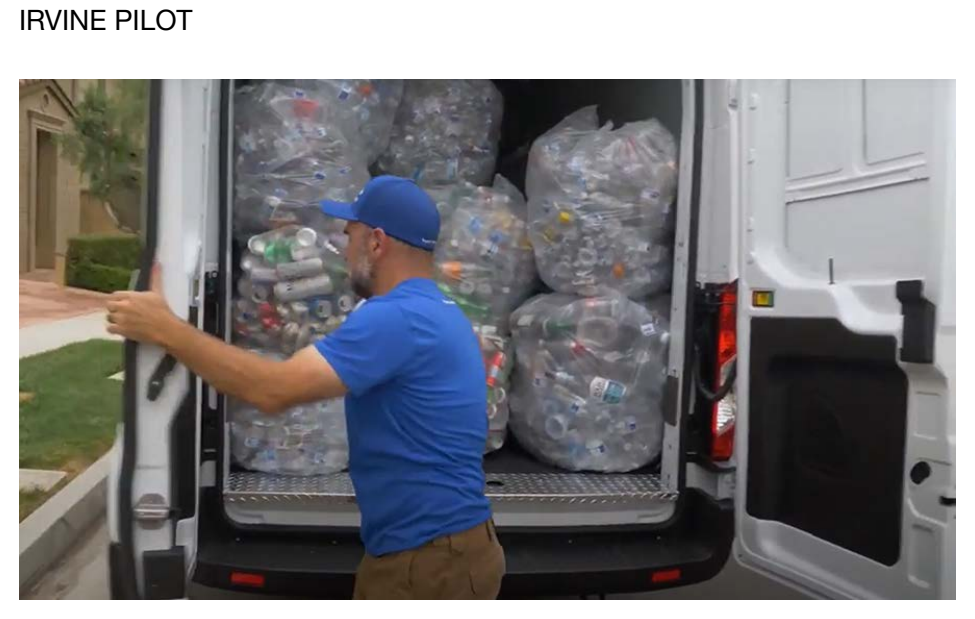
IRVINE PILOT Irvine’s Pilot Program: At-home pickup mails payments after processing CRV. The Irvine pilot is the only one of the five that offers something new—a recycling pick up service at home. “It’s innovative, creative and we believe it will create more recycling opportunities for our residents who want to recycle,” according to Ryan Tenney of Irvine19 Public Works & Transportation.
Consumers put recyclables into a marked bag and schedule the at-home pickups to20 redeem beverage containers with electronic or mail payment, according to CalRecycle. The pickup program “was designed to help overcome local code restrictions that limit new take-back sites in the city,” CalRecycle said. If broadly adopted, such a program is very convenient for consumers, but the effort is not financially sustainable, scalable or efficient.
The Irvine pilot does not return all the deposits back to consumers. Consumers are charged 15% of the CRV refund for the pickup service. Refunding a nickel deposit is costing the pilot $.14 cents a container, a non-starter for financial viability. The pilot’s 10-15 customers a day are averaging $15 in CRV payments with a deduction of $2.25 for the service, generating less than $500 per month in collection revenue. At the same time, customers are not being refunded the full value of their CRV—something that the Bottle Bill requires.
This means that waste haulers could challenge such a service as a violation of their exclusive waste-collecting franchise agreements, similar to the legal challenges faced by Ridwell in Oregon and Washington for the subscription collection services of21 recyclables. Waste haulers already have the exclusive right to collect materials from homes for a fee via curbside bins, including cans and bottles. Potentially, Irvine’s City Council might have to approve such a home pickup service and amend their franchise agreements.
The redemption rate for Orange County, where Irvine is located, continues to fall, registering at 50% in 2020, down 12% from the year before. When the pilot was deemed operational, 22 stores were exempted from refunding CRV and four stores got out of paying fines totaling $148,000 a year not to recycle, according to CalRecycle. If those stores each provided redemption service to only two or three customers a day seven days a week that would be more efficient than this pilot.
CONCLUSION The pilots reviewed in this report demonstrate that they will not be financially sustainable beyond the life of CalRecycle grants unless supermarkets, beverage makers, or distributors financially support them. These pilots are inconvenient for consumers and are being underutilized. Their operators should receive no further CalRecycle grant money unless there are signed agreements with larger supermarkets to fund them through June of 2026, when the grants end. Otherwise, CalRecycle should award no more grant money and the rules requiring in-store takebacks or penalty fees must be reinstated. CalRecycle recently negotiated with CVS that the company will install 20 reverse vending22 machines at CVS stores in areas of the state without redemption opportunities. CVS will also pay CalRecycle $1 million dollars in restitution for disputed back fees for bottle and can redemption obligations. This is a positive development, but it should not take enforcement action to install reverse vending machines at beverage retailer sites. Deposit beverage retailers currently resist provision of redemption service in store. That is because supermarkets pay CRV up front to beverage wholesalers. They make that money back when they charge consumers buying deposit beverages for CRV. But when they refund deposits, the state provides no way to directly reimburse that money, which means they have no financial incentive to provide redemption service. Retailers must be paid for redemption services.
A new budget request from CalRecycle seeks $330 million in FY 2022-23 from its Beverage Container Recycling Fund to install automated return equipment at supermarkets and other locations, and to provide other consumer and business incentives23 to stimulate CRV refunds, including more grants and loans. Roughly $70 million of this money is earmarked for “mobile” recycling.
However so-called mobile recycling has not worked in California’s pilot programs, and mobile recycling does not exist anywhere in the nine other states with bottle deposit systems. In fact, successful bottle deposit systems feature extensive automation from reverse vending machines to bag drop centers that take in containers and issue deposit refunds at or near retail stores. Without underlying reform of California’s antiquated Bottle Bill—so it serves consumers instead of special interests from the waste haulers to the retailers—the budget expenditure will fail.
CITATIONS1 Two pieces of legislation authorized the creation and funding of CalRecycle’s first redemption pilots: SB 458 (Wiener) in 2017 and SB 54 (Ting) in 2019. Senate Bill 458 authorized CalRecycle to approve up to five limited-term recycling pilot projects for no more than three years each to improve beverage container redemption opportunities in so-called “unserved convenience zones.” Assembly Bill 54 (Ting) appropriated $5 million for these pilots from 2019 through 2021.2 For a description of the SF pilot prepared by the Alliance and the SF Department of the Environment for Senator Scott Wiener, see: https://consumerwatchdog.org/sites/ default/files/2022-06/ SB%20458%20Pilot%20CRV%20Recycling%20Center%20Project%20description.pdf (opens in new tab)3 For the SF Department of the Environment press release, see: https:// sfrichmondreview.com/2021/12/22/press-release-sf-launches-new-recycling-program/ (opens in new tab)4 These KGO Seven on Your Side stories reveal the way the Bottle Bank is severely limited and has not served consumers: https://abc7news.com/sf-bottlebank-mobile-recycling-service-san-francisco-app/ 11556375/ (opens in new tab) https://abc7news.com/sf-bottlebank-mobile-recycling-service-san-francisco-app/ 11538522/ (opens in new tab) https://abc7news.com/sf-bottlebank-mobile-recycling-san-francisco-crv-alliance-programs-app/11644244/ (opens in new tab)5 See the SF BottleBank website here: https://sfbottlebank.org (opens in new tab)6 According to CalRecycle, in 2020 the statewide average was 672 deposit beverages per person sold. San Francisco is home to roughly 900,000 residents. That means 604 million deposit beverages are purchased there every year. If a nickel is paid on each of those containers, the total comes to $30 million dollars annually.7 The CRV Alliance trademarked the pilot name of BottleBank in May 2019. See: https://trademarks.justia.com/884/25/bottlebank-88425122.html (opens in new tab)8 For CAW board members, see: https://www.cawrecycles.org/board-of-directors (opens in new tab) and for a Consumer Watchdog report on waste haulers and their role in the bottle deposit system, see: https://www.consumerwatchdog.org/sites/default/files/2021-05/ WASTE%20HAULERS%20Report%20v7.pdf (opens in new tab) For retailer invoices and emails, See: https://consumerwatchdog.org/sites/default/files/ 2022-02/SFPilotFraudPDFs_0.pdf (opens in new tab) and https://consumerwatchdog.org/sites/default/files/2022-03/PilotPayments.pdf (opens in new tab)10 For SFE email, see: https://consumerwatchdog.org/sites/default/files/2022-04/ EmailDrewToRaphael033120.pdf (opens in new tab)11 See: https://trademarks.justia.com/884/25/bottlebank-88425122.html (opens in new tab)12 For the Alliance letter to Senator Wiener, see: https://consumerwatchdog.org/sites/ default/files/2022-05/SFPilotRetailersWant%243Million.pdf (opens in new tab)13 For a synopsis of retailer and city emails with annotations, see: http:// consumerwatchdog.org/sites/default/files/2022-04/ Excerpts%20from%20Retailer%20Emails%20Showing%20Non.pdf (opens in new tab)14 For the Safeway email, see: https://consumerwatchdog.org/sites/default/files/ 2022-06/SafewayNoInvestment.pdf (opens in new tab)15 See SFE email here: https://consumerwatchdog.org/sites/default/files/2022-04/ EmailDrewToRaphael033120.pdf (opens in new tab)16 For the letter calling for an investigation and audit, see: https:// consumerwatchdog.org/sites/default/files/2022-03/SFPilotFraudLtr3-8-22.pdf (opens in new tab)17 For more on redemption fraud, see: https://www.consumerwatchdog.org/report/cash-trash-recycling-fraud-california (opens in new tab)18 For Consumer Watchdog’s report, Cash for Trash: Recycling Fraud in California, See: https://www.consumerwatchdog.org/report/cash-trash-recycling-fraud-california19 For Tenney’s remarks, see: http://consumerwatchdog.org/sites/default/files/ 2022-06/20July2021%20CustomizedRedemption.pdf (opens in new tab)20 For more on the pilots, see: https://calrecycle.ca.gov/newsroom/2020-2/12dec/13-2/ (opens in new tab)21 For more on Ridwell’s fight with waste haulers, see: https://www.wweek.com/news/ business/2022/03/28/recycling-pickup-company-ridwell-continues-to-spar-with-washington-county-over-its-services/ (opens in new tab) For more on CVS and reverse vending machines, see: https://calrecycle.ca.gov/ newsroom/2022-2/03mar/01-2/ (opens in new tab)23 For more on CalRecycle’s budget request, see: https://calrecycle.ca.gov/NewsRoom/ 2022-2/03mar/03-2/ (opens in new tab)