
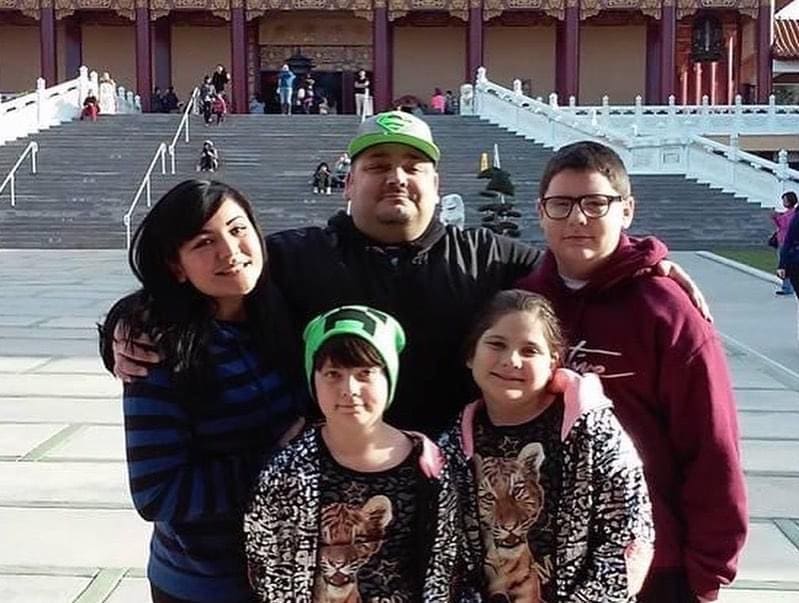
Anthony Torres was looking forward to his daughter’s upcoming wedding, and was getting in the best shape of his life as he was preparing to walk his little girl down the aisle. He managed an off-road products business, and was enjoying his life as a father of 4 children. His twins were set to graduate from high school with honors. Anthony had so much to look forward to in what he viewed as the best year of his life.
Anthony was experiencing a bad stomachache and was taken to the local emergency room for care. His mother Kelly worked as a charge nurse for more than 30 years, and she expected her son would get the same excellent treatment that she gave her patients. Instead, she realized that his care was being delayed and he was suffering a series of medical mistakes. She battled to get her son the best care but, despite her best efforts, her cries for assistance went unanswered.
Anthony was diagnosed with gall stones and was told that he needed to undergo gallbladder removal surgery. However overnight his kidneys began to fail, and he was prepared for emergency dialysis. The surgery was delayed for 4 days, for reasons the doctor did not share with Anthony or his mother.
Once in surgery, the doctor discovered that Anthony had a hole in his stomach where gastric acids had leaked into his abdomen leading to sepsis. The doctor did not catch the clear signs of sepsis during the 4-day delay before surgery. Anthony’s mother believes the doctor waited too long to perform the surgery. In sepsis cases, every minute counts.
After the surgery his kidneys should have continued to be monitored with dialysis, but this sepsis protocol was not followed.
Blood clots were then discovered that sent Anthony back to surgery. He stopped breathing on the operating table and he had to be resuscitated.
Anthony’s troubles continued in the ICU. He was in a coma for a month while the sepsis continued to wreak havoc on his organs, and he had an adverse reaction to the Heparin he was given to prevent additional blood clots.
After the medication was changed Anthony finally began to respond to his family. He was moved out of ICU two days after coming out of the coma but was still in a very weak condition.
Anthony’s family was so happy that he had survived, but his mother noticed that he was not being monitored in the step-down unit. When Kelly went to visit her son, she found him in respiratory distress without oxygen. The family of the patient sharing the room with Anthony said no one was helping him.
Kelly demanded that her son be taken back to ICU, but the doctor and nurses refused. Kelly told her son’s doctor, “if you don’t move him out of this unit, he is going to die.”
When Anthony’s breathing appeared to be improving Kelly felt she could leave him for a few hours. Kelly received a call at 1:30 that morning that Anthony had coded. When Kelly arrived back at the hospital, she could see that her son was brain dead. There was no life left in him. Anthony died later that evening.
Anthony’s doctor was so far removed from his case that she didn’t even know that he had passed away. The doctor never went to physically see Anthony in his last day in ICU or in the step-down unit.
Kelly is devastated. As a retired charge nurse, she knew how to care for her patients and expected her son to get the same quality care and compassion. When Kelly obtained the medical records, she learned the nurse had documented that Anthony had been so desperate for help he tried to call 911 from the hospital.
Kelly sought Consumer Watchdog’s help getting answers for how her son could have died so tragically in a hospital system that she trusted. She wants to be part of the change to make patient care safer for other Californians and she wants to work on medical board reform to ensure that physicians are held accountable when they neglect their patients.