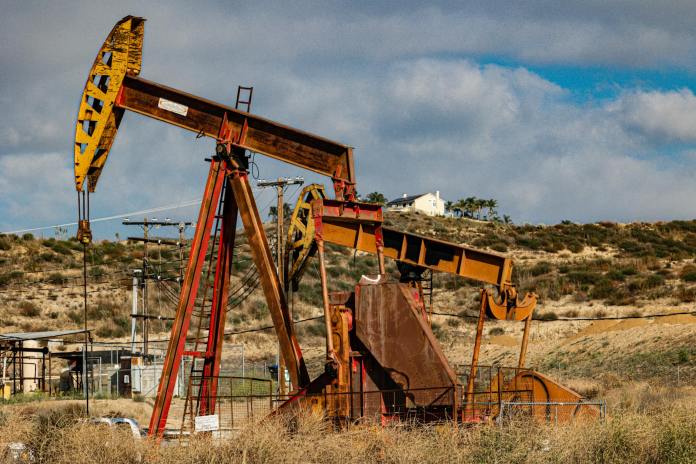
Los Angeles, CA—Last year, permit approvals for drilling new wells continued falling, but in the first three weeks of January alone, California oil regulators issued more new drilling permits than for all of 2025, according to a new analysis from Consumer Watchdog and FracTracker Alliance. In 2025, permit approvals fell to 17 from 73 the year before. But in January, the California Energy Management Division (CalGEM) bested that number by approving 20 new drilling permits.
Further continued progress in cutting fossil fuel production is now under assault from new state legislation, federal drilling plans, and industry lawsuits, said Consumer Watchdog and FracTracker Alliance.
“California must move beyond fossil fuels, but powerful special interests are focused on drilling at all costs, regardless of what it costs Californians in terms of bailouts, dangerous public health impacts including cancer and asthma, and environmental damage and risks,” said Kyle Ferrar, Western Program Director at FracTracker Alliance. “Between a state law that fast-tracks drilling, federal plans to auction off our public lands and waters for more drilling, and the combination of industry and federal lawsuits against basic health protections, California’s clean energy transition is being blockaded. We cannot let lawsuits and loopholes lock us into more decades of pollution.”
Many of the hardest hit communities are in Kern County, the epicenter of oil production in California.
“Our region already suffers from some of the worst air quality in the country, and increasing drilling without strong oversight puts our health at further risk,” said Cesar Aguirre, Director, Air and Climate Justice at the Central California Environmental Justice Network. “More wells mean more pollution and more unchecked leaks, especially when satellite data shows California’s oil and gas operations are among the largest methane emitters globally. Our communities need stronger enforcement and real protections, not decisions that allow industry to expand while residents pay the price.”
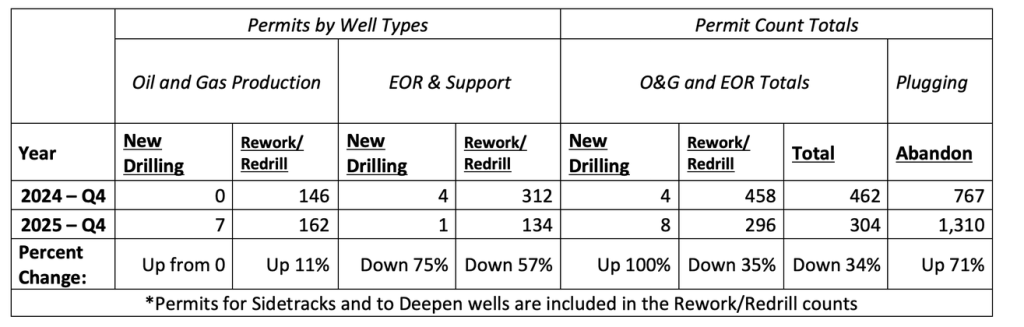
CalGEM’s more deliberate consideration over permit approvals over the last five years already appears to be reversing–in keeping with Governor Newsom’s apparent shift toward supporting expanded drilling. In the last quarter of 2025, CalGEM approved eight new drilling permits; seven in Kern County and one in Orange County that is located within the state’s public health protection zone between communities and drilling. Together with the 20 additional permits for new drilling in Kern County issued in January, that brings the total in the last month of 2025 and first month of this year to 28 permits, according to CalGEM data analyzed by FracTracker Alliance.
Since Governor Newsom assumed office in 2019, a total of 18,964 permits, including reworks, were granted. Between January 2011 when Brown assumed office and the end of 2018, a total of 23,618 permits to drill new oil and gas wells were issued. Nearly the same amount of permits to rework existing wells were also approved. For more on permit counts and locations, go to: Newsomwellwatch.com, a website jointly operated by Consumer Watchdog and FracTracker Alliance.
“Approvals under Newsom to drill new oil and gas wells were going down and now that is in jeopardy,” said Consumer Advocate Liza Tucker. “The new drilling permit in the public health protection zone combined with almost 30 new drilling permits issued in just the last two months looks like the state is gearing up for expanded oil drilling. The state is going to issue lots of new drilling permits without rigorous CEQA review. Will CalGEM also start ignoring its own state public health protections in favor of more neighborhood drilling in vulnerable communities?”
Key Threats
Recent legislation, SB 237 (Grayson) went into effect on January 1. Under that statute, Kern County, the epicenter of California’s oil industry, can permit tens of thousands of new oil and gas wells over the next decade under a streamlined local environmental review, bypassing stricter and often site-specific state-level scrutiny. CalGEM still rubber-stamps approvals. A previous version of the county’s ordinance was successfully challenged and paused for three years for violating the California Environmental Quality Act (CEQA) before SB 237 became law.
“For communities across Kern County, these new oil and gas permits are not just numbers on paper, they represent continued harm to families who already carry the burden of pollution,” said Anabel Marquez, president of Committee for a Better Shafter. “In passing SB 237, Kern County is now approving permits in the same places where residents are dealing with poor air quality, serious health impacts, and a lack of real protections. As community members, we are calling for accountability and for county and state agencies to truly prioritize the health and well-being of frontline communities, not the interests of the oil and gas industry.”
“Rubber-stamping new permits also affects all Californians,” said Tucker. “It means increased fiscal liability for consumers who could end up paying billions of dollars to plug wells because the state doesn’t make oil companies put up enough in bonding. These new permits only abet the oil industry and the Trump Administration’s plans to overturn our laws protecting public health and to expand drilling across wide swaths of this state when we can be making a faster transition away from fossil fuels. They also paper over the industry’s financial problems of weak oil prices and a glut of supply.”
The oil industry and the U.S. Justice Department under President Trump are suing to overturn SB 1137 (Gonzalez), the 2022 law that established 3,200-foot health protection buffers between drilling and communities. The law went into effect following an industry ballot referendum that failed due to lack of public support. Opponents have now turned to the courts.
The US Bureau of Land Management proposed opening 850,000 acres of public land —from Santa Barbara to the Bay Area and inland—to oil drilling and fracking, despite a state ban on fracking. BLM’s proposal seeks to finalize two leasing plans previously halted by lawsuits, using updated environmental review documents that do not acknowledge SB 1137.
The proposal for expanded drilling threatens local and regional air and water quality in parks, communities, and sensitive coastlines. This expansion push comes as California faces severe air quality challenges. Oil and gas drilling is a primary source of ozone precursors in the Central Valley, where many counties receive failing air quality grades. The American Lung Association’s 2025 “State of the Air” report found 98% of Californians experience unhealthy air at some point during the year.
Annual and Quarterly Permit Totals (2025)
CalGEM approved 17 new oil well drilling permits last year, down 77% from all of 2024 (73 permits), according to CalGEM data analyzed byFracTracker Alliance. The total number of rework permits issued last year fell 15% from the year before to 1,089. (See Table 1 below.)
Table 1. Quarterly versus annual changes in permitting
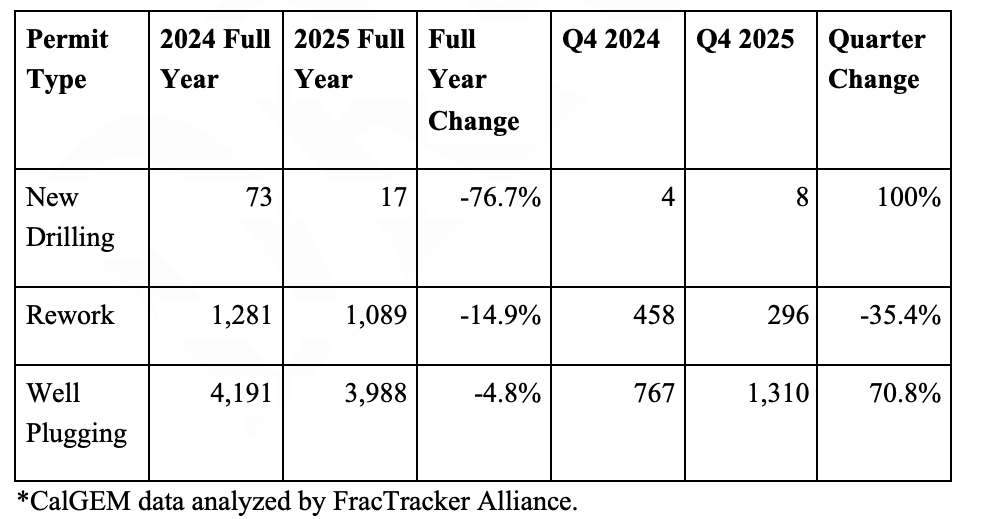
In the fourth quarter of 2025, CalGEM approved eight new drilling permits versus four in the last quarter of 2024. (For more detail on quarterly permits, see Table 2 below.) Well plugging permits rose 71% in the fourth quarter but were actually down about 5% for the year versus 2024. Fourth quarter increases in plugging approvals of 71% were likely last-minute moves by operators to meet required idle well plugging quotas. While operators were focused on plugging in the fourth quarter, permits to rework existing wells fell by 35% over the fourth quarter of 2024.
Table 2. 2025 4th Quarter Permits
*CalGEM data analyzed by FracTracker Alliance.