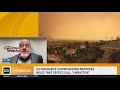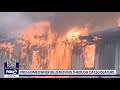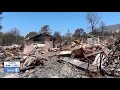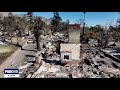

When embers rained down during the Pacific Palisades wildfire, Tim McCune’s home didn’t burn down. But in many ways, what came next felt almost worse.
“The closest houses that burned were across the street from us, about 200 feet away,” recalled McCune.
“We had embers land in the yard…lots of soot, char, ash blowing through. And we had hot spots smoldering in the backyard.”
Toxic particles had seeped into every corner of the house, including the attic, where Tim discovered thick layers of ash blanketing the insulation. An environmental testing company confirmed elevated levels of soot and ash, and Tim quickly began gathering remediation quotes. He ultimately hired two separate contractors—one for the structure and another for the contents. The combined estimate: $130,000. It recommended deep cleaning of nearly each room to remove ash and smoke residue, using HEPA vacuuming and manual wiping. And contaminated carpet and insulation would be removed. The HVAC system also had to be cleaned.
But as a policyholder under the California FAIR Plan, which provides insurance to those in fire-prone and other areas when private insurance companies refuse to cover them, the insurance paid for none of that. As a result, his experience with the FAIR Plan has left him exhausted, frustrated, and tens of thousands of dollars in debt. The first red flag was what the field adjuster for FAIR Plan did, and didn’t do, when he came to “inspect” the home. He ignored the attic, and when McCune got a ladder out and made him look up there, he didn’t do much.
“He didn’t take any pictures of the attic,” said McCune. “He didn’t actually go into the attic. Like, that’s where the bulk of the damage was, just in terms of the ash.”
“He definitely didn’t seem interested in doing too much.”
After deductibles, the FAIR Plan reimbursed McCune just $36,000—a fraction of the cost of what needed to be remediated.
The check covered pressure washing the home’s exterior, a coat of paint, some deodorization using hydroxyl treatment, and new carpeting, said McCune. No testing, no inspection report, just a line-item breakdown of what they’d pay, according to McCune. In other words, the FAIR Plan only cares about appearances.
“They’re very focused on what is visible and what can be smelled, and nothing else,” said McCune.
So far, McCune has paid nearly $170,000 out of pocket. That includes $3,000 for environmental testing, $130,000 for remediation, $25,000 for new carpet, $6,000 to replace attic insulation, and $26,000 in rent.
He’s not alone. Many of Tim’s neighbors are caught in similar battles, some receiving no payouts at all. “From what I can tell, I’m one of the only people in our area who got any money from FAIR Plan. I guess I should feel lucky, but I still can’t live in my house,” he said.
Tim credits one factor for the limited progress he has made: leveraging the power of banding together. He joined group chats with neighbors, filed complaints with the California Department of Insurance (CDI), and attended three state-run workshops that brought FAIR Plan supervisors face-to-face with fire victims. Those workshops helped him secure five months—$21,000—of Fair Rental Value payments, FAIR Plan’s version of alternative living expense coverage, which pays for what a home would have rented for to a tenant. McCune was having trouble getting someone from Fair Plam on the phone to pay for it even though his policy covered it.
That’s been the only thing that’s gone relatively smoothly, he said.
Most everything else has felt like a dead end. He says insurance adjusters rarely respond. When they do, it’s often unclear whether they’re following strict policies or simply unaware of them.
“But I’ll tell you what seems the only thing that seems to be making forward progress is the fact that, all of LA is up in arms over this, and they continue to push and push and complain and complain,” said McCune. “And it seems like over time, we are collectively sort of chipping away at this.”
McCune continued.
“Somebody just said the other day, ‘Hey, I got my environmental testing paid for.’ And someone else said, ‘Hey, I got my attic insulation paid for.’ And it seems like all the decisions seem to be happening at the upper management levels of Fair Plan, and then they’ll make a policy change of what they’re gonna pay for.”
Tim has become a reluctant expert in insurance escalation tactics. When he realized FAIR Plan never sent the official field adjuster’s report—only a payout summary—he flagged that too. He’s still fighting for reimbursement for everything the environmental testing deemed necessary to make his home habitable again. A state court decision since ruled that the California FAIR Plan illegally limits payouts for smoke damage claims.
His advice to others?
“Leverage your network of friends and neighbors. Join the chat rooms of everyone else that’s in the same boat, and make sure you understand what’s going on,” he stressed. “Because, like, every couple days, I’ll see a new person join the chat and just say, ‘Hey, I heard Fair Plan is not paying for smoke damage. Is that true?’ And it’s like, dude, it’s been three months. Where have you been? What have you been doing?”
Above all, he tells families to prioritize their safety.
“Do what you have to do to make sure your family is safe,” advises McCune. “Don’t do what insurance tells you to do. Do what you need to do to make sure you’re safe, and worry about the rest later.”