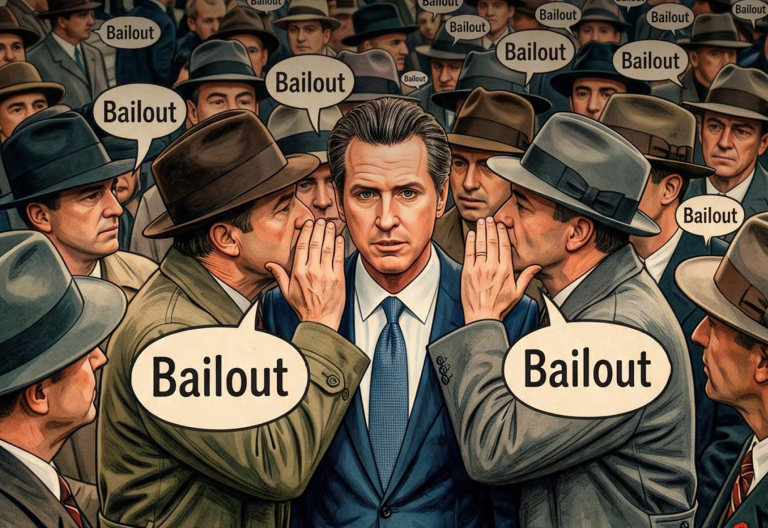


EXECUTIVE SUMMARY “Oil companies are ripping you off,” Governor Gavin Newsom tweeted on September 30. “Their record profits are coming at your expense at the pump. I’m calling for a NEW windfall tax exclusively on oil companies. If they won’t lower their prices, we will do it for them. The $$ will go directly back to you.”1 Based on investor profit reports, the Governor is right. Californians have been paying way too much for their gasoline and deserve a big refund. Second quarter investor reports show world-record profits off West Coast refining, which are almost certain to grow in third quarter investor reports to be released starting later this month. United Nations Secretary-General Antonio Guterres has slammed the “grotesque greed”2 of oil and gas companies, urging governments to “tax these excessive profits.” He told Reuters: “It is immoral for oil and gas companies to be making record profits from this energy crisis on the backs of the poorest people and communities, at a massive cost to the climate.”
Windfall profits taxes are made by oil companies squeezing consumers for every penny they can get away with. They have been making outsized profits, but
Nobel Prize-
instead of investing these gains into more oil production or renewable alternatives, oil companies have engaged in
winning economist
a frenzy of stock buybacks and a buildup of cash reserves over the last two years as pandemic restrictions have
Joseph Stiglitz 3
eased and demand has rebounded.
believes a windfall
Indeed, eight of the biggest oil companies in the world posted record-breaking second quarter 2022 profits
tax on oil is
totaling $51 billion. Phillips 66 posted a 981% increase in quarterly profits, while ExxonMobil and Chevron4
appropriate to rein
each reported a rise or 273% and 276% respectively.
California refiners alone reported more than $26 billion
in price-gouging.
in second quarter profits by capitalizing on the Russia- Ukraine war. They raised prices at the pump because their cartel-like hold on the market allowed them to do it.
European countries are acting by imposing windfall profit taxes on the oil and gas sector, the electricity sector, and even on the banking sector that has profited from the energy price run up. Americans, for their part, are fed up with what they see as price-gouging at the pump. In the United States, according to a poll conducted by Hart Research Associates, 80% of voters favor a windfall tax on the hand-
Oil companies are ripping you off,” Governor Gavin Newsom tweeted on September 30. “Their record profits are coming at your expense at the pump. I’m calling for a NEW windfall tax exclusively on oil companies. If they won’t lower their prices, we will do it for them. The $$ will go directly back to you.”
over-fist profits oil companies are making from gasoline sales while Congress is focused on5 proposals to impose a national crude oil windfall profit tax.
This report reviews other countries’ imposition of windfall profit taxes on petroleum-related industries and the pitfalls; the experience of the U.S. in imposing previous windfall taxes; current U.S. proposals to tax crude oil, and the most successful ways of structuring a windfall tax in California. It concludes that the simplest and most straightforward way to structure a California windfall profit tax is to introduce one onto refiners’ profits per gallon of gas to provide relief at the pump to many cash-strapped Californians. Findings:
- European countries are seriously considering or have already imposed windfall profit taxes due to extreme oil company profits.
- U.S. windfall taxes on crude oil production have had benefits and pitfalls. The Crude Oil Windfall Profits Tax imposed on crude oil from 1980 to 1988 generated net revenues of $80 billion. Oil companies could deduct this as an expense, reducing federal tax liabilities below what they would have been otherwise. In fact, the tax was a selective excise tax paid upfront before profits from the sale of the oil were determined. The downside was that it led to a reduction in production and increase in foreign crude imports.
- California can apply the lessons of windfall tax pitfalls to structure a straightforward, targeted windfall tax on California refiners without affecting gasoline supplies or oil production. A windfall profit tax in California can apply only to the excess profits oil refiners make from processing crude oil into gasoline above a certain baseline amount. By focusing on “downstream” profits (refining) rather than just “upstream” profits (crude production) the windfall tax can target the gouging done in California by refiners based on their cartel-like hold on the market. Four of the five dominant oil refiners in California have only downstream operations (Chevron is the exception).
- The California Oil Refinery Cost Disclosure Act, SB 1322 (Allen), provides the basis to assess an appropriate windfall profit tax. Beginning in January 2023, California oil refiners will have to publish their monthly gross refining margins, their actual crude oil costs, and other information about their gasoline sales. This information will allow for an evaluation of how much oil refiners are making above their baseline profits historically and in other parts of the country. For example, some California oil refiners made an unprecedented $1 per gallon in the West during the 2 quarter of 2022, according to reports made to investors. Setting a baseline gross refining margin based
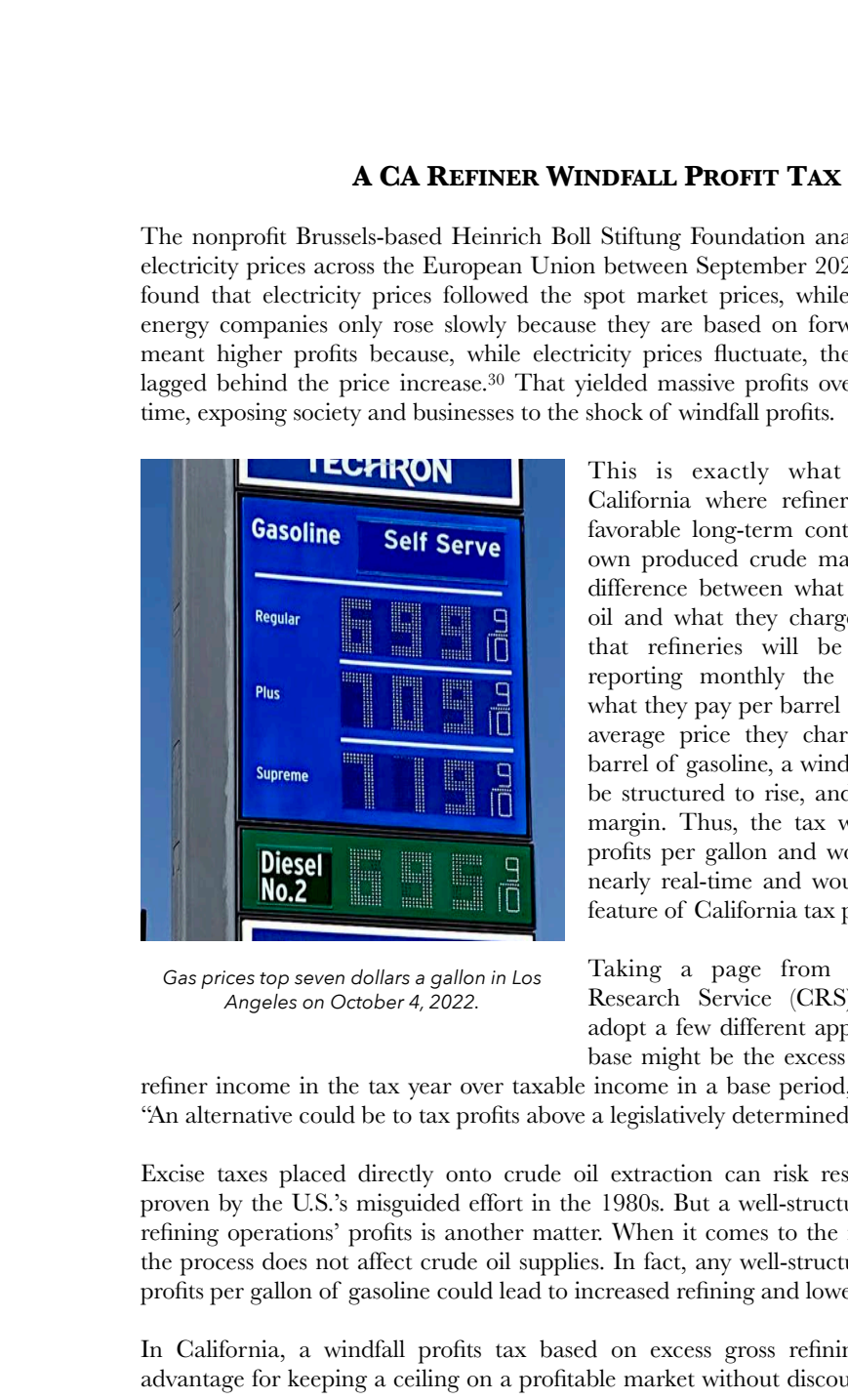
on historical precedent of 50 cents per gallon would allow the state to recoup profits above that baseline and potentially return that money to the state’s consumers. WHY A WINDFALL PROFITS TAX IS APPROPRIATE FOR CALIFORNIA’S GASOLINE MARKET California consumers paid $2.61 per gallon higher gas prices than the average US price6 as of October 4, 2022. Refiners falsely claim the difference is due to environmental fees and taxes. Environmental regulation and taxes account for 69 cents of the difference. Added CA Costs From Environmental Regulation And Taxes Added state taxes = 25 cents (Average state tax is 29 cents/ CA taxes are 54 cents) Low carbon fuel standard = 16 cents Cap and trade = 26 cents Underground storage = 2 cents Difference = 69 cents Five refiners—Chevron, Marathon Petroleum, PBF Energy, Phillips 66 and Valero— make 97% of the state’s gasoline. They are in a position to restrict gasoline supply to
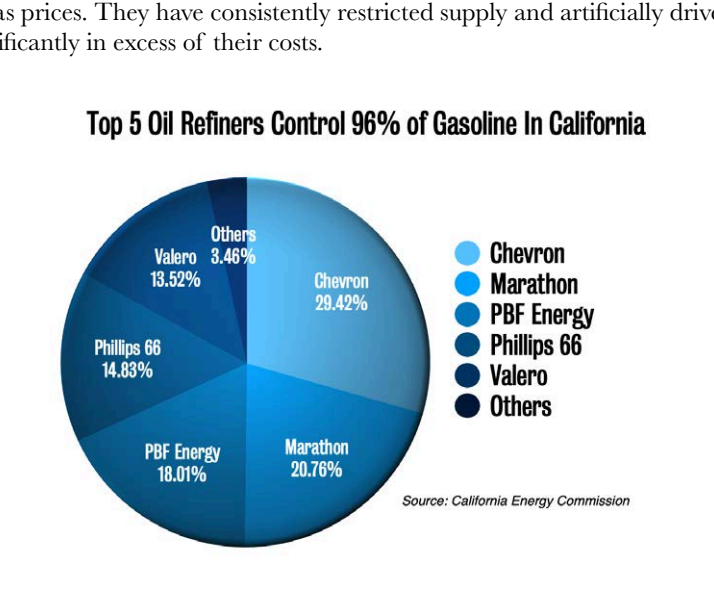
drive up gas prices. They have consistently restricted supply and artificially driven up their prices significantly in excess of their costs.
These refineries capitalize off California’s unique gasoline market. The California Attorney General explains that California is a proverbial “gas island” hobbled by lack of pipelines from East of the Rockies and the necessity of importing crude and gasoline by ocean. “California, despite its burgeoning population, is largely dependent on a relatively static supply of refined product produced by instate refineries,” according to the CA7 Attorney General. “When a refinery goes down, or a pipeline cannot transport fuel, price spikes occur.”
During the latest geopolitical paroxysm, California refiners raked in second quarter 2022 profits of more than $26 billion by capitalizing on market uncertainty surrounding the8 Russia-Ukraine war.
The proof of the “Golden State Gouge” is in the company’s own profits reports to investors in the second quarter. All five refiners raked in unprecedented profits per gallon in the West – profits of between 79 cents and $1.01 per gallon.
Profits Per Gallon—West Coast Region
In the second quarter, Consumer Watchdog reports these five refiners made from three to ten times more in profits per gallon off their West Coast operations from April through June than they did in the same period last year. Consumer Watchdog also found that profits per gallon from West Coast operations registered highest among each refiner’s reported regions across the United States and world.
With the recent price spike in California prices, eclipsing $3 more per gallon in some places than US prices, profits per gallon are very likely to have grown substantially. We will know more when 3 quarter investor reports are released later this month and early next month.
California, despite its burgeoning population, is largely dependent on a relatively static supply of refined product produced by instate refineries,” according to the CA Attorney General.7 “When a refinery goes down, or a pipeline cannot transport fuel, price spikes occur.”
| Profits Per Gallon—West Coast Region | |||
|---|---|---|---|
| Oil Company | 2nd Q 2022 | 2021 | 2020 |
| Chevron Profits Per Gallon | N/A | 37 Cents | 24 Cents |
| Marathon Profits Per Gallon | $1.01 vs 34 Cents 2nd Q 2021 | 33 Cents | 22 Cents |
| PBF Energy Profits Per Gallon | 82 Cents vs 15 Cents 2nd Q 2021 | 22 Cents | 8 Cents |
| Phillips 66 Profits Per Gallon | 79 Cents vs 8 Cents 2nd Q 2021 | 18 Cents | 8 Cents |
| Valero Profits Per Gallon | 83 Cents vs 27 Cents 2nd Q 2021 | 23 Cents | 14 Cents |
COUNTRIES IMPOSING WINDFALL TAXES European countries and Britain are already imposing or seriously considering temporary windfall profit taxes on oil, gas and also on electricity producers. Spain, Romania, Italy9 and Greece were among the first to announce a windfall tax on power companies. Greece’s levy on windfall profits of power producers is 90%. Taxation sights are also10 squarely trained on oil and gas production in Britain.
Britain This year, Britain imposed a 25% windfall tax on the oil and gas sector’s profits to raise11 $19 billion in low-income household assistance, The Washington Post reports. The government plans to dispense at least $1,500 in financial support to eight million of Britain’s “most vulnerable” households. The rationale: Rishi Sunak, Britain’s top finance official, told The Washington Post that the profits did not arise because of “changes to risk-taking, innovation or efficiency…and for that reason, I am sympathetic to the argument
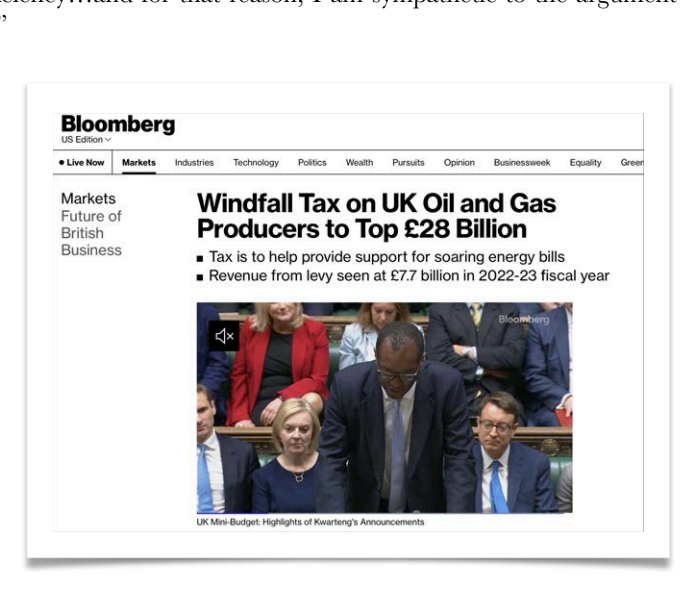
to tax those profits fairly.”
But the tax is also structured along with a boost in corporate deductions of up to 80% to entice investment.
The tax comes on top of a 40% tax rate on oil and gas companies operating in the North Sea (far higher than the 19% other companies pay) and it closes loopholes allowing deductions of losses or decommissioning12 expenditures. The windfall tax will stop at the end of 2025 or when prices return to more normal levels. Britain is no stranger to windfall taxes, having imposed them five times since the first world war, including twice in the 1980s under Margaret Thatcher, according to the13 Fairness Foundation, a non-partisan UK charity.
The energy consultancy Wood MacKenzie criticizes Britain’s taxation approach for inconsistency. “Many countries, including big oil and gas producers Brazil, Nigeria and Canada, already have mechanisms in place that automatically change the tax or royalty14 rate on oil when prices change,” the consultancy writes. “UK policy over the past 50 years has also been to adjust the tax rates when prices change, but on an ad-hoc, unpredictable basis – which investors abhor. A bolder response from the government would be to link its petroleum profits tax rate…directly to prevailing oil prices. This
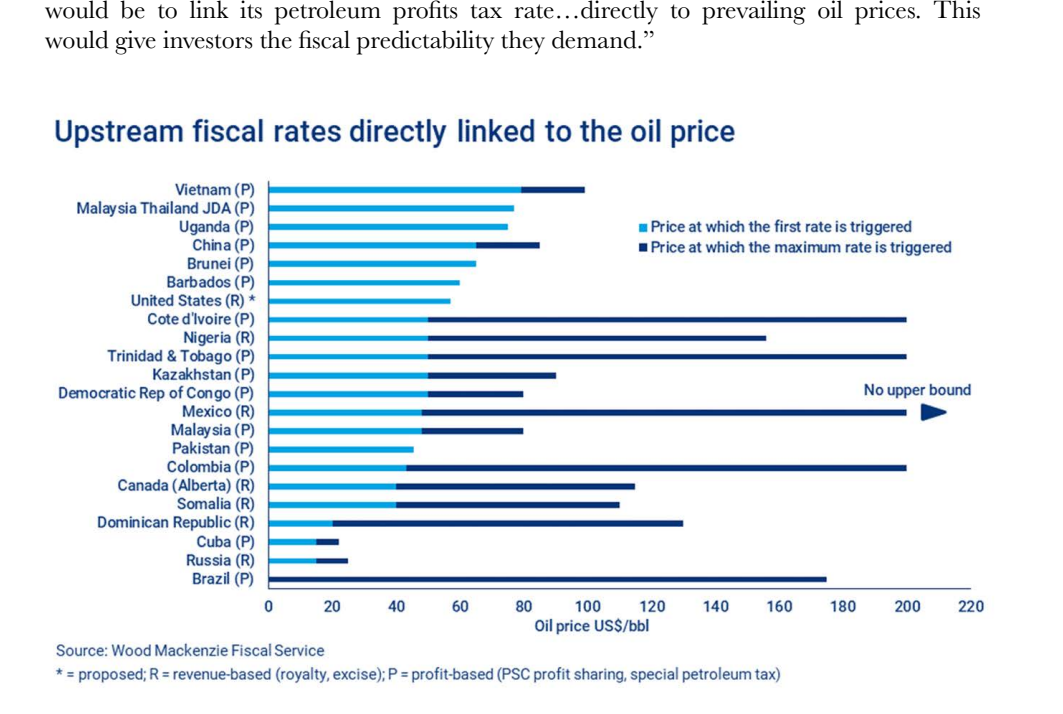
would give investors the fiscal predictability they demand.”
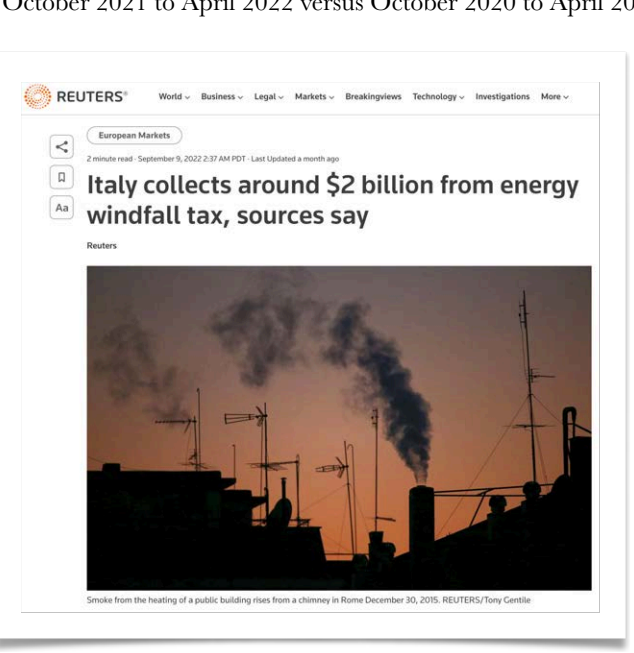
Italy Italy imposed a 25% tax on profits of energy companies benefiting from surging oil and15 gas prices, including power companies. The country will raise about 11 billion Euros16 that way, according to Reuters. Reuters reports that producers and sellers of natural gas, petroleum, and electricity made a first installment payment in June and will pay more taxes in November. The tax applies to profit margins that jumped by more than 5 million Euros between October last year and April this year compared to the same period last year, except for companies whose profit margin rose by less than 10%. Italy’s measures expire in December.
The Italian Windfall Tax of 25% targets producers of electricity, methane gas or natural gas producers, sellers of those products, as well as the production and distribution of oil products, according to the consultancy KPMG, a global network of professional tax and17 advisory service firms. It also applies to energy and oil product importers but does not apply to companies that organize trading platforms for electricity, gas, and fuels. The tax applies to the difference between the incremental added value for a period of time from
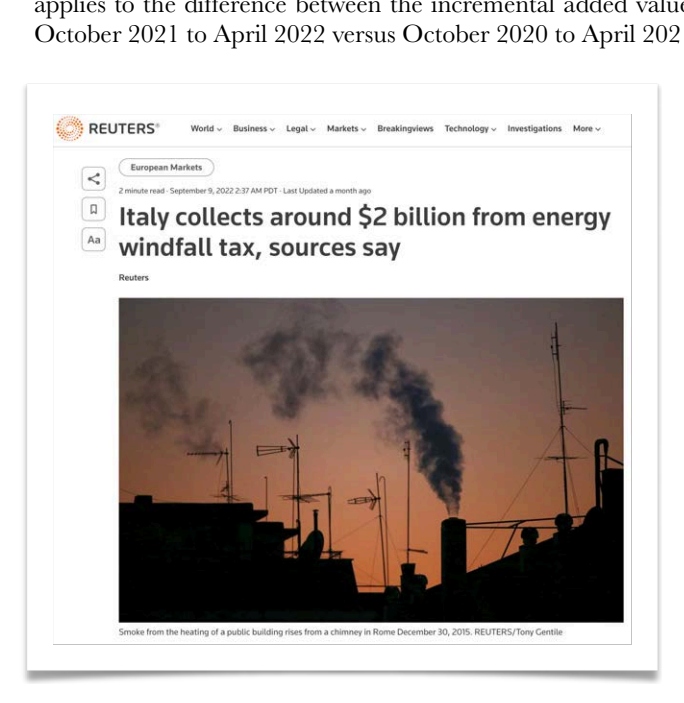
October 2021 to April 2022 versus October 2020 to April 2021.
“Whilst special measures have been included to prevent shifting of the tax to end-consumers, several concerns with the structure of the Italian Windfall Tax remain,”18 writes Freshfields.
“Firstly, the tax basis is not designed in a way that exclusively captures the windfall profits generated by the spikes in energy and oil prices. Indeed, the Incremental Added Value could be influenced by a variety of factors (including M&A activities) which are not connected to price fluctuations.”
Further, Freshfields notes: “…to the extent that certain players operate on a hedged basis, to protect themselves against price fluctuations, the financial benefit associated with the price fluctuations may in fact have been passed to financial counterparties, thus diluting the profit remaining in the hands of the energy industry player. In such cases, the tax would not capture the exceptional profitability.”
Spain Spain is about to vote on a windfall tax to raise around 7 billion Euros from big energy companies and banks by 2024 to help blunt increases in the cost of living. The tax would apply to about 20 major corporations that would be prohibited from passing on the cost19 of the tax to customers while watchdogs monitor the companies for compliance. “The proposal calls for energy companies with more than 1 billion euros in revenue in 2019 to pay an additional 1.2% in tax on revenue this year and next. Financial institutions are
he tax would apply to about 20 major corporations that would be prohibited from passing on the cost of the tax to customers while watchdogs monitor the companies for compliance.19 “
expected to provide 3 billion euros through a 4.8% tax on their net interest and customer
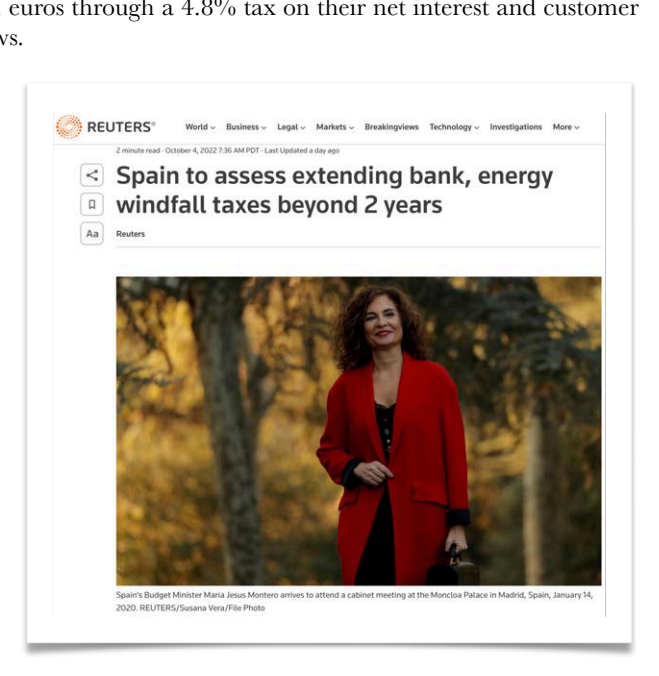
fees,” according to ABC News.

The Spanish Windfall Tax specifically requires electricity providers to pay back the Spanish electricity system a portion of the jump in income from the incorporation of the natural gas price into electricity prices. But so far, the results show that Spain misjudged the market.
“The Spanish Windfall Tax was originally intended to apply to energy providers regardless of the contracting method used (i.e., regardless of whether providers sold electricity on the daily market or through fixed-price contracts),”20 writes the international law firm Freshfields Bruckhaus Deringer. “However, this meant that the Government was penalizing companies for profits they were not making, as the prices for such contracts were set before the price rise (through bilateral agreements at a fixed price).”
The government then exempted producers with bilateral contracts at fixed prices signed prior to the tax’s effective date. According to Freshfields, the tax “has had no real effect in solving the problem of rising wholesale power prices in Spain, as it has not achieved the revenue collection objective that the Spanish Government was looking for since most of the electricity sold in Spain (approx. 80-90 per cent) is not actually sold via the daily market, but is sold on fixed-price contracts signed prior to the application of this measure and therefore excluded from the Spanish Windfall Tax.”
U.S. Windfall Tax The U.S. imposed price controls on oil in the early 1970s that continued after the Arab oil embargo. Fearing that removal of price controls would spike the price of crude oil, from 1980 to 1988, the U.S. imposed a windfall profit tax in the form of an excise tax on domestic production.

The Crude Oil Windfall Profit Tax used a percentage of the difference between the price of oil and a base price indexed for inflation (70% for integrated oil21 companies; 50% for others).
Lower rates applied to so-called “stripper” or marginally productive wells and even lower rates to heavy, hard to produce oil. The tax was repealed in 1988 as world oil prices fell.
According to the Center for American Progress, the 1980 windfall profit tax was not a profit tax. It was a selective excise tax22 paid upfront before profits from the sale of the oil were determined. The tax applied only to domestic production and was criticized for reducing production and increasing foreign oil imports.
Numerous policy considerations would apply to a windfall profits tax on oil companies today, including whether the tax would be an income or excise tax (and whether the tax would apply solely to U.S. production, or imports, both of which have implications for oil supplies) and how the windfall profits would be defined—whether as the excess of profits23 over a base period or some other way, according to the Congressional Research Service.
- In the United States, Sen. Sheldon Whitehouse (opens in new tab) (D-RI) and Rep. Ro Khanna (opens in new tab) (D- CA) have introduced the Big Oil Windfall Profits Tax Act. According to Congressional Research analysis, the proposed tax would be 50% of the difference between the current price of Brent crude oil and the average price from 2015 to 2019 (inflation adjusted after 2022). The tax would be imposed on both domestic production and imports limited to firms that produced or imported an average of at least 300,000 barrels per day. The legislation could raise about $35 billion to $40 billion a year. This money could be sent directly to consumers in “relief checks” to24 offset high fuel prices.
- Rep. Peter DeFazio (opens in new tab) (D-OR) has introduced similar legislation but taxing profits instead of crude oil per barrel by setting a baseline level of profits earned by oil and gas companies and taxing the difference. Revenues would also be rebated to consumers.
- Other oil windfall tax bills (opens in new tab) have also been introduced by Rep. Adam Schiff (D-CA),25
Sen. Ron Wyden (D OR), and Rep. Donald Norcross (D-NJ). These bills use different approaches from imposing an excise tax to add-on taxes. They have not reached the floor of the House or Senate. Each of the bills propose rebates to26 individuals, with rebates phased out for higher-income earners.
- A bill first introduced by Rep. Katie Porter (opens in new tab) (D-CA) and Rep. Kim Schrier (D-WA), HR 7688 (opens in new tab), passed the House in May but the Senate has not taken it up. The Consumer Fuel Price Gouging Prevention Act would lower gas prices by making exploitative price hikes unlawful, holding market manipulators accountable, and boosting transparency in the oil and gas market. The bill would also require the Federal Trade Commission to investigate whether the price of gasoline is subject to manipulation and establish a special transportation fuel monitoring and enforcement division to collect, monitor and analyze market data.
SUPPORT FOR A WINDFALL PROFITS TAX ON OIL Nobel Prize-winning economist Joseph Stiglitz believes a windfall tax on oil is appropriate to rein in price-gouging: In the midst of this economic and political crisis, oil and gas companies are taking advantage of world events, increasing their prices enormously despite no meaningful increase in their costs of production, raking in record profits at the expense of ordinary27 Americans….A windfall tax whose proceeds are used to help consumers is an economically sound way to deliver relief. With the benefits of price-gouging thereby reduced, some companies might even be discouraged from price gouging.
According to the Tax Policy Center, jointly run by the Urban Institute and Brookings Institution, “Extracting non-renewable natural resources such as oil and gas often28 generates excess profits, or ‘rents,’ that balloon when prices spike. Taxing these profits is relatively efficient because it doesn’t significantly affect investment and production. Since petroleum profits accrue largely to upper-income taxpayers, resource rent taxes also are highly progressive.”
The International Monetary Fund advises the introduction of a permanent tax on windfall profits for oil and gas producers when a country does not have an appropriate policy already in place. “The tax should be imposed on a share of economic rents (that is, excess profits) because rent-targeting taxes raise revenue without reducing investment or29 increasing inflation.” The IMF favors a permanent tax because temporary taxes on windfall profits tend to increase investor risk, can be distortionary if poorly designed, and because investors prefer “a stable predictable tax regime” to temporary taxes.
According to the Tax Policy Center, jointly run by the Urban Institute and Brookings Institution, “Extracting non-renewable natural resources such as oil and gas often generates excess profits, or ‘rents,’ that balloon when prices spike.28 Taxing these profits is relatively efficient because it doesn’t significantly affect investment and production. Since Since petroleum profits accrue largely to upper-income taxpayers, resource rent taxes also are highly progressive.”
A CA REFINER WINDFALL PROFIT TAX The nonprofit Brussels-based Heinrich Boll Stiftung Foundation analyzed the run-up in electricity prices across the European Union between September 2021 and June 2022. It found that electricity prices followed the spot market prices, while gas costs for fossil energy companies only rose slowly because they are based on forward contracts. This meant higher profits because, while electricity prices fluctuate, the gas bought ahead30 lagged behind the price increase. That yielded massive profits over a short period of time, exposing society and businesses to the shock of windfall profits. This is exactly what has occurred in California where refiners buying crude on favorable long-term contracts or using their own produced crude make a killing off the difference between what they pay for crude oil and what they charge gas stations. Now that refineries will be required to start reporting monthly the difference between what they pay per barrel of crude oil and the average price they charge for the finished barrel of gasoline, a windfall profits tax could be structured to rise, and fall, based on that margin. Thus, the tax would be on refiner profits per gallon and would rise and fall in nearly real-time and would be a permanent feature of California tax policy.
Taking a page from the Congressional Research Service (CRS), California could adopt a few different approaches. “…the tax base might be the excess of adjusted taxable31 refiner income in the tax year over taxable income in a base period,” writes the CRS. “An alternative could be to tax profits above a legislatively determined rate of return.” Excise taxes placed directly onto crude oil extraction can risk restraining supplies as proven by the U.S.’s misguided effort in the 1980s. But a well-structured windfall tax on refining operations’ profits is another matter. When it comes to the refining of gasoline, the process does not affect crude oil supplies. In fact, any well-structured windfall tax on profits per gallon of gasoline could lead to increased refining and lower prices. In California, a windfall profits tax based on excess gross refining margins has the advantage for keeping a ceiling on a profitable market without discouraging participation
A CA REFINER WINDFALL PROFIT TAX The nonprofit Brussels-based Heinrich Boll Stiftung Foundation analyzed the run-up in analyzed the run-up in electricity prices across the European Union between September 2021 and June 2022. It found that electricity prices followed the spot market prices, while gas costs for fossil energy companies only rose slowly because they are based on forward contracts. This meant higher profits because, while electricity prices fluctuate, the gas bought ahead lagged behind the price increase.30 That yielded massive profits over a short period of time, exposing society and businesses to the shock of windfall profits.
monthly the difference between what they pay per barrel of crude oil and the average price they charge for the finished barrel of gasoline, a windfall profits tax could be structured to rise, and fall, based on that margin. Thus, the tax would be on refiner profits per gallon and would rise and fall in nearly real-time and would be a permanent feature of California tax policy.
Taking a page from the Congressional Research Service (CRS), California could adopt a few different approaches. “…the tax base might be the excess of adjusted taxable refiner income in the tax year over taxable income in a base period,” writes the CRS.31 “An alternative could be to tax profits above a legislatively determined rate of return.”
in it. It also prevents manipulation of “costs” that oil refiners might use to offset income tax profits and minimize an income-based windfall profit tax. California’s Oil Refinery Cost Disclosure Act will provide the data necessary to pinpoint how much of a refiner’s profits per barrel of gasoline are windfall, a critical component in structuring an
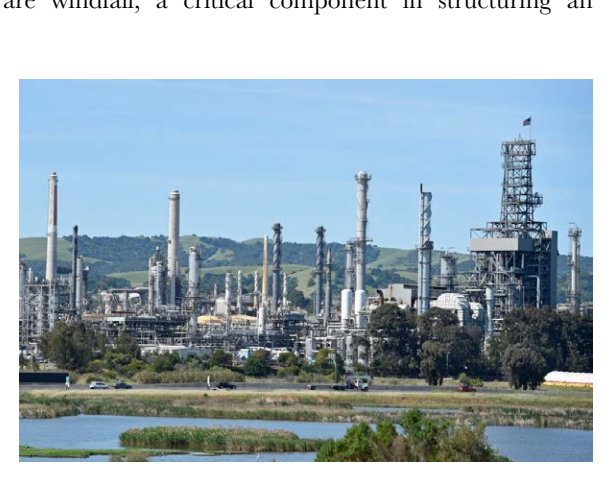
appropriate windfall tax.
Similarly, applying a windfall profit tax to gross refining margins, as opposed to net refining margins, would prevent manipulation of the companies’ books to minimize the tax. For example, Marathon’s conversion of its Martinez refinery to a biodiesel/alternative fuels facility would entail a significant offset to lower its “net margins.”
Yet Marathon made the decision to convert its facility and will be making significantly more money from the gas sold at other facilities due to the closure.
Making such a windfall tax permanent would put a brake on refiner gouging as it would rise and fall based on the benchmarks the state establishes. California consumers deserve nothing less than to be treated fairly and any revenues gained can be used to offset their energy bills.
CITATIONS1 See Consumer Watchdog’s analysis of second quarter 2022 profits of California’s five biggest refiners here: https://www.consumerwatchdog.org/energy/cas-big-5-oil-refiner-profits-top-26-billion-1- gallon-watchdog-make-case-profits-disclosure (opens in new tab)2 For Guterres’s remarks, see: https://www.reuters.com/business/energy/un-chief-urges- tax-grotesque-greed-oil-gas-companies-2022-08-03/ (opens in new tab)3 For more on what oil companies are doing with their profits, see: https://www.usnews.com/news/top-news/articles/2022-06-13/drilling-vs-returns-u-s- oil-producers-tradeoff-as-windfall-tax-threatens (opens in new tab) and https://www.nytimes.com/2022/07/29/business/oil-company-buybacks.html (opens in new tab)4 For more on big oil company second quarter profits, see: https://accountable.us/report-big-oil-companies-see-235-increase-in-profits-thanks-to-months-of-sky-high-gas-prices/ (opens in new tab)5 For the Hart poll, see: https://climatepower.us/wp-content/uploads/sites/ 23/2022/03/Garin-Costs-and-Clean-Energy-Memo.pdf (opens in new tab)6 For the latest data on gas prices in California versus the rest of the country, see: https:// gasprices.aaa.com/?state=CA (opens in new tab)7 For the CA Attorney General’s description of California’s gas market, see: https:// oag.ca.gov/antitrust/gasoline (opens in new tab)8 For second quarter refiner profits, see: https://www.consumerwatchdog.org/energy/cas-big-5-oil-refiner-profits-top-26-billion-1-gallon-watchdog-make-case-profits-disclosure (opens in new tab)9 For the El Pais article on windfall taxes on power generators, see: https:// english.elpais.com/economy-and-business/2022-07-14/how-europes-windfall-taxes-target-energy-profits-but-leave-out-banking.html (opens in new tab)10 For a thorough review of current taxation approaches to energy by numerous countries, see the European think tank Bruegel’s analysis here: https://www.bruegel.org/dataset/national-policies-shield-consumers-rising-energy-prices (opens in new tab)11 For the Washington Post article on British windfall taxes, see: https:// www.washingtonpost.com/world/2022/05/27/britain-windfall-tax-oil-gas-inflation/ (opens in new tab)12 See the UK government’s description of the tax here: https://www.gov.uk/ government/publications/cost-of-living-support/energy-profits-levy-factsheet-26- may-2022 (opens in new tab) and https://www.bbc.com/news/business-60295177 (opens in new tab) For the Fairness Foundation, see: https://fairnessfoundation.com/posts/a-windfall-tax-would-be-both-effective-and-fair (opens in new tab) Also see: https://www.theguardian.com/politics/2022/may/26/the-history-of-windfall-taxes-who-used-them-and-why (opens in new tab)14 For Wood MacKenzie analysis, see: https://www.woodmac.com/news/the-edge/the- pros-and-cons-of-an-upstream-windfall-tax/ (opens in new tab)15 For more details about the Italian windfall tax, see an analysis of the Italian government’s tax directive here: https://www.gop.it/doc_pubblicazioni/ 993_o59fwlbvdy_ita.pdf (opens in new tab)16 For Reuters’ description of the Italian windfall tax, see: https://www.reuters.com/ article/italy-economy-windfall-tax/energy-companies-to-pay-italian-windfall-tax-in-two-parts-by-november-draft-idINL5N2X489H (opens in new tab)17 See KPMG on the Italian windfall tax here: https://home.kpmg/us/en/home/ insights/2022/03/tnf-italy-withholding-taxes-dividends-indirect-energy-tax.html (opens in new tab)18 For Freshfields’ analysis of the Italian windfall tax, see: https://www.freshfields.com/ 49e8be/globalassets/noindex/articles/tax-briefing—windfall-profit-taxes.pdf (opens in new tab)19 For more on Spanish windfall taxes, see: https://abcnews.go.com/International/ wireStory/spains-govt-windfall-tax-banks-energy-companies-87544050 (opens in new tab)20 For Freshfields’ analysis of windfall taxes, see: https://www.freshfields.com/49e8be/ globalassets/noindex/articles/tax-briefing—windfall-profit-taxes.pdf (opens in new tab)21 For more on the Crude Oil Windfall Profit Tax of 1980, see: https:// www.encyclopedia.com/environment/energy-government-and-defense-magazines/ crude-oil-windfall-profit-tax-act-1980-wpt (opens in new tab) And https://crsreports.congress.gov/product/ pdf/IF/IF12064 (opens in new tab)22 For the Center for American Progress and its arguments in favor of a windfall profit tax on oil, see: https://www.americanprogress.org/article/as-energy-prices-skyrocket-congress-must-return-the-oil-and-gas-industrys-windfall-profits-to-the-american-people/ (opens in new tab)23 See: https://crsreports.congress.gov/product/pdf/IF/IF12064 (opens in new tab)24 For Khanna and Whitehouse remarks on a windfall tax, see: https://www.kron4.com/ news/rep-khanna-pushes-oil-tax-bill-as-prices-soar/ (opens in new tab)25 For other U.S. windfall tax bills proposed, see: https://www.congress.gov/search? q=%7B%22source%22%3A%22legislation%22%2C%22search%22%3A%22oil%20win dfall%20tax%22%7D (opens in new tab) For analysis of of these proposals, see the Congressional Research Service here: https://crsreports.congress.gov/product/pdf/IF/IF12064 (opens in new tab) 27 See: https://www.whitehouse.senate.gov/news/release/as-oil-companies-rake-in-cash-economists-and-environmental-groups-endorse-whitehouses-windfall-profits-tax (opens in new tab)28 For the Tax Policy Center’s views on an oil windfall profit tax, see: https:// www.taxpolicycenter.org/taxvox/petroleum-profit-tax-would-be-efficient-and-progressive (opens in new tab)29 For the IMF’s analysis of windfall profits taxes on oil, see: https://www.imf.org/en/ Publications/IMF-Notes/Issues/2022/08/30/Taxing-Windfall-Profits-in-the-Energy- Sector-522617 (opens in new tab)30 For the Henrich Boll Stiftung analysis of windfall profits in energy markets, see: https://eu.boell.org/en/2022/06/30/windfall-profits-energy-markets-acute-symptoms-structural-problems (opens in new tab)31 For the Congressional Research Service analysis of windfall profit taxes, see: https:// crsreports.congress.gov/product/pdf/IF/IF12064 (opens in new tab)