
“They’re not there to serve the policyholder. They’re there to serve the insurance company.”
- Karen Girard, Eaton fire survivor
“The longer things went on, the more we realized that this is just not how this works at all, and that the companies they’re hiring don’t really have our best interests in mind.”
- Jenny Kampmeier, Eaton fire survivor
“They’re not really testers to figure out what’s in there.
They’re testers to….minimize the claim.”
- Jesse Morrow, Eaton fire survivor
Introduction

We all know who the big insurance companies are, but they are only a part of the insurance claims galaxy. Once you file a wildfire claim, in come industrial hygienists to perform testing, and remediation companies to do clean up. Many only work for insurance companies. There are high-end consultants who are brought in when an insurer smells a lawsuit, and they often use fancy language to dress up all the work they don’t do. But too often, they are instruments to underpay and under clean homes.
This report will explore the insurance subcontractors that appear to take care of smoke damaged homes. What are they doing, exactly? How broadly or narrowly do they test and clean homes? Are they independent?
And why are policyholders expressing so much dissatisfaction with them?
(AI/Google Gemini) This is part two of a series about how large insurance companies have been mistreating wildfire survivors. You can read part one here (opens in new tab).
The Trouble with Testing
A couple of years ago, the Morrows did a gut renovation to their home in Altadena, California—so it was pretty much brand new. Then came the sweeping fires out of Angeles National Forest and into foothills of L.A. County. Their home ended up suffering severe smoke damage.
But Jesse Morrow was prepared as anyone could be for the fight ahead. His cousin, a public adjuster who was affected by the Marshall Fire in Colorado, told him immediately to hire an adjuster to help him with the insurance claims battle, as well as a top-notch tester for toxins. And still, it hasn’t been enough when up against the monolithic force of the insurance industry. Over the past year Morrow’s insurance company, Amica Mutual, has been seeking to rebut the testing results of toxins found in the Morrow’s home.
“We didn’t realize what we were up against…that there’s these insurance companies and it’s like an industrial complex,” said Morrow. “They all know each

other, they’re all friends.”
People buy insurance for a reason: to have our backs and recoup losses when something bad happens. But that’s not what’s been happening at all this year for many survivors of the Eaton and Palisades Fires.
“We actually had gone back the day of the fire because we had no fire support, so we had evacuated our family to the Hollywood Hills. My wife and I went back and fought the fire with a garden hose all day,” said Morrow.
One of the first things the Morrows did after averting a total loss of their home was to ask Amica about testing, due to smoke damage. That’s the first thing that has to be done, to establish if, and to what extent, toxins are in a home. Some things can be cleaned, but if toxins are ingrained in the building components or contents of a home, they generally have to be replaced. An air filter, scrubbers or deodorizers won’t clean them.
“We asked the insurance company, we said, ‘We’re very concerned about heavy metals,’” said Morrow. “Our house was brand new. We don’t want heavy metals

and cyanide in the drywall.”
“And they denied that request. They said, ‘We’re sending in J.S. Held, and J.S. Held is just gonna do what they’re gonna do.’ And we said, ‘Well, are you going to give us a plan for the testing plan?’ And they’re like, nope.’” J.S. Held, a consulting firm hired by Amica, came in and did about 15 tape samples, and some air sampling. J.S. Held’s recommendation was to clean the home, according to Morrow.
The Morrows hired their own industrial hygienist to do independent testing, Dawn Bolstad-Johnson. She did about 2100 tests in the Morrow home, and found cyanide in the plaster walls as well as in a sofa, and unhealthy levels of the carcinogen Acetaldehyde, a carcinogen. Simply cleaning it wasn’t going to cut it. It cost the Morrows $17,000, made possible by taking out a Small Business Administration loan.
For the Morrow home, Bolstad-Johnson recommended the removal of things contaminated by the fire, such as drywall, carpeting, HVAC equipment, attic and wall insulation. She determined that all contents and building materials have been exposed to toxic levels of carcinogens, chemical concentrations, and suspended particulates since the date of the fire. The fire damage is pervasive, and the scope of damage is extensive.
Instead, Amica sent a company called Blue Sky Environmental Consulting. At first it was looking good. The company would retest instead of merely rebutting Bolstad-Johnson’s report. But when the Morrows started asking questions to understand the testing plan, things got dicey.
“Any questions that we asked him, he just was very, like, especially to my wife, just dismissive, didn’t want to answer questions, said that we were being uncooperative,” said Morrow.
So the Blue Sky people dropped out before doing any testing. Next, Amica dispatched HRA Consulting, to rebut Bolstad-Johnson’s report. One topic discussed in the report was Chloride Anion levels in the home, which are toxins emitted from burning things like lithium batteries, which are everywhere now. The HRA report said: “Chloride anions are common in household environments and can originate from numerous sources unrelated to fire exposure—including sea spray (especially relevant in coastal Southern California).”

The Morrow’s home is about 25 miles away from the ocean, and was surrounded by the Eaton fires. Yet the HRA report said the breeze from the ocean—sea spray —was the problem.
“I think he just copied that rebuttal from a Palisades house and just left that line in there. I mean, why would you leave that line in there?” asked Morrow. “It makes no sense. It’s ridiculous.”
The Deposition
So who is J.S. Held? Who is HRA Consulting? Who is Blue Sky?
HRA Consulting is one guy named Hamid Arabzadeh, who mostly works for insurance companies or law firms repping insurance companies. That’s according to a deposition he sat for in a lawsuit against an insurance company a couple of

years ago.
The home in question in the litigation was within feet of the Tenaja Fire, a rural fire that occurred in Riverside County in 2019. The home suffered smoke damage, but the insurance company, Catlin, hired HRA Consulting to inspect the home.
Here are some things Arabzadeh said during the deposition: Q. So your method was you did a visual inspection of the home, you used your nose to inspect to some degree, and then you did those six tape lifts. Right? A. Correct.
Q: So other than what you see with your eyes, you believe that the question of damage to building components is not very complex. Right?
A: If the flames haven’t touched the house, yes.
Translation: smoke damage isn’t real.
Arabzadeh’s report of the home he examined said he used something called sponge wipes, which are used to collect dust samples. But he testified that he actually didn’t use them.
Q: Did you use any sponge wipes?
A. I don’t believe I did.
Q. So why is it on your report if you didn’t use them?
A. It is just there. It is, you know, something I put on the reports.
The deposition suggests that Arabzadeh has stock phrases, like the “sea breeze” line, that he puts into reports whether or not they pertain to the specific home being tested.
Q. Okay. But what did you do to determine whether the area around the Mohrs’ house had been impacted in that way, possibly?
A. I think it’s not needed to do anything, and I didn’t do it. I looked at the conditions, where the fire was, those are what I did.
It appears Abrabzadeh relied on no industry or governmental standards to assess the home. According to his testimony, he did a smell test and some tape lifts. According to experts like Bolstad-Johnson, thorough tests must collect air particles in different ranges, screen key toxins, sample surfaces, and heavy metals. Determining if emissions seeped into the drywall or HVAC is important too. Tape lifts are not as effective, according to her.
“We’re testing for total cyanide in wallboard and yoga mats and baby car seats and mattresses, bolster pillows, and we’re finding it everywhere,” said Bolstad- Johnson. “So there’s been no fire like this that has included this amount of synthetic materials, this amount of batteries, this amount of electronics. So it’s really unprecedented…this fire in particular was a very toxic fire.”
Keep in mind that the Eaton and Palisades fires are as much, if not more, an urban fire than a wood fire, which means insurers should test more to ensure homes are safe.
In Arabzadeh’s deposition, he’s asked about Volatile Organic Compounds, or VOCs, stuff that is emitted from paint, cleaning supplies, building supplies, wood, etc.
Q: Do you know, as you sit here today, whether any VOCs, including PAHs, were adsorbed into any building component, fabric, or other porous surface at the Mohrs’ residence? A: I don’t believe so.
Despite not testing, Arabzadeh said under oath that it was unlikely that soot and VOCs were absorbed into the home. This consultant’s recommendation for the home in question was, “don’t do anything.” No vacuuming or wiping, even. Through its lawyer in this lawsuit, Catlin insurance paid $25,000 for the services of HRA Consulting.
“Well, he also tried to say that the cyanide in the ADU is from a gas appliance or a wood-burning fireplace,” said Morrow. “But it’s brand new. There’s never been a gas appliance in there—it’s all electric. And there’s never been a fireplace.” Morrow believes his insurer is data shopping, or performing tests until it finds the cheap, desired result it is looking for.
What about J.S. Held? Who are they? Well, here’s what they say they are, according to their website.
“J.S. Held is a global consulting firm that combines technical, scientific, financial, and strategic expertise to advise clients seeking to realize value and mitigate risk. Our professionals serve as trusted advisors to organizations facing high stakes matters demanding urgent attention, staunch integrity, proven experience, clear-cut analysis, and an understanding of both tangible and intangible assets. The company serves 81% of Global 200 Law Firms, 70% of the Forbes Top 20 Insurance Companies, and 65% of the Fortune 100 Companies.”
Translation: It isn’t for regular people. We’re trying to save the big guy as much

money as possible.
These consultants actively market their services towards companies and law firms. A person isn’t likely to get their services on their own.
It’s important to point out that J.S. Held was the first on the scene of the Morrow residence, before anyone else came to examine it. And when they did arrive, they tested very narrowly.
“They’re the testing company of choice because they are large, and they tend to test for litigation,”
“They’re being
said Morrow. “They’re not really testers to figure out what’s in there. They’re testers to…minimize the claim. They’re minimizing the damage from the paid to do a very beginning.”
service
Another company we’ve been hearing a lot bout from policyholders is P.W. Stephens, which describes
that may
itself as setting, “the gold standard of service in the environmental abatement and remediation industry within the greater state of California.” They work or may not for all the big insurance providers. Consumer
work.”
Watchdog spoke with one woman whose insurer— Farmers—foisted this company onto her to clean the lead inside her Altadena home. Her name is Karen Girard. Karen read her remediation contract very carefully—and she found some absurd things, including the fact that P.W. Stephens, after it is done doing its “gold standard service,” said: “The work provided in this contract does not include the removal of any hazardous dust materials such as asbestos, lead or other hazardous dust particles, unless otherwise noted in our contract.”
“They won’t actually guarantee that the home is remediated for lead,” said Girard. That’s coming from a company that remediates lead. What’s even more head scratching is the following language in their contracts, which say: This bid is based on no lead clearance testing being preformed (sic). Should lead clearance testing be preformed (sic) and the clearance test fails to meet lead clearance standards, PWSEI will continue to clean the surface areas at a T&M rate of $135.00 per hour, per man. PWSEI is not responsible for the costs associated with the failed clearance testing.
The company is basically saying, “We’ll clean for the price we quoted, but if a lead test happens later and it doesn’t pass, you’ll have to pay us more to keep cleaning, and you’ll also have to pay for the test.”
“So, to my mind, they’re being paid to do a service that may or may not work,” said Girard.
Gaslighting
“In my case, the Eaton Fire started; I fled my home in the middle of the night. There were no alerts of any kind, and I drove out with my car being buffeted by ash,” recalled Girard.
“The aftermath has been far worse in a different way, because the immediate disaster was frightening, but the recovery from the fire has been incredibly difficult, because the social services, the governmental services, the paid services, like insurance, are not actually helping those of us who are survivors of the fire.” “But then the gaslighting starts. It turns out that ServPro answers directly to the insurance company, in my case Farmers.”
ServPro is the vendor that Farmers sent out to clean her home. Girard said Farmers initially denied testing of her smoke damaged home. The company’s report recommended only minimal cleaning. But after the LA Department of Public Health put out an advisory that said that anyone in a property within 250 yards of burned structures faced health risks, Farmers reversed its decision and sent out a company to test. They sent out an industrial hygiene company called HygieneTech.
“I was talking to the adjuster, I said, ‘You know, so what are the qualifications of these folks? What are the kinds of things they’re testing for? Why are they answering to you and not to me?’ And I expressed dissatisfaction that I was being left out of the process. That particular jester said that he hoped I would be satisfied with the service when all was said and done, but that Farmers is a financial company whose job is to deliver the cash to fix the properties. They are not, in fact, an insurance company.”
“I was shocked, because I felt like, he’s saying the quiet part out loud.” Girard was still hopeful but red flags emerged while looking through the testing report.
The testing protocol was outdated, according to Girard. They should have tested for more chemicals, and in more locations, she said.
“Places where you spend a lot of time, like your bed or your sofa, are good candidates for testing because you get a sense of just how dangerous the goods are in your home. They did not test any of these that I can tell. They took bulk samples for the soft goods, and they never recorded where they took them.”
“And when I got to the one that was on top of the automated thermostat that I touch twice a year, I realized just how biased it was.”
“Everybody’s doing whatever they want,” said Bolstad-Johnson, the testing expert. “They don’t wanna pay or can’t afford to pay for extensive testing. So consultants are coming and they’re saying, oh, we can come and sample for $3,500 and we’ll take seven samples. So you’re making a determination on, three or 4,000 square foot house and seven inches of data. And it doesn’t address the VOCs. It doesn’t address heavy metals. It doesn’t address any of the things that this home

was exposed to.”
Girard’s report came back positive for lead and arsenic. That’s where P.W. Stephens comes in. The company said everything will be cleaned and nothing will have to be thrown out.
“So, we will attempt to clean everything, and if you’re not satisfied, if you think that it is not clean, if you smell smoke, then you can do a sniff test, and we’ll come back and redo the job,” recalled Girard.
Her response?
“That’s how you get lead poisoning.”
“I’m
Then she saw the contract language about not actually guaranteeing the home is cleaned of lead.
surprised at
“They’re essentially the insurance company’s employees if they are not in any way, shape, or form independent,” said
how naked
Girard.
“And when the insurance company chooses all the vendors,
and open
and then uses those vendors to limit the scope of work, and then uses those vendors’ alleged certifications and
this is.”
expertise to deny you payment on your choice of vendors— then how is a homeowner supposed to remediate their home? And what is the value of insurance? Because it’s not actually paying to remediate your home.”
Right now Girard is out of pocket $10,000 for testing.
The cleaning of her home is still up in the air.
“And so, many of the public adjusters are very careful about the cases they take, and in fact, I couldn’t get some of them to take my case, simply because they said, we think you’re going to end up in court. Many of the smoke cases are very hard to get any movement on. The insurance companies just stonewall, so we don’t want to take your case only to disappoint you.”
“I’m surprised at how naked and open this is,” said Girard.
According to the California regulator South Coast AQMD, which aims to improve air quality for parts of Southern California, it has fined P.W. Stephens five times since 2018 in connection with civil settlements for air pollution violations, including a $56,900 penalty against the company for violations of asbestos emission regulations. AQMD records show the company failed to properly contain or notify regulators during an asbestos remediation on at least one occasion. In 2009, P.W. Stephens settled a lawsuit alleging the company improperly flushed asbestos-containing material into a home’s septic systems.


ServPro
“They are essentially a cleaning company. And so they’re not certified to deal with these crazy chemicals that were burned in this urban fire,” said Eaton fire survivor Jenny Kampmeier.
Kampmeier is talking about ServPro, a vendor that worked for her insurer: State Farm. Her house sustained smoke damage. If she entered for just a few minutes, she’d get headaches.
ServPro primarily cleans homes. The gist of its testing is the eyes and noses of its employees.
“The function of their service is not to truly ensure that your house is safe to live in, it’s to clean it so that it smells good,” said Kampmeier.
“So, by looking at it, does it look clean? Does it smell clean? That’s the only testing that they do after the fact.”
But they won’t open drawers, or closets, or washing machines to clean, according to several policyholders. It’s all about appearances.
“One of the other things that struck me from the estimate from Servpro is that they use a lot of technical language to try to make it sound like they know what they’re doing,” said Kampmeier. “Just saying that they’re gonna HEPA vacuum—all that is a vacuum with a HEPA filter. The HEPA filter just ensures that you’re not blowing stuff back out the back end of the vacuum when you’re vacuuming. It’s not a better vacuum, it’s just got a better filter, right? Or same thing, they would talk about, ‘Oh, we’re gonna use soot sponges to test for soot. And that is kind of a specialized thing. It’s like a little rubbery block that they can use to scrape onto a couch or onto a cabinet, and if it comes back black, then we know that there’s still soot present.’ But when you kind of think about what they’re actually saying, really all they’re going to be doing is wiping things down with, like, a microfiber cloth and some spray. They’re just vacuuming my house. I could do that. Why would I pay $23,000 for somebody to vacuum, right?”
Dylan Schaffer, an attorney who’s been litigating smoke damage issues, spoke of the challenges in bringing such cases.
“The challenge is demonstrating that they’re all paid off,” said Schaffer, “They’re working hand in glove with the remediation industry, which is very, very profitable and which is basically house cleaners with hazmat suits on. So the real challenge is

to get a competent hygienist to say, this is the scope that’s necessary, and that means, for instance, tearing out ducting, insulation, carpeting, flooring. In many cases drywall, and in the worst cases, sheathing and framing.”
Almost a year after the fires, survivors are still displaced from their homes, and still have to fight their insurance providers.
“I left my home under pretty difficult circumstances, but the aftermath has been far worse in a different way, because the immediate disaster was frightening, but the recovery from the fire has been incredibly difficult,” said Girard.
“We just don’t want to move back into it if it’s not safe. And it’s really hard to determine that,” said Morrow.
A Lack of Protections
The problem is there are no established standards to follow for smoke damage testing and remediation in California.
“To his credit, one of the things that my ServPro representative said is that their industry doesn’t have good guidelines for how to deal with something like this,” said Kampmeier. “It’s a relatively new phenomenon, and the body that provides guidelines for cleaning and restoration companies, they have guidelines for wildfire, and they have guidelines for house fires, but they don’t really have guidelines for urban wildland interface fires. And so he said, ‘Yeah, we’re just cleaning to the guidelines for a wildfire.’” And although under the California insurance code an insurer can’t push a vendor onto you, and as a policyholder, you have the right to pick your own vendor—they are refusing. It’s part of the reason companies are getting away with narrow testing and cleaning protocols.
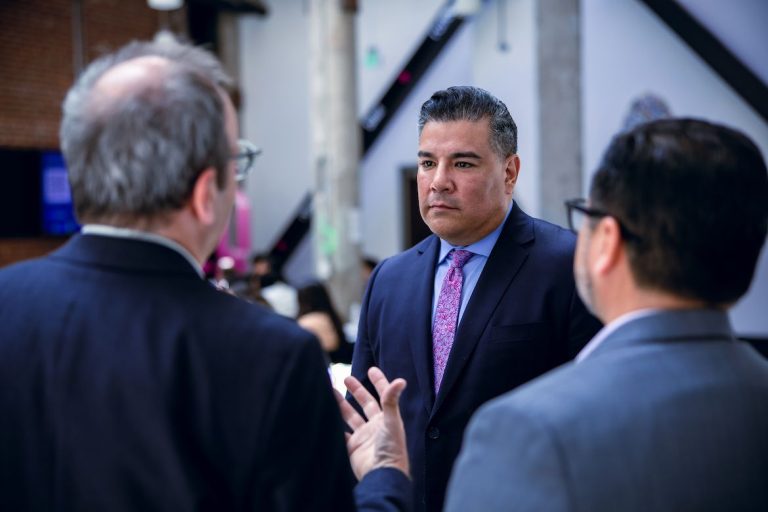
In 2025, California Insurance Commissioner Ricardo Lara, who is supposed to regulate the insurance industry, formed a 13-member Smoke Claims and Remediation Task Force.
“Together, they will recommend science-based insurance standards and best practices for safely returning to and restoring homes and personal property,” announced Lara’s office in a press release.
But guess who’s on the task force? Hamid Arabzadeh, the HRA Environmental consulting guy who does the smell test, as well as the President of Blue Sky Environmental Consulting, who bailed on testing the Morrow’s home. More than half the task force is corporate consultants or lobbyists working for the insurance industry: Safeguard Enviro Group, Forensic Analytical Consulting, Anderson Group International, and two insurance company trade associations. No public adjusters, or independent testers or industrial hygienists were appointed by the insurance commissioner. The Task Force is supposed to deliver science-based, statewide standards for how homes damaged by wildfire smoke should be handled. But will these standards make peoples’ homes safe to live in? Or is it more likely, given what we’ve learned about these consultants’ loyalties, that they’ll lowball the standards to protect insurance companies’ bottom line?
The battle over smoke damage is only beginning.