
By Maggie Angst, THE SAN FRANCISCO STANDARD
Jane Kim wants a state-run wildfire insurer. Ben Allen wants to fix the private market. Whoever wins will inherit a mess.
The only competitive statewide race this election is between two Democrats with starkly different visions for fixing California’s home insurance crisis. It’s also a test of progressives against the party’s mainstream.
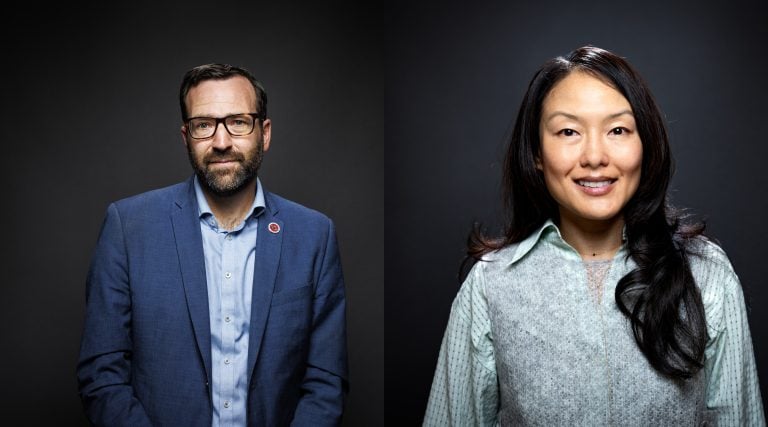
In the race for insurance commissioner, former San Francisco Supervisor Jane Kim, who’s backed by Sen. Bernie Sanders, is pushing to create a mandatory state-run “natural disaster for all” insurance program to cover wildfire risk for every home. State Sen. Ben Allen, who’s endorsed by the state Democratic Party, wants to stabilize the private market by keeping commercial insurers in place but changing the rules under which they operate.
With the governor’s race a virtual lock for centrist Democrat Xavier Becerra, the contest for insurance commissioner, pitting a progressive against a moderate, has risen in profile.
The result could signal which wing of the party California voters trust to fix the problem. Allen is making his case based on his legislative record and proposed market reforms, while Kim argues that her opponent is defending a failed “status quo” and that bold change is needed. Each is making their case through fights over industry money and the cost of their plans.
“My plan is actually grounded in the reality of the market and the system that we have, but it also doesn’t just accept things as they are,” Allen said, highlighting his experience helping constituents after the 2025 Palisades fire. “I’m not learning about this crisis on the fly, like my opponent.”
Kim said Allen’s approach keeps the problems in place.
“The status quo is rising premiums, canceled coverage, and claims that continue to get denied, delayed, and underpaid,” she said. “What is magical thinking is that we can continue to do what we’re doing today and expect a different result tomorrow.”
California’s insurance commissioner holds the power to approve premium rates for home, auto, and commercial coverage. Following several years of devastating wildfires, major carriers have restricted or halted new policies, driving more homeowners to the state’s “insurer of last resort,” the FAIR Plan.
Among 11 candidates in the June primary, Kim finished first, with 26.8% of the vote. Allen got 19.6%, and Republican Stacy Korsgaden finished third with nearly 16%. Two recent polls showed that the majority of voters were undecided in the final weeks leading up to Tuesday’s election.
Political strategists caution against reading too much into the race and what it means for the Democrat Party at large. It’s a down-ballot contest, with low public awareness of the candidates and the office, and Republican and independent voters could help decide the outcome.
“It’s a matter of will they vote or skip it,” Republican consultant Rob Stutzman said of GOP voters, adding that those who participate are far more likely to choose Allen, who is viewed as a moderate relative to Kim, the former state director of the progressive California Working Families Party.
The outcome could come down to something as simple as ballot designations. Jamie Court, president of Consumer Watchdog, said Kim’s designated title of “attorney/consumer advocate” carries stronger populist appeal than Allen’s traditional “state senator.”
“That title may very well carry her into office, and it was a smart thing to do,” Court said of the “consumer advocate” label.
Kim worked as a civil rights attorney before serving on the San Francisco Board of Supervisors from 2011 to 2019, where she led the charge for stronger eviction protections and tuition-free community college.
Court’s group has not endorsed either contender, and he said he views both as capable regulators. But he remains skeptical of Kim’s proposal for state-run wildfire insurance, arguing that the “numbers don’t add up.” Court questioned where Sacramento would find the billions of dollars in estimated startup capital and (opens in new tab) warned that a state-run program could struggle to absorb claims after a catastrophic blaze. He also doubts the legislature and governor, whose approval the plan hinges on, would sign on.
Kim has cited public disaster insurance in New Zealand and France as precedents, but neither directly match her proposal. New Zealand’s program, for instance, is a capped layer of coverage built into private home policies for earthquakes, landslides, volcanic activity and tsunami — but not wildfire unless one of those events causes it.
Kim’s proposal instead would carve wildfire out of private homeowners policies altogether and create a state-run entity that assumes the risk and sets rates. While several U.S. states operate public insurers of last resort, none operate a mandatory program at this scale.
Beyond the public disaster insurance program, Kim wants to require companies that sell auto coverage in California to also offer homeowners insurance, and she supports mandating minimum payout ratios across both lines.
Kim’s supporters say the primary results showed voters want more than the party establishment is offering.
“There’s an appetite for voters in California and across the country for elected officials that are willing to pursue bold proposals, even if they have a political cost and even if the corporate money is against it,” said Amar Shergill, a former chair of the California Democratic Party’s progressive caucus, who backs Kim.
Allen and his allies reject the argument that reforming the market means defending the status quo.
Allen has pledged to shorten Department of Insurance rate reviews from years to months and build on regulations introduced by outgoing Commissioner Ricardo Lara that allow wildfire catastrophe modeling and reinsurance costs in rate filings. He said he would also work with the legislature and governor to set fire hardening standards designed to help lower premiums, and he would restore insurer disclosure of fossil fuel investments .
Allen points to a legislative track record that includes several wildfire and insurance bills enacted this year, such as expanding state regulatory enforcement, requiring longer notice before insurers drop policyholders, and creating a state loan framework for home hardening. He also authored a $10 billion climate bond, passed by voters in 2024.
“Sen. Allen has a really impressive track record when it comes to making the connection between climate and insurance and those two twin crises,” said Erika Guzman Cornejo of California Environmental Voters, which endorsed Allen. “That’s really what it’s going to take to address this.”
Campaign messaging has turned increasingly combative. An Allen advertisement warns that Kim’s state-run disaster insurance plan constitutes a costly government takeover that could “bankrupt the state.” A Kim ad, featuring Sanders, counters that she will “hold insurance companies accountable and put people before profits.”
Kim has made campaign money a sharp contrast, saying she has never taken a check from insurance carriers or their PACs. She has attacked Allen for taking direct insurer contributions in past races and pointed to a PAC backing him that recently accepted more than $100,000 from insurance industry groups, as first reported by CalMatters (opens in new tab).
“It’s important that this office, whose sole authority is to regulate this $3.3 trillion industry, is independent from the industry that it is regulating,” Kim said.
Allen called the attacks a “distraction.” He said he doesn’t control the outside PAC backing him, and at an early October debate said he promptly refunded four small insurance-industry donations that were mistakenly transferred from a previous committee account for this race.
Allen’s campaign has countered Kim’s claims by pointing out that an outside committee backing her accepted $50,000 from PG&E, and that the utility giant also gave to a PAC that backed her failed 2016 state Senate bid. “I’m a little mystified by some of the criticisms, given her own record,” Allen said.
Beyond the donor checks and party labels, the next commissioner will have to answer to California homeowners facing canceled policies and rising premiums. And for them, success will be judged by much simpler standards: whether their premiums come down and their coverage stays intact.
Maggie Angst is an award-winning politics reporter at The Standard. Previously, she covered homelessness and addiction for the San Francisco Chronicle and state politics for The Sacramento Bee.
Consumer Watchdog · October 30, 2026
https://consumerwatchdog.org/in-the-news/the-san-francisco-standard-how-an-insurance-fight-between-two-democrats-became-californias-most-competitive-race/
© 2026 Consumer Watchdog. Printed November 2, 2026.