
Jane Kim takes office in January with an ambitious proposal for publicly run disaster insurance, but industry leaders warn the plan could expose taxpayers to billions in losses. Wildfire survivors and consumer advocates are pressing her to crack down on insurers over rates and claims handling.
By Malcolm Maclachlan, DAILY JOURNAL
One of the most hotly contested statewide races in California this election cycle was for arguably the state’s most thankless job: insurance commissioner.
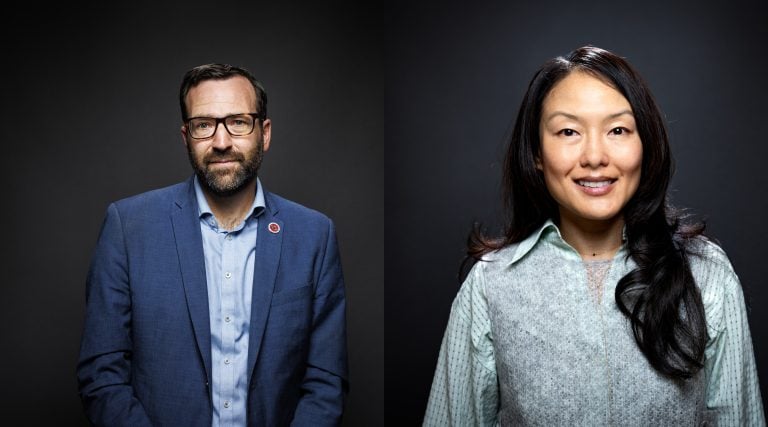
In January, Jane Kim will take office under the threat of looming weather disasters and longstanding questions about the financial solvency of the state’s insurer of last resort. Whatever she does, she will face criticism –and possible lawsuits — from homeowners, insurers or business organizations.
If that were not enough, some people are warning that her signature policy proposal could crash California’s home insurance market and leave taxpayers on the hook for billions. Her idea, titled “Natural Disaster Insurance for All,” would create a publicly run, nonprofit insurance program that would provide universal coverage against catastrophic losses from wildfires and other natural disasters.
Former insurance commissioner candidate Patrick Wolff has warned that the proposal could leave taxpayers on the hook for billions; he endorsed Kim’s general election rival, Ben Allen. Personal Insurance Federation of California President Rex Frazier has questioned whether it would be legal to force insurers to contribute funds to help pay for the idea.
Even Consumer Watchdog President Jamie Court has questioned how the state could afford the billions of dollars needed to create a reserve fund to pay claims after catastrophic wildfires. But he also said this does not necessarily mean it is a bad idea.
“I don’t think you can be too aggressive as insurance commissioner,” Court told the Daily Journal. “Especially with this market, it really needs a kick in the butt. She’ll have to balance the immediate needs of consumers with the long-term vision she has for the market, but I have every confidence she’ll do that.”
Consumer Watchdog did not endorse a candidate in the race. But Court said that was because it liked both Kim, an attorney and former San Francisco supervisor, and Allen, an outgoing state senator.
“We were agnostic in the general,” Court said. “We felt that both would be good. Ben was more familiar to us, but Jane was clearly more aggressive.”
He also rejected the idea that Kim would crash the home insurance market, adding that anyone who won the job was going to inherit a dire situation.
Court has long been critical of outgoing Insurance Commissioner Ricardo Lara. Across eight years in office and a variety of actions, Court’s critique was that Lara was “all carrot, no stick;’ giving away too many concessions to insurers for too little in return.
“The fair plans have been in trouble for a while,” Court said. “She inherited a horrible situation, with the industry getting a lot of the deregulation they wanted.”
The industry
Industry groups have taken a conciliatory tone with Kim since she won. But some have also urged her to continue following some of Lara’s policies.
“California’s insurance recovery under the Sustainable Insurance Strategy is beginning to reach communities that have had the fewest choices;· said Personal Insurance Federation of California Vice President Seren Taylor in an email.
Lara introduced the strategy in 2023 to stabilize the state’s troubled homeowner’s insurance market. The reforms allow insurers to use catastrophe models and incorporate reinsurance costs into rate calculations in exchange for commitments to expand coverage in wildfire-prone areas where insurers have increasingly withdrawn.
Taylor credited it with finally slm,ving down the growth of the FAIR Plan. The insurer of last resort nearly doubled between 2021 and 2024, hitting 465,000 policies. But Taylor said the grmvth has recently leveled off.
“The evidence is compelling – FAIR Plan residential growth is the slowest since 2022,” he said. “The FAIR Plan added just 2,230 residential policies in Q3 2026, down 82% from 12,406 in the prior quarter. It was the fourth straight quarter of slower residential growth. Commercial policy counts fell for the third straight quarter.”
According to the analysis published by Consumer Watchdog in September, 10 insurers had requested or received $571.6 million in rate increases while committing to write 12,189 additional homeowners insurance policies in California’s wildfire-prone areas.
Consumer Watchdog calculated that this amounted to approximately $47,000 in rate increases for each additional policy promised. But these numbers are not final; the rate increases were requested by insurers, not already approved by regulators, or paid by consumers.
But Kim is arguably coming into office with bigger plans but less political capital than her predecessor. While she ultimately won comfortably by more than 8 percentage points, hers was one of just a few statev.ride California races not called on election night. Kim has also never held elected office outside San Francisco.
“A popular former senator, Ricardo Lara, was unable to get his former legislative colleagues to pass his much more modest Sustainable Insurance Strategy (SIS), so he did it unilaterally by regulation,” Frazier said. “The new commissioner would be asking an unfamiliar Legislature for something much larger, which may be difficult.”
Something much larger
Kim’s transition team did not make her available for an interview by press deadline. But she has criticized Lara’s Sustainable Insurance Strategy as a giveaway to insurers, arguing that companies have raised premiums without significantly expanding coverage in wildfire-prone communities. She has not promised to repeal it, but she has promised tougher enforcement around rates, coverage and transparency.
Her alternative “Natural Disaster Insurance for All” proposal would create a publicly run, nonprofit insurance program providing universal coverage against catastrophic wildfire losses. Funded by premiums paid by property owners, the program would shift disaster risks from private insurers to a state-administered pool. Implementing the plan would require approval from California lawmakers.
“It creates an enormous concentration of correlated risk that no reasonable insurer would ever contemplate because wildfire loses are not independent risks that become safer merely by adding more California homes to the pool,” Taylor said. “A statewide fire season can affect thousands of properties simultaneously, producing tens of billions of dollars in claims.”
Last year, less than four months after the Eaton and Pacific Palisades fires, FAIR Plan President Victoria Roach told the Assembly Insurance Committee that the plan entered 2025 with a $400 million surplus. That surplus literally went up in smoke in the first few days of the year; the plan has since been hit with 5,500 claims relating to just those two fires.
“There is currently no existing model of a wildfire-specific or an all-disaster perils public/ private hybrid insurance programs in the United States,” Amy Bach, executive director of United Policyholders, said in an email.
Bach founded the San Francisco-based nonprofit consumer advocacy organization in 1991.
United Policyholders helps people navigate insurance claims, recover from disasters and advocate for stronger protections for insurance customers.
The closest existing models to what Kim has proposed may be the National Flood Insurance Program and the California Earthquake Authority. Both have issues, Bach conceded. The flood program is $22 billion in debt to U.S. Taxpayers. The authority only covers “a small fraction of CA homeowners,” she said.
“Her plan is very ambitious and would need legislative approval, plus strategies for avoiding short- and long-term negative impacts on property values, real estate sales, mortgage transactions and consumers in general,” Bach said.
Vocal allies
But Kim has one group in her corner: representatives for fire survivors. Many of these advocates got involved because they live in communities ravaged by fire — or personally experienced the loss of nearly everything they owned.
“I think that she’s going to be a real breath of fresh air, especially after everything that we’ve been through in the last two years,” said Joy Chen, executive director of Every Fire Survivor’s Network.
Chen is a former Los Angeles deputy mayor who became an advocate for California wildfire victims after she turned an Altadena pickJeball WhatsApp group into an evacuation and recovery network when the Eaton Fire erupted on Jan. 7, 2025. She is now the executive director of Every Fire Survivor’s Network, a nonprofit representing more than 10,000 survivors.
Her own home did not burn. Instead, Chen got caught in the nightmare scenario that has plagued thousands of other homeowners in Los Angeles and elsewhere: smoke and soot damage. Whether and how much smoke-damaged homes are covered under existing policies has become a flashpoint in California’s already tense battle over the future of the home insurance market. The Eaton and Palisades fires took place in much more densely populated communities than most of the other recent fires, resulting in thousands of homes that were damaged but left standing.
“We’re seeing mass delays and underpayments in this recovery,” Chen said. “That’s really an indictment of the insurance industry for systemically delaying and underpaying our claims, but it’s also an indictment of the sitting insurance commissioner for not enforcing the rules.”
Kim has called for tougher enforcement of smoke-damage insurance claims, mandatory testing for toxic contamination and a statewide standard for determining when a smoke-damaged home is uninhabitable. She has also argued that insurers should treat homes rendered uninhabitable by smoke contamination as total losses.
These proposals are separate from her “Insurance for All” plan. But they point to the tightrope that Kim, or anyone else who holds the job, wm have to walk: keeping rates affordable without prompting a mass exodus of insurers.
Court also pointed out that home insurance is just part of Kim’s new job. California has also faced issues with its car insurance market, especially affordability for low-income drivers. New technologies, from artificial intelligence to self-driving cars, could also throw some curveballs.
The to-do list
Given the difficulty of pushing through major changes to California’s insurance markets, it is possible Kim will not be able to deliver the kind of sweeping vision she has talked about.
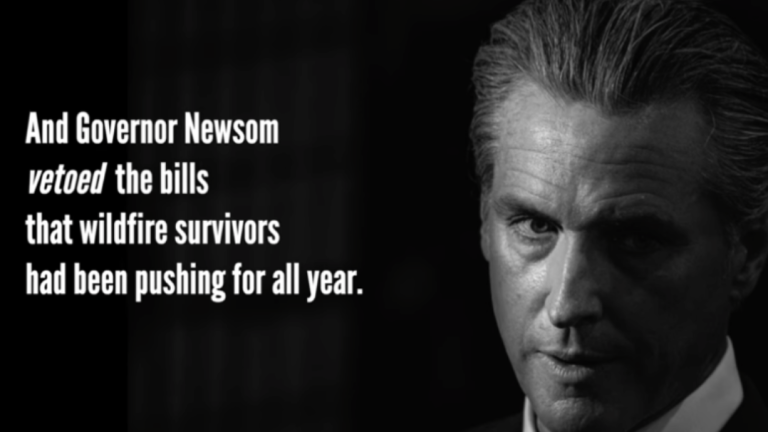
Lawmakers have responded to this situation by passing a series of reforms, including a package of recent wildfire bills signed by outgoing Gov. Gavin Newsom. These include AB 1795, which requires insurance companies to pay for necessary smoke damage testing and cleanup after wildfires.
The good news for Kim, Bach said, is that there are plenty of moves she can make quickly, some of them without legislative approval.
“She has the power to have her agency bring enforcement actions on both the State Farm Market Conduct Exam findings and the CA FAIR Plan Market Conduct Exams that focused on policy language and claim handling related to wildfire smoke damage,” Bach said.
Other items on Bach’s proposed to-do list include expanding wildfire risk reduction grants through the Department of Insurance’s Strengthen California Homes program and ensuring insurance rates reflect homeowners’ and communities’ efforts to reduce wildfire risks, as California law already requires.
Taylor urged Kim to speed up insurance rate reviews by setting clear deadlines and resolving questions early. California takes an average of 282 days to approve homeowners’ insurance rate requests, he said, down from 352 days but still among the slowest in the nation. Faster approvals could encourage insurers to expand coverage, he added.
“We’re ready to work with Commissioner-elect Kim to make homes safer and expand insurance options,” Taylor said.
There is a recent model for a more aggressive insurance commissioner, Court said. Dave Jones held the job from 2011 to 2019. Jones was hardly universally popular, but he arguably pushed the bounds of the job in a way that Lara did not. This included tangling with insurers over disclosing any risks from climate change and litigating over his regulatory authority.
“They slowed Dave Jones down,” Court said. “The thing is, there is judicial review. Courts tend to defer to regulators. They can try to tie you up, but that’s just part of the game.”
Consumer Watchdog · November 24, 2026
https://consumerwatchdog.org/in-the-news/daily-journal-jane-kims-bold-insurance-overhaul-faces-steep-political-financial-hurdles/
© 2026 Consumer Watchdog. Printed November 24, 2026.