
By Megan Fan Munce, SAN FRANCISCO CHRONICLE
https://www.sfchronicle.com/politics/article/home-insurance-commissioner-kim-california-22513024.php
Californians are about to embark on a major experiment involving the most important asset most will ever own: their home.
San Francisco progressive Jane Kim, who appears poised to become the next state insurance commissioner, has pledged to pull no punches on the industry she’s about to regulate. She intends to launch more investigations into insurers when consumers complain, to institute new profit ceilings on the industry and to punish insurers who delay paying claims. Perhaps most radically, she also envisions a world in which wildfires are covered not by the private market, but by the state.
Voters appear to be on board.
With just under 70% of expected ballots counted Friday afternoon, Kim held 52.8% of the vote — a lead of more than 400,000 and climbing over her opponent, state Sen. Ben Allen, D-El Segundo (Los Angeles County). Though the race had not yet been called, Allen released a statement Friday afternoon acknowledging, “it appears that she has won.” Kim would become the first woman and the first Asian American to be elected insurance commissioner; she would also become the first Working Families Party candidate to hold statewide office anywhere in the U.S.
Her apparent victory will test whether the tentative progress in easing California’s insurance crisis can survive a major change in tack.
More than any other statewide elected official, the decisions of the insurance commissioner have a direct impact on the wallets of nearly 9 million insured homeowners, alongside millions more drivers, business owners and more who collectively pay over $100 billion in premiums each year.
Kim vowed her ambitious reforms will secure long-term availability and affordability for policyholders across the state. But such big changes inevitably carry a degree of risk, especially in a market still in recovery after years of insurers leaving the state or cutting back on coverage.
“I think that’s the biggest fear of a lot of people is that, OK, we’re finally making some progress. Companies have come back to the state and here’s someone who’s threatening to blow it all up,” said Steven Maviglio, a Democratic political strategist who has worked with the insurance industry, but spoke to the Chronicle in his personal capacity.
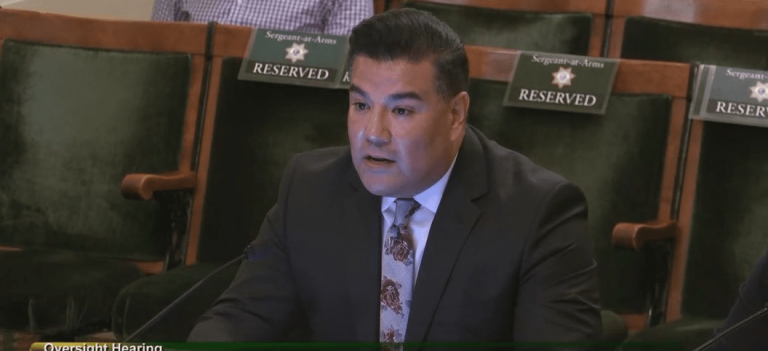
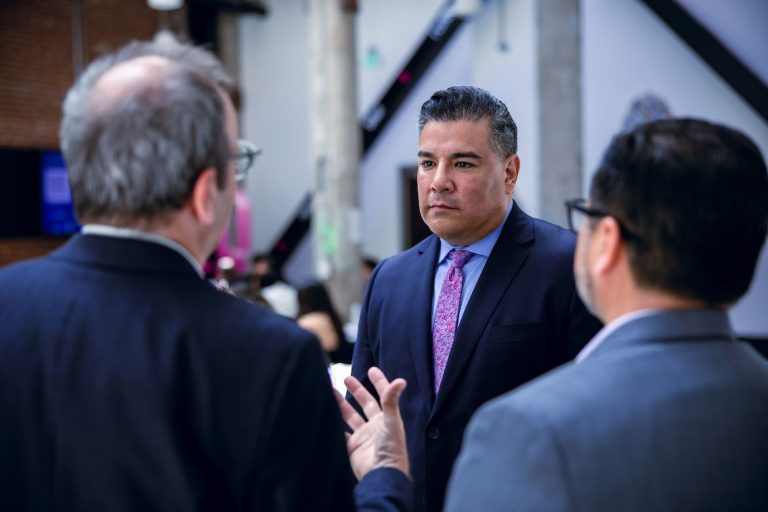
Current commissioner Ricardo Lara, elected just days before the deadly and destructive 2018 Camp Fire, found himself managing a market in crisis. Insurance giants Allstate and State Farm stopped writing new policies throughout the state, and hundreds of thousands of California homeowners found themselves with nowhere to go but the California FAIR Plan, the state’s insurer of last resort.
He approached the problem by negotiating compromises. He’d allow rates to rise if companies wrote more policies; he’d let insurers base their prices on private catastrophe models if regulators approved those models; he’d grant State Farm an unprecedented rate hike as long as it wouldn’t drop even more customers.
The approach seems to have worked, at least in part. Both State Farm (opens in new tab) and Allstate (opens in new tab) announced earlier this year their intentions to reopen to new business, albeit in limited ways, and the growth of the California FAIR Plan has slowed for the first time in years.
Allen proposed staying the course: seeking common ground with the industry and making moderate reforms over time. Kim asked voters to think more long-term: If the system already isn’t working now, how will it survive a future where climate change is only getting worse?
“Insurers are already threatening to leave California,” she told the Chronicle in an interview after launching her campaign. “We should take their threat very seriously.”
Kim envisioned a world of single-payer healthcare, but for wildfires. Her “Natural Disaster Insurance for All (opens in new tab)” plan would have insurance companies cede premiums to a state-run nonprofit to manage wildfire risk and claims. The private market could then focus on higher-frequency, lower-cost claims like burst pipes, which are much easier to insure.
In years with no bad fires, the nonprofit insurer would be able to invest premiums into wildfire mitigation work to reduce the risk of wildfires overall, Kim’s said. Funding it would require working with the Legislature, possibly to pass laws requiring insurance companies to provide upfront capital in exchange for taking wildfire risk off their hands.
Kim has also proposed expanding the state’s public low-cost auto insurance program and using the power of the commissioner’s office to push for guaranteed healthcare for children.
Many of her ideas would require close partnership with the Legislature, in which Kim – a former member of San Francisco’s Board of Supervisors – has never served.
Her ability to achieve her long-term goals will depend on whether she can also deliver immediate improvements, said Jamie Court, president of the advocacy group Consumer Watchdog. While her eyes are on the long-term future of insurability, the allies she’ll need in Sacramento will want to see results quickly for their constituents, he said.
“This job is two things: making sure there’s coverage and making sure it’s affordable,” Court said. “If she can do that, she will win the hearts and minds of people in Sacramento.”
But there’s also a lot Kim can accomplish on her own. If she wished, she could go back and tweak the regulations Lara passed in his second term — she could require companies to make the catastrophe models they use public, or up the requirement of how many policies they must write in order to use such models, according to Court.
While not speaking on behalf of the industry, Maviglio said he expects insurers will aim to seek common ground with their new commissioner. After Kim claimed victory Friday, two of the state’s leading industry groups — the American Property Casualty Insurance Association and the Personal Insurance Federation of California — released statements congratulating Kim and expressing their desire to work with her. But one also urged caution.
“While recent reforms are beginning to stabilize the market, the insurance crisis is far from over, and a full recovery will take time. Protecting this progress is critical. Costly new mandates or regulatory actions that drive up costs or limit coverage options risk reversing this progress and worsening the crisis,” wrote Denni Ritter, the APCIA’s department vice president for state government relations.
Court said he believed Kim’s apparent win should serve as a warning shot to the industry that the tide of the public is against it. After all, Kim is leading not just in populous Democratic areas like San Francisco and Los Angeles, but in rural areas like Butte, Mariposa and Shasta counties. So far, she has claimed both the popular vote and 42 out of 58 counties.
Maviglio cautioned against seeing the results as a referendum — even amid renewed attention to the insurance market, it was still a relatively low-information race, he said. As of Friday afternoon, 1.2 million fewer people had cast a ballot for insurance commissioner than they did for governor, a far greater dropoff rate than in previous years where both a Republican and Democrat were on the ballot.
Court agreed it was a low-information race, but still felt Kim’s apparent victory signaled voters’ desire for their chosen commissioner to be tougher on the industry than Lara has been in the past.
“I think Californians have spoken, and they want someone who’s going to be hard on the insurance companies,” he said. “There’s a new sheriff in town, and she’s got really sharp spurs. The insurance industry has got to get ready for that.”
Consumer Watchdog · November 7, 2026
https://consumerwatchdog.org/in-the-news/san-francisco-chronicle-california-poised-for-major-change-after-apparent-progressive-victory-in-key-race/
© 2026 Consumer Watchdog. Printed November 9, 2026.