By Kerri Anne Renzulli, AARP
https://www.aarp.org/money/personal-finance/beat-surveillance-pricing/
You are now leaving AARP.org and going to a website that is not operated by AARP. A different privacy policy and terms of service will apply.
Determining whether you’re truly getting a good deal can feel like navigating a minefield these days, as inflation, tariffs and frequent sales leave many of us questioning the price tags we see. Making matters even more challenging, some online retailers are using the vast troves of data they’ve collected on shoppers, along with AI, to instantly adjust prices for certain customers.
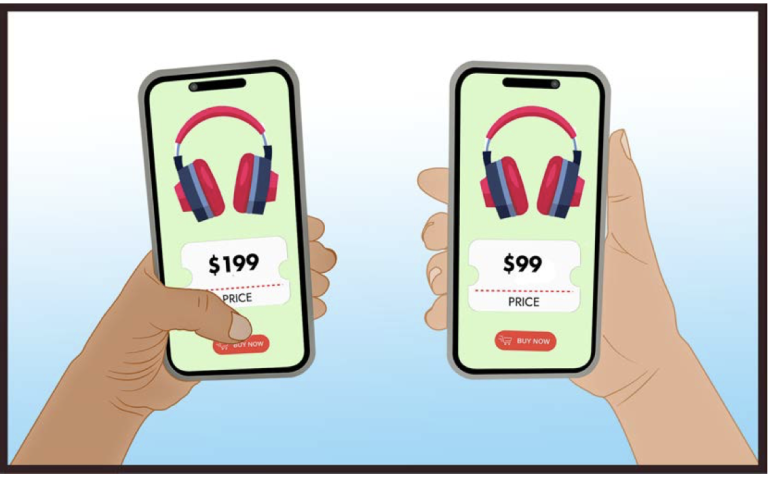
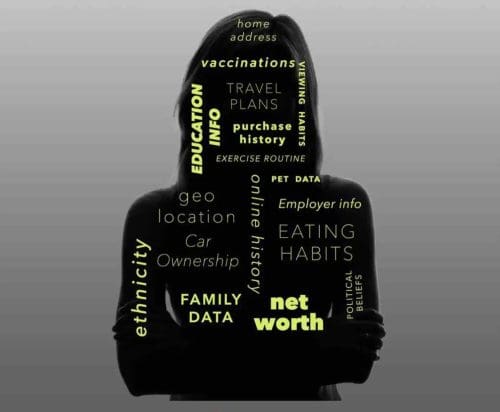
In a practice known as surveillance or personalized pricing, businesses are using customers’ browsing histories, locations and other personal details to charge individualized prices for products or services, according to a 2025 study from the Federal Trade Commission (FTC). That means the price you see online for a pair of jeans could be different than what your neighbor sees.
“It all comes down to personal data and companies trying to set prices, not in a traditional way but based on who you are as a person,” says Justin Kloczko, a tech researcher with the consumer protection nonprofit Consumer Watchdog.
In some cases, the practice can actually be a good thing for consumers. If you’ve ever taken advantage of a senior discount or a store loyalty program, you’ve benefited from paying less for something than another customer simply because of your age or past shopping habits. But retailers can also use your data to set prices at the highest point they think you’d be willing to spend.
Many consumers and legislators are pushing for a ban on the practice. Roughly three-quarters of survey respondents told the nonprofit advocacy group Groundwork Collaborative and Data for Progress in May that they support efforts to end surveillance pricing.
In the past two years, lawmakers in about half of U.S. states have introduced legislation targeting the pricing scheme, with Maryland becoming the first state to restrict surveillance pricing earlier this year, banning grocers and third-party delivery services from engaging in it.
Because companies do not typically disclose their pricing formulas or their reasoning for adjusting an item or service’s cost, it can be difficult for consumers to know exactly why a product they looked at yesterday is more expensive today. But surveillance pricing isn’t necessarily to blame. A sudden hike could be the retailer’s response to market shifts, such as rising fuel costs or increased demand.
“People worry that their personal information is being used to their detriment, but in individual cases, we don’t really know how much our data is affecting the prices we see,” says Darrell West, a senior fellow at the Center for Technology Innovation at the Brookings Institution, a nonprofit public policy research organization. “Right now, companies have all the information, and consumers have almost no information. Nobody is admitting to using surveillance pricing.”
And yet, companies ranging from grocery stores to apparel retailers are deploying surveillance pricing to some degree. The FTC’s 2025 study found that “retailers frequently use people’s personal information to set targeted, tailored prices for goods and services — from a person’s location and demographics, down to their mouse movements on a webpage.”
So if companies aren’t saying what factors influence the prices shoppers see, how do consumers — and especially retirees on fixed budgets — ensure they’re getting a fair shake?
According to the pros, your best chance at beating surveillance pricing is to reduce how much data retailers collect about you. That entails taking the following measures.
“If you’re given a choice between granting a website or business permission to collect information, always refuse,” West says. Be mindful of web cookies, the tiny files often tied to advertising or marketing networks that watch you as you browse. Additionally, you can erase information about your online activity from your web browser by looking for options such as “clear browsing data” or “remove website data” in the settings.
To go a step further, you could use a virtual private network (VPN), which masks your location and lets you shop online via the VPN provider’s server address rather than your own.
The FTC found that companies sometimes prominently display higher-priced products based on a shopper’s search and purchase history, hypothetically showing a new parent higher-priced baby thermometers on the first page of their search results.
By searching for an item on more than one device — such as your phone and your spouse’s computer — you can see whether prices differ, says Mayu Tobin-Miyaji, a law fellow at the Electronic Privacy Information Center, a nonprofit research and advocacy organization. Doing so can also help you avoid making repeated searches on a single device or account that could signal to retailers an urgent need or heightened interest in that particular product and trigger a price increase.
While these programs often offer digital coupons and discounts, they also provide retailers with reams of data about your shopping habits, budget and tastes, enabling them to predict what you’ll buy and how much you’re willing to spend, Tobin-Miyaji says.
The FTC found that companies can use voluntarily provided information to set individualized prices. For example, a cosmetics company could survey customers about their skin tone and then offer targeted discounts based on that information. Also, some retailers sell the data they collect through loyalty programs to other businesses, meaning your information at one store could be used by a number of other retailers to set prices too.
If you live in California, you can ask data brokers operating in the state to stop selling your personal information and delete your profile — which could contain information such as your Social Security number, precise geolocation, browsing history, health details and shopping habits — through the Delete Request and Opt-out Platform (DROP) service.
Another 22 states have enacted consumer data privacy laws, which typically allow residents to opt out of having their personal information sold by a company to a third party. Still, the laws often apply only to certain businesses. Security.org provides a state-by-state breakdown of the legislation.
Shopping at brick-and-mortar stores might be one of the simplest ways to ensure you’re paying a fair price. “Surveillance pricing is easier through online commerce because individual consumers are only looking at prices on their own screen,” Tobin-Miyaji says. “They can’t see that it might be different from what their neighbor is seeing on their iPhone. It’s much harder to compare than the price tag that’s shown at the grocery store.”
Despite concerns that the practice could bleed into in-person shopping, Robert Sanders, a marketing and analytics professor at the University of California San Diego’s Rady School of Management, says surveillance pricing in physical stores is a long way off. “It would require a consumer to go to a shelf and there be some sort of facial recognition or some QR code you scan instead of a price sticker. Then, when they go to check out, that’s linked to a price specific to that individual,” he says. “We’re nowhere near that.”