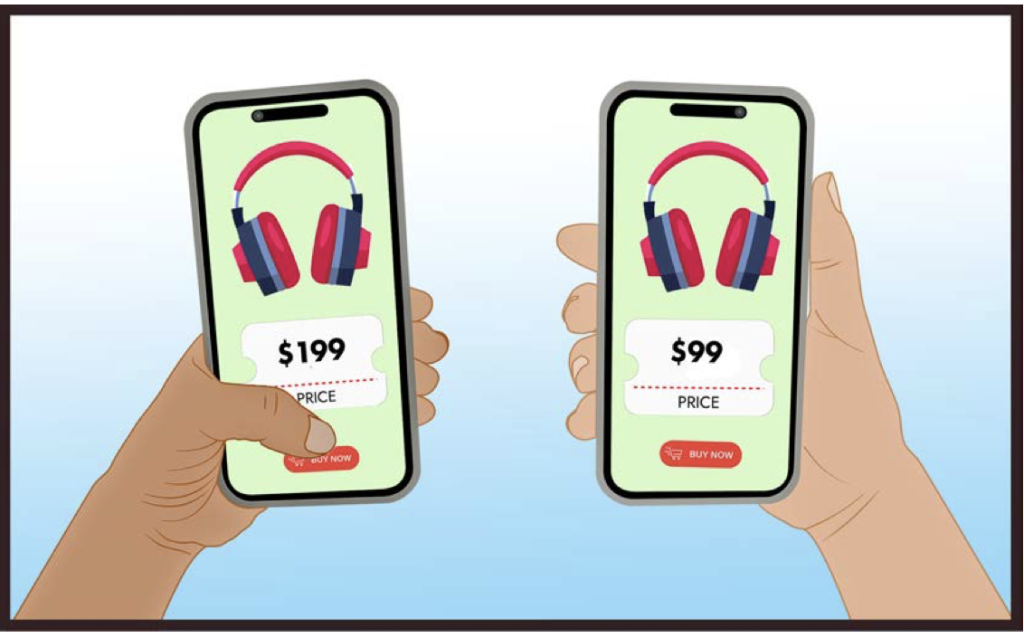
The Bill Would Have Stopped Companies From Adjusting Prices Based on Shopper’s Personal Data.
On Monday, the California State Assembly let die AB 2564, an important piece of consumer protection law combating surveillance pricing. After passing the state Senate 22-14, the Assembly declined to take up a final concurrence vote.
The bill would have helped regulate a largely invisible practice: retailers using algorithms to sift through an enormous amount of personal data to change the prices of goods at any moment. It would’ve empowered shoppers against a growing tide of corporate surveillance algorithms during an era of high prices.
But as expected, there was a lot of industry opposition. This is the second time Assemblymember Chris Ward (D-San Deigo) tried to pass a surveillance pricing bill, and once again the same talking points emerged: Discounts will be taken away. This will hurt small businesses.
But it’s just not true.
Despite that, there were many Democrats and Republicans who echoed these concerns over and over again. Senate Privacy Chair Chris Cabaldon said Monday that he supported regulating surveillance pricing, but then said AB 2564, “erases the ability of small and medium-sized retailers to offer discounts.”
First, the practice of buying and selling data, then filtering them through a pricing algorithm, is suited to large, data-rich companies that have access to sophisticated pricing technology. Small businesses are much more likely to engage in dynamic pricing, which is different from surveillance pricing and based more on market forces. Surveillance pricing is not based on market forces. It’s based on what a computer thinks you want, and charges you accordingly.
Second, the bill lists several carveouts for discounts, one much broader than its predecessor bill AB 446. Retailers would have still been able to offer discounts in the following areas:
- When someone tries to cancel a membership.
- Seeking to win a member back.
- Prior purchase history.
- A product the consumer saved online.
- Being a first-time website visitor.
- Discounts for students, seniors, military or teachers.
So the idea that people’s discounts would’ve been taken away as a result of the bill is simply inaccurate. A small business would still be able to offer 20 % off everything. It could continue to give a discount to someone who joins a loyalty program, or submits their email or phone number. It would even be able to give someone a discount based on a prior related purchase, or “abandoned carts.”
Last year, Ward parked AB 446, a bill Consumer Watchdog co-sponsored, from going any further after industry significantly narrowed its scope. But it still exempted groups that typically get discounts, or those who sign up for loyalty programs. Despite this, groups still ran paid ads and opinion pieces incorrectly saying the opposite. (opens in new tab)
People shouldn’t be charged different prices for something like toothpaste because artificial intelligence thinks one person wants it more than another based on browsing history. Nor should someone be charged more for diapers because an algorithm believes the shopper is a busy parent who will pay more.
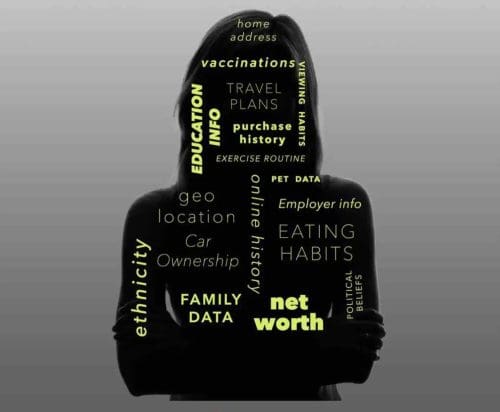
This idea that every person has an individual price is not only bad, but is also based on highly- speculative data. After requesting my data from large data brokers, I found they keep detailed profiles—hundreds of pages of inferences about my net worth, to my preferences for almost every consumer product on the planet. Experian keeps track of “impulse shoppers,” a marker on which I scored “below average.” On other points, such as my race, income, and brand preferences, the broker was simply wrong. But companies are free to use this information in setting prices.
In 2024, Consumer Watchdog published a report, “Surveillance Price Gouging,” outlining some examples of surveillance pricing, including the results of a rideshare case study. Both rides were requested from the same company at the same time, the routes were identical. However, one person paid $5 more on Lyft than the other person using Lyft, and one person paid $1 more on Uber than the other person using Uber. It’s unclear why, but this shouldn’t be happening.
Unless you’re toggling between multiple devices at the right moment, surveillance pricing is hard to spot. Without protections, catching it is a full-time job, and one that consumers shouldn’t have to do.
Read the full Surveillance Price Gouging report here.