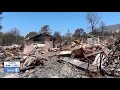
FAIR Plan insurance premiums are rising so much that some people have made the hard choice to drop the wrap around policies bought to cover everything besides fire. That means accepting the risk of paying out of pocket that others might not be willing, or able, to do. That’s what Linda Dannels and her husband ended up doing in order to save thousands of dollars on insurance for their mountain vacation home in Lake Arrowhead.
“We were forced to make a decision to reduce some aspects of coverage,” said Linda. “We were willing to pay out of pocket for some of the risks that our old home insurance covered because historically we did not have any claims for those things. We felt the risk was low and the premium was too high.”
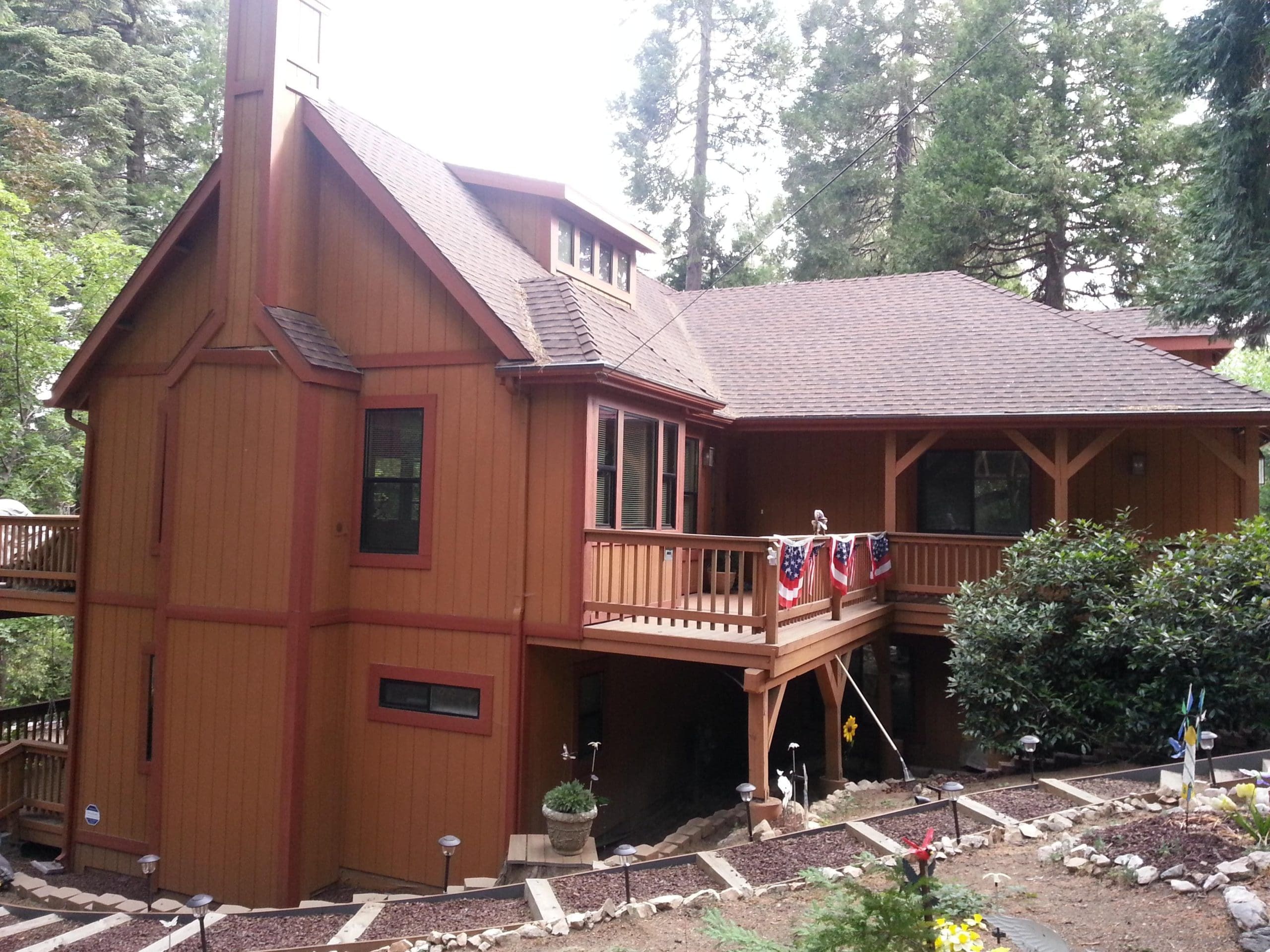
When she and her husband first got a 2,300-square-foot vacation home in Lake Arrowhead in 2016, they had full coverage with Travelers for $1,491. By 2020, the premium had reached $2,021. The house, built in 2002, is on a major, well-maintained street with a yellow line down the middle. There are lots of trees in the area but none overhanging the home. “SoCal Edison trims the tops of trees that are growing into the electrical lines twice a year and fire hydrant is less than 50 feet away,” said Linda. Thus, access is great and the area is maintained for potential fire hazards.
But in 2021, Travelers sent a notice of nonrenewal, stating that the property is at increased risk of wildfire loss and no longer eligible for coverage. “Then we started checking rates and nobody was underwriting full coverage policies,” Linda said. “It is hard to find somebody to even offer a wraparound policy.” Farmers offered to get Linda onto the CAL FAIR Plan with a Farmers wraparound for the mountain house and offered premium discounts if Linda would also switch her primary residence, cars and her umbrella policies to Farmers.
Linda agreed. The 2021 premium for both the wrap around and CAL FAIR plans together was $3,632, an 80% increase over Travelers. In 2022, the combined premium for the plans went up nearly 9%. Then, in 2023, the combined premiums reached $5,664. The wraparound policy alone had doubled from $1,502 to $3,011. That included some extended coverage under the FAIR Plan that gave additional protection for outside decks.
Linda had avoided even higher premiums for both the FAIR Plan and the Farmers wraparound by increasing her deductibles. If she hadn’t done that, the Farmers premium would have been $3,929, a 161% increase from 2022.
“As seniors on a fixed income, the last couple of insurance rate increases are more than what is considered excessive,” said Linda. “We are retired, so when you are on a budget, premium increases really cut in.”
When she got the 2024 renewal notice, Linda compared the FAIR Plan coverage for their vacation home to the Farmers wraparound and saw that she could add optional coverage to the FAIR Plan to replace some of what the wraparound covered, and drop the rest. Linda and her husband will pay out of pocket for the coverage gap such as for water damage, hail damage, temporary housing, and fences and shrubs if something happens. “If we had continued to keep full coverage like we had before, such as for water damage, I hate to see what our renewal premium would be.”
Linda and her husband have no mortgage on their mountain home, otherwise the lender would require the wrap around coverage to supplement the FAIR Plan.
The 2024 premium for only the FAIR Plan is $3,096, a far cry from $5,664 in 2023.
Linda wrote the Insurance Commissioner that her rate increases had gone up much higher than the rate increase that Farmers was granted. She wanted to know why and what risk factors went into such high premiums on her home. She copied Farmers on her complaint. Linda got letters back from both stating that rate increases were approved and, in the case of Farmers, that certain discounts were discontinued for her policy while reconstruction costs had gone up. But no specific risk factors about Linda’s property were provided. “I feel that they are not being transparent on how they evaluate risk.”
Linda also reviewed her wildfire risk scores on the FAIR Plan. In her case, the FAIR Plan used two different black box modelling companies in two different years. The two scoring models, one by Zesty.ai and another by Verisk, differed in factors determining wildfire scores. “The scores are not apples to apples, they are like two different models,” said Linda. Their assignment of risk level also differed. In 2023, Verisk assigned lower risk while in 2024, Zesty assigned higher risk. How the two risk assessments differed so much is an open question. “I would like to see what underwriting risk factors they use, what is the scale and how they pigeonhole your property to a specific risk category, said Linda. “It seems like the risk is applied universally to all properties within a geographic area or zip code and not individually considered by your specific property.”
“The Department of Insurance should regulate the use of such models and make the models public so underlying factors are better understood.”