By Megan Fan Munce, Susie Neilson, SAN FRANCISCO CHRONICLE
https://www.sfchronicle.com/home-insurance/article/newsom-home-insurance-bills-22452857.php
A newly signed law will give California homeowners more ways to make sure they can recover financially after disaster.
Starting next year, all home insurers in California must offer at least 50% extended replacement cost coverage to clients under a law Gov. Gavin Newsom announced Sunday he had signed.
In almost all cases, home insurance policies — including those marketed as replacement cost coverage — will only replace a policyholder’s home and belongings up to a set coverage limit. Extended replacement cost coverage allows a policyholder to go beyond that limit if they need to. And oftentimes, they need to.
A Pulitzer Prize-winning Chronicle investigation published last year found many major insurance companies recommend policy limits to homeowners using an algorithm susceptible to mistakes that leave wildfire survivors without enough money to rebuild when their homes burn down — a phenomenon known as underinsurance. The problem is magnified after disasters, when wide-scale destruction causes the demand for contractors and materials to surge, raising prices.
Consumer advocates say extended replacement cost coverage is an important tool to fight underinsurance by giving policyholders access to additional funds beyond their coverage limit. Requiring a minimum of 50% extended replacement cost was one of the proposed solutions during a Board of Equalization hearing last May held in response to the Chronicle’s investigation.
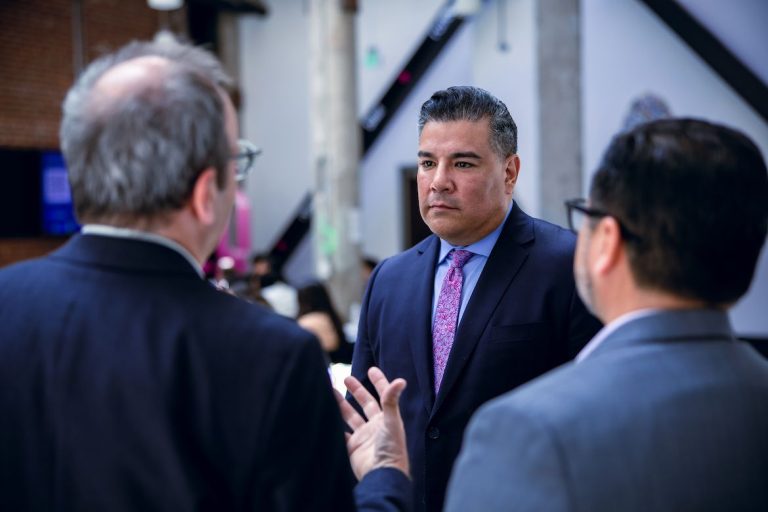
“Today we are telling every wildfire survivor who shared their story: We heard you, and now it’s the law,” Insurance Commissioner Ricardo Lara wrote in a statement Monday. “No family who has lost everything should have to fight their insurance company to get the benefits they paid for.”
About 40% of insurance companies in California already offer 50% extended replacement cost or more, Deputy Commissioner Tony Cignarale testified before the state Senate Insurance Committee.
Across California, 87% of homeowners insurance policies have extended replacement cost coverage; a third have 50% or more, according to the California Department of Insurance.
Ken Klein, a law professor at California Western School of Law, has researched the frequency of underinsurance and was one of the experts to testify before the Board of Equalization. His most recent research found that homes impacted by fires were even more likely to have extended replacement cost — in an analysis of 74,000 California fire claims between 2018 and 2023, Klein found 89% had some kind of extended replacement cost coverage, and of those,about 42% had 50% extended replacement cost coverage or more.
Klein said the data suggests that homeowners are willing to pay more if it means having more coverage, even as the ongoing insurance crisis caused premiums to spike. When such extended coverage is available, and when insurance brokers and agents explain its importance, “my research suggests homeowners will buy it. In droves,” he said.
Homeowners will still have to opt into the coverage, which does come at a cost. But the added cost of extended replacement cost coverage is typically less than the cost of increasing policy limits overall, Amy Bach, executive director of the consumer advocacy group United Policyholders, testified to the Board of Equalization.
The new law, authored by state Sen. Steve Padilla, D-Chula Vista, will also require all insurers, including the California FAIR Plan, to give policyholders an estimate of the cost to rebuild their home.
The insurance industry initially opposed the bill, testifying in committee that requiring additional coverages would drive up premiums. But by the time it passed the Assembly, industry groups switched their position to neutral.
Bach told the Chronicle policyholders will typically only dip into extended replacement cost if their home is completely destroyed, which is rare in the scope of all insured homes in the state. Therefore, she said, the extended replacement cost requirement should not have a significant impact on statewide rates.
Alongside the provisions addressing underinsurance, the bill also doubles fines when insurance companies violate laws that regulate how claims are handled during a declared emergency, such as a wildfire. It will also require insurers to directly pay restitution to their policyholders when they’re found to have committed such violations.
Insurance companies will also have to create disaster recovery plans in advance, which will help regulators at the California Department of Insurance ensure companies are prepared to support policyholders and process claims after disasters, according to Deputy Commissioner Michael Soller.
“It’s all about consumer protection and it’s about making sure people’s needs are met timely, transparently, fairly and equitable when they suffer catastrophic loss, which is why people pay premiums for, in some cases, decades,” Padilla told the Chronicle after the bill passed the legislature.
More notice before being dropped
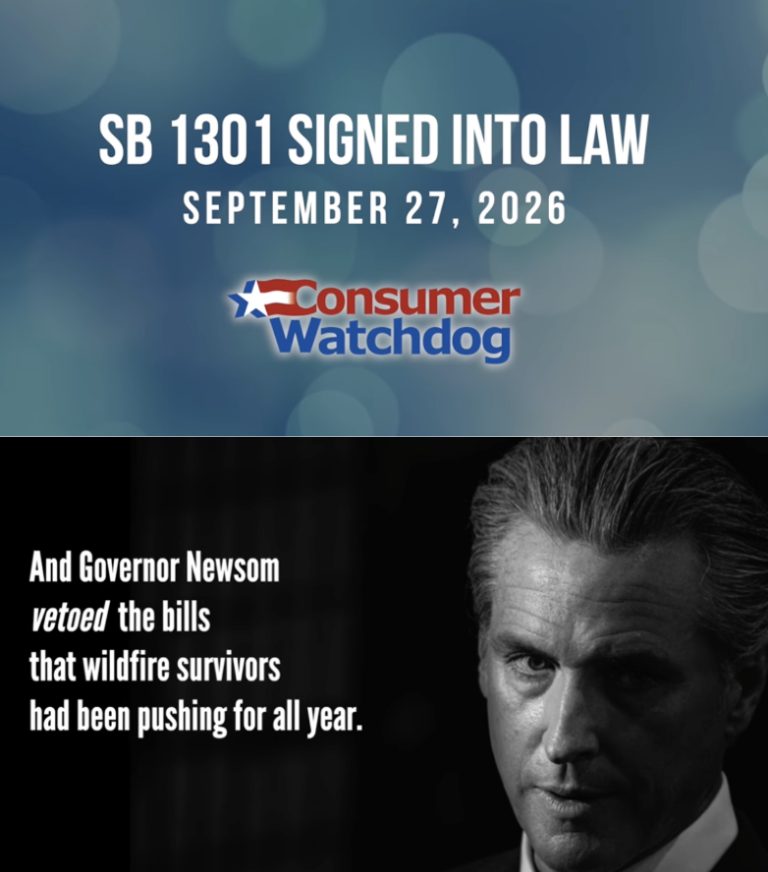
On Sunday, Newsom also signed Senate Bill 1301, a bill by state Sen. Ben Allen, D-Santa Monica, which requires insurers to give policyholders 90 days notice, up from 75, before their policy is nonrenewed. If the insurer determined the policy was being dropped for a reason the policyholder could fix, such as an outdated roof, it would require the insurer to give 120 days notice. The bill takes effect at the beginning of 2028.
However, he vetoed two bills that addressed common issues that arose in the aftermath of the January 2025 Eaton and Palisades fires.
SB877 and SB878, both authored by state Sen. Sasha Pérez, D-Alhambra (Los Angeles County), would have required insurance companies to pay interest penalties for delayed payments and to provide policyholders with copies of all estimates created for their claims.
These bills followed widespread complaints from wildfire survivors alleging their insurers delayed making decisions and issuing payments. The Los Angeles County wildfires were the most expensive in global history, with insurers having paid $25.2 billion in claims as of July. The Chronicle’s investigation also documented cases in which insurers denied or delayed providing estimates to policyholders, despite instructions from regulators to do so.
In his veto message, Newsom cited recent Department of Insurance reforms that regulate the way insurance companies write and price policies. He wrote that SB877 and SB878 “seek to codify portions of unrelated, existing regulations that are unnecessary at this time.”
Consumer advocates and wildfire survivors lambasted the vetoes. In a statement, advocacy group Consumer Watchdog said the department’s reforms do not at all address the issues that SB877 and SB878 sought to solve.
Joy Chen, an Eaton Fire survivor and founder of the group Every Fire Survivor’s Network, said in a statement the vetoes would leave future fire survivors vulnerable to the delays that plagued survivors in Altadena and the Pacific Palisades, setting back their recovery.
“I’m disappointed that, again, California fire survivors will be forced to wait for accountability and justice as a result of the Governor’s veto,” Pérez said in a statement.