By Angela Linders, LIVE INSURANCE NEWS
https://www.liveinsurancenews.com/california-homeowners-notice/8576538/
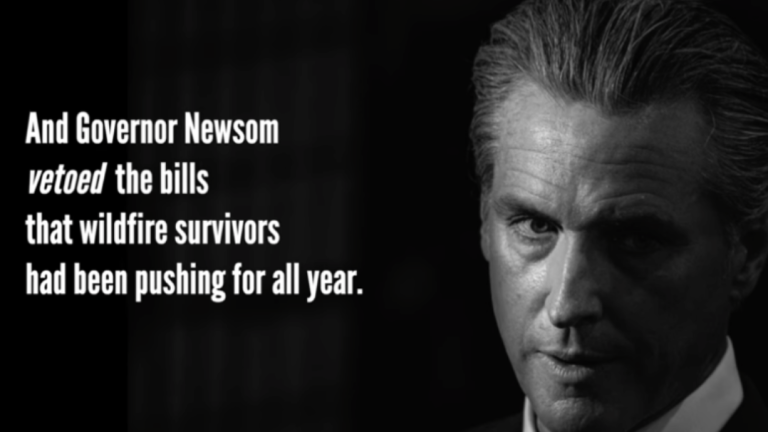
On September 27, California Governor Gavin Newsom wrapped up the state’s insurance legislative season — signing some bills, killing others. For homeowners already stretched thin by the state’s insurance crisis, the difference between what he signed and what he didn’t tells the real story.
The bills he signed give you more notice before your insurer drops you. The bills he vetoed would have given you cash penalties when your insurer drags its feet paying a claim you’re owed. Newsom chose one side of that line.
The most significant bill to become law is SB 1301, authored by Sen. Benjamin Allen. Starting July 1, 2027, insurers will be required to give homeowners 180 days’ notice before a nonrenewal — up from the current 75 days. That’s six months to find alternative coverage rather than scrambling at the last minute.
The law also prohibits insurers from dropping you simply because you filed a claim that was paid. It bars them from using roof age alone as a reason for nonrenewal if an independent inspection shows at least five more years of useful life remain. And it requires that nonrenewal notices include the specific, documented reason — not a vague form letter. (California Legislature, 2026)
SB 876, authored by Sen. Steve Padilla, requires insurers to send claim status updates within 15 days of assigning an adjuster and doubles financial penalties for violations that occur during declared emergencies. It also requires insurers to submit disaster-recovery plans to the state Department of Insurance. (CA.gov, September 2026)
Two bills authored by Sen. Sasha Renée Pérez didn’t make it. SB 877 would have required insurers to hand over all claim-related documents — including every version of your loss estimate and the reasoning behind any changes to it — within 15 days of your request. For a homeowner trying to understand why their payout came in tens of thousands below what they expected, that transparency would have been a direct tool.
SB 878 went further. It would have set a 40-day deadline for insurers to accept or deny a residential property claim after receiving proof of loss. Miss that deadline on an undisputed claim, and the insurer would owe 20 percent annual interest on the unpaid amount. Companies would also have been required to file compliance reports signed by corporate officers under penalty of perjury. (Insurance Business Mag, September 2026)
Newsom’s office said the vetoed bills “codified existing regulations and were unnecessary at this time.” Spokesperson Anthony Martinez declined to address whether the decision had any connection to political disputes.
The consumer reaction was swift. Carmen Balber of Consumer Watchdog put it plainly: “It’s a real black mark on the governor that he would throw survivors under the bus in that way for what appears to be a petty reason.”
Sen. Pérez said: “I would hope (the decision) is not because of politics and petty infighting. The reality is that this decision is going to have an impact on survivors’ recovery.”
Joy Chen of the Every Fire Survivors Network was direct about what the vetoes will mean on the ground: “These vetoes mean more families will face what we have faced: rebuilding stalled, bills piling up, and lives on hold while waiting for insurance money they are owed.” (CalMatters, September 2026)
The suspicion behind the vetoes isn’t idle speculation. Earlier this year, Newsom pushed a bill to reduce utilities’ financial liability for wildfire damages — a measure that would have significantly reduced potential payouts to fire victims from companies like PG&E. Sen. Pérez was among those who opposed it. That effort failed.
Newsom’s office has declined to connect those dots publicly. But the authors of the vetoed bills, fire survivor groups, and consumer advocates have drawn them clearly. Pérez authored both bills that were killed. The governor’s office won’t say why those two specifically didn’t make the cut when SB 876 — covering some of the same claim-handling territory — did. (CalMatters, September 2026)
None of this is happening in a stable market. As of December 2025, 668,609 California properties were insured through the FAIR Plan — the state’s insurer of last resort — a 146 percent increase since September 2022. The FAIR Plan now carries $724 billion in total exposure across the state. (California Assembly Insurance Committee, January 2026)
That number reflects how many Californians have been dropped or priced out of the private market entirely. The bills Newsom signed are meaningful steps. But for the homeowners who’ve been waiting months for a claim decision with no deadline forcing one — or who received a payout well below their loss estimate with no legal right to see how it was calculated — what he vetoed may matter more than what he signed.
SB 1301’s 180-day nonrenewal notice protection doesn’t take effect until July 1, 2027. If you receive a nonrenewal notice before that date, current law requires only 75 days’ notice. California homeowners who believe a nonrenewal notice was issued improperly may want to file a complaint with the California Department of Insurance, which maintains a consumer line at 1-800-927-4357.
If your claim has been delayed or underpaid, the vetoes of SB 877 and SB 878 mean the stronger protections proposed in those bills are not yet law. Keeping detailed written records of every contact with your insurer — including timestamps on emails and notes from phone calls — may be important if you later need to dispute a payment timeline or challenge how your loss was estimated.