A provision tucked into a must-pass transportation bill could shield Uber and Lyft from lawsuits — as the companies battle thousands of injury and sexual assault claims.
By Luke Goldstein and Freddy Brewster, THE LEVER
https://www.levernews.com/congress-just-snuck-in-uber-immunity
A must-pass congressional funding package for the nation’s roads, bridges, and public infrastructure includes an industry-friendly carveout that would give ride-hailing apps like Uber and Lyft legal immunity from car crashes and injuries, according to a review of the bill text by The Lever.
Drivers would be held individually responsible, rather than the apps, unless the platforms were found to be “grossly negligent” or engaged in “criminal wrongdoing,” a much higher bar for bringing lawsuits.
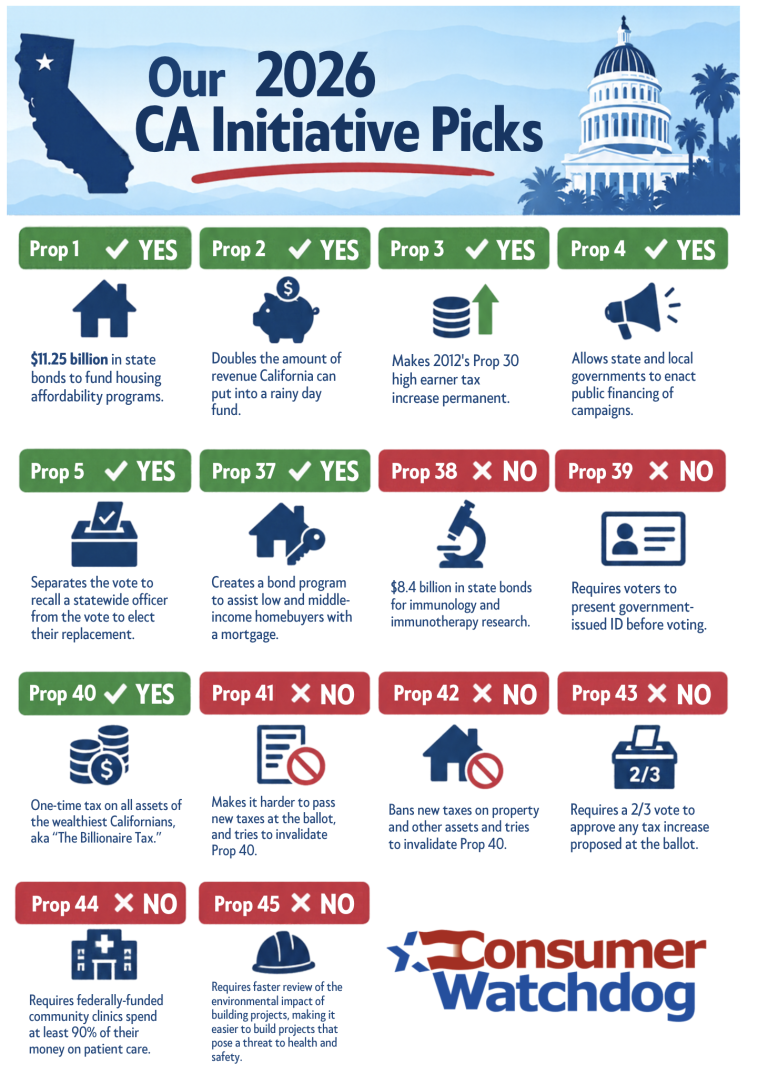
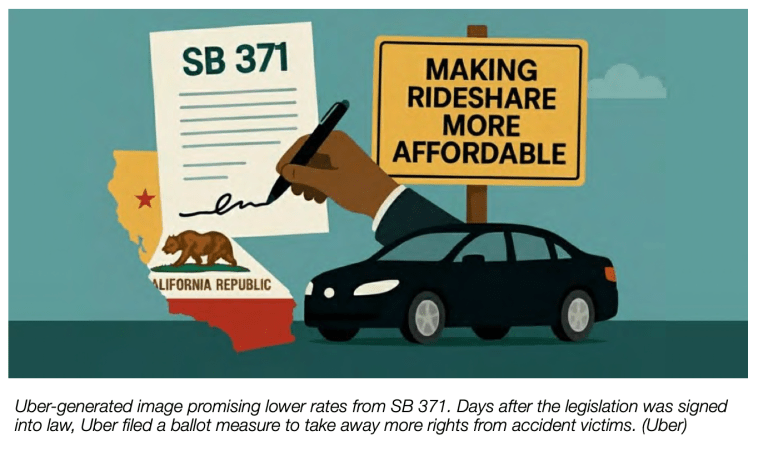
The insertion of this provision into the bill by federal lawmakers comes at a time when Uber is facing thousands of class action lawsuits for rampant sexual assault cases and other accident injuries. The company is also fighting a California ballot measure, favored by consumer advocates, that would firmly hold Uber and Lyft liable for accidents or injuries, among other passenger protections.
The ride-hailing apps Uber and Lyft spent more than $1 million combined lobbying Congress this past quarter on the surface transportation reauthorization bill, including on the “vicarious liability protection” provision, according to lobbying records.
The industry-backed amendment was introduced by Rep. Vince Fong (R-Calif.) and passed the House Transportation and Infrastructure Committee in a midnight vote at the end of May with support from one Democrat, New York Rep. Laura Gillen. The full funding package has not yet been scheduled for a full floor vote.
“This 2 a.m. vote benefits Uber and its executives’ bank accounts, but it comes at the expense of riders who need Uber to have a deterrent to hiring shoddy drivers,” said Jamie Court, president of consumer advocacy group Consumer Watchdog, in a statement on the committee vote. “Shame on the House for voting in the dead of night to take Uber riders’ rights.”
Uber did not respond to a request for comment from The Lever.
A Liability Loophole
The surface transportation bill, as it currently stands, would let Uber off the hook and nullify the California ballot initiative before voters have a chance to weigh in at the ballot box.
The provision classifies the apps as “digital network” operators rather than “common carriers” such as buses and trains, which are legally liable under the law. The language specifically includes a preemption provision that overrides any state regulations that might designate ride-hailing companies as carriers.
The amendment includes exceptions to the blanket liability shield in cases of criminal wrongdoing or gross misconduct.
In ongoing cases in California, Uber has tried to avoid legal responsibility for its drivers with exactly this line of argument: That it is not a common carrier, but rather a digital network, and that their drivers, under California law, are not employees of the app, but rather independent contractors liable for their own accidents.
The company’s argument held sway in at least one case decided last year, a major class action lawsuit that found Uber was not responsible for several sexual assault incidents that took place in drivers’ vehicles. However, in a similar class action case related to sexual assault, an Arizona jury ruled this year against Uber, awarding the plaintiff $8.5 million in damages from the company.
Uber has faced scrutiny for its potentially inadequate efforts to combat rampant sexual assault incidents against drivers and passengers. The company is currently trying to fight 3,600 sexual assault cases, which have been consolidated into major class action lawsuits.
To fend off litigation, the rideshare companies have backed their own California’s ballot initiative that would slash the compensation trial attorneys can receive for bringing injury lawsuits against ride-hailing apps on behalf of harmed passengers. By slashing the compensation rate, attorneys argue that they won’t be able to afford to bring worthwhile cases against the tech firms.
The consumer advocates’ rival ballot measure, which is supported by trial attorneys, would add further passenger protections by forcing the apps to monitor and publicly disclose sexual assault incidents and maintain a risk score on their drivers.
“Undermine The Rights Of Injured People”
But to prevent that consumer-protection measure’s liability provision from applying to the ride-hailing apps before it even reaches the ballot in California, Uber and Lyft have turned to Congress.
Lobbying disclosures show that Uber has spent nearly $1 million so far this year lobbying Congress and other regulators on the surface transportation reauthorization bill, including on “vicarious liability protection,” among other matters. Uber’s political action committee has also donated $14,500 to the current election efforts of seven members of the House Transportation and Infrastructure Committee, including $3,500 to committee chairman Sam Graves (R-Mo.) and $3,500 to ranking member Rick Larsen (D-Wash.). Graves voted for the liability shield amendment.
The second-largest rideshare company, Lyft, spent $250,000 in the first quarter of 2026 lobbying on the “surface transportation reauthorization” and other matters, according to lobbying disclosures.
Lyft’s political action committee gave $2,500 to Larsen’s current campaign efforts and $5,000 to Graves, federal data shows.
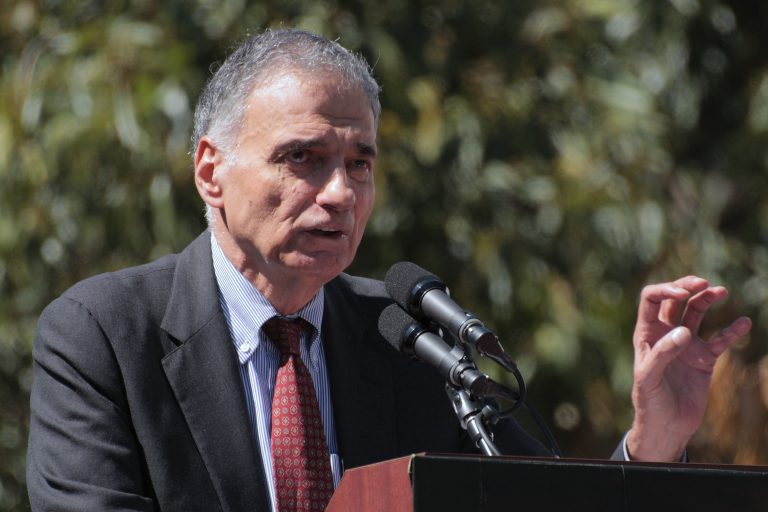
Ralph Nader, godfather of the consumer rights movement and automobile safety regulations, wrote a letter to Uber executives last week excoriating their strong-arm tactics to undermine passenger protections.
“These efforts are not technical adjustments to litigation rules,” Nader wrote. “They represent a fundamental attempt to undermine the rights of injured people and reduce corporate responsibility at the very moment rising autonomous systems are being tested on public roads at scale.”