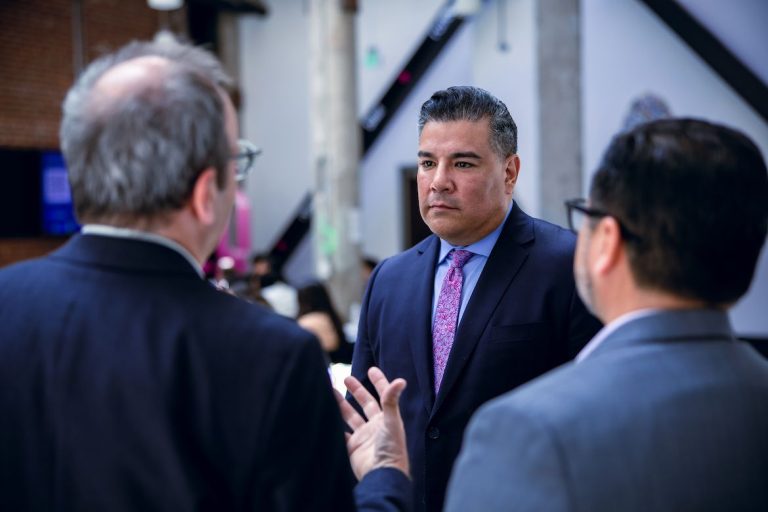
By CHRIS HAGAN, THE BAKERSFIELD CALIFORNIAN
For years, I was part of the machine.
I was one of the lawyers that billion-dollar insurance companies hired to defend claims. When someone was hurt in a crash, my job was to make that claim cost as little as possible.
I prepared thousands of case evaluations that went to insurance companies. I prepared budgets for my cases. I combed through medical records looking for anything that could be labeled as a “pre-existing condition” or prior complaint in an effort to undermine the connection between an accident and the injuries claimed. I took depositions, probing injuries, medical history, gaps in treatment, inconsistencies in statements, and even seemingly minor details that could be used to challenge the victim’s credibility, liability allegations, or causation of their injuries. I hired third-party contractors to perform deep dives into injury victims’ social media platforms.
I tried cases arguing that injuries clearly caused by an accident were actually just those same pre-existing conditions that had deteriorated over time. I learned that claims aren’t valued by what happened to a human being. Claims are valued by what insurance companies believe they can get away with paying.
I was good at that job, and I won’t pretend everyone on that side is a villain. Most of the adjusters and lawyers I worked with were decent people doing the work in front of them. The problem is the work itself. The system rewards paying less, paying later, and making the process hard enough that people give up.
So, when the insurance industry tells us that there is a crisis and that premiums have to go up because costs are out of control, I know how to read that message. You don’t have to take my word for it. You can read their own filings.
California’s top 10 auto insurers won approval for average rate increases of 13% in 2023, 15.4% in 2024 and another 6% in 2025. Not surprisingly, Progressive, being one of those companies reported in its 2025 Annual Report that 2024 was “… the most successful year in the history of Progressive …” State Farm initially applied for a 23.4% rate increase, lowering its request only after Consumer Watchdog intervened. Insurers covering roughly 85% of the state’s auto policies have raised rates by more than a third since 2023.
In their 2025 annual reports to the Securities and Exchange Commission, documents certified by executives as accurate, the insurance companies reported the following: Progressive earned $11.3 billion, up from $8.5 billion in 2024 and $3.9 billion in 2023. Allstate earned $10.2 billion, up from $4.6 billion in 2024. Chubb earned a record $10.3 billion. Travelers earned $6.3 billion, up from $5.0 billion the year before. The Hartford earned $3.8 billion, up from $3.1 billion.
These “earnings” are not gross revenue numbers; these are profits. This is what is left after expenses, after paying claims, and after paying for hordes of lawyers.
Together, those five companies earned about $41.9 billion in 2025, up from roughly $30.4 billion in 2024 and $18.1 billion in 2023. Their combined profit more than doubled in two years.
Where did that money come from? It’s actually a pretty simple formula when you think about it. The insurance business model is to collect record numbers in premium dollars and pay out as little in claim dollars as possible. Chubb’s filing shows its earned premiums rose 6.4% last year while its losses and loss expenses rose only 2.7%. Progressive took in nearly $11 billion more in earned premiums than it did in 2024. When premium dollars outpace claim costs, the difference to the insurance company is profit, yet they would have you believe that there is a crisis requiring an increase in your premiums.
There’s another line in these reports that I recognize from the inside. Every claim gets a “reserve,” which is the money a company sets aside for what it expects that claim to cost. Case reserves are set claim by claim, based on the injuries, liability, venue, policy limits, and once suit is filed, defense counsel’s evaluation, which I have authored thousands of. Both Travelers and The Hartford credited part of their 2025 gains to favorable development on prior-year reserves. In plain English, they set money aside to pay people’s claims, then paid out less than they had set aside, and booked the difference as profit. When discussing reserve strategies in its 2025 annual report, Travelers states, “In 19 of the past 20 years, we have recorded net favorable prior year reserve development totaling more than $14 billion …”
To be fair, some of Allstate’s result came from selling off business lines. But even after setting that aside, its adjusted net income was $9.3 billion. And the company knew what to do with it: a higher dividend to its shareholders and a new $4 billion stock buyback. The rewards are flowing to shareholders, not policyholders.
Wall Street has noticed record profits, too. Over the past three years, some of these same insurance companies have recorded record growth in their stock prices. Travelers, trading at $193 per share in January 2023, were trading at $393 per share at the end of September 2026. During that same time period, Progressive’s stock value increased from $134 per share up to $210 per share, and Chubb’s stock price rose from $228 per share up to $332 per share.
Here’s what never shows up in an SEC filing: it’s the family sitting at the dinner table with an empty chair, trying to figure out how to pay the mortgage without the person who was taken from them. The parent who can no longer work, play with their kids, or drive them to practice because of an injury that they did not cause. The spouse who has become a full-time caregiver overnight, watching the medical bills pile up faster than the savings can cover them. None of that is a line item on a balance sheet.
On the other side, all of it becomes a file. A request for “more documentation” to evaluate a claim. The months of silence. The first offer that doesn’t cover the medical bills, let alone the lost wages, and certainly not the life that was taken. I know that playbook because I used to help run it, and unfortunately, a playbook that increases profits doesn’t change.
Today, I sit on the other side of that table. As a personal injury lawyer at the Law Office of Chain Cohn Clark in Bakersfield, I represent the people I used to be hired to fight against. The difference now is that I know exactly what the adjuster is looking for, how the file is being valued, and why the first offer is never the real number. Nobody should need an insider in their corner just to get what a policy was supposed to cover all along. But until the industry changes how it treats people after a crash, that’s the reality.
That matters right now, because this same industry is telling Sacramento that the fix for high premiums is limiting what injured people can recover in court. If lawsuits were truly crushing insurers, it would show up in their filings. It doesn’t. What shows up is record profit. Capping the rights of injured Californians won’t lower your premium. It will only widen the margin.
Here is some advice from someone who used to sit on the other side:
1) Shop your policy at every renewal.
2) If you’re hurt in a crash, get medical care right away and follow through with it. Gaps in treatment are one of the first things an adjuster uses to argue you weren’t really hurt.
3) Take photos, get the names of witnesses and request the police report. You are not required to give a recorded statement to the other driver’s insurance company, and you should understand that one is taken to evaluate your claim, not to help you.
4) Be just as careful with the medical authorizations they send. A broad release can open up your entire medical history.
5) Don’t sign a release or accept the first offer before you know the full extent of your injuries.
6) Don’t post about the crash or your recovery on social media.
7) Keep copies of everything: medical bills, records, missed paychecks and every letter or email from the insurance company.
8) Perhaps the most important advice I can give you is to talk with a personal injury lawyer so that you understand your options. Don’t talk to an “investigator,” someone who claims to work for a law firm, or a case manager. I am going to repeat myself, talk to a lawyer! After all, insurance companies have an army of lawyers that work for them and you should too.
Finally, tell your state legislators that an industry posting record profits does not need special protection from the people it insures.
Insurance is a promise. You pay your premium, and when the worst happens, they show up. Californians have kept their end of that deal, paying more every year while being told that costs are out of control and that there is a crisis. The industry’s own filings tell a different story: record profits, soaring stock prices and billions returned to shareholders.
Before lawmakers limit the rights of injured Californians, they should ask the industry one simple question: If costs are crushing you, why are you posting the most profitable years in your history?