
By Melody Petersen, LOS ANGELES TIMES
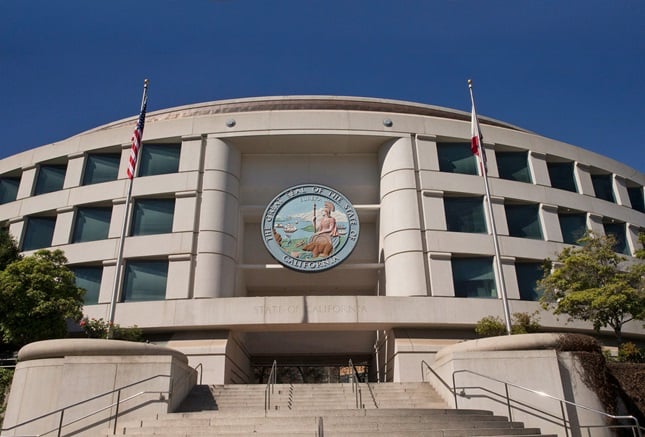
Although Gov.-elect Xavier Becerra has vowed to freeze electric rates, the current five members of the state public utilities commission, all appointed by Gov. Gavin Newsom, are voting to raise them.
With the terms of two commission members ending in January when Becerra takes power, the panel approved two rate hikes last week and is poised to enact more increases and other measures benefiting the state’s three biggest for-profit electric companies by year’s end.
On Thursday, the commission voted to approve two separate rate hikes for Pacific Gas & Electric customers, allowing the company to begin billing customers for more than $2 billion. A third proposal to raise San Diego Gas & Electric customers’ bills by 3.7% was delayed for a vote on Dec. 3.
In October, Southern California Edison bills rose by 1.5% after an earlier commission vote granted approval to pass along most of the cost of damage from the deadly 2018 Woolsey fire to customers. Investigators found that Edison’s equipment sparked the fire. Last year, the commission voted (opens in new tab)to raise Edison rates by more than 10%.
Loretta Lynch, a former commission president, said that it’s not unusual for commissioners to work to pass measures before their term ends.
“But this is bigger and more egregious than I’ve ever seen,” she said.
Terrie Prosper, a California Public Utilities Commission spokesperson, said in a statement that the commission often has many items to cover before the end of a year.
“In some years, like this one, the timing of commissioner transitions add to this,” she said.
Prosper said the commission “thoroughly and publicly considers utility rate requests” and disallows costs that are not supported.
Since Newsom took office in 2019, California’s residential electricity rates have climbed from seventh highest in the country to the second-most expensive, according to the U.S. Energy Information Administration. Only Hawaii has higher rates.
“From day one, Governor Newsom has held utilities accountable and fought to protect ratepayers and fire survivors,” said Anthony Martinez, a spokesperson for Newsom. “Ratepayers deserve rigorous scrutiny of utility spending, action to bring costs down and ways to equitably distribute costs.”
Another recent commission ruling could result in an increase to a controversial $24 monthly fixed fee (opens in new tab), which the utilities previously proposed should be $85 to $128 for households earning more than 650% of the federal poverty level, or $180,000 for a family of three.
Another proposed decision would allow PG&E to escape most of the damage cost from the 2019 Kincade and 2021 Dixie wildfires. The commission’s proposal denied consumer advocates’ claims that the company acted negligently before the fires, which would have required its shareholders to help pay for the damage.
Prosecutors initially filed criminal charges against PG&E for igniting the Kincade fire, but dropped them in a settlement in which the company agreed to pay $55 million.
The commission could vote to finalize the proposal as early as next month.
Utility investors had been closely watching what the commission decided on the two fires because Edison eventually will face a similar commission proceeding to look at whether it acted prudently before last year’s Eaton fire. The inferno killed 19 people in Altadena and destroyed thousands of homes.
That future proceeding will determine whether Edison pays nothing for the damage, estimated to be tens of billions of dollars, or a portion of the costs, which a 2019 law passed by Newsom (opens in new tab) and lawmakers would cap at $4.3 billion.
Government fire investigators said the Eaton blaze was ignited by electrical arcing (opens in new tab) on Edison’s out-of-service transmission line in Eaton Canyon. Edison kept the century-old line in place despite not using it since 1971.
Among Wall Street utility investors, Newsom’s appointed commissioners are known for votes often favoring the for-profit electric companies.
“The CPUC continues to be oriented toward protecting utilities from wildfire liabilities as documented in 2026 multiple instances,” analysts at Jefferies, the investment bank, wrote in a Nov. 17 note to their clients.
Mike Gazda, a PG&E spokesperson, said the company appreciated the commission’s findings in its proposal on the two fires.
“We recognize the impacts of the Kincade and Dixie Fires and remain committed to standing with the communities and people who were affected,” he said.
During Thursday’s meeting, dozens of electricity customers urged the commissioners to reject the rate hikes as well as another proposal to allow the utilities to shut off power to more customers behind on their bills, citing the utilities’ big profits.
Almost 1 in 5 California households have past-due electric bills, according to the commission’s public advocates office.
Consumer groups were especially angered by the panel’s vote to allow PG&E to start charging customers for $456 million in costs that the commission has not yet scrutinized.
Prosper, the commission spokesperson, said PG&E would have to refund customers any amount later found unreasonable.
PG&E has warned customers that it may delay connecting new housing developments (opens in new tab) and other projects to the grid as its executives put off $2 billion in planned infrastructure spending. Executives blamed the delay on the failure of Newsom and lawmakers (opens in new tab) to pass legislation that further protects utility shareholders from wildfire liabilities.
“It is shameful that Newsom’s CPUC appointees pushed through another rate increase for PG&E before the incoming governor takes office, without demanding answers about the utility’s changing spending plans,” said Jamie Court, president of Consumer Watchdog.
The commission’s votes to approve the two rate hikes allows PG&E to begin billing customers for $2.2 billion. The company will receive about $15.4 billion in revenue from customers this year, according to the public advocates office.
Gazda said the company does not expect the newly approved spending to raise bills because other costs being billed to customers will end this year. Overall electricity rates will remain about the same, he said.
Russell Archer, Edison’s director of pricing, design and research, said that similar year-end adjustments will result in a 2.8% reduction in electricity rates for the company’s customers on Jan. 1.
A large part of the proposed 3.7% increase for SDG&E customers is for a drone inspection program that costs $662 per pole compared with $3 to $18 per pole for non-drone inspections.
SDG&E defended the drone program in a statement, saying that California regulators found drone inspections can identify safety issues at nearly 10 times the rate of traditional ground patrols.
Mark Toney, executive director at the Utility Reform Network, said the three companies have requested 39 other rate hikes that are now being discussed at the commission.
“It’s completely unacceptable that the California Public Utilities Commission is granting so many rate increases when bills are already so high,” Toney said.
On Tuesday, Advanced Energy United, which represents clean energy and transportation companies, asked the commission to modify a ruling that Commission President John Reynolds made in September. The ruling orders commission staff to prepare a proposal for adjusting the $24 monthly fixed charge, which applies even if the customer uses little or no electricity.
In 2022, Newsom introduced a last-minute budget trailer bill (opens in new tab) that requires the charge to be based on customers’ income. The next year, Edison proposed that households earning more than $180,000 pay $85 a month, while PG&E proposed those customers pay a $92 fixed charge. SDG&E proposed a $128 charge for those higher earning households.
After hundreds of complaints, the commission approved a $24 charge for all but the lowest income customers, who pay less.
Brian Turner, senior director at Advanced Energy United, said in an interview that he was worried the fast timeline set by Reynolds could undermine Becerra’s ideas on what to do about California’s escalating electricity bills. He pointed out that the commission hadn’t yet done a planned study of the consequences of raising the fee.
“We don’t want the terms of the debate set before there’s that opportunity,” Turner said. “Governor Becerra is coming into office and has some real ideas on affordability.”
The three electricity companies said they had not submitted proposed changes to the $24 fee.
Prosper said the public will be allowed to comment on any proposal.
This story originally appeared in Los Angeles Times (opens in new tab).
Consumer Watchdog · November 24, 2026
https://consumerwatchdog.org/in-the-news/los-angeles-times-newsoms-utilities-commission-pushes-to-pass-electricity-rate-hikes-other-industry-friendly-measures/
© 2026 Consumer Watchdog. Printed November 24, 2026.