By Jamie Court, LAW.COM
https://www.law.com/therecorder/2026/06/16/phil-burtons-rage-for-justice-lives-on
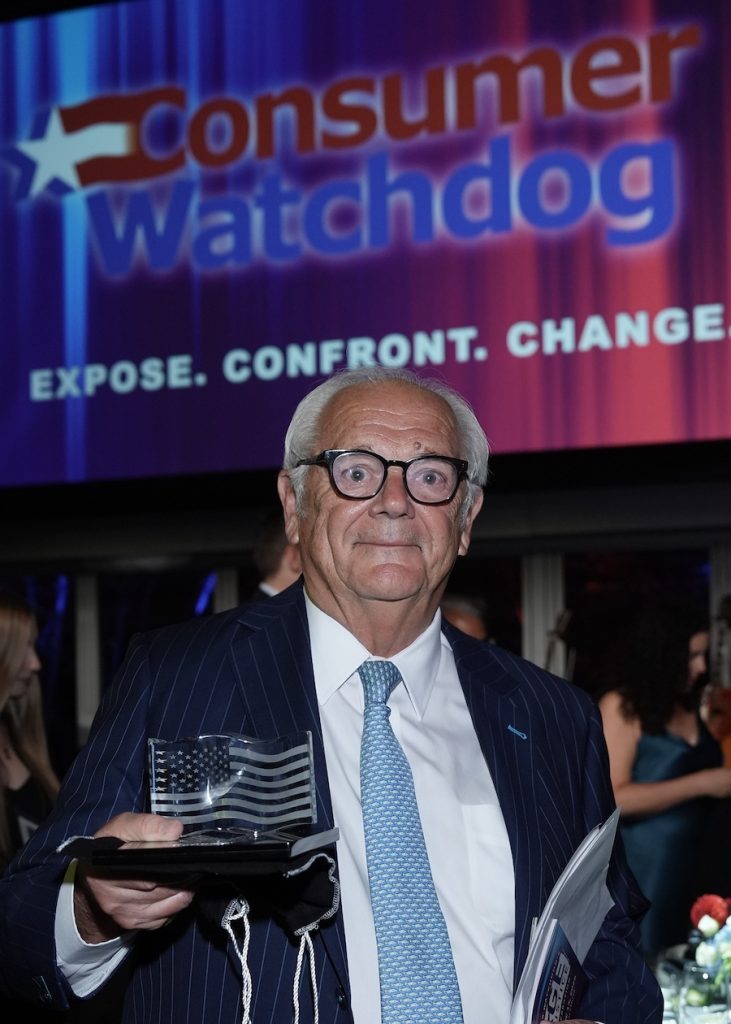
Over the last 24 years, Consumer Watchdog has hosted 17 Rage For Justice Awards, named after the biography of San Francisco’s legendary Congressman Phil Burton. Burton was one of America’s most productive, progressive legislators and a force for the underdog: farm workers, union members, the poor, elderly, disabled, minorities, welfare recipients, the environment.
His biographer John Jacobs noted, “Beyond the force of historical events, beyond the lucky happenstance of being in the right place at the right time, Burton showed by force of personality, self-will, and passion for his point of view that social change could happen.”
Burton’s famous maxim: “The only way to deal with exploiters is to terrorize the bastards.”
Consumer Watchdog has given 62 Rage for Justice Awards and named 17 Lifetime Legal Achievement Award winners.
These are excerpts from the acceptance speech of the 2026 Lifetime Legal Achievement Award honoree Michael Kelly of Walkup Melodia Kelly & Schoenberg:
I am honored beyond words to join this extraordinary group. And I am especially honored because this recognition comes from Consumer Watchdog.
Consumer Watchdog occupies a unique place in California. As trial lawyers, we generally enter the story after the harm has occurred. Consumer Watchdog spends its time trying to prevent the harm from happening in the first place.
For decades they have fought for consumers, policyholders, patients, utility customers, homeowners, and ordinary citizens whose lives and livelihoods are threatened by the machinery of larger institutions.
Which brings me to something that can’t be ignored which I’ve observed with increasing frequency over the last fifty years.
Every large adversary we face develops the same blind spot.
Big corporations. Big government. Big healthcare. Big insurance. Big utilities. And now, Big technology. The larger they become, the easier it becomes for them to lose sight of the individuals who make up our communities.
People become statistics. Wrongs become anonymous errors. Patients become numbers. Consumers become values on a spreadsheet
But statistics don’t have faces. People do. Bad things don’t happen to numbers. They happen to people.
The work of Consumer Watchdog—and the work of trial lawyers at our best—is to keep the focus where it belongs. On the people. The mother. The father. The child. The worker. The patient. The family. The person who has to live with the physical and emotional consequences long after everyone else has moved on.
That is why Consumer Watchdog matters. In an age when everyone has opinions, Consumer Watchdog has earned the right to be heard.
We’ve all heard that hope is not a strategy. And that’s true. But clients don’t come to us because they want a strategy. They come to us because they’re looking for hope. Hope that somebody will believe them. Hope that somebody will care about them. Hope that somebody with empathy, skill, energy, and honesty will stand in their shoes and tell their story.
Like many of you, my journey has taken me to the homes of grieving families, brain-injured children and adults, wildfire victims, people hurt by dangerous drugs and defective products, and folks from every walk of life whose futures were changed forever by the wrongful conduct of others.
What they have lost has been much more than money.
What has been taken from them is part of their humanity. Peace of mind. Dignity. Confidence. Optimism. Relationships. The future they imagined. What we are asked to do is much harder than recovering money. It is to deliver accountability. To restore worth. To rebuild confidence. To provide security. To help people believe in their futures again.
Being trusted with that responsibility has been the privilege of my life.
With age comes at least some small degree of wisdom. Experience is a wonderful teacher. The good news is that after making mistakes for fifty years, people eventually start calling it experience.
The older I get, the less interested I become in what I can accomplish myself and the more interested I become in what I can help others accomplish.
For more than thirty years I have had the privilege of teaching trial advocacy and helping younger lawyers sharpen their skills, listen better, prepare more carefully, and hopefully avoid some of the mistakes that I have made.
To the younger lawyers in this room, let me say this: Our work is far from finished. There are still workers who need protection. Patients who need advocates. Consumers who need a voice. Seniors who need respect and protection. And there remain powerful interests spending extraordinary sums of money trying to make it harder for ordinary people to obtain justice in our courts.
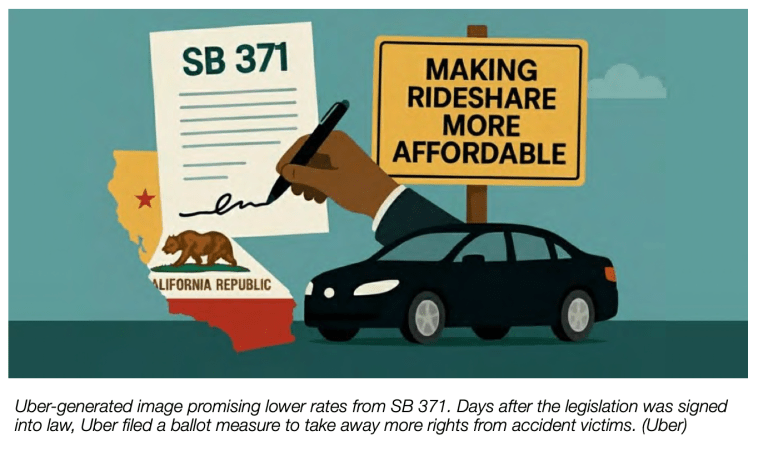
We need look no further than the current effort by Uber to rewrite our Constitution in a way that would make it economically impossible for many injured people to obtain representation and meaningful access to justice.
Those battles matter. Because rights that cannot be enforced are not really rights at all.
People often ask me why I am still doing this. Why, having reached what can only be described as antique-adult status, I continue to try cases, teach lawyers, and take on difficult fights. At this stage of life, time becomes your most valuable asset. And I don’t want to spend the time I have left doing things that don’t matter.
I have never believed the purpose of life is to accumulate things. I believe we are here to leave this place better than we found it. Every day there are things that are wrong. Every day there are people who have been treated unfairly. Every day there are voices that are not being heard.
Those of us fortunate enough to have the intelligence, training, opportunity, and experience to do something about it have an obligation to try. We won’t solve every problem. We won’t win every fight. We won’t always agree on the route. But we know the direction.
Our compass doesn’t point north. It points toward justice. Toward fairness. Toward accountability. Toward the principle that every person matters. And no one should be forgotten.
We cannot rewrite the past. But we can force those who caused harm to confront the wreckage they left behind, accept responsibility for it, and pay for what they have taken. That is justice.
______________________________________________
Jamie Court is the president of the LA-based advocacy group Consumer Watchdog