A late-night House committee vote advanced legislation that would sharply restrict when Uber and other rideshare companies can be held liable for crashes and assaults involving drivers, intensifying a broader legal and political battle over accountability in the gig economy.
By Malcolm Maclachlan, THE DAILY JOURNAL
https://www.dailyjournal.com/article/391674-federal-proposal-backed-by-uber-could-dramatically-limit-lawsuits-over-driver-crashes-and-assaults
A California congressman has advanced federal legislation that could sharply limit Uber Technologies Inc.’s liability for crashes and assaults involving its drivers, escalating a broader political and legal fight over the ride-hailing giant’s exposure to lawsuits.
Rep. Vince Fong, R-Bakersfield, successfully pushed the measure through a House committee this week as part of a sweeping five-year transportation reauthorization bill authorizing roughly $580 billion in federal spending. The amendment, titled “Vicarious liability for network companies,” passed on a mostly party-line 35-30 vote during a late-night committee session.
The proposal would add language to federal law limiting when app-based ride-hailing and delivery companies can be held liable under state law for conduct involving their drivers, regardless of whether those drivers are classified as employees or independent contractors. The language would also apply to future lawsuits involving conduct that allegedly occurred before the law’s enactment.
Critics say the amendment could significantly curtail lawsuits involving serious injuries and sexual assaults linked to rideshare drivers.
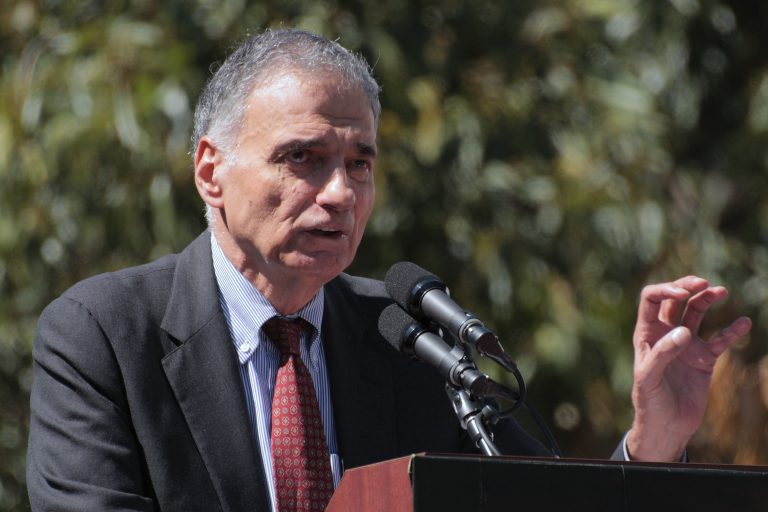
“It could totally wipe out any personal injury cases and even the sexual assault cases,” said Jamie Court, president of Consumer Watchdog. “The only exceptions are criminal activity or gross negligence.”
Uber strongly disputed that characterization, arguing the amendment is aimed at limiting what it describes as abusive litigation targeting companies primarily because of their insurance coverage.
“Rideshare companies like Uber are too often sued simply because of their high insurance coverage, even when the company is not alleged to be at fault,” Uber said in a statement. “This is a commonsense reform to help stop these unnecessary and abusive auto accident lawsuits, which drive up rideshare prices for consumers nationwide.”
The company also rejected claims that the amendment would weaken existing safety standards.
“Consumer Watchdog’s claim is simply not true,” Uber said. “Background checks and disqualifying criteria are often set and required by state and local law.”
Fong’s office did not respond to requests for comment by deadline.
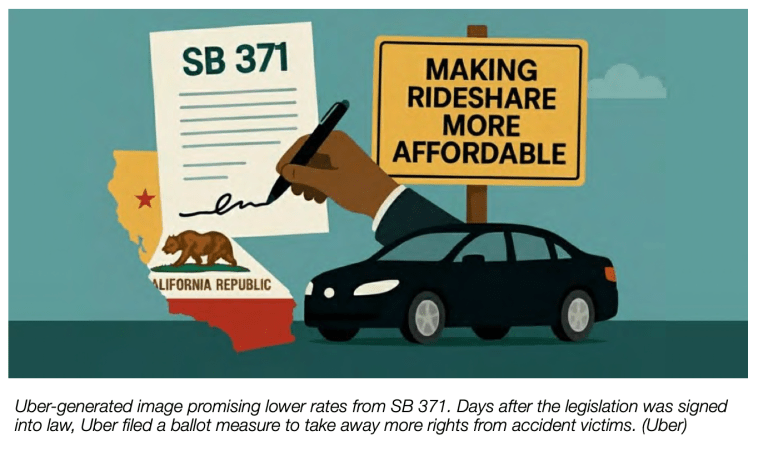
The amendment lands amid an increasingly aggressive campaign by Uber to reshape liability and litigation rules both federally and in California. In California, the company is backing a ballot initiative titled the Protecting Automobile Accident Victims from Attorney Self-Dealing Act, which would require injured plaintiffs to receive at least 75% of any damages recovered while capping or restricting attorney fees in auto accident cases. The measure would also limit recovery of medical expenses, which supporters describe as a way to curb inflated billing practices. Opponents argue it would make many injury cases economically impossible to pursue.
A recent study by the Civil Justice Research Initiative at UC Berkeley School of Law concluded the initiative could reduce injured plaintiffs’ access to legal representation and medical care while confusing voters about its practical effects.
Michael McCann, professor emeritus of political science at the University of Washington and co-author of Distorting the Law: Politics, Media, and the Litigation Crisis, said Uber’s campaign mirrors earlier corporate-backed tort reform efforts.
“It was about a massive campaign by industry — pharmaceutical companies, insurance companies and tobacco companies — to convince people that litigation was out of control and driven by predatory lawyers,” McCann said.
McCann also questioned whether Uber’s proposed attorney fee limits account for the substantial costs involved in litigating complex injury cases.
“One implication of that is that lawyers can only make 25% and that they have to pay all those costs,” he said. “The math doesn’t add up.”
Uber’s opponents have increasingly highlighted incidents involving rideshare drivers, including allegations of dangerous driving and sexual assault, as they attempt to frame the company’s liability proposals as efforts to avoid accountability. Advocates opposing Uber’s California initiative recently pointed to a jury verdict holding the company liable in a sexual assault case involving one of its drivers, as well as a Santa Barbara crash in which an allegedly intoxicated Uber driver with prior DUI convictions killed two people.
The growing fight reflects a larger battle over who bears responsibility in the gig economy as ride-hailing companies continue pushing to preserve contractor-based business models while narrowing their exposure to civil liability.