Tom Steyer rolled into working-class East San Jose in a pale blue bus, a billionaire on his way to a union rally, when Lorena Gonzalez decided to test the premise of his entire campaign.
Gonzalez, a major labor leader in the state, had a stack of red shirts made up for the May Day rally, with “WORKERS OVER BILLIONAIRES!” stamped on the front. “I was like, ‘You need to put it on,’” she said, recounting the scene.
Steyer, 68, didn’t flinch, slipping the tee over his button-down and grinning for the crowd. “My whole campaign is about representing working people against the corporate special interests,” Steyer said. “There’s enough of us to win.”
A former hedge fund titan turned leftist firebrand, Steyer is vying to become California’s next governor by running against his own class. His calls to cap oil refinery profits, break up electric utility monopolies and impose a one-time wealth tax on billionaires have infuriated the business community. They’ve also placed him in striking distance of surviving a crowded June 2 primary and reaching the general election in November.
With $212.6 million of his own money spent to date, averaging more than $1 million per day, it’s one of the most expensive gubernatorial campaigns in U.S. history.
His pitch as the anti-billionaire billionaire has provoked both suspicion and scorn. The editorial board of the San Francisco Chronicle called his campaign a “hodgepodge of populist slop.” Attack ads—many funded by the state’s largest utility, PG&E Corp. and the California Chamber of Commerce—paint him as a phony.
But his wealth, estimated at $5.1 billion by the Bloomberg Billionaires Index, has enabled him to blitz the airwaves with his own messages slamming President Donald Trump and railing against California’s affordability crisis, often in a tone of wry outrage. He’s also paying social media influencers to spread the word. His lifetime political spending, including several state ballot measures and his own failed 2020 presidential campaign, is fast nearing $1 billion, according to campaign finance records tallied by Bloomberg.
Steyer is now out-polling several competitors with government experience, including a former congresswoman and an ex-mayor of Los Angeles. California’s primary system allows the top two candidates to advance to the general election regardless of party. Recent polls show Steyer in third place, close behind Democrat Xavier Becerra—U.S. health and human services secretary under President Joe Biden—and Republican commentator Steve Hilton.
“I think our political system is grotesquely riddled with money,” said climate activist and writer Bill McKibben, a Steyer friend. “I’d rather have him spending money on himself than Chevron.”
California has a history of rich candidates—including former Silicon Valley CEOs Carly Fiorina and Meg Whitman—failing to win high office, in part because their campaigns were seen as vanity projects. Steyer insists that isn’t the case here.
Rather, he sees the country at a crisis point in its politics and says it’s everyone’s duty to help, including his. He likens it to the way his parents’ generation faced World War II, with citizens expected to support the war effort in whatever way they could.
“If you didn’t show up in World War II, you sucked,” Steyer said, in a meeting with Bloomberg reporters and editors. “Everybody in America should be stepping up, and certainly everyone in California.”
His opponents say his spending has drowned out any serious discussion in the race. “Steyer’s avalanche of money has absolutely dominated the airwaves and made it harder to have a substantive debate,” said San Jose Mayor Matt Mahan, whose own gubernatorial bid has struggled to gain traction. It’s “become kind of the epitome of performative politics.”
Steyer was born in Manhattan in 1957, the youngest of three boys in a well-off, competitive family. His father, Roy, was a partner at the elite law firm Sullivan & Cromwell, while his mother, Marnie, had been a news writer before becoming a teacher. He attended Yale University, then the Stanford University Graduate School of Business, where he met his wife, Kat Taylor, herself the granddaughter of a prominent California banking executive. A post-graduation stint at Goldman Sachs found him working under the tutelage of future Treasury Secretary Robert Rubin.
In 1986, he founded Farallon Capital Management in San Francisco with seed money from a close network of investors, including the Fisher family behind Gap Inc. The hedge fund—named after a group of craggy islands off the city’s coast—would become the source of his fortune. He proved adept at complex deals, scooping up a distressed Indonesian bank, bailing out a subprime lender and funding coal development.
But his success eventually came into conflict with his emerging role as a Democratic donor, and his growing interest in climate change. Billions of dollars in financing deals for coal, along with stock holdings in private prisons, became political liabilities and personally troubled him. “I realized just like Paul on the road to Damascus,” Steyer said in a recent interview with a social media influencer. “I took that mistake and said, ‘That’s a wake-up call to do the right thing.’”
“He just cold-called me out of the blue,” said McKibben. The pair ended up hiking in the Adirondack Mountains, where Steyer told McKibben that preventing climate disaster would be the focus of his life’s work. McKibben hoped Steyer would act as a liberal version of the conservative Koch brothers. “He hasn’t backed away one iota,” McKibben said.
Steyer stepped down from Farallon in 2012 and made fighting global warming the centerpiece of his post-hedge fund career. His remaining holdings in Farallon are now worth $34.7 million, according to his campaign team. He co-founded Galvanize Climate Solutions, a roughly $7 billion climate-focused investment firm, as well as a bank focused on social justice, Beneficial State Bank.
Steyer also dove into political campaigns, becoming a pivotal voice urging university endowments to divest from fossil fuels and bankrolling opposition to the Keystone XL pipeline. In California, he backed successful ballot campaigns that defended the state’s landmark law to cut greenhouse gas emissions and closed a tax loophole for out-of-state businesses. He also funded a 2017 campaign pressuring Congress to impeach Trump.
Unlike the Kochs and other billionaires who wield influence behind the scenes, Steyer’s advocacy often includes self-promotion. Last year, when he spent $13.5 million backing Governor Gavin Newsom’s effort to redraw congressional maps in favor of Democrats, Steyer funded an ad featuring himself sitting on a barstool and speaking directly to the camera. “Let me tell you something about a bully,” Steyer said. “Let’s stick it to Trump.” A month later, he announced his bid for governor.
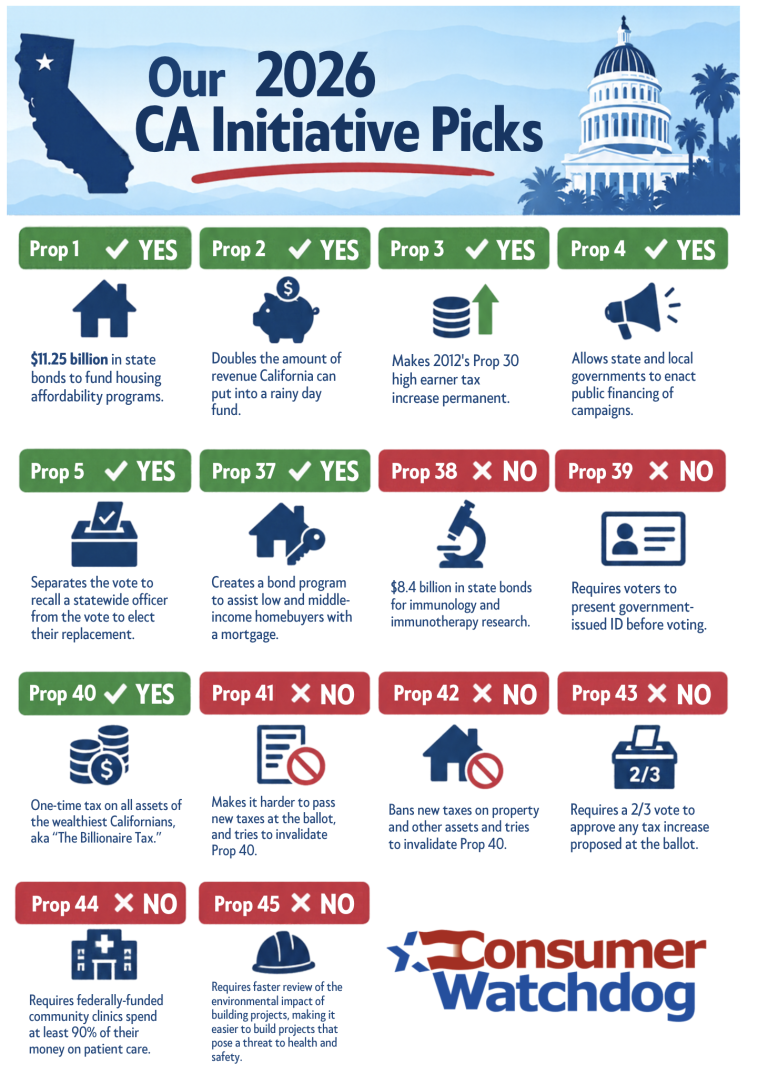
“There is an element of narcissism,” said Jamie Court, head of the Consumer Watchdog advocacy group, who admires Steyer and counts him as an ally. “Because he thinks he is the agent of change.”
His single largest campaign has been for himself: the 2020 presidential election, when Steyer spent $342 million on his candidacy but failed to win any delegates. The race yielded an awkward hot-mic video of an earnest Steyer being brushed off by Senator Bernie Sanders after a debate. “I’m a bit tired of seeing billionaires trying to buy political power,” Sanders said in 2019 when asked about Steyer’s campaign.
Our Revolution, the Sanders-aligned PAC, has now endorsed Steyer for governor. “Yes, Tom Steyer is a billionaire. But it matters what he is doing with that power,” the group said in a press release. Sanders did not return a request for comment.
Within the Democratic Party’s policy spectrum, Steyer’s campaign proposals skew left. He has called for ending the monopolies enjoyed by the state’s electric utilities and reducing their return on equity investments. He also wants to assess commercial property at market value instead of under the current system, which often limits increases in taxable value. That proposal, which would require calling a special election, could raise billions of dollars from major real estate holders. Both the California Association of Realtors and the California Chamber of Commerce are now financing ads against him.
While he’s convinced some former doubters, it remains to be seen whether Steyer can win over enough voters to advance to the general election at a time of rising anger against the rich. During a campaign stop in San Jose, his eyes started tearing up after a potential voter said she was skeptical of him and put off by his aggressive style. In a gravelly voice, Steyer tried to convince her he was a different kind of billionaire.
“It gets me emotional,” he told her. “These rich people think they made their money on their own. My point is, basically, poor people have set up a system at the risk of their lives for hundreds of years. Do not disrespect them.”
This article was provided by Bloomberg News.