
Divided court allows insurers to charge widows, divorcees, single parents and other unmarried Californians more for auto insurance
Los Angeles, CA — A divided California Court of Appeal today upheld Insurance Commissioner Ricardo Lara’s decision to allow insurance companies to charge Californians more for auto insurance simply because they are unmarried. Consumer Watchdog filed an amicus brief (opens in new tab) with the Court of Appeal noting that the voters made the Civil Rights Act apply precisely to prevent the kinds of discrimination that insurance companies once used, and did not give the Insurance Commissioner – which Prop 103 made an elective office – the right to overturn the civil rights laws.
The published decision in Ison v. Lara permits insurers to continue using marital status as an optional rating factor, allowing higher premiums for widows, divorcees, single parents, and other unmarried drivers. Farmers Insurance intervened in the case alongside Commissioner Lara to defend the discriminatory regulation.
The opinion notes allegations that unmarried drivers are charged approximately $56 to $100 more than married drivers for the same auto insurance coverage as a result of insurers’ use of marital status as a rating factor.
The Consumer Federation of America (CFA), a national association of nonprofit consumer organizations that filed an amicus brief in the case, documents the same pattern with real-world numbers. In an April 2025 test of a 50-year-old driver with a clean record, GEICO charged a single driver $331.40 for six months of coverage compared to $250.40 for a married driver with the same profile — a 32 percent increase. Insurers’ own filings with the Department of Insurance show the same gap: Mercury discounts the rate for married drivers by 13 percent and adds a 2 percent surcharge for unmarried drivers, while GEICO’s filings show a married driver’s premium rising just 3.3 percent above the base rate compared to a 24.3 percent increase for an unmarried driver with the same driving history.
“This is Ricardo Lara endorsing discrimination by insurance companies against widows, divorcees, single parents, and every other Californian who, for whatever personal reason or circumstance, is not married,” said Consumer Watchdog Litigation Director William Pletcher. “The commissioner’s position here is shameful. Lara was elected to protect consumers. Instead, he joined with insurers in court to defend an industry rule that punishes people because of their marital status – a result that would not be allowed in any other circumstances under California law.”
California’s Unruh Civil Rights Act expressly prohibits discrimination based on marital status, and California’s automobile insurance nondiscrimination law likewise prohibits insurers from treating a protected characteristic as a basis for charging higher rates.
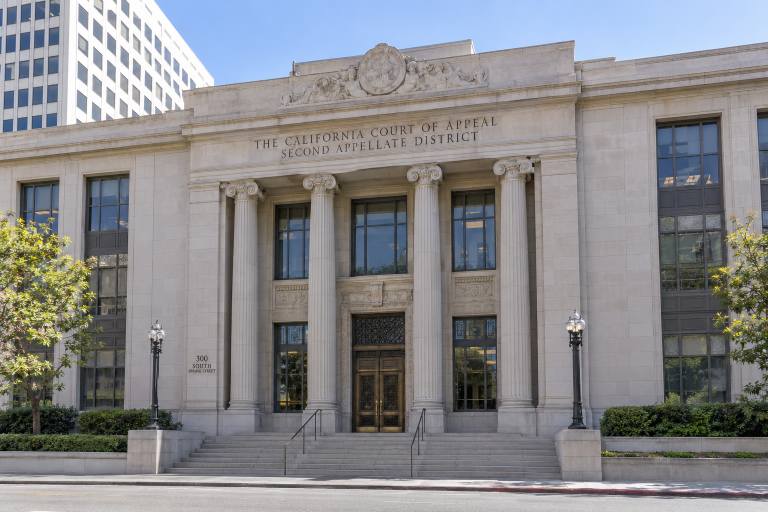
In a forceful 30-page dissent, Presiding Justice Alison M. Tucher concluded that California law no longer permits insurers—or the Insurance Commissioner—to discriminate against drivers based on marital status.
“Because insurers must comply with future amendments to the Unruh Act and the Act was amended to list marital status as a protected class in 2005, automobile insurers may no longer discriminate on the basis of marital status. And for the same reason, the Commissioner may no longer approve rates that allow such discrimination.”
Justice Tucher wrote:
“On its face, the regulation appellants challenge allows insurers to charge unmarried drivers more than married drivers. … For that reason, it cannot stand[.]”
“A widow does not become a more dangerous driver when her spouse dies. A divorced parent does not suddenly become a greater insurance risk when a marriage ends,” Pletcher said. “Yet Commissioner Lara believes insurers should be allowed to charge them more anyway. That is not consumer protection. It is insurance commissioner-sanctioned discrimination.”
Rejecting Lara’s argument that insurers may discriminate if they claim actuarial or business support, Justice Tucher wrote:
“The most obvious problem with the Commissioner’s analysis is that it is untethered to the Unruh Act’s statutory language. … There is no hedging in the statutory text … and no textual hook for the Commissioner’s theory that discriminatory practices are acceptable if they have actuarial support or business justification.”
The dissent further explained:
“The Commissioner’s analysis is also without precedent. He cites no case that holds the Unruh Act authorizes a business to discriminate on the basis of an enumerated classification, so long as the business can claim a legitimate business reason for doing so.”
Justice Tucher concluded:
“In sum, statutory text and case law establish that the Unruh Act simply prohibits price discrimination based on marital status, which is what Regulation 2632.5(d)(9) purports to allow.”
The dissent also rejected the notion that Commissioner Lara could continue enforcing a regulation that conflicts with California’s updated civil-rights laws:
“Today, section 1861.03(a) requires insurers to comply with an Unruh Act that expressly identifies the use of marital status as unfairly discriminatory. Thus, sections 1861.03(a) and 1861.05(a) no longer authorize—indeed they prohibit—a regulation that allows insurers to discriminate based on marital status.”
Justice Tucher criticized the majority for preserving an outdated regulation despite those changes:
“The majority acknowledges that Proposition 103 requires insurers to comply with civil rights laws as they are amended, but it then insulates insurers from this requirement by deploying section 51(c) to encase the 1996 regulations in amber.”
The dissent closed with a direct rebuke of Commissioner Lara’s position:
“The Commissioner’s extensive powers over automobile insurance rates do not include the right to pick and choose among the state’s civil rights laws, requiring insurers to comply with only some of them. I would hold that the marital status regulation is invalid on its face, and appellants are entitled to a writ mandating that the Commissioner replace it.”
“This case is about whether an insurance company can charge someone more because they are widowed, divorced, or simply unmarried,” Pletcher said. “Justice Tucher’s dissent recognizes what common sense and California’s civil-rights laws demand: people should be judged by how they drive—not by whether they wear a wedding ring.”
Consumer Watchdog, which filed an amicus brief supporting the plaintiffs, is continuing to review today’s decision.