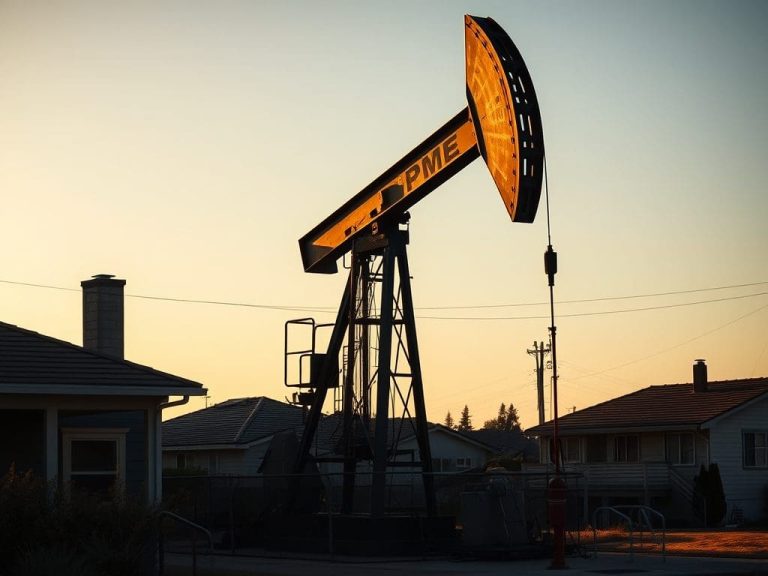
LOS ANGELES, CA – California’s energy policy is dramatically and dangerously shifting with a staggering 300% rise in approved drilling permits in the first half of 2026 over the entire three-year period from 2023 through 2025, according to new data released today by Consumer Watchdog and FracTracker Alliance. State regulators approved 353 new oil drilling permits in the first six months of 2026 compared to a total of 115 drilling permits approved in the three years prior to 2026.
“The new number, 353 new oil drilling permits in the first half of the year, is staggering compared to the number of new oil drilling permits for all of 2025, which came to just 17,” said Consumer Advocate Liza Tucker. “This is definitely the wrong direction for California. This is a reversal of our commitment to stop oil drilling and to stop endangering nearby communities.”
California Resources Corp. (CRC) and Aera Energy, one of its new acquisitions, together received the highest number of permits at 435. CRC is ramping up drilling at a time when most of its wells produce little oil or don’t at all. The producer will eventually have to plug those wells at a cost of billions. Chevron received the second highest at 340. (See Table 2 below.)
“Drilling is ramping up, putting communities at risk, and Big Oil is using high-carbon-intensity extreme extraction to do it,” said Kyle Ferrar, Western Program Director at FracTracker Alliance. “As oil production drops lower and lower, more water is consumed to push more oil out of the ground, and air quality is further degraded. This is not energy independence. It is environmental regression.”
CRC, California’s biggest independent producer, also just received CPUC approval with no conditions to acquire two in-state oil pipeline systems supplying refiners from a financially distressed owner, gaining control over pipelines that other oil producers also must use. It is also expanding into risky Carbon Capture and Storage services, according to a new Consumer Watchdog report, that depend on massive federal subsidies and on state incentives and private investment for success.
The current drilling permit surge, centered almost exclusively in Kern County, is the direct result of SB 237 (Grayson) , passed last year with Governor Gavin Newsom’s backing. The new law allows Kern County, the heart of the state’s oil production, to authorize tens of thousands of new wells over the next decade under a streamlined local environmental review, effectively bypassing the stricter, site-specific scrutiny required under the California Environmental Quality Act (CEQA).
Permit Breakdown by Year and Type
The following table illustrates the sharp contrast in permitting activity before and after SB 237 took effect. Many fewer wells are being plugged and abandoned this year compared to previous years, and many fewer wells are being reworked or redirected to reach oil or gas, while the number of permits to drill new wells is surging. See Table 1.
Table 1. Permits by Year and Type.
| Permit Type | 2023 | 2024 | 2025 | 2026 (H1) | Total |
|---|---|---|---|---|---|
| *New Drill | 25 | 73 | 17 | 353 | 468 |
| Rework | 1,730 | 1,278 | 1,078 | 202 | 4,288 |
| Sidetrack | 304 | 182 | 528 | 36 | 1,050 |
| Deepen | 5 | 8 | 11 | 4 | 28 |
| Abandon | 4,896 | 4,191 | 3,988 | 830 | 13,905 |
| Total | 7,021 | 5,781 | 5,676 | 1,474 | — |
Source: FracTracker Alliance analysis of CalGEM data.
*New Drill permits include both oil and gas production wells and EOR wells.
Top Drilling Operators in First Half 2026
The permits are concentrated among a handful of major operators, with Chevron, Aera Energy, and Sentinel Peak Resources leading the charge. See Table 2.
Table 2. Rank by Operator
| Rank | Operator | *New Drill | Rework | Deepen | Sidetrack | Total |
|---|---|---|---|---|---|---|
| 1 | Chevron U.S.A. Inc. | 138 | 43 | 4 | 4 | 340 |
| 2 | Aera Energy LLC | 104 | 46 | — | 7 | 289 |
| 3 | Sentinel Peak Resources California LLC | 42 | 20 | — | — | 232 |
| 4 | California Resources Production Corporation | 25 | 9 | — | 1 | 146 |
| 5 | Crimson Resource Management Corp. | 18 | — | — | — | 36 |
Source: FracTracker Alliance analysis of CalGEM data.
*New Drill permits include both oil and gas production wells and EOR wells.
Q2 2026 vs. Q2 2025: A Clear Acceleration
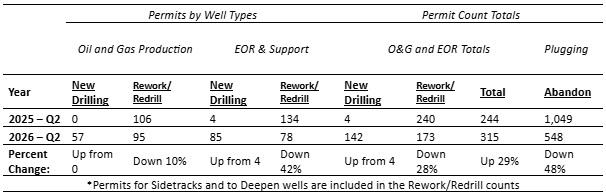
In the second quarter of 2026, regulators issued 142 new EOR and oil and gas drilling permits, compared to just four in Q2 2025. Critically, this increase includes 85 new drilling permits for EOR. See Table 3.
Table 3. Summary of 2026 2nd Q CalGEM Oil and Gas Well Permits Vs Same Quarter 2025.
This surge raises fundamental questions about California’s commitment to its own climate goals.
“We are not choosing between energy and the environment,” said Tucker. “We are choosing between a clean, renewable future and a dirty, extractive past. This data shows which path California is currently on—and locking the state into a high emissions trajectory for decades to come is not the one we envisioned.”
A Shift Toward Extreme Extraction
The majority of the newly approved permits are not for conventional drilling, but for extreme “Enhanced Oil Recovery” (EOR) methods. This process injects high-pressure steam into depleted oil fields to pry out remaining reserves—a technique that risks long-term subsurface spills, eruptions of oil and rock, and contamination of underground aquifers that may otherwise have to serve as critical drinking water sources.
Of the 353 permits approved in the first half of 2026, 226 were for EOR injection wells, alongside 107 new oil and gas production wells, according to FracTracker analysis of CalGEM data. By contrast, no new EOR permits were approved in 2025, only 33 in 2024, and just 6 in 2023.
Since Governor Newsom took office in 2019, the state has now issued a cumulative 19,559 drilling permits, inching perilously close to the 20,000 threshold. Between January 2011 when former Governor Jerry Brown assumed office, and the end of 2018, a total of 23,618 permits to drill new oil and gas wells were approved. To see real-time data on permit locations, operators, and extraction methods, visit Newsomwellwatch.com, a joint Consumer Watchdog and FracTracker Alliance public tracking tool.