Big Brother isn't watching you. But Facebook might be.
The wildly popular social networking site – which now boasts 800 million users worldwide and 200 million in the United States alone – has become the go-to mode of connecting with friends, family and people you vaguely know without having to see them in person.
But the site's nebulous, ever-changing privacy rules have long been a source of criticism from users.
And with the roll-out of slick new Facebook profiles known as Timelines, some security and social media experts are crying foul about Facebook's invasion of private lives for profit.
"On Facebook, you're not the customer, you're the product," said Chester Wisniewski, senior security advisor for Sophos, a developer of online security software and hardware. "Anytime you're getting something for free, you're giving something up. So you don't realize that everything you put on Facebook is going to be used in some way to capitalize – for Facebook."
Timeline – which is currently optional but will become the mandatory Facebook profile "very soon" – reimagines the entire look, feel and function of Facebook.
In the old format, past information was hidden and difficult to access. Now, seeing what your friend was up to in February of 2008 is as simple as clicking a button and visiting that portion of their Timeline.
"It's drawing attention to all the things you've buried in your Facebook all these years," Wisnieski said. "If people are concerned about the type of stuff that's showing up there, they need to rethink how they're using social media."
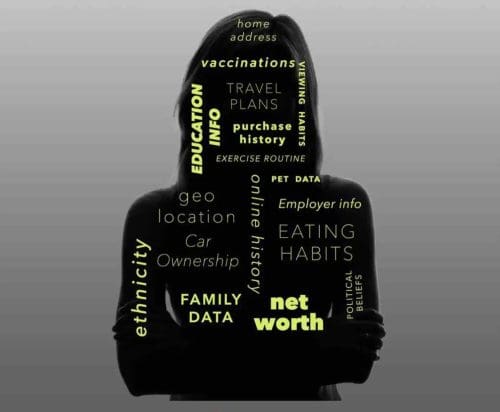
In addition to making past Facebook activity easily accessible, Timeline encourages users to fill in the gaps by adding "life events" – think piercings and tattoos, illnesses, vacations, major purchases, graduations, births and weddings, all of it designed to help "tell the story of your life."
"This is simply the single most ambitious attempt to catalog the tangled mass of human lives in the history of the Internet," wrote Sam Biddle of Gizmodo about the new Timeline feature.
Facebook founder Mark Zuckerberg is certainly excited about the changes. At the most recent f8 developer conference, he called Timeline a platform for more profound expression of self.
"Imagine expressing the story of your life," Zuckerberg said while introducing the new profile. "If the original Facebook was the first five minutes (of a conversation) and the stream was the next 15, what I want to show you today is the rest – the next few hours of a deep, engaging conversation."
But some social media analysts sense another motive behind Timeline that has nothing to do with bonding and heartfelt connections.
"The bottom line is Timeline allows for better marketing," said Ed Cabellon, director of the Rondileau Campus Center at Bridgewater State University and founder of LTE Consulting, a leadership education and technology consulting firm.
"(With Timeline), the ads are richer and more targeted," Cabellon said. "The bottom line is Facebook is doing this for money. Let's not kid ourselves that this is an easy way to connect with family and friends."
Security experts agree that while Facebook pitches the changes as a new form of deep digital storytelling, in reality, Timeline is a ploy to extract even more information from users.
"They're in the business of selling advertising," Wisniewski said. "The more information they get, the more money they can make in advertising."
And some are wondering just who might be listening in to that "deep and engaging" conversation Zuckerberg described.
Wikileaks founder Julian Assange has called Facebook "the most appalling spy machine that has ever been invented."
David Meyer wrote about the changes on ZDNet UK, questioning why Facebook would ask about medical topics like illnesses and broken bones.
"Who wants to know?" Meyer wrote. "It's one thing handing over medical data to those who claim some sort of genuine purpose for their systems, but why does Facebook need that information?"
A video by news satire outfit The Onion depicted Facebook as a CIA program that has saved the agency millions of dollars in data-gathering – and that was before Timeline was introduced. But the video is not entirely comedic.
"Governments have to love this stuff, because there really hasn't been a public forum that was so easy for them to access to get information from people," Wisniewski said. "It is a little scary to think that you've voluntarily given a third-party company this pile of information that can be used against you."
Law enforcement agencies have historically used Facebook to assist in their investigations, either by setting up fake profiles and "friending" suspects to gather information on them, or by subpoenaing Facebook records.
"A large portion of all our investigations, one way or another, involve technology," Attleboro police Detective Sgt. Arthur Brillon said. "We do use information gathered from cellphones, text messaging and websites like Facebook."
Although Timeline in particular promotes more sharing of sensitive personal information than ever before, the privacy concerns don't end there.
The redesigned profile format is now coupled with a new Open Graph system that allows for constant, automatic sharing, also known as "frictionless sharing."
Through Open Graph, online social applications from services like Spotify, Netflix, Yelp, Hulu and The Washington Post can – with your one-time permission – integrate with Facebook and post automatic updates to your profile about what you're listening to, watching, reading, and more, without your involvement.
And it's all delivered in real-time through the recently unveiled "Ticker" feature, a running record of everything your friends are doing – what they've "liked," what they're listening to, what they're saying – that appears on the right side of the news feed.
Now, with Timeline, Open Graph and Ticker working together to share as much as possible, as frequently as possible, several groups concerned with consumer privacy have said enough is enough.
In September 2011, 10 organizations – including the American Civil Liberties Union, the Bill of Rights Defense Committee, the Center for Digital Democracy and Consumer Watchdog – asked the Federal Trade Commission to formally investigate Facebook's abuse of consumer privacy and safety.
A 14-page document to the FTC called Facebook's privacy policies "confusing, impractical and unfair" and cited two key problems with the latest version of Facebook: frictionless sharing and Facebook's secret tracking of user activity, even after users have logged out of Facebook.
In November, the FTC reached a proposed settlement with Facebook that would, among other things, institute tighter privacy controls on the site, establish a "comprehensive privacy program" and make sure that deleted photos and other items actually stay gone.
Facebook must also undergo privacy audits every two years.
The changes may be a step in the right direction, but experts say the privacy problem is far from solved.
"There's an enormous number of people on Facebook who are very vulnerable to these (privacy issues), because they don't understand them," Wisniewski said, citing a 47-page terms and conditions agreement that few, if any, Facebook users read.
Wisniewski said users should assume that even if their Facebook profiles are set to "private," the information they post will not remain that way.
"Even if Facebook has truly beautiful intentions with it, you're giving information about yourself to somebody else who has no legal obligation to protect it," Wisniewski said. "They tell you up front – they're not lying to you – that everything you put on there is theirs and they can do what they want with it."
Similarly, Cabellon called the idea of privacy online an "oxymoron."
He said the popularity of Facebook is understandable in a fame-obsessed society where people want to become "F-list celebrities" via the Internet.
But the irony, some say, is that users who try to boost their sense of identity by sharing freely online may actually be losing it.
"The new (Timeline) feature feels incredibly personal," wrote Jeff Roberts of PaidContent.org, "and, sooner or later, will force many users to confront the fact that the story of their life doesn't actually belong to them."