Regulators say the penalty is the highest ever sought, but a cap on each violation would soften the blow for California’s largest insurer.
By Rukmini Callimachi and Blacki Migliozzi, NEW YORK TIMES
https://www.nytimes.com/2026/05/04/realestate/california-state-farm-fires-insurance.html
California’s insurance regulator announced on Monday that it was seeking a record fine against State Farm, the state’s largest insurer, after an investigation revealed that the company systematically mishandled claims from the Los Angeles wildfires last year.
The monthslong investigation, known as a market conduct exam, followed thousands of complaints against State Farm in which policyholders alleged a pattern of delays and claim denials that crippled their ability to rebuild.
The California Department of Insurance looked at a sample of 220 State Farm claims and found a total of 398 violations of state law in 114 of them. Many of the claims had multiple violations.
According to state law, the department can fine State Farm $5,000 per violation — or $10,000 if the violation was willful — which would mean a penalty of approximately $2 million, said Michael Soller, a deputy insurance commissioner in California, who explained that the higher $10,000 penalty is rarely applied because proving willfulness is difficult.
“There’s no record of the department ever seeking a larger fine against an insurance company for mishandling claims,” Mr. Soller, a spokesman for the regulator, said.
The proposed fine, as well as the results of the market conduct study, will need to be reviewed by an administrative law judge.
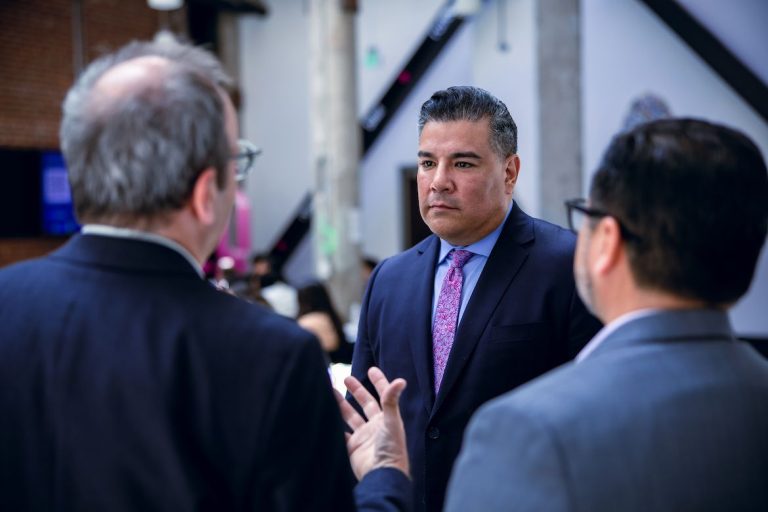
The investigation found that State Farm “delayed, underpaid and buried policyholders in red tape at the worst moment of their lives,” said California’s insurance commissioner, Ricardo Lara. Nearly half of all consumer complaints were for smoke damage claims, and included the denial of testing for toxic substances, as earlier reported in a New York Times investigation.
According to the department, the last time an insurer was fined such an amount was after the Oakland Hills fire in 1991, when Allstate was issued a $1.9 million penalty for claims handling.
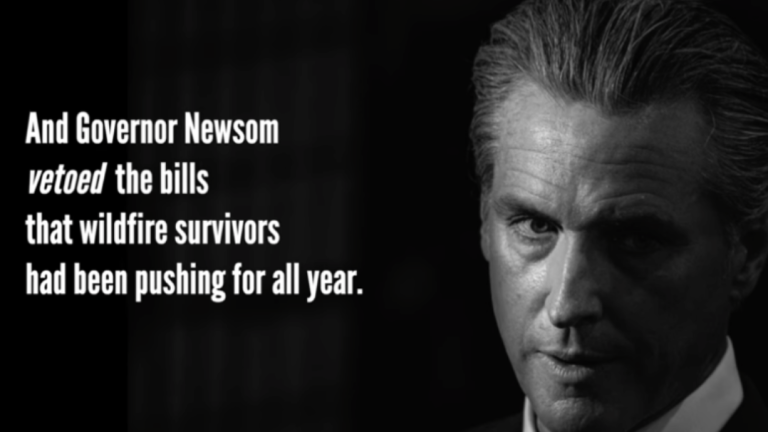
Hours after the department’s findings were announced, California Gov. Gavin Newsom warned insurers that they “may be subject to state enforcement if they unlawfully delay or deny claims.”
Advocates for homeowners, as well as one of California’s former insurance commissioners, described the proposed fine as minuscule in light of State Farm’s profits.
“Two million dollars is about how much it would cost to repair two of the homes in California,” said Carmen Balber, executive director of Consumer Watchdog, a group based in California that tracks the insurance industry. “If State Farm broke the law in half of its claims, $2 million falls far short of holding it accountable.”
More than 16,000 structures were destroyed when wildfires ripped across the dry hills of Los Angeles on Jan. 7, 2025, incinerating the Pacific Palisades, scorching homes alongside Highway 1 in Malibu and laying waste to sections of Altadena. Thousands more were contaminated with toxic smoke, resulting in a total of 38,835 claims, about 11,300 of which were handled by State Farm.
In a statement, a spokesman for State Farm said, “We reject any suggestion State Farm engaged in a general practice of mishandling or intentionally underpaying wildfire claims.” He added that “California’s homeowners insurance market is the most dysfunctional in the country, and State Farm has worked to be part of real solutions.”
Survivors of the fires say that the results are too little, too late, and show that the regulatory process is toothless.
According to the paperwork filed on Monday by the regulator, State Farm could lose its license for up to a year. But both the Department of Insurance and Consumer Watchdog said that was unlikely.
“This illegal conduct has been happening for 16 months — people have suffered needlessly,” said Joy Chen, a former deputy mayor of Los Angeles, who has advocated on behalf of fire survivors. “We have filed thousands of complaints with this department and it has been a black box. Now that they finally acknowledge the problem, we have a nominal fee of $2 million, while these companies have been profiteering this whole time.”