
After years of skyrocketing insurance bills and policy non-renewals by insurance companies, it was good to hear candidates for Governor offer proposals to push back at the recent Pomona College debate.
A suggestion by Xavier Becerra has triggered the most debate. Becerra called soaring insurance rates and non-renewals a “break-glass moment,” saying he would declare a state of emergency and freeze premiums while the state works toward long-term solutions. A Sacramento lobbyist for the insurance industry quickly published a blog arguing that any moratorium on rate increases would be unconstitutional. He’s wrong.
When California voters approved insurance reform Proposition 103 in 1988, they rolled back rates and froze most rates for a year, until new consumer protections kicked in that require insurance companies to publicly justify rate change applications. Rex Frazier, of the Personal Insurance Federation of California, argues that when the California Supreme Court unanimously upheld the constitutionality of Proposition 103 in 1989, it barred rate freezes. What the Court actually did was to note, correctly, that an insurance company has a constitutional right to a hearing to try to prove it is being denied a fair profit.
What the Court actually did was hold that insurance companies retain a constitutional right to some adequate process by which they can seek relief if a rate proves confiscatory — not that they are guaranteed any particular procedure. The California Supreme Court explained that because “virtually any law which sets prices may prove confiscatory in practice, courts have carefully scrutinized such provisions to ensure that the sellers will have an adequate remedy for relief from confiscatory rates.” (Calfarm Ins. Co. v. Deukmejian (1989) 48 Cal.3d 805, 817.) It continued: “Consequently, we focus less on the rate specified in the statute than on the ability of the seller to obtain relief if that rate proves confiscatory.” (Calfarm, 48 Cal.3d at 816.) The constitutional line Calfarm drew was not to bar all freezes — and the Calfarm Court was dealing with a mandatory rate rollback to 20% below prior rates, a situation the Court recognized was more likely to lead to confiscation than locking in existing rates (Calfarm, 48 Cal.3d at 820) — but to bar measures that altogether deprive insurance companies of any meaningful avenue to demonstrate that a particular rate is confiscatory as applied to them. A freeze at current rates, with rates already approved under Prop 103 and with Prop 103’s rate-adjustment escape-valve process left intact, does neither. Under that process, an insurer that claims a frozen rate deprives it of a fair return could file for a rate adjustment before the Commissioner — exactly the kind of relief mechanism Calfarm found constitutionally sufficient.
And even then, the Court recognized that, in an emergency, insurance companies could be temporarily deprived of that right. It defined that as “‘a temporary situation of such enormity that all individuals might reasonably be required to make sacrifices for the common weal.’” (Calfarm, 48 Cal.3d at 820-821.)
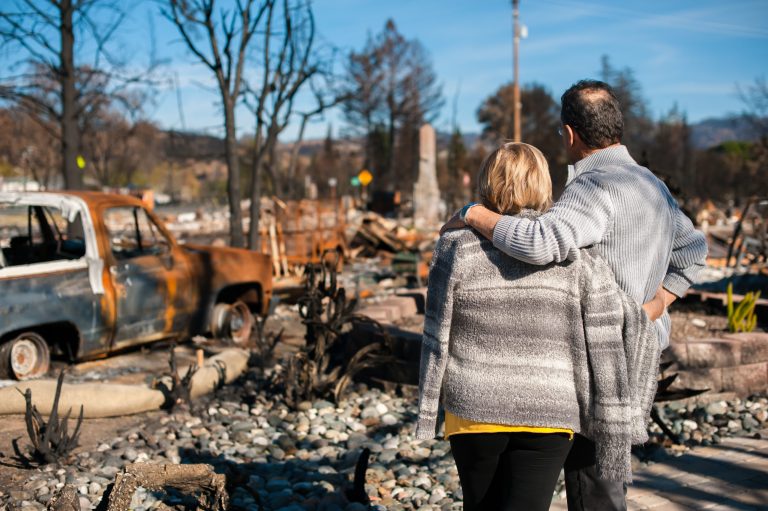
California’s current insurance crisis is precisely that kind of emergency — and then some. Over the last three years, insurance companies have been receiving record rate increases, collecting billions of dollars in additional premiums, and reporting record profits. At the same time, they have refused to renew insurance policies in many neighborhoods across the state, leaving millions of Californians unable to find the insurance they require to keep their homes. Those homeowners have been forced into the state’s industry-run “insurer of last resort” – the FAIR Plan, which charges high premiums for insufficient coverage. Meanwhile, thousands of Los Angelenos who lost their homes in last year’s wildfires cannot get their insurance company to pay their claims, are running out of ALE, and cannot timely rebuild.
Insurers have nothing to fear from a freeze. Under Prop 103, any company that claims it needs an increase can seek relief from the Commissioner – but it must be ready to prove the rate hike is necessary. Last year, State Farm declared a corporate “emergency” and requested an immediate $921 million hike in residential rates. Consumer Watchdog vehemently objected, and the company agreed to cut it to less than half.
The Governor and Commissioner Should Work Together
Becerra’s instinct is right. This November, voters will elect new leadership. The new Insurance Commissioner – who has the direct power to order a moratorium on rate increases as well as stop unjust cancellations and non-renewals – and the next Governor will need some time to wrestle the insurance industry back under control. A regulatory freeze will help stabilize the insurance market until they do so.