By Lesley Clark, E&E NEWS
Two dozen entities that have urged the Supreme Court to bar climate lawsuits have deep links to the oil and gas companies
being targeted in the cases.
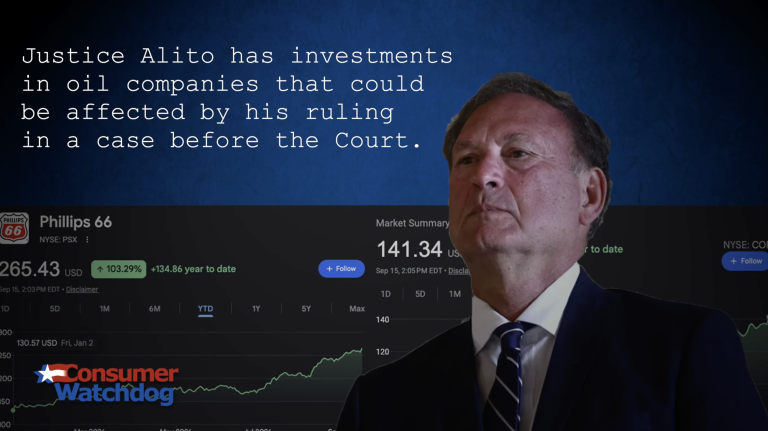
A survey released Monday by the advocacy group Consumer Watchdog found that 25 of the 38 individuals and organizations
that have filed friend of the court briefs on behalf of the industry have financial ties or other connections to the fossil fuel
companies that are facing billions of dollars in potential damages for contributing to climate change. The report argues that
many of briefs make “nearly identical legal arguments.”
“The fossil fuel industry wants the Supreme Court to believe there’s a broad, independent movement supporting Exxon and
Suncor,” said Jamie Court, president of Los Angeles-based Consumer Watchdog. “Follow the money and you understand it’s
a fossil-fuel-funded and interconnected echo chamber.”
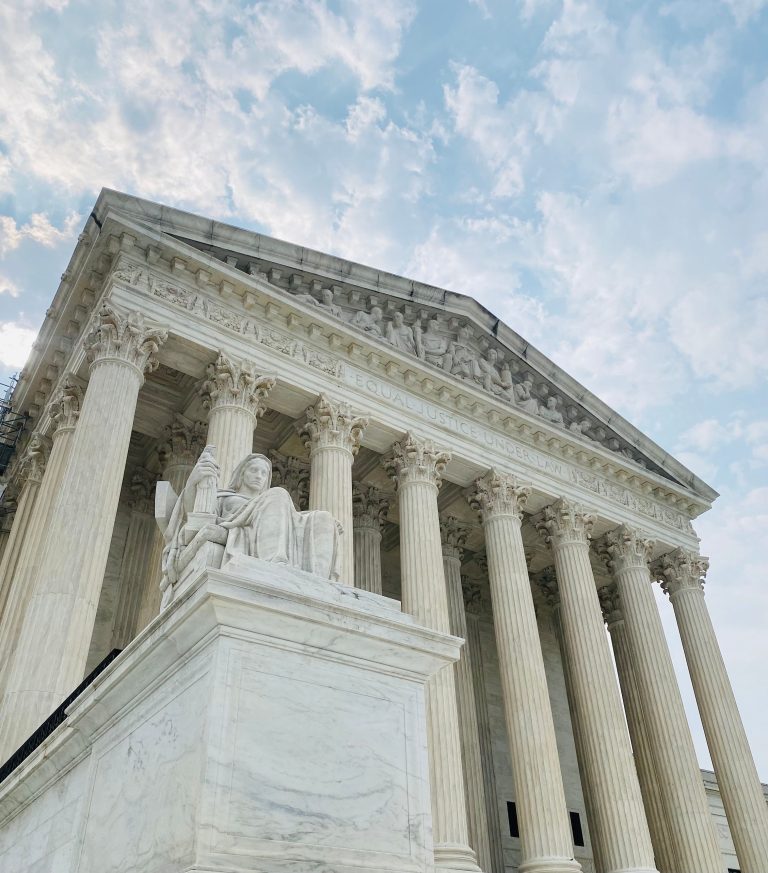
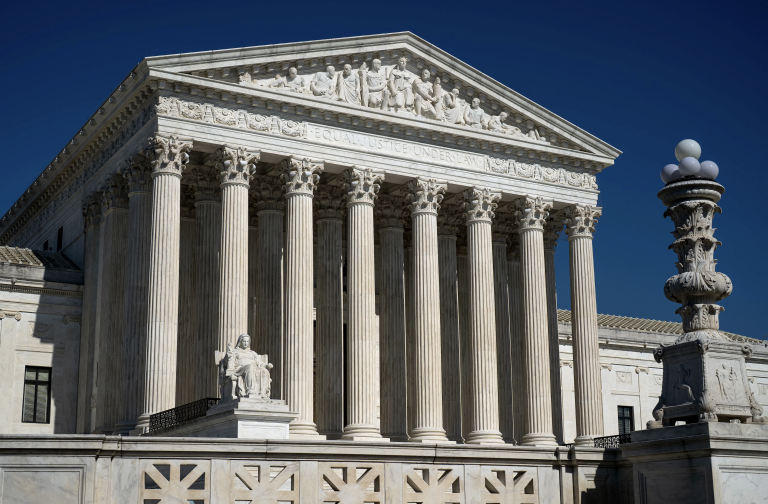
The report came as the Supreme Court prepares to hear oral arguments in the blockbuster climate showdown, Suncor v.
Boulder, on Oct. 5 — the opening day of its new term. The justices will weigh whether federal law or the Constitution bars
local governments from suing fossil fuel companies for costs associated with climate change.
If the high court decides that the city and county of Boulder cannot use state consumer protection and other laws against
Suncor and Exxon Mobil, the ruling stands to invalidate nearly two dozen similar climate lawsuits.
Court of Consumer Watchdog argued that the groups are “financed by the same fossil fuel companies, billionaire investors,
and climate denial networks that spent decades disputing the industry’s role in climate change.” Now, he added, “they are
asking the Supreme Court to make it harder to hold those companies accountable for deceiving the public.”
The industry has argued that the local governments’ attempt to use state tort law is “incompatible” with the Constitution.
The report comes as an industry-backed group criticized the flurry of friend of the court briefs supporting the Boulder
governments as “stacked with a sprawling coalition of national activist groups, political leaders, and out-of-state
governments.”
Energy in Depth, a website overseen by the Independent Petroleum Association of America, argued that some Colorado
entities instead sided with industry.
In its survey, Consumer Watchdog said it found that 16 of the groups filing friend of the court briefs received funding tied to
the two fossil fuel defendants — Exxon or entities connected to billionaire Paul Singer, whose Elliott Investment
Management is one of Suncor’s largest investors.
That includes the American Tort Reform Association, which the report notes received a “modest contribution” from Exxon in
2023 of between $10,000 and $24,999 for supporting “civil justice reform.”
Other groups have ties to the broader fossil fuel industry, including the Koch network of foundations, coal magnate Joe Craft
and oil executive Harold Hamm.
Others have links to groups that reject mainstream climate science, including the Lynde and Harry Bradley Foundation and
the Searle Freedom Trust, which Consumer Watchdog says “have spent decades financing organizations opposing climate
science, environmental regulation, and climate accountability.”
It notes that nine groups reported receiving funding from a network associated with Leonard Leo, the conservative legal
activist and former judicial adviser to President Donald Trump.
That included Consumers’ Research, which filed a brief arguing that if Boulder’s case is allowed to continue, “every state may
try to use its own tort law to regulate every nationally significant industry.”
Other groups affiliated with Leo have been active in the campaign against the lawsuits, with one launching an effort last year
aimed at quashing the lawsuits it called the “biggest risk” to Trump’s energy agenda.
The report said many organizations received funding from multiple networks, creating what it called a “financial feedback
loop” in which fossil fuel interests finance organizations that present themselves as independent voices.
It says Advancing American Freedom, which was founded by former Vice President Mike Pence, has accepted money linked
to Leo and received $325,000 from National Philanthropic Trust, which is connected to Singer.
The Trump administration also filed a brief in the case. Deputy Solicitor General Sarah Harris said the Department of Justice
has already gone to court to block similar lawsuits, arguing that they “severely interfere with the federal government’s
constitutional and statutory responsibilities.”
Consumer Watchdog has advocated for tougher oil industry rules, including supporting a proposal in California to cap oil
refiners’ profits. It is currently running ads in California pushing back against Gov. Gavin Newsom’s proposal to limit
wildfire liability for power companies.
The Independent Petroleum Association of America’s Energy in Depth website argues that the battle of the briefs shows
Boulder has little support in its own state.
Neither of the state’s senators — Democrats John Hickenlooper and Michael Bennet — joined a 90-member congressional
brief supporting Boulder. The state’s four House members, all Democrats, did sign the brief, and Colorado Attorney General
Phil Weiser, the Democratic nominee for governor, led a multistate briefin support of Boulder.
Energy in Depth noted that no Colorado city, town, county or other local government joined a brief filed by 10 city and
counties across the country. And it noted that the state’s environmental groups are “nowhere on the docket as organizational
amici.”
Several local Colorado governments sided with industry. The Associated Governments of Northwest Colorado joined eight
Western Slope counties in a brief arguing that Boulder does “not speak for” the rest of the state.
“Boulder built its case as a local dispute over local injuries,” Energy in Depth wrote. “Its own amicus support tells a different
story — a well-funded national coalition, and a home state that has largely opted out.”