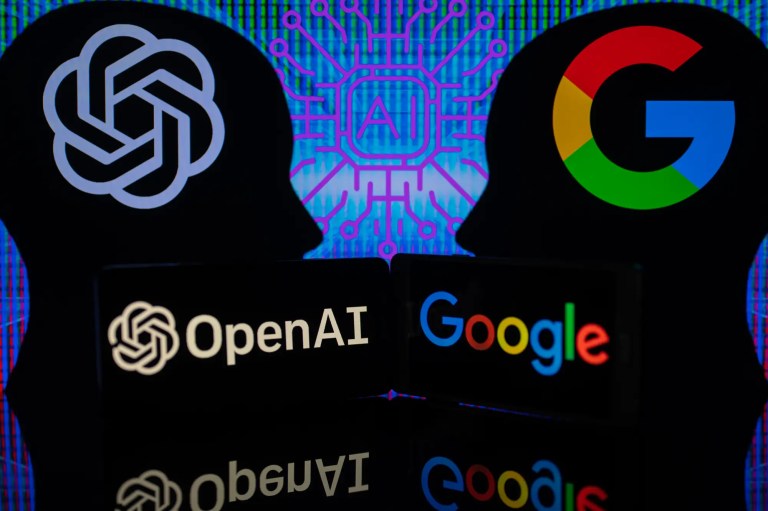
If Governor Gavin Newsom actually supports tech safety the way he says he does, then he would have signed critical bills instead of vetoing ones that would have created new rights for consumers. This past week was a huge opportunity to put a check on corporate tech power as we move into a new, unknown era, but instead the governor listened to the Metas, Googles, and OpenAIs of the world.
Yesterday, Newsom put out a press release touting “new initiatives to advance safe and responsible AI.” In it, he advertised the signing of 17 bills regulating AI technology. If you just crawled out from under a rock, you might think the future is safe. He signed AB 2013 (Irwin), which will require developers of AI to disclose the data used to train an AI system. He signed AB 2355 (Carillo), that will make committees who make political ads disclose when AI has been used. And he signed SB 896 (Dodd), which will mandate risk analysis on AI used by the state.
But aside from a few lines referring to his big veto of Senate Bill 1047 (Wiener), he didn’t mention all the meaningful tech bills that he quietly vetoed, including those protecting the data of minors, mandating browser opt outs, and requiring safety drivers and data reporting requirements for autonomous vehicles.
Newsom didn’t mention his veto of AB 3061 (Haney), which would’ve mandated that the California Department of Motor Vehicle report collision and disengagement data for deployment permits of autonomous vehicles. It would’ve made all reports be published on the DMV’s website within 90 days of receipt. Nor did he mentioned the veto of union-backed bill AB 2286 (Aguiar-Curry), that would have required a human safety driver when heavy-duty AV trucks are testing and deploying. In his reasoning, Newsom cites weaker draft DMV regulations as addressing this issue. However, current DMV regulations do not mandate a safety driver for deployment permits of heavy-duty AVs.
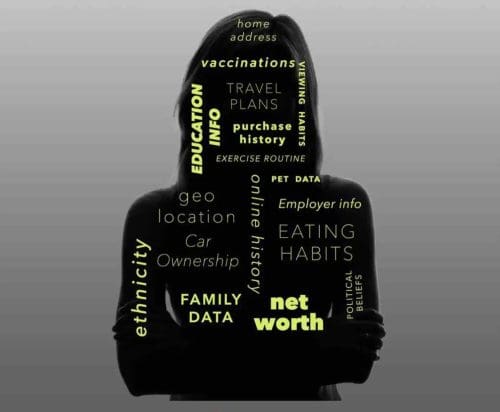
Newsom didn’t mention his veto of AB 1949 (Wicks), which would have protected children’s data. Although the bill was gutted to reinstate the so-called knowledge standard that largely immunizes businesses from actually being held liable for any misconduct, it would have required parents of kids under 13 to consent before businesses could sell or share data, and for minors between the ages of 13 and 18 to opt into data collection.
Newsom didn’t mention his veto of AB 3048 (Lowenthal), that would have been foundational to stopping discriminatory AI and algorithms. It would’ve made web browsers honor people’s data privacy preferences universally instead of forcing consumers to do it business by business. In his letter to the State Assembly, Newsom reconciled his decision not to sign the bill by saying, “Most Internet browsers either include such an option or, if users choose, they can download a plug-in with the same functionality.” But Google Chrome, Apple Safari and Microsoft Edge don’t offer a global opt out and they make up for nearly 90 percent of the browser market share. People don’t want to install plug-ins or opt out thousands of times. Safari, which is the default browser on iPhones, doesn’t even accept a plug-in. Oddly enough, the governor vetoed a bill that was co-sponsored by his own state agency, the California Privacy Protection Agency.
Then there’s the veto of the much-publicized SB 1047 (Wiener), which stings the most. It was aimed at preventing massive, future AI models from becoming dangerous by simply making companies test for safety. But in a weird twist, Elon Musk backed it and not the governor.
In the end, major tech companies and funders such as Google, Meta, OpenAI, Andreessen Horowitz, Y Combinator, as well as Anthropic opposed the bill and lobbied Newsom’s office to kill it. Further, Democrats from Silicon Valley, as well as Nancy Pelosi, also opposed the bill. Newsom instead plugged an AI taskforce he convened aimed at stopping the end of the world, consisting of a professor who was against the bill and who herself has created her own AI start-up. (opens in new tab)Newsom thinks being fair is deferring to tech interests.
It’s going to take strong steps to address our bleak reality, not small ones. If the governor wants to curb risky AI then he’s going to have to tackle corporate power, which he didn’t do here. Technet, whose members include Meta, Apple, Google and Amazon, opposed AB 1949, AB 2286, AB 3061, AB 3048 and SB 1047. Aside from AB 3061, the California Chamber of Commerce opposed all of these bills as well. And now Newsom has joined their team. Unfortunately, it doesn’t come as a surprise from the Bay Area politician whose rise occurred in tandem with Big Tech, but we thought maybe now things would be different. Stay tuned.