“Affordability” is the buzzword in Sacramento. No fewer than 25 energy-related bills are on the docket
By ROB NIKOLEWSKI, SAN DIEGO UNION-TRIBUNE
With complaints from financially stretched customers growing louder, a flurry of measures aimed at curbing ever-increasing energy and utility bills have been introduced during the current legislative session in Sacramento by lawmakers of both parties.
“Affordability” is the buzzword throughout the hallways of the State Capitol — especially with many members of the Assembly and Senate up for re-election this year. No fewer than 25energy-related bills are on the docket.
That’s not much of a surprise, considering that many Californians feel they’re getting walloped on multiple fronts, from the prices they pay at the gas pump to what they see when they open their monthly power bill statements.
For example, according to the Public Advocates Office — the independent arm of the California Public Utilities Commission — the average residential rate for electricity in San Diego Gas & Electric’s service territory has nearly doubled, increasing 98% in the past 10 years.
Pacific Gas & Electric customers have seen a rise of 76%, while rates for Southern California Edison have soared 101% over the course of a decade.
Released last month, the report from the advocates office said that as of the end of 2025, the average residential rate for SDG&E came to 45.7 cents per kilowatt-hour. The average stood at 35 cents for PG&E and 34.5 cents per kilowatt-hour for SCE.
Here’s a look at a few of the energy, fuel and utility-related bills navigating through the legislative obstacle course at the Statehouse.
Reducing utility profits
Just this week, Assemblymember Tasha Boerner, D-Encinitas, introduced two pieces of legislation.
Assembly Bill 1667 seeks to reduce the amount of profit that the state’s investor-owned utilities can earn on their infrastructure projects.
What’s called the “return on equity” is a percentage that the California Public Utilities, also known as the CPUC, determines after conducting lengthy proceedings.
In December, the CPUC slightly reduced the rates for each utility.
Starting this year, SDG&E’s return on equity — or ROE for short — is at 9.93%, while Southern California Edison’s stands at 10.03%. The rate for Pacific Gas & Electric is 9.98%.
Boerner’s bill would give the power companies a bigger financial haircut.
AB 1677 aims to set the rates by taking the yield of long-term Treasury bonds — currently at 4.7% — and then adding another 4%. If AB 1667 were in place now, the utilities would not be allowed to earn more than 8.7%.
“I would say that at a high level, there’s a misincentive for the monopoly (utilities) to go for profits,” Boerner said. “AB 1677 would require the profit level that energy corporations are allowed to make be tied to real market conditions.”
Shaving the return on equity by 1 percentage point results in about $61 million in savings per year for SDG&E customers, according to calculations by Mark Ellis, a critic of the state’s current ROE structure. Now an independent consultant, Ellis was formerly chief of corporate strategy and chief economist at Sempra, the parent company of SDG&E.
Assemblymember Cottie Petrie-Norris, D-Irvine, has introduced a similar bill, called AB 2463.
Her legislation requires the CPUC by next year to “conduct a systemwide” and “comprehensive review” to best determine the proper rate of return. Petrie-Norris told the Orange County Register the analysis would be robust and independent.
“The utilities argue that higher ROEs are warranted and necessary to attract capital,” she said. “The ratepayer advocates argue that they’re wildly excessive. What I want to know is: Who’s right? We need to have an evidence-based, data-driven process to determine what’s the right answer.”
AB 2463 is scheduled to be heard in the coming weeks in the Assembly Committee on Utilities and Energy, which Petrie-Norris chairs.
Casting an eye on wildfire spending
One of the primary cost drivers relates to the money that power companies in California spend on reducing the risk of wildfires caused by utility equipment.
For example, SDG&E has spent roughly $6 billion in ratepayer funds since the Witch Creek, Guejito and Rice fires in 2007 ravaged large swaths of San Diego County.
The second bill Boerner has introduced, AB 1774, would require independent audits of wildfire mitigation spending so that utility funds are spent before new money is appropriated through rate hikes.
“We’re trying to ensure that we’re only paying for what we get,” Boerner said. “If there’s no problem in accounting, then no one’s going to have a problem with 1774.”
The bill’s co-sponsors — Los Angeles-based advocacy group Consumer Watchdog and the Eaton Fire Survivors Network — point to audits of utility Wildfire Mitigation Plan spending by the big three investor-owned utilities in 2019 and 2020.
Conducted by accounting firm Crowe LLP, the audit looked at the combined spending of nearly $2.5 billion during those two years. As reported by CalMatters, Crowe said some costs from PG&E, Edison and SDG&E may have been covered by rates that were previously approved or that more documentation was needed.
In SDG&E’s case, Crowe said SDG&E underspent $240 million of its general rate case capital costs for 2019 and 2020 and used the funds instead for “Wildfire Activities, which are recorded in incremental accounts.”
But SDG&E disagreed with the findings, countering that Crowe’s audit “reflected a misunderstanding” of the general rate case, and further, “how the ratemaking process works.”
Edison said Crowe’s audit of its numbers “constitutes clear legal error,” while PG&E said the findings “are a misunderstanding of utility forecasting and ratemaking.”
CARB and the CEC under the microscope
Senate Minority Leader Brian Jones, R-Santee, and Sen. Roger Niello, R-Fair Oaks, have touted a trio of “affordability and accountability” bills they’ve introduced:
- Senate Bill 1239 would require the California Air Resources Board to prepare an economic impact report on all of its regulations before they are voted on.
- SB 981, if passed, makes the Air Resources Board explicitly analyze the effects on cost of living whenever the agency considers major regulations. That includes impacts on electricity, groceries, housing construction, business costs and the price of gasoline.
- SB 929 would mandate the chair of the California Energy Commission to appear each year before the Legislature to report on various programs, rules and regulations — and discuss what benefits and effectiveness they have on ratepayers.
Jones called CARB and the energy commission “a two-headed monster of inflation and costs” in California.
“If these three bills pass, these two agencies will have to think twice about the regulations they’re passing,” Jones said. “If they have to tell the citizens of California what these regulations are going to cost them, it’s just another level of accountability that these regulators are going to have to respond to.”
A couple of other bills in the hopper
Assemblymember Jeff Gonzalez, R-Indio, rolled out AB 1745, which would suspend the state’s 61-cent-per-gallon tax on gasoline for one year.
“In rural and desert communities, a car is not a luxury — it’s a lifeline,” Gonzalez said at a news conference last month. “This is about affordability, this is about fairness, and this is about putting people before politics.”
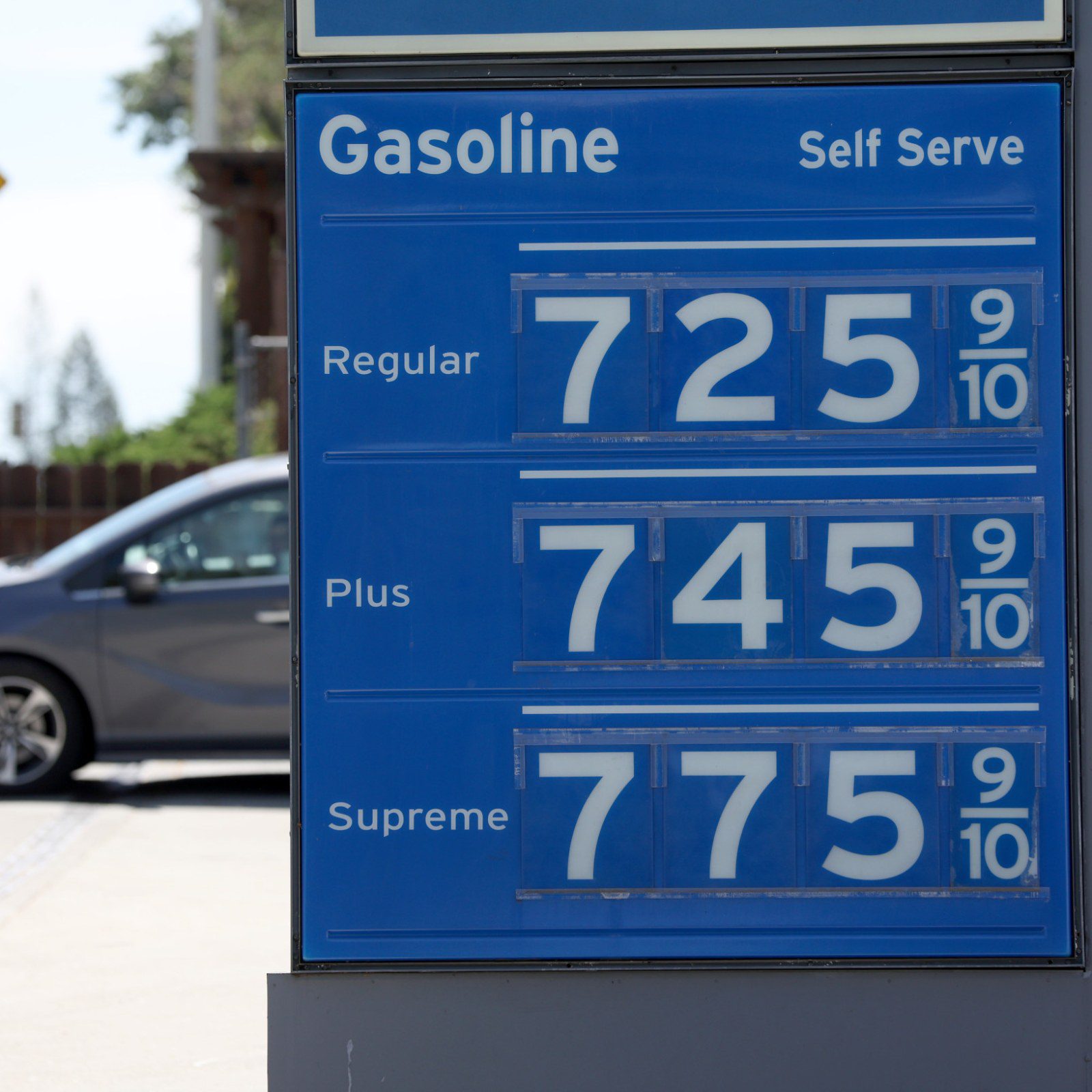
California gas prices were already rising in February due to the annual switch from winter-blended fuel to the more expensive summer blend. But they’ve gone through the roof since the start of the war in Iran.
As of Thursday, the average price for a gallon of regular in the San Diego area came to $5.396, according to AAA. That’s 71 cents higher than the day U.S. and Israel launched airstrikes on the Iranian regime.
Fuel analysts also worry that the closures of two large oil refineries — one in Los Angeles County and the other in the Bay Area — may lead to supply constraints across the Golden State.
On the utility front, AB 2611 aims to shield public schools and lower-income customers in hot climate zones from high electricity rates. Introduced by Assemblymember Jasmeet Bains, D-Delano, the bill requires the CPUC to prevent “unreasonable hardship” by having electric companies refrain from imposing above-baseline rates upon those two groups “during any hour” when it’s 90 degrees or hotter outside.
“Charging working-class families in the Central Valley higher rates for electricity when it is 110 degrees during the summer is not only cruel but also dangerous,” Bains said in an email. “Our current rate policy punishes the most vulnerable residents of the Central Valley while padding the bottom line of utility companies. That’s got to end.”
According to the U.S. Energy Information Administration‘s most recent figures, California has the second-highest average price for electricity in the country, at 34.71 cents per kilowatt-hour. As of December, Hawaii came in No. 1, with 41.62 cents per kilowatt-hour.