By Noah Baustin, POLITICO
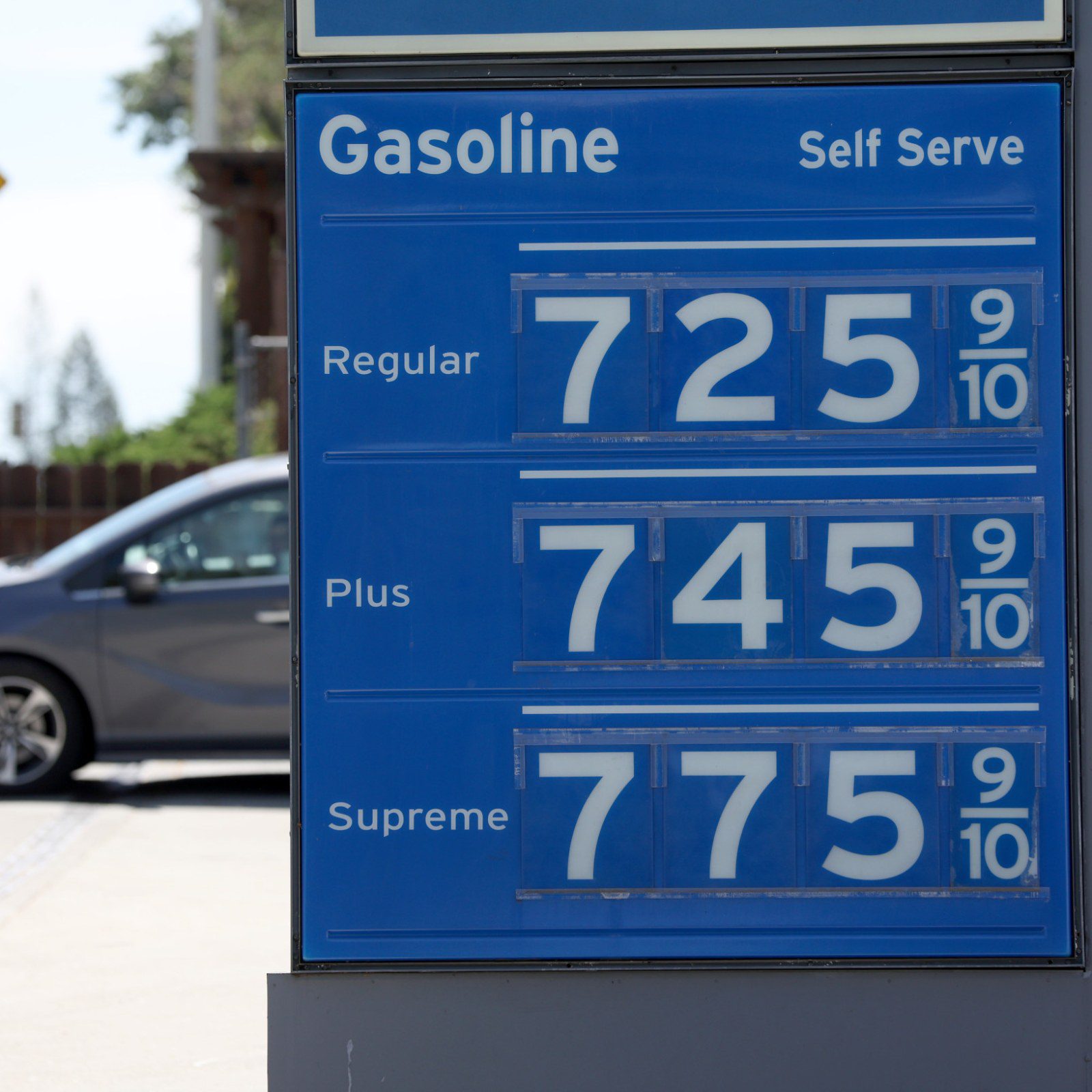
THE PRICE WE PAY: Affordability concerns dominate today’s politics, so the last thing any government leader wants is thousands of glowing signs on every roadway displaying higher and higher prices to their constituents. But that’s exactly the situation in California, where the average price of gasoline is now $5.88 per gallon, having climbed $1.24 in the past month, according to AAA data.
This isn’t just a California problem. The national gasoline average climbed $1.01 during that same time period. The war in Iran cut off a shipping route through which about 20 percent of the globe’s oil typically travels, sending oil and gasoline prices soaring worldwide.
But California has the most expensive gasoline in the country — the national average is $3.99 per gallon, and California’s is nearly 50 percent higher. So as people across the nation have grown frustrated with gas prices, California’s costs have become a national story. That’s spurred everyone from Democratic gubernatorial candidates to Republican state senators to the oil industry itself to shout from the rooftops about how they think the crisis should be fixed.
Their ideas range from axing environmental programs and state taxes, to upping in-state fuel production, to cracking down on the oil industry.
So far, those have all proven unpalatable to Gov. Gavin Newsom’s administration.
Newsom himself has responded by hammering President Donald Trump for attacking Iran, blaming the conflict for the increase in prices. When asked earlier in March what his administration could do in the short term to provide drivers with relief, Newsom made his thoughts on the situation clear.
“We could continue to call out the President of the United States’ recklessness,” the governor said. “Donald Trump is the driver of these spikes in the cost of gas and oil, not only here in California, across the United States.”
Behind that criticism of Trump is a frustrating fact for California officials, according to oil analyst Tom Kloza.
“There’s not much they can do short term,” Kloza said in an interview.
There’s the fact that gasoline prices are intractably tied to global oil prices, which is why increasing in-state oil production would not translate to lower pump prices, according to the Newsom administration. But beyond that, gas stations are private businesses that have leeway to raise their prices beyond what’s required to cover their costs if they believe customers will still pay, he explained.
“It ranges from the guy who does it by feel, who says, ‘I think I can get away with this number’ … to a lot of sophisticated software that tells people where to price,” Kloza said.
Some of those outlier cost increases have drawn the attention of the Division of Petroleum Market Oversight, a state agency tasked with overseeing the state’s fuel system. DPMO released a statement earlier this month saying that it was engaging with retailers whose high prices might not be justified by increases in their costs.
The DPMO “is vigorously monitoring the entire market for price gouging and is going after individual gas stations trying to exploit this crisis,” Newsom spokesperson Anthony Martinez said in a statement.
Beyond investigating individual bad actors, the Newsom administration and its Democratic allies in the legislature haven’t signaled an appetite to make more systemic changes to the state’s fuel system in reaction to the skyrocketing rates.
Earlier this month, the California Senate Environmental Quality Committee voted not to pass SB 1035, a bill authored by Republican Sen. Tony Strickland, which would have created a one-year exemption for fuel suppliers from the state gas tax and two environmental programs funded through gasoline sales: the Low Carbon Fuel Standard and cap and trade.
Altogether, state and local taxes plus California environmental programs make up about 28 percent of the price of a gallon of gasoline in the state. That’s the second-largest share of the cost behind crude oil itself, according to a California Energy Commission analysis of January prices.
While California charges the highest gas tax of any state, Newsom, in line with governors across the country, has dismissed proposals to pause the fee. His office has pointed out that it funds critical road repairs, and expressed concern that fuel companies would end up pocketing a large share of the savings if the state rolled out a gas tax holiday.
The California Air Resources Board, which runs the two environmental programs, did not reply to a request for comment.
For their part, environmental advocates are calling on the state to go after fossil fuel companies, who they believe are taking advantage of the global supply crisis to juice their profits.
Kloza, the analyst, said that in California, the price of refined fuels like gasoline, diesel and jet, have increased more than the price of oil in recent weeks. That’s a boon to the state’s refiners.
“At the moment, it’s incredibly profitable,” Kloza said.
About 27 percent of the price of gasoline comes from the gap between the cost of crude oil and government fees and the price people pay at the pump, according to the CEC’s analysis of the January price. That includes refiners and distributors’ profits and their operating costs.
Jamie Court, president of the affordability organization Consumer Watchdog, wants the Newsom administration to go after those profits.
“The sales tax and the environmental fees buy something for us, they buy better roads, and they buy cleaner air,” Court said. “But the money we’re giving to the refiners is just money we’re handing over.”
During previous gasoline price spikes, Newsom went after the oil industry, saying in 2024 that “price spikes are profit spikes.” He led two special legislative sessions on gasoline prices, one of which yielded a powerful policy tool that would have allowed the state to cap refiner profits. But with the prospect of two refineries idling, the CEC last year opted to signal a more favorable environment to the oil industry by voting to delay its authority to impose that cap.
Now, Newsom is “not talking about the refiners getting rich, or what are we going to do with the tools, he’s pointing to Trump,” Court said. “I think that’s disingenuous.”