By John Cox, BAKERSFIELD.COM
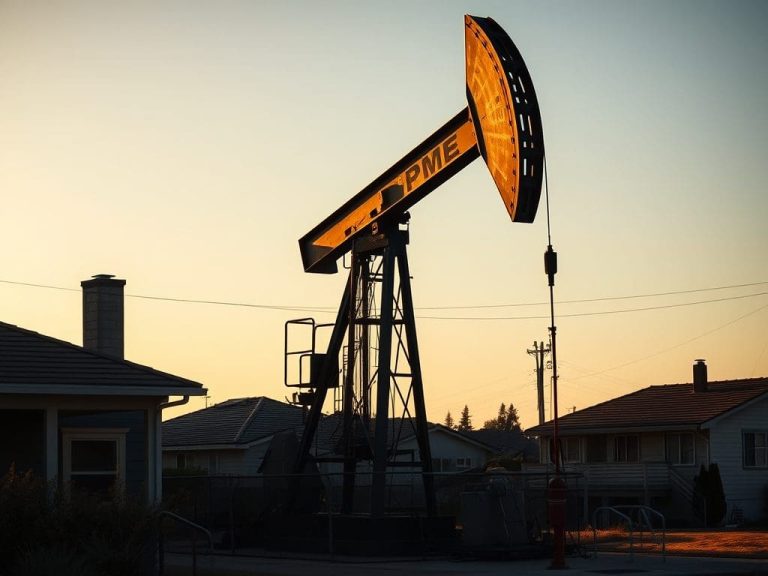
A policy study published last week concludes California can best advance its oil supply-related climate goals by resuming and possibly expanding the disputed oilfield buffer zones being put before statewide voters next year.
Researchers led by the University of California, Santa Barbara found so-called setbacks enforcing minimum distances between oilfield facilities and sensitive sites like homes would cut greenhouse gas emissions more effectively than two other supply-side strategies they focused on: imposing a carbon tax or an excise tax.
Buffers would also protect public health better, the report says, and cost fewer jobs in disadvantaged communities — but they would take away more employment statewide than either of the other two options studied.
The study that came out Thursday in the academic journal Nature Energy, titled “Equitable low-carbon transition pathways for California’s oil extraction,” carries no state authority; indeed, 3,200-foot setbacks approved last year have been put on hold pending a referendum set for November 2024. But the research adds understanding to a hotly contested topic in Kern, including what buffers would and would not be expected to accomplish.
Environmental justice groups and others advocate setbacks because research suggests proximity to oil and gas wells is associated with health problems such as adverse birth outcomes, heart disease and respiratory diseases including asthma.
The oil industry says no formal correlation has been established supporting a 3,200-foot buffer. It says restricting oil supply only pushes production overseas, where standards are much lower than in California and where there is no benefit to workers such as those living in Kern County, which relies on oil property tax revenues to help fund public services.
Gov. Gavin Newsom urged state lawmakers to adopt buffers last year as the state legislative session was winding down, after his administration abandoned a years-long effort to establish them on its own. An earlier, more ambitious anti-oil bill that included setbacks had died in committee.
The successful bill, Senate Bill 1137, ended oil and gas production and bans well deepening and reworks within the setback radius. It called for pollution controls on wells within the setback areas. It restricted noise, light and dust while mandating new testing and paperwork.
But it was in place for only a short time early this year because, immediately after its passage, the industry launched an effort to gather signatures for a voter referendum. The campaign took criticism for misleading some would-be signers, but it ultimately won space on the presidential ballot, effectively placing SB 1137 on hold.
Researchers have now found that setbacks come down to a tradeoff: They report that the same disadvantaged communities that buffers are intended to protect would receive one-third of the statewide health benefits — and suffer a third of the job losses.
“Our analysis is trying to quantify what those tradeoffs look like as the state considers different policies,” Kyle Meng, an associate professor at UCSB’s economics department and the Environmental Markets Lab at the Bren School of Environmental Science & Management, said in a news release. The release called it the first peer-reviewed, comprehensive study on how different oil extraction-related decarbonization policies can affect employment and health.
Meng added that the tradeoff was surprising, noting, “The same communities that benefit from cleaner air are also those facing labor market consequences.”
The study found using a carbon tax as an alternative supply-side climate measure represents the least expensive choice because it would “go after the most carbon-intensive oil extractors first,” stated study co-lead author Paige Weber, an environmental economist at the University of North Carolina, Chapel Hill. She added such a tax would nevertheless offer the weakest health benefits while causing the fewest layoffs. Carbon taxes are similar in ways to California’s existing cap-and-trade pollution credits program.
Many states use an excise tax instead of California’s ad-valorem, property tax-based method of taxing oil production. The new report’s authors found adding an excise tax would eliminate the most expensive oil production operations first, and that such a policy “falls roughly in the middle in terms of job and health implications,” Thursday’s news release said.
Another finding published in the report was that even the largest setback distance the researchers studied — one mile, or about two-thirds larger than SB 1137’s provision — wasn’t big enough to achieve the scale of cuts required under California’s 2045 goal of cutting emissions in the state’s transportation sector by 90% relative to 1990 levels.
“So, you’d need to combine a setback with another policy” such as a carbon tax or an excise tax, Weber stated.
The release characterized the report’s findings as conservative, noting researchers focused on premature mortality to the exclusion of other health impacts. It said they probably overestimated employment impacts because their modeling system doesn’t account for the possibility laid-off oil workers find other work.
The study follows others by the same multidisciplinary researchers on the same general topic. The team previously found setbacks decrease state oil production because oil companies might not find it economical to drill elsewhere.
The team has also published findings that reducing in-state petroleum production by even 90% will cost Kern County an average of 1,700 jobs annually, plus $27 million in property-tax revenues per year through 2045. On the other hand, the team said that will improve Kern’s mortality rate a total of 25% because of local reductions in particulate air pollution.
Oil industry representatives were skeptical of the recent findings. The Western States Petroleum Association trade group called the study deficient and unhelpful to public policy discussions.
The California Independent Petroleum Association trade group was more specific, saying the researchers relied on national data on particulate-matter pollution rather than using numbers reflecting California’s more restrictive regulations.
CIPA CEO Rock Zierman said by email the study also should have used production data from California’s tightly regulated oilfields instead of national figures. He pointed out California’s oil and gas industry contributes $152 billion to the state’s economy, including $26 billion in annual wages.
Los Angeles-based public interest nonprofit Consumer Watchdog faulted the study for other reasons, noting not all people working in oilfields live nearby. It referred to research suggesting most laid-off workers would find jobs elsewhere and that retraining the rest wouldn’t be prohibitively expensive.
“They have skill sets that are transferrable and in demand,” Energy Project Director Liza Tucker said.
She emphasized public costs of treating people for emissions-related illness would decrease, adding, “Basically what you’re looking at is an enormous savings.”