Several important tech bills have now passed the California legislature, many after a bumpy road out. Bills aimed at protecting children’s data, thwarting future AI catastrophes, making opting easier, and bringing transparency to autonomous vehicle testing all passed, many significantly altered.
A couple closely-followed bills didn’t make it though: AB 2930 (Bauer-Kahan), aimed at curbing discriminatory algorithms, didn’t make it to a vote in time over the weekend and was put on the inactive file. The bill in its original form was set to more broadly regulate categories like housing and financial services, but was significantly narrowed to only cover employment related matters. AB 3211 (Wicks) would have required labeling for AI-generated content, though it too didn’t make it to a vote.
But the biggest obstacle for the bills that did pass is now Governor Gavin Newsom, who holds the veto pen for the next month.
Here’s a look at those bills.
AB 3048 (Lowenthal), which would make browsers offer a global data privacy control, is a simple bill that sailed to the finish line without any major changes. There is virtually no fiscal impact under the bill, maybe only to the companies who profit off our data, but they can afford it. This bill is a no-brainer to sign, especially if California wants to still be a leader in the data privacy rights space. If signed, California will become the first state in the country to make all browsers doing business in the state to universally accept people’s privacy choices.
AB 3061 (Haney) would mandate that the DMV report collision and disengagement data for deployment permits of autonomous vehicles. The reports will be made available upon request by local and state transportation officials starting next July, and in 2028, all reports shall be published on the DMV’s website within 90 days of receipt. Consumer Watchdog has been calling out the need for more AV transparency at the DMV for years, and this bill should be signed. It’s simply asking to make data public and imposes no additional costs onto manufacturers.
AB 1949 (Wicks), aimed at protecting kid’s data, moves forward, but with a reinstated knowledge standard that largely immunizes businesses from actually being held liable for any misconduct.
A number of bills addressing AI labeling and deepfakes are also before Newsom. AB 2655 (Berman) would make online platforms during election season take down deceptive content or put warnings around it. AB 2839 (Pellerin and Berman) would penalize those who share fraudulent campaign materials, but not if they’re a parody.
Then it’s a tough call.
The big one—SB 1047 (Wiener)—which is aimed at preventing future AI models from becoming dangerous—passed as well, but not without opposition from all sides.
Even though the bill went through some fourth-quarter amendments that include eliminating a new state agency to regulate these future AI systems, narrower testing requirements, and reduced civil penalties, the thrust of the bill remains intact. Companies who build really expensive, really big AI models must test them for safety.
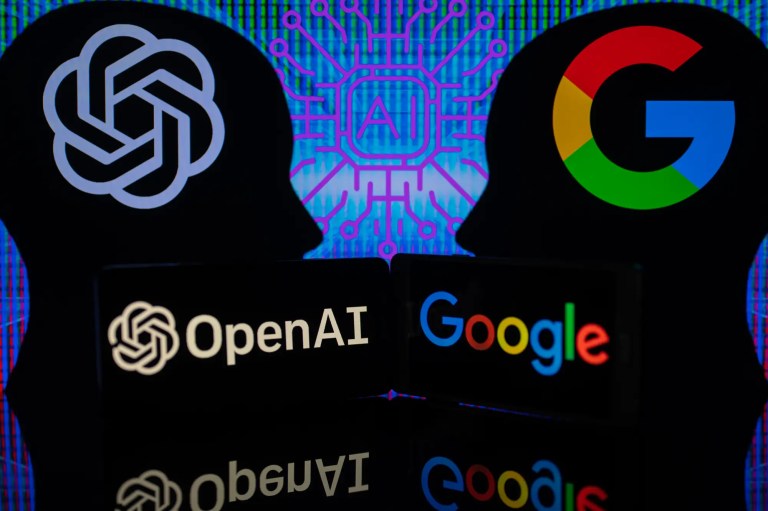
It’s important to remember that despite the amendments that were lobbied by tech companies such as Anthropic, it didn’t seem to convert the bill’s naysayers. The major tech companies and funders such as Google, Meta, OpenAI, Andreessen Horowitz, Y Combinator, and yes, Anthropic, still don’t like the bill.
And many of these companies have Newsom’s ear.
According to Fast Company, Andreessen Horowitz has hired by the lobbying firm Axiom Advisors, which is led by Jason Kinney, the guy whose birthday party Newsom attended at the French Laundry restaurant that violated the governor’s Covid-19 guidelines, to lobby against SB 1047. Axiom said Kinney put up a firewall between his work for Newsom and Axiom’s clients following the French Laundry dinner.
Y Combinator, which gave seed funding to companies such as Cruise, Airbnb, Coinbase and Doordash, is also lobbying against SB 1047.
If you look closer, the number of Democrats who have opposed the bill hail from districts whose campaigns have been flush with tech money. Nearly half of the top 20 career donation totals for Reps. Zoe Lofgren, Anna Eshoo and Ro Khanna come from tech and software companies, according to a financial analysis conducted by The American Prospect. They recently signed a letter urging Newsom to veto the bill. But the most high-profile Democrat to come out against the bill has been Nancy Pelosi.
Newsom, for his part, hasn’t said anything specific about the bill. But he wants California to remain the tech hub of the world, which it will, even with SB 1047 as law. When talking about AI this summer, Newsom used the words “overindulging,” “chasing a shiny object,” and “perilous position.” But he wasn’t talking about the danger of AI. He was talking about the danger of regulation.
Newsom said, “If we over-regulate, if we overindulge, if we chase the shiny object, we could put ourselves in a perilous position.”