
Consumer Watchdog

Expose. Confront. Change.

Consumer Watchdog

Privacy

Consumer Watchdog Files Complaint Over Google Shopping Prices, Labels

Consumer Watchdog Files Complaint Over Google Shopping Prices, Labels

<p><b>Google says its top Shopping results are clearly labeled as sponsored by merchants</b></p> <p id="first_paragraph">The top product results in Google's Shopping service frequently feature products with higher prices than those listed on competing online shopping services, according to a complaint filed by longtime Google critic Consumer Watchdog.</p> <p>But Google said the top search results in its Shopping service are clearly labeled as sponsored by the retailers.</p>
Consumer Watchdog Claims Google Shopping Makes Consumers Pay More, Further Evidence Of Google’s “Search Monopoly”

Consumer Watchdog Claims Google Shopping Makes Consumers Pay More, Further Evidence Of Google’s “Search Monopoly”

<p>Consumer Watchdog has lodged a new complaint about Google’s “search monopoly” with the US Federal Trade Commission (FTC), this time saying Google Shopping results don’t pass the sniff test. The group <a href="http://www.consumerwatchdog.org/newsrelease/consumer-watchdog-complains-ftc-about-deception-google-shopping-results" target="_blank" rel="noopener">calls</a> the way the search engine displays its Product Listing ads “deceptive and unfair”, adding that Google Shopping’s paid listings are price gouging consumers.</p>
Consumers Pay Up To 67% More For Products On Google Shopping

Consumers Pay Up To 67% More For Products On Google Shopping

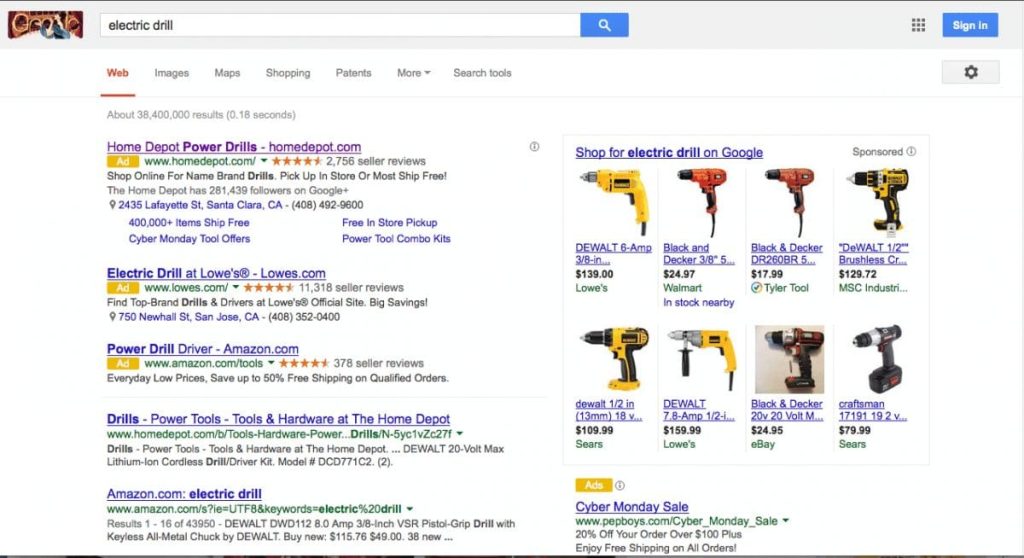
<p>You could be paying substantially more for products if you are searching through Google Shopping.</p> <p><a href="http://www.consumerwatchdog.org/resources/googlereport112513.pdf" target="_blank" rel="noopener">Consumer Watchdog issued a report today</a> that said Google’s “search monopoly” allows the company to charge higher prices on its shopping search engine. The organization’s tests found that consumers would have paid more for eight out of 14 items if they’d used Google Shopping rather than a competing Comparison Shopping Engine (CSE).</p>
Google’s Cyber Scam

Google’s Cyber Scam

<p><a href="http://www.consumerwatchdog.org/sites/default/files/images/googleshopping.png"><img class=" alignright size-full wp-image-2722" alt="" src="http://consumerwatchdog.org/wp-content/uploads/2013/12/images_googleshopping_large.png" style="width: 211px; margin-left: 5px; margin-right: 5px; float: right; height: 115px;" width="1200" height="654" /></a>If you're one of the millions of Americans shopping online today on "Cyber Monday," be careful. <em><strong>You can't trust Google Shopping to show you the best price.</strong></em><br /> <br />
Your Mobile Phone May Be Unlocked. Don’t Bother Cheering

Your Mobile Phone May Be Unlocked. Don’t Bother Cheering

<p class="bodytextragright"><span id="MNGiSection">Before the end of the year, the FCC and the wireless carriers will likely announce that mobile phones will be "unlocked," meaning customers theoretically can use them on a different carrier's network.</span></p> <p><span id="MNGiSection">But is that truly a gift to consumers, or a lump of coal?</span></p>
GOOGLE INC: Public Interest Groups Oppose Privacy Suit Settlement

GOOGLE INC: Public Interest Groups Oppose Privacy Suit Settlement

<p>Consumer Watchdog joined the Electronic Privacy Information Center (EPIC) and three other public interest groups on Oct. 16 in re-iterating their opposition to a proposed $8.5 million settlement in a class action suit against Google for privacy violations in the way it handled users' search data because proposed recipients of settlement funds don't represent the interests of the class.<br /> <br />
Consumer Group Says Comparison Shopping On Google Can Cost You Plenty

Consumer Group Says Comparison Shopping On Google Can Cost You Plenty

<p style="margin: 0.0px 0.0px 15.0px 0.0px; line-height: 23.0px; font: 14.0px Arial; color: #2c2d2e"><a href="http://losangeles.cbslocal.com/2013/11/27/consumer-group-google-shopping-results-up-to-67-percent-higher-than-other-price-comparison-sites/">Click here to listen to the audio of this radio news broadcast</a>.</p>
Why States Are The Big Winner In The $17 Million Google-Safari Settlement

Why States Are The Big Winner In The $17 Million Google-Safari Settlement

<p>On Monday, Google <a href="http://news.yahoo.com/google-pay-17-million-settle-states-safari-probe-195526846--sector.html">agreed to pay</a> 37 states to settle charges that in 2011 and 2012 it had ignored a key privacy feature embedded in Apple's Safari browser. As part of the deal, Google — while not admitting fault — has also vowed to stop using the code that lets it circumvent the controls.
Google Settles ‘Cookie’ Privacy Suit with N.C., 36 States for $17M

Google Settles ‘Cookie’ Privacy Suit with N.C., 36 States for $17M

<p><span class="dateline">Raleigh, N.C. — </span>Google on Monday reached a $17 million settlement with North Carolina and 36 other U.S. states as well as the District of Columbia over its circumvention of privacy settings for some Internet users.</p> <p>Google will pay $17 million to the states and make changes to how it tracks consumers’ Internet surfing under a settlement announced today, Attorney General Roy Cooper said Monday.<br /> The settlement involves Google;s use of "cookies" to track users' activity on some Safari web browsers between 2011 and 2012.</p>
Here’s A Chance To See How Your Privacy is Routinely Invaded

Here’s A Chance To See How Your Privacy is Routinely Invaded

<p>Have you heard about the outstanding documentary film <a href="http://www.imdb.com/title/tt2084953/"><em>Terms and Conditions May Apply</em></a>?  Directed by Cullen Hoback, it exposes what corporations and governments can learn about you based on how you use the Internet and your cell phone.<img class=" alignright size-full wp-image-2716" alt="" src="http://consumerwatchdog.org/wp-content/uploads/2013/11/images_tacma.png" style="width: 200px; height: 154px; float: right; margin-top: 5px; margin-bottom: 5px;" width="540" height="415" /><br /> <br />
Markey, Barton Bring Back Do Not Track Kids Bill

Markey, Barton Bring Back Do Not Track Kids Bill

<p><strong>It would extend digital privacy protections to teens 13-15</strong></p> <p class="google_elide">Sen. Ed Markey (D-Mass.) and Rep. Joe Barton (R-Tex.) aren't giving up on passing legislation to extend online and mobile privacy protections to teens 13 to 15. On Thursday, the privacy duo, along with Sen. Mark Kirk (R-Ill.) and Rep. Bobby Rush (D-Ill.), re-introduced the Do Not Track Kids Act.</p>
New Bill Would Curb Behavioral Targeting Aimed At Teens

New Bill Would Curb Behavioral Targeting Aimed At Teens

<p>Lawmakers in the House and Senate introduced legislation today that would impose new restrictions on companies' ability to collect data from children.</p> <p>The “Do Not Track Kids” Act would amend the Children's Online Privacy Protection Act by prohibiting Web companies from collecting personal information from teens under 16 without their consent. Currently, the law prohibits companies from collecting such data from children younger than 13 without their parents' consent.</p>