By Rob Nikolewski, MERCURY NEWS
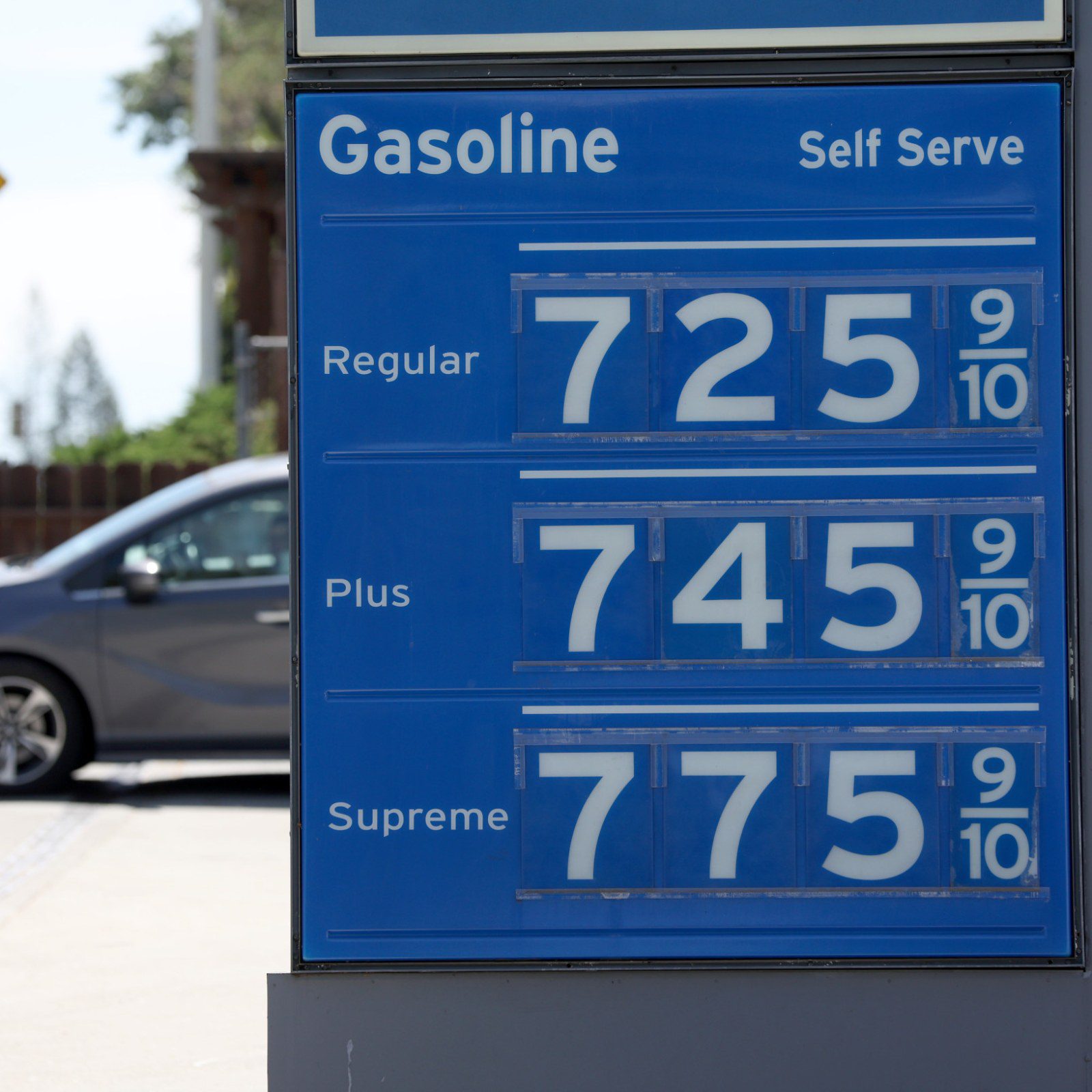
In a vote scheduled for Friday, the California Air Resources Board is expected to set stricter carbon intensity targets across the state for transportation fuels, including gasoline. If approved, the move is expected to increase prices at the pump but how much has become a matter of increasingly fierce debate.
Some point to projections of prices rising as much as 47 cents per gallon next year. Others warn with plenty of caveats that prices in 2025 could climb 65 cents, while Air Resources Board officials have tried to allay fears by saying that historically the program assigning carbon intensity standards accounts for just 8 to 10 cents of what consumers pay per gallon.
But regardless of where the number lands, the issue has become a combustible topic as a growing number of Californians struggle with the rising cost of living.
The meeting on Nov. 8 has put a focus on the board, known as CARB. Some critics say the process leading up to the vote has lacked transparency and, more directly, that the regulator is tone-deaf to the plight of motorists.
CARB officials have pushed back, saying the regulator is doing its job to reduce greenhouse gas emissions and help the state reach its ambitious clean energy targets while also keeping consumers in mind.
“Affordability is a guiding consideration in all our rulemakings,” CARB’s executive officer, Steven Cliff, said during a recent briefing with reporters. “We strive to balance affordability with other considerations, such as protecting public health and meeting legislative mandates.”
The timing of the vote coming right after the general election has also drawn criticism.
On top of all that, the proposed changes highlight a larger complaint from those who contend that provisions in what’s called the Low Carbon Fuel Standard skew too heavily toward biofuels produced by fossil-fuel companies.
What is the LCFS? And how does it affect gas prices?
CARB has proposed an overhaul to the Low Carbon Fuel Standard, a credit-trading program that requires transportation fuels in California to become increasingly less polluting over time to help the state meet its clean energy goals. These fuels include gasoline and diesel.
Created in 2011, the standard known as the LCFS sets carbon intensity benchmarks. Fuel producers that don’t meet the requirements must buy credits from those who do, thus providing companies an incentive to develop cleaner fuel options.
It’s been estimated the LCFS has issued credits worth more than $22 billion since 2013 and CARB touts that more than 31 billion gallons of petroleum have been displaced by low-carbon fuels.
The proposal before board members on Nov. 8 calls for raising the carbon-intensity reduction target from 20 percent to 30 percent in 2030 and then stepping it up to 90 percent by 2045.
But making the requirements more stringent affects the credit prices in the LCFS, which then ripples down to the price of fuels such as gasoline.
Back in September 2023, CARB staff released a 175-page impact assessment of the proposed stricter requirements. It included a table that projected potential increase in the price of gasoline of 47 cents per gallon in 2025 (and 59 cents for diesel and 44 cents for fossil jet fuel).
CARB officials have since backpedaled on those estimations.
Cliff told reporters on Oct. 25 the assessment included a caveat that the price of gasoline is complicated, takes a number of different factors into consideration and is “not intended to be an actual price at the pump. So we’re not predicting gas prices,” he said. “We don’t have the capability of that.”
Earlier last month, Danny Cullenward took a deep dive into the proposed amendments to the LCFS in a paper he wrote as senior fellow at the Kleinman Center for Energy Policy at the University of Pennsylvania.
The report examined a range of topics, including total price impacts. If LCFS credit prices reach their maximum allowed levels, “then retail gas prices impacts could be” 65 cents per gallon in the near term, 85 cents per gallon by 2030 and nearly $1.50 per gallon by 2035.
But in the next paragraph, Cullenward pointed out that LCFS credit prices “are fundamentally uncertain and could easily be lower” and said a rise in credit prices from about $60 (where they are now) to $100 per credit could translate to total retail gas prices going up 26 cents per gallon in the near term, 34 cents per gallon by 2030 and almost 60 cents by 2035.
In an interview with the Union-Tribune, Cullenward said the difference between his estimated total price impacts and CARB’s was primarily because the figures used in CARB’s assessment were based on 2021 dollars while his more recent calculations were based on 2023 dollars, which were higher due to the rate of inflation.
Cullenward emphasized that he’s not predicting rises of, say, 65 cents a gallon are coming.
“I don’t know where the LCFS credit market is going to go. … What I can tell you is there’s a big range and even the low end of that range is something we need to talk about,” he said. “I am not suggesting we hit the (credit price) ceiling and everything falls apart next year. But I do think even with modest price increases, those are numbers we ought to be able to have a sensible, adult conversation about.”
A climate economist and lawyer, Cullenward said he wrote the report to remedy what he saw as an information vacuum leading up to CARB’s meeting on Nov. 8.
“I shouldn’t be the one filling this gap with some basic analytics,” he said. “That should be coming from a regulator, from staff, that want to engage this issue responsibly.”
A win-win?
CARB officials emphasize the agency’s chief duty is that of a public health organization tasked with fighting air pollution. They say the proposal will lead to about $5 billion in health cost savings while helping fund infrastructure that will eventually reduce vehicle fueling costs in the long run.
“In this case, it’s a win-win,” Cliff said. “We get public health benefits, we reduce costs for public health, reduce health costs, we see lower costs of driving and we help turbocharge those investments in clean energy infrastructure that helps drive our zero-emissions future.”
That drew fire from CARB’s critics on the political right.
“It’s so easy for them to sit up on their pedestal and jack up gas prices by 65 cents a gallon,” state Senate Minority Leader Brian Jones, R-San Diego, said. “To add insult to injury, they’ve just called this price hike a ‘win-win.’ This isn’t just out of touch it’s a slap in the face.”
CARB planned to vote on the proposal in March but postponed it.
The Nov. 8 meeting will come three days after Election Day, leading some to suspect the vote was scheduled then to protect policymakers and Democrats who hold a super-majority in Sacramento from political fallout.
Some Democrats in the Legislature have also raised concerns about potential increases in gas prices.
“The optics are bad and the potential for consumers to pay more is horrible,” said Jamie Court, president of Consumer Watchdog, which questioned approving the proposed amendments because Court suspects fuel producers in California take unfair advantage of the LCFS.
“I think the oil refiners have every intention of ignoring the credit side and just adding whatever their costs are to a gallon of gas,” Court said, “and I think that would be devastating for the consumer.”
Other complaints
Beyond gas prices, the debate leading up to the vote has also highlighted more general criticisms by environmentalists and other groups.
They think CARB has given too much priority in the Low Carbon Fuel Standard to the production of biofuels, such as renewable diesel that is primarily made from crops like soybeans and canola oil, rather than emphasizing electrification in the transportation sector.
Critics also say the biomethane projects from dairies and landfills in the LCFS overstate their environmental benefits and the proposal sidesteps opposition they have to the credits that companies can receive when making hydrogen or electricity from fossil fuels.
Jim Duffy, a former manager of the LCFS program, sent a letter to CARB last month recommending “the Board seriously consider voting No on the amendments and direct staff to start over” next year.
But others say CARB should stay the course.
“Misguided efforts to preclude dairy participation in the LCFS program, eliminate avoided methane crediting or directly regulate dairy methane reduction will only force more dairy farms to consider leaving the state and taking their sustainable practices with them,” Sal Rodriguez, a dairy farm manager in Fresno County, said in an opinion piece at CalMatters.
Executive officer Cliff said CARB can make adjustments going forward and “nothing in this proposal would preclude us from doing future regulations to require emission reductions at dairy operations.”
Why not delay or make some changes?
The 12 members of California’s GOP delegation in the U.S. House of Representatives sent a letter to CARB last month, requesting a delay of Friday’s vote so that the Air Resources Board can “carefully consider how proposed amendments will affect low-income and disadvantaged populations throughout California.”
But Cliff said CARB can’t delay the vote or even make amendments to the proposal because according to the state’s Administrative Procedure Act, the agency has one year to finalize a regulation and the deadline is about to come.
“This process either needs to be finalized and move forward or we would have to start over with a totally new process,” which would take about two years to complete, Cliff said.
UC Davis economics professor James Bushnell said that absent the adoption of a tax on carbon, nobody has a precise idea what effect programs such as the LCFS have on gasoline prices.
“The trick is, such mechanisms need to try to simultaneously offset the cost impacts while also discouraging the use of higher carbon fuels,” Bushnell said in a post at the Energy Institute at the Haas School of Business. “Ultimately, if we want Californians to stop using gasoline, we are going to have to make it more expensive than the alternatives.”
Friday’s meeting will be held at CARB’s Southern California headquarters in Riverside, starting at 9 a.m. There are 14 voting members of the board, of which 12 are appointed by the governor, with Senate confirmation.