By Christy Gutowski, CHICAGO TRIBUNE
https://www.chicagotribune.com/2026/06/07/plastic-surgery-ayoub-sayeg-deaths
Dr. Ayoub Sayeg’s ads have an appealing ring to budget-minded consumers: “Most Affordable Plastic Surgery Center in Chicago. Period.”
His social media, website and occasional billboards offer discount prices for those seeking “confident curves,” including perkier breasts, flatter tummies and plumper butts.
Amid the promotional vouchers, financing options and before-and-after photos, potential patients are assured they are in safe hands. The board-certified plastic surgeon says on his website he has performed more than 45,000 procedures in his 25-year medical career.
“As an accredited surgical facility, we take extra steps for patient safety,” his website promises. “Your happiness is our mission!”
But a Tribune investigation has found eight of Sayeg’s patients – all of them women of color – died in a seven-year span shortly after their surgeries at 63 Laser & Skin Clinic, located in a predominantly Latino neighborhood on the city’s Southwest Side. Each surgery involved a tummy tuck and at least one other procedure, typically liposuction.
Six of the women died from complications of plastic surgery, according to medical examiner and coroner records, and two other patients overdosed on pain medication at home. The Tribune could identify only one other doctor in Cook County who, since 2015, had more than one patient die after performing plastic surgery. He had two patient deaths, medical examiner records show.
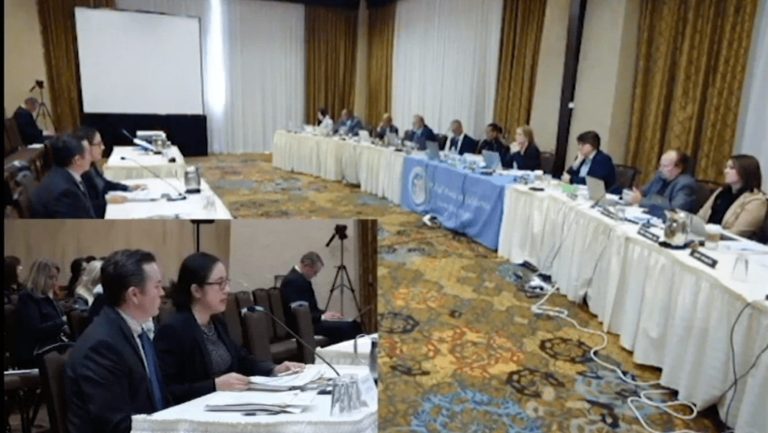
The Illinois Department of Financial and Professional Regulation, which licenses physicians, confirmed it initiated formal administrative proceedings against Sayeg after receiving a complaint in 2020 regarding Idalia Corcoles, a 39-year-old Chicago mother of four who died the previous year, shortly after undergoing surgery.
But more than five years later, Sayeg remains open for business with a clean medical license. Four of his patients have died since Corcoles, at least three while the state investigation has been pending, records show.
Corcoles’ family also sued Sayeg and his anesthesiologist in 2021. In late 2024, jurors delivered a $56 million verdict – with post-judgment interest, it rose to more than $66 million – even as the investigation continued.
In Illinois and in Michigan, where Sayeg lives and maintains another practice, court records show at least 15 patients or their estates besides Corcoles have sued him alleging harm, including a Michigan woman whose lawsuit accused him of causing “excessive grotesque scarring” including marking her skin with his initials during her 2005 breast reduction surgery.
Four of the plaintiffs, including that woman, agreed to financial settlements, and two lawsuits still are pending. Sayeg won one case at trial, four lawsuits were dismissed without costs to Sayeg and three plaintiffs voluntarily dropped their cases. One went to binding arbitration with a confidential outcome.
The eight women who died in Illinois after Sayeg’s surgeries were mothers who, in nearly all cases, struggled with obesity and other underlying health conditions. Relatives told the Tribune the women heard about his office-based surgical center through social media advertisements, family and friends, or simply while driving by on their daily routine.
The youngest was Melony Rose Thompson, a 31-year-old CTA conductor from Hammond, Indiana, who left behind two young daughters. Her sister, Michelle Thompson, told the Tribune in an interview that Melony underwent a “mommy makeover” in summer 2020 because she “wanted to feel better about herself.”
“She was nervous but excited,” said Michelle, who has a lawsuit pending against Sayeg on behalf of her sister’s estate. “We texted that morning. She’s like, ‘Pray for me that I’m going to be OK.'”
Hours later, after surgery, “medical staff was unable to (awaken) her, prompting them to call 911,” according to a medical examiner’s report, and she died that night at a hospital from “complications of abdominoplasty, liposuction, and fat grafting,” with obesity listed as a “significant condition.”
National medical studies have estimated the mortality rate for tummy tucks, the nickname for abdominoplasty, at one death for every 10,000 to 13,000 surgeries – making Sayeg a statistical outlier.
The Illinois Department of Financial and Professional Regulation declined the Tribune’s request to interview an official in its division of professional regulation, which licenses about 65,000 physicians and surgeons as well as many other professionals.
But in response to Tribune questions, the agency sent a statement that acknowledged “the timeline of this case has fallen short of our standards,” saying it would conduct an internal audit to assess what happened and “to prevent similar scenarios in the future.” It also pledged to seek changes to state law “to eliminate barriers” that contribute to lengthy investigations.
“Nothing is more important than protecting Illinoisans and the Department is committed to continued efforts to improve its processes,” the statement said.
In a 16-page complaint obtained by the Tribune through an open records request, the department’s medical prosecution unit accuses Sayeg of “breaching” his responsibility to Corcoles “according to accepted medical standards of practice,” alleges he caused her “actual harm” and states the doctor is “likely to cause harm to patients in the future.” The department recently amended the complaint to include similar allegations involving another patient death, records show.
The department is “currently pursuing the maximum penalty against Dr. Sayeg to bar him from returning to Illinois to practice medicine,” according to its statement.
Sayeg did not respond to multiple Tribune requests for comment, including via his attorneys.
In various court proceedings, he has defended his work as a skilled surgeon who complies with the standard of care for his patients. He has said that while every surgery has risks, he follows evidence-based practices for evaluating and treating patients. He is a longtime member of the respected American Society of Plastic Surgeons, which requires board certification and accreditation of members’ facilities.
“There’s a whole list of things that happen,” Sayeg said while testifying in the Corcoles civil trial. “One in a million, all right, whether it be irregular heart rates, whether it be strokes, whether it be heart attacks, whether it be death. These are incredibly rare. Do they happen? Yes.”
‘A great market’
Sayeg’s Chicago clinic is wedged between a Mexican restaurant and a residential building in West Lawn, a working-class neighborhood near Midway International Airport where nearly 87% of residents are Latino and the median household income is about $73,000.
His discount prices, as advertised on his website, are below the average fees listed in the American Society of Plastic Surgeons’ 2024 annual report. He also offers his patients financing options, working with multiple credit companies to provide more than $4.5 million in approved financing at his Chicago office alone, according to his website.
The 58-year-old surgeon actually lives not in Illinois but in Michigan, in an 8,500-square-foot home on an acre of land he bought in 2018 from former Detroit Lions head coach Jim Caldwell, public records show. The sale price was not made public, but the property had been listed at nearly $2.3 million.
In court proceedings, Sayeg has described a busy schedule of weekly travel between the two states.
His Michigan clinic, Your New Looks, which he bills as “Detroit’s most advanced plastic surgery center,” is located in the posh suburban community of West Bloomfield where the median household income is about $125,000 and less than 4% of the population is Latino.
But the surgeon had long eyed a different type of market for his services. In a 2007 Detroit Free Press article about Michigan’s then-dwindling demand for cosmetic surgery, Sayeg was quoted as saying: “Plastic surgery is huge in Latin America. It’s an underserved market here.”
Five years later he got his medical license in Illinois, and he opened his Chicago practice in 2013.
By his own acknowledgment, it was a financially stressful time.
A native of Kuwait who grew up in Canada, Sayeg earned his medical degree from the University of Toronto and spent four years in a general surgery residency in Washington, D.C., where he said he worked on trauma cases before deciding to pursue a specialty with fewer negative outcomes.
“It’s very hard to tell the family that you lost somebody,” he said in 2024 while testifying as a defendant in a wrongful-death lawsuit. “So I made a decision that I wanted to do something better. I wanted to transform. I wanted to be in a place where I didn’t have to deal with cancers or trauma or death.”
After a two-year residency and other training, he opened Sayeg Plastic Surgery Center in a Detroit suburb in 2002. Four years later, he became board certified in plastic surgery, a voluntary credential with rigorous training and testing requirements. By then, he had patented a breast augmentation surgical procedure, called PEBAM for short, that his advertisements characterized as revolutionary in its minimally invasive approach.
But business disputes, lawsuits and other financial issues arose in the years after he opened his practice, court records show.
In late summer 2002, Sayeg sued a doctor who he alleged had “forcefully evicted and ejected” him from a leased office space, later winning about $100,000 in damages. Sayeg sued two co-tenants in another medical building in 2005 alleging they had “stolen, embezzled, and otherwise deprived” him of medical charts, broke into his operating room, encouraged some of his patients to go elsewhere and threatened to “‘take down’ and financially ruin” his practice. The tenants denied the claims, countersued and accused him of installing hidden surveillance equipment throughout the leased premises, court records show.
In 2006, an arbitrator denied nearly all the claims on both sides, adding that their actions and “the expletives thrown around like confetti disturbed me no end,” court records show. “The charges and counter charges that have been made exceed anything I have ever heard between parties to a lawsuit,” he wrote. “I sincerely hope that your greed does not blind you in any further associations.”
In addition, five Michigan patients over the next six years sued Sayeg alleging he mishandled their treatment, leading in some cases to disfigurement, infection and medical intervention. Sayeg, who denied the claims, emerged from the court cases without a major financial loss, according to available court records.
When asked in a 2021 deposition if he had paid out money in earlier lawsuits, Sayeg said: “They were paid – they were not paid – lawyers fees were paid out. High, low, I don’t know how they did it, but I did not get any judgment against me, just a lawyer thing is how they did it.”
Court records show he reached a consent judgment with one Michigan woman who accused him of botching her breast reduction surgery. In her 2008 lawsuit, Jolene Usitalo alleged Sayeg gave her different-size breasts than she had sought, placed her nipples too close and “excessively high” and, in a shocking allegation, left her with “excessive grotesque scarring including the Dr’s initials.”
In an interview with the Tribune, Usitalo said Sayeg “carved his initials in my chest … underneath my right breast where the keyhole incision should be.”
“It was a couple weeks later, after I took off all the bandages, and I’m looking in my little handheld mirror, and I see ‘A and S’ and I’m like, ‘Oh my God. … He branded me,'” she told the Tribune.
In an affidavit filed in court, the doctor’s lawyers said the operation was “properly performed” and “without improper nipple placement or excessive scarring and certainly without the surgical placement of Dr. Sayeg’s initials.”
Usitalo told the Tribune she agreed to a settlement with Sayeg in 2012, fearing a trial where a judge or jury would see intimate photos of her body. The terms were for $40,000, court records state. Usitalo said she later paid another surgeon for breast implants and to remove the skin with the alleged scarring.
“It was just a total nightmare,” she said.
A 2011 joint tax return included as an exhibit in unrelated court records shows Sayeg reported about $270,000 in income to the federal government that year. But by 2013, an ongoing divorce, unpaid taxes, legal bills, loans and other obligations were taking a financial toll.
In a court filing seeking to have Sayeg’s then-wife removed from business accounts and to limit spending, his attorneys cited an estimated $142,000 in debt and said the doctor was “forced to obtain cashier certificates to pay for his business rent, his liability insurance, and IRS installment payments” and he “believes his staff will quit if he cannot make payroll in a timely manner.”
He faced additional lawsuits in 2013 and 2014 regarding alleged personal and business debts, all unrelated to patient care, eventually resulting in hundreds of thousands of dollars in financial obligations, records show.
In court documents, Sayeg has said he opted by then to close his Michigan practice because “everybody was fighting over all the (business) entities” in his divorce. After leasing office space for several months, he opened his practice again under a new name in late 2014 in Southfield before eventually opening Your New Looks in West Bloomfield.
Meanwhile, Illinois gave Sayeg a license to practice medicine in summer 2012. The next year, he set up his office-based surgical center at 63rd Street and Pulaski.
In a deposition he gave in 2023 in the Corcoles case, he said: “Chicago is a great market and I like working (there). … It’s a place I started after I got divorced and built myself back up.”
Deaths follow surgeries
Melony Thompson, the youngest of six children, grew up in Chicago’s south suburbs in a blended, close-knit family. She had worked for the Chicago Transit Authority since 2014, most recently as a train conductor on the Red Line, according to public records.
Michelle, 10 years her senior, told the Tribune her sister was a hardworking jokester and loving mother, often using her daughters as her models in the budding makeup artist’s social media videos.
She said her sister had sought plastic surgery because she “wanted to keep her curves but just look more toned.” Melony had researched Sayeg, her sister said, before choosing him for her 2020 surgery.
Board certified? Check. Accredited? Check. Clean medical license? Check. Google reviews? Glowing. But none of her research revealed the doctor’s earlier history, which by then included four patient deaths.
The first two, according to the Tribune’s review of medical examiner records, were Chicago women who overdosed on pain medications in 2016 and 2018 within days of their surgeries.
Blanca Esperanza Cuenca Agudo, 42, died within eight hours of leaving the clinic, according to her husband’s lawsuit, which he eventually dismissed without explanation. The medical examiner attributed her death to hydrocodone toxicity post elective cosmetic surgery, with liver disease as a significant contributing factor, records show.
Her family did not respond to Tribune requests for comment. They raised $5,000 after her death to send her remains to her native Ecuador to fulfill her “last wish,” according to a crowdfunding page.
The second death was Theresa Hood, 51, who died of combined drug toxicity after undergoing a tummy tuck and liposuction, according to a medical examiner’s report.
Angela Ashley, the oldest of Hood’s three daughters, described her mother in an interview as “everyone’s anchor” and said the former hair salon owner had been wanting to undergo cosmetic surgery for a while. “My mom loved her family, and at that point in her life she was just ready to start doing for herself,” Ashley said.
She told the Tribune her mother went to Sayeg after another plastic surgeon turned her down, citing medical history that included a high body mass index, or BMI.
Ashley said her mother had a high pain threshold after managing lupus, diabetes and other health challenges throughout her life. But after the surgery, she said, Hood could not urinate and was in such agony that she started alternating liquid morphine that belonged to another relative with her prescribed pain medications. She died three days after her surgery.
Ashley told the Tribune she wanted to sue over her mother’s death but she couldn’t find a lawyer willing to take on the case because of the morphine issue. She later wrote an online review criticizing her mother’s care but then was forced to delete it.
“I got an email from a lawyer saying that I was slandering his name and that if I did not take down my review I would be pretty much sued,” Ashley said. The letter, which she provided to the Tribune, disputed the review’s implication that Sayeg or his staff had advised giving Hood morphine, among other objections.
In March 2022, Sayeg did sue a former patient over comments the Plainfield woman posted on the Facebook group “Plastic Surgery Chicago” about her 2018 surgery and patient deaths, alleging she had harmed his reputation and cost him potential income. The two sides reached a confidential settlement agreement, according to court records.
Unlike the overdoses of Agudo and Hood, the next two fatalities involved patients who bled to death following their surgeries: Crystal Walker Keating and Idalia Corcoles.
Walker Keating, 47, died in November 2018, the same day she underwent a tummy tuck, liposuction, flankplasty and fat grafting of the buttocks, also known as a Brazilian butt lift.
Her only child, Michael Keating Jr., filed a wrongful death suit. At the civil trial, Keating described to a jury how his mother grew up on the city’s West Side but was living in Iowa at the time of her death. A patient advocate and former church gospel singer, she was quick to help others, including when she took in a friend of his who had no place to live, he said.
In his own testimony, Sayeg said Walker Keating had normal blood loss during the surgery, which took 5 hours and 20 minutes. The first sign of trouble came 15 to 20 minutes afterward, he testified, when his staff called him back into the room because Walker Keating had a high heart rate and her blood pressure was unstable. She was transported to a hospital within an hour but died that night.
Attorneys representing her estate at trial labeled Sayeg “Dr. Rush,” alleging he didn’t adequately clear her medically beforehand, combined too many procedures into one surgery and didn’t do enough to check for possible signs of bleeding. They also argued she should have been transferred to the hospital sooner.
The lawyers said Walker Keating wasn’t a good candidate for surgery because of preexisting health conditions including anemia, diabetes, hypertensive cardiovascular disease, fatty liver and obesity, with her weight at about 275 pounds, according to her autopsy.
As far as a preoperative workup, Sayeg testified her X-rays, blood work and EKG were normal. He argued that her bleeding must have begun at the hospital, as there were no signs of it when he checked at his surgical center.
Sayeg noted the vast majority of his patients have preexisting health conditions, including obesity.
“That’s part of your population,” he testified. “That doesn’t mean they’re contraindicated for surgery. Everybody’s a candidate depending on whether you weigh the risks and the benefits.”
A judge declared a mistrial in Walker Keating’s case in October 2024 after jurors were unable to reach a unanimous decision after two days of deliberations. The case was set for retrial, but attorneys instead agreed to nearly $1.1 million in settlements with the various parties, including the hospital and medical staff that treated her, court records show. Sayeg and his business entities were responsible for $470,000 of the total, court records show.
Michael Keating, now 28, testified at the trial about the sight of his mother, hooked up to a ventilator, in the hospital. At one point, the son said, he noticed “a big pool of blood” beneath her stretcher. When asked how often he thinks of her, the son replied: “Every single day.”
A $56 million verdict
Idalia Corcoles was the next woman to die, the morning after her tummy tuck and liposuction in November 2019.
She had lived in West Elsdon, a Latino neighborhood close to the clinic, and was married with three daughters, a son and, at the time, one granddaughter. The stay-at-home mom had met her husband, Alex, in Mexico years earlier in a public plaza where people traditionally gathered. He later followed her to Chicago.
“I was thinking of getting married, but she got ahead of me,” he told jurors when the family’s civil lawsuit went to trial. “She bought the rings and she gave them to me and I said ‘yes.'”
Her children, who also testified, remembered her as a doting mom who would wake up at 4 a.m. to press her daughter Judy’s high school Junior ROTC uniform, and the pride she showed when the eldest, Krystal, got an academic scholarship for college.
The youngest, Lizbeth, a fifth grader when her mom died, shared memories of the two building a sand castle and collecting sea shells while vacationing in Florida. She said her parents always held hands when out together. They were big on traditional Christmas decorations and opening their presents at midnight, and their birthday cakes were always homemade.
Corcoles arrived at Sayeg’s clinic early that November morning for her four-hour surgery. Later, in the recovery room, her heart rate at times spiked to a critical level – more than 200 beats per minute. Besides her high heart rate, she had low blood pressure and produced little urine despite being given several liters of fluids, records show.
She spent more than four hours in a recovery room before a staff member called an ambulance. Despite lifesaving efforts, including blood transfusions and surgery, Corcoles died at the hospital that next morning. Her death was attributed to “complications of abdominoplasty and liposuction,” the medical examiner found.
“We were so hopeful until her last breath,” her daughter Krystal Corcoles testified, describing how she followed the ambulance carrying her mother from the surgical center to the hospital, where a chaplain met her in the emergency room.
At the 2024 trial in the family’s lawsuit, plaintiff attorneys Brad Cosgrove and Craig Squillacecontended that Sayeg and his anesthesiologist ignored telltale signs Corcoles was bleeding and that, had 911 been called earlier, she would have lived.
“To call it substandard care may actually be giving it a compliment because it was so terrible,” Cosgrove said in his closing argument, according to a court transcript. “No human on earth should have been subjected to what Mrs. Corcoles was subjected to.”
The doctor’s attorney in both the Walker Keating case and Corcoles’ said the patients’ bleeding was caused by a serious blood-clotting condition known as disseminated intravascular coagulation, or DIC, which can cause uncontrollable bleeding and organ damage. The attorney said the condition is unpredictable, unpreventable and not caused by or the fault of the surgeon.
“Ms. Corcoles unfortunately developed DIC very early on during this surgery,” attorney Patrick O’Connor told jurors in that case. “And it wasn’t due to negligence, it wasn’t due to something that was done wrong, and sadly, once that occurred, her prognosis, she had a greater than 50 percent chance of passing away.”
The anesthesiologist, also a defendant in the lawsuit, testified she repeatedly asked Sayeg about possible bleeding because of the patient’s vitals in the recovery room. The anesthesiologist said she also asked him whether the patient should be transferred to a hospital but she said Sayeg insisted there wasn’t much blood loss during the surgery.
Sayeg, who had a second surgery that day, testified he did not physically examine Corcoles in the recovery room. The surgeon told jurors the anesthesiologist came to him “at least once” asking about possible bleeding and she did not need his permission to send Corcoles to the hospital. “Again, I was in surgery,” he testified. “(The anesthesiologist) is responsible for the post-operative care.”
In his earlier deposition in the case, Sayeg said the surgery “went amazingly well,” saying he is unclear what later happened at the hospital, which was not a defendant in the lawsuit. “A lot of unanswered questions,” the doctor said in his deposition.
A jury ultimately delivered the $56 million verdict against Sayeg after deliberating for about three hours. That includes the anesthesiologist, whose portion was capped at $1.1 million because of a pretrial agreement.
Plaintiff attorneys made an issue of Sayeg’s busy schedule as he flew back and forth between Michigan and Illinois. In various court proceedings, Sayeg has estimated he performs up to 20 surgeries each week in Chicago and another half-dozen in his home state. Sayeg said he is in surgery “four to five” days a week and performs a tummy tuck “pretty much” every day he operates, with up to 200 a year in Chicago alone. He does up to 60 liposuction procedures a month, totaling between 700 to 1,000 annually, the surgeon has estimated.
Illinois does not regulate the number of daily surgeries that a physician may perform, but such restrictions aren’t unheard of. In Florida, a spate of deaths related to Brazilian butt lifts led to new regulations that include a limit on how many of these procedures plastic surgeons may perform daily.
Medical experts the Tribune interviewed said there isn’t a set standard for what BMI might disqualify a patient for a procedure or the acceptable number of surgeries in a week, as too many variables are at play and every patient is unique.
Some surgical decisions are in a gray area and the surgeon’s personal threshold for risk comes into play, said Dr. Heather Faulkner, a board-certified plastic surgeon and associate professor in the plastic surgery division at Emory University School of Medicine in Atlanta.
“You’re not going to find a book that says always operate on this patient or don’t on that patient. … We’re talking about surgical judgment and assessing a patient’s risk,” said Faulkner, who also serves as chair of the American Society of Plastic Surgeons’ patient safety committee. “There is some nuance to it. It’s not so cut and dry. Qualified surgeons understand that being up to date with the latest evidence and taking the time to know your patients’ risk factors help to guide assessment, as does experience.”
‘I fell to my knees’
Melony Thompson died in July 2020, less than eight months after Corcoles. Because of the pandemic, her family could not be with Thompson at the hospital, but her sister said she checked in with the doctor there every hour.
“They said, ‘We did everything we could but she passed away,'” Michelle Thompson said. “I fell to my knees. I just couldn’t believe it.”
The lawsuit she filed on behalf of her sister’s estate is still ongoing. It alleges Sayeg “unsuccessfully performed a series of in-office, ill-advised, complicated, elective cosmetic surgical procedures” on Melony Thompson, who according to a medical examiner’s report was obese at about 280 pounds. The same anesthesiologist as in the Corcoles case also is a defendant in the lawsuit.
“Our expert’s opinion is Melony was not a candidate for this surgery,” attorney Ted Stacy told the Tribune, citing an exhibit submitted in the case that alleged her obesity made her “high risk for the planned operation.” “Her BMI was too high,” Stacy said. “In his opinion, she should have been counseled to go to weight loss (treatment) and then have the sculpting surgery.”
Thompson suffered an “irreversible comatose state of being, blood loss, and organ damage” that led to her death at the hospital later that same night, according to the lawsuit. Sayeg’s attorney in the Thompson case did not respond to the Tribune’s requests for comment.
Not all of the eight patient deaths resulted in lawsuits. The Tribune learned of Hood’s death and three other cases through public records requests to the Cook County medical examiner and local county coroners for any documents that mentioned plastic surgery.
The deaths of Sharon Israel, 49, of Round Lake, and Zoraida Valdez, 54, of Glenview, both were attributed to complications of surgery, records show. Valdez’s family chose not to be interviewed regarding her October 2021 death. But Israel’s stepdaughter described a harrowing day of surgery earlier that year, on April 14.
“I talked to her right before she went into the room,” Yacarah Israel told the Tribune. “She called me and said, ‘I love you.’ She sent me a picture of her in her hospital gown and she was like, ‘I’ll talk to you later.’ And that was the last time I talked to her.”
Israel said the clinic didn’t OK her stepmother for release until the evening and her father and younger brother didn’t get too far down the road with her before having to pull over and call 911.
Public records show an ambulance was called at 8:12 p.m. to help an unconscious woman at Interstate 290 near Harlem Avenue. She was pronounced dead at a nearby hospital at 8:48 p.m. Besides complications of plastic surgery, hypertensive cardiovascular disease was listed as a “significant contributing factor to death,” the medical examiner found.
Similar to other families, Yacarah Israel said she has many unanswered questions.
“For so long, I wanted people to know this is happening,” she said through tears. “I felt like nobody did anything, and then we found out other people were dying and I wanted other people to know this is serious.”
The eighth and final death the Tribune found was a 55-year-old Naperville woman who died in July 2023, the morning after Sayeg performed her tummy tuck and flankplasty, according to public records. Her cause of death was listed as abdominal wall hemorrhage due to surgery, with obesity a contributing factor.
In a Tribune interview, one of her daughters said her mother passed out while preparing to return to Sayeg’s clinic to check on her weak condition. The daughter said she called 911.
“Once we reached the hospital, in about 15 minutes, they declared her dead, that she was no more,” said the daughter, who asked that the Tribune not publish her mother’s name.
National accreditation experts told the Tribune roughly half of U.S. states have some form of mandate for accreditation or inspection of office-based surgery centers such as the one Sayeg operates. Illinois is not among them.
The legal entity behind Sayeg’s Chicago surgery center, called Anti-Aging Surgical Care, is currently accredited by the Oakbrook Terrace-based Joint Commission, a voluntary process that includes on-site evaluations. The organization declined to answer specific questions from the Tribune about the clinic, citing confidentiality.
In a deposition in the Corcoles case, Sayeg said a different accreditation group – now known as QUAD A – had placed his facility on probation around 2022 for a couple of months because of a patient’s death. “What happened during the probation?” a lawyer asked Sayeg. “Nothing,” the doctor responded. “We just continued operating.”
Besides the litigation surrounding some of the death cases, four other Chicago-area patients have sued Sayeg between 2018 and 2023 after accusing him of causing nonfatal injuries during their tummy tucks or breast surgeries. He won one case at trial, two were voluntarily dismissed and never refiled, and one ended in a settlement.
A jury sided with Sayeg in June 2024 in the case of a Chicago mother of five who sued for at least $5 million in damages alleging negligence after she suffered skin necrosis, sepsis, deep vein thrombosis and a pulmonary embolism following her 2018 tummy tuck and liposuction. She spent 12 days in the hospital, including the ICU, according to her trial testimony.
Her attorneys argued during the trial that because the woman was morbidly obese, weighing about 270 pounds, Sayeg exposed her to “an unreasonable risk of harm” by performing the surgery.
Sayeg’s attorney said the patient, who signed lengthy consent forms, understood the risks and was medically cleared by her primary care physician for surgery. He noted Sayeg sent her home with medication, compression boots and instructions to avoid clots, and treated her in several follow-up visits. Sayeg again testified, portraying himself on the stand as a caring physician who gives his cellphone number to his patients so he is easily available to them.
The settled lawsuit was brought by a suburban woman who alleged Sayeg failed to properly diagnose and treat an infection following her May 2020 surgery. She declined to comment to the Tribune, citing a nondisclosure agreement. The terms of the settlement were not public.
Her sister, Angelica Bonilla, told the Tribune she was the one who cared for the woman during several weeks of recovery during the pandemic.
“I’m grateful that we weren’t burying her,” Bonilla said in an interview. “She has permanent scars, both emotionally and physically, but at least we have her here.”
Slow and secret
In Illinois, complaints about physicians go to the Department of Financial and Professional Regulation, which also reviews information provided by hospitals, insurance companies and courts.
If the department finds the doctor’s alleged conduct may have violated the Illinois Medical Practice Act, the agency opens an investigation. Possible violations include unprofessional conduct, impairment, deviation from standard of care, misleading advertising and violating patient confidentiality. In the most serious cases, department lawyers file a complaint containing formal administrative charges against the doctor. The case is heard before an administrative law judge, who holds a hearing and makes a recommendation regarding discipline.
The Tribune confirmed through a public records request that the department opened an investigation into Sayeg sometime in 2020 after it learned about Corcoles’ death. A department investigator interviewed Sayeg in January 2021, records show.
In the department’s 16-page written complaint, state regulators allege Sayeg failed to obtain medical clearance for Corcoles, failed to evaluate and examine her in the recovery room and proceeded with another surgery while she was in an unstable condition. He also failed to transfer her to the hospital in a timely manner, they wrote.
The complaint was recently amended to include allegations involving Walker Keating’s care. It alleges Sayeg failed to properly control and diagnose her bleeding and failed to transfer her to a hospital in a timely manner.
The chief of the department’s medical prosecution unit has recommended Sayeg’s license be “suspended, revoked, or otherwise disciplined,” records show. Other disciplinary options include a reprimand, probation and fines. Following a formal hearing, the administrative law judge’s recommendation for discipline goes to the Illinois Medical Board, which then makes a recommendation to the head of the agency for a final decision.
But, some six years after the state received the complaint, the department confirmed its investigation has yet to advance to a formal evidentiary hearing. Sayeg’s license remains in good standing. The civil suit Corcoles’ family filed in March 2021 took less time to resolve.
The next status hearing in the state investigation is scheduled for Monday.
Carmen Balber, executive director of Consumer Watchdog, a California-based nonprofit that advocates for patient rights, said physician investigations in all states take far too long to keep patients safe.
“That problem is really compounded by the fact that these investigations remain completely secret until some sort of (formal) accusation is filed,” Balber said. “We’ve unfortunately heard too frequently that when physician investigations drag on in secrecy, additional patients are harmed in that lag time.”
In statements to the Tribune, the IDFPR noted matters involving patient harm or death “require careful evaluation of medical, legal, and evidentiary issues” but acknowledged its handling of the Sayeg case failed to meet its standards.
The department said it has made “significant process improvements over the last several years, and it will continue to examine its processes through its formal comprehensive internal audit and through continuous review.”
It also “will seek future legislative changes in order to eliminate barriers that contribute to extended timelines,” such as to allow certain civil judgments to serve as grounds for discipline without requiring full administrative proceedings, it said.
In Illinois, confidentiality laws prohibit the department from disclosing complaints against physicians to the public until it files formal administrative charges or takes disciplinary action. Any prior action is public information, and consumers may look on the department’s website to see whether prior discipline and restrictions were imposed on a physician’s license.
But in Michigan, where licensing regulators are also investigating Sayeg, basic information about complaints is available as a public record regardless of the status of the investigation.
The Michigan Department of Licensing and Regulatory Affairs provided basic information dating back to 2004 that shows six people have filed complaints against the surgeon. None involved death. Most recently, a Michigan woman and her mother complained to the state last year regarding their respective surgeries, these records show, with the daughter writing: “He is a hack job surgeon who should not be practicing medicine.”
Dari Brown, 47, of White Lake, Michigan, alleged in her complaint that Sayeg botched her May 2024 breast surgery. Her mother’s complaint alleges she had to pay another plastic surgeon thousands of dollars to “make things right” following a face and neck lift surgery she said Sayeg performed in April 2024.
In a Tribune interview, Brown said the state licensing department told her in early 2025 that its investigation may take up to two years. Brown said she also wrote a scathing online review in an effort to ensure “that no one ever has to go through what I went through and, you want me to be honest, I hope he loses his license and can never practice again.”
As these licensing complaints work their way through the system in Illinois and Michigan, lawyers in the Corcoles case are still in court fighting to collect on the multimillion-dollar judgment. Thompson’s lawsuit has a tentative trial date later this fall, and another lawsuit against Sayeg is due in court Tuesday.
In that case, a woman alleged she needed reconstructive surgery after Sayeg injected her lips in 2024 with a filler contraindicated for that use. Sayeg performed the procedure at a Schaumburg facility he had been affiliated with at the time, records show.
Meanwhile, Sayeg continues to welcome customers to his Chicago clinic.
According to his website, he averages more than 600 appointment requests a month from potential patients inquiring about a nip, tuck or lift.