By Alejandro Lazo, CALMATTERS
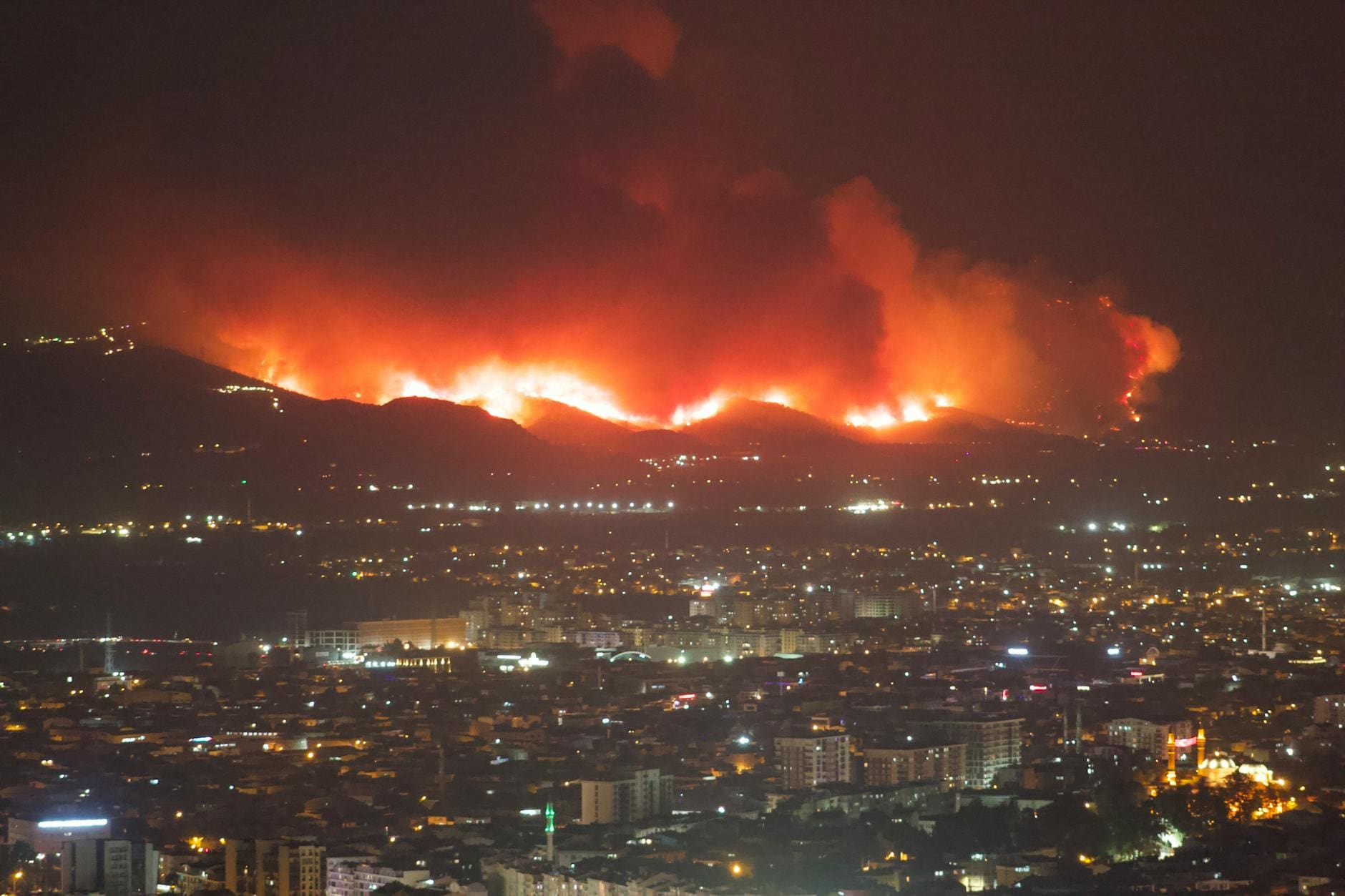
An explosion rattled windows across nearby neighborhoods. Orange columns of flame shot like blowtorches out of stacks and pipes, uncontrolled.
The incident that shook Chevron’s El Segundo refinery last week once would have prompted a federal investigation. Not anymore.
As the Trump administration moves to weaken the U.S. Chemical Safety Board, California still hasn’t said whether any agency, department or authority will take charge of a comprehensive investigation when a refinery erupts — something that’s happened twice this year.
Separately, in response to fears over higher gas prices, Gov. Gavin Newsom and state lawmakers have opened the door to more drilling, and state agencies have delayed, or moved to loosen, new oversight measures.
“It does raise the issue of who’s watching the refineries,” said Jamie Court, president of Consumer Watchdog. “They’re the most dangerous manufacturing facilities we have in our communities.”
Scholars and engineers as well as local agencies and fenceline communities have seen the now-inactive chemical safety board as a vital source of information into the causes of major incidents at refineries. The independent federal agency “was the gold standard for investigations of these kinds of incidents,” said Greg Karras, an environmental advocate and independent consultant.
But the Trump administration has argued that the board “duplicates substantial responsibilities” of other agencies. In President Donald Trump’s first term, the White House proposed eliminating the board; in this second term, executive branch officials have again proposed to zero out its budget.
The California Environmental Protection Agency is not leading a broad, multi-regulatory investigation after the Oct. 2 explosion. Instead, says CalEPA spokesperson Diana Ibrahim, the agency is “ready to support” the El Segundo Fire Department, which will lead a safety review.
Other state, regional and local agencies are investigating for their own purposes — a specialized unit of the California Department of Industrial Relations for worker hazards, the South Coast Air Quality Management District for pollution and the California Energy Commission for fuel supply — while Chevron runs its own internal review.
“It’s quite siloed,” said Earthjustice attorney Oscar Espino-Padron. “It’s often difficult to point to one body that’s really helping to coordinate and compile all of the necessary information.”
Earlier this year, an explosion at the Martinez Refinery, owned by PBF Energy, injured six workers and caused a shelter-in-place order. The Martinez and El Segundo incidents are the latest in a string of nearly a dozen major refinery explosions and fires in California over the past decade.
Some lawmakers and advocates are frustrated that the state has yet to get ahead of the problem.
“A fire in El Segundo has to happen for us to … wake up?” said state Sen. Lena Gonzalez, a Democrat from Long Beach whose bill to create a statewide standard for refinery air-quality monitoring was vetoed by Newsom last year. “It’s just so ridiculous.”
Watchdogs said to struggle reining in refineries
State and local agencies that launched investigations after last week’s fire have struggled to enforce refinery rules in the past, according to observers.
In the five years leading up to the explosion, the South Coast Air Quality Management District’s inspectors issued 46 notices of violation to Chevron in El Segundo. The most recent, issued July 30, alleged that the refinery failed to properly control the burning of excess gases at a piece of equipment related to its Isomax unit, which uses hydrogen, heat and pressure to break down heavier oils into lighter fuels like jet fuel. That’s the same part of the refinery that caught fire last week.
That notice is not yet finalized, a process that can take months or years. Espino-Padron, the Earthjustice attorney, said the air district’s oversight is often opaque, with residents having no easy way to tell when or how a notice of violation is resolved. Penalties also tend to be minimal, he said.
“The reality is there isn’t enough personnel to really provide adequate oversight of these operations,” he said. “What you see is not significant, robust enforcement.”
Rainbow Yeung, a spokesperson for the South Coast air district, rejected criticisms of the district’s inspection practices, enforcement and transparency. Yeung said the district is coordinating with other agencies on possible enforcement actions “with an eye toward protecting the public going forward.”
At the Chevron facility over the last decade, CalOSHA opened 18 accident and complaint inspections, eventually issuing nearly two dozen violations. The most recent CalOSHA investigation began on Sept. 11.
Garrett Brown, a retired employee of the agency, said that the inspection teams are short staffed. The agency’s ability to investigate is “compromised,” he said, in part because of recent turnover.
Denisse Gomez, from the Department of Industrial Relations, says that Cal/OSHA “has consistently carried out its duties” in responding to refinery incidents and “continues to strengthen its specialized workforce through active recruitment and training to protect workers and uphold California’s nation-leading refinery safety program.”
Safety standards face rollbacks
California has some of the nation’s toughest refinery safety rules because of two earlier explosions – one in 2012 at Chevron’s Richmond refinery, and another in 2015 at ExxonMobil in Torrance. The rules are built around the concept of process safety, which requires refineries to identify and fix hazards before accidents occur and to involve workers directly in investigations when they do. The system is designed to prevent the kind of cascading failures that have caused refinery explosions in the past.
But after the Western States Petroleum Association sued to block the rules, calling them burdensome, CalEPA and other state agencies quietly settled the suit. Unions and advocates say revisions to two regulations prompted by that settlement could weaken key safeguards.
The agency is updating the accidental release program rule for refineries and has yet to finalize those revisions. A companion rule at the state’s workplace safety agency is unchanged, for now; regulators are proposing to update the rule next year.
WSPA spokesman Jim Stanley did not comment on the settlement or process safety regulations specifically, but he argued that California refineries follow some of the industry’s strictest rules.
“From CalOSHA to local air districts to the California EPA, refiners work closely with regulators at all levels of government and our partners in labor to minimize the risk of accidents, keep workers and communities safe, and comply with environmental standards,” he said.
But Mike Smith, chair of the United Steelworkers National Oil Bargaining Program, said that the heart of refinery safety is having experts on site who can fully understand what’s happening inside the plant.
“Obviously, any weakening of safety regulations in the refining sector is not good,” he said.
Smith said that the rules have been under threat after the union was excluded from settlement negotiations between industry and the state over those protocols.
“The foundation really is employee participation,” Smith said. “The experts in the plants playing a role.”
The debate over those revisions comes as California’s political priorities shift—from tightening refinery oversight to keeping fuel flowing.
California eases up on oil
In an effort to lower gas prices and keep up with growing energy needs, California’s Democratic leaders have softened their stance toward the oil industry this year. For years, Newsom blasted refiners for high gas prices and promised to phase out drilling. Faced with the threat of refineries closing, potentially imperiling supply and pushing up prices, he too has changed course.
In 2024, two days after signing a measure aimed at pricing and maintenance schedules, Phillips 66 announced it would shut its Los Angeles refinery by the end of 2025, citing doubts about the sustainability of California’s market. In April, Valero said it would close its Benicia refinery next year, blaming a challenging regulatory environment.
Last month Newsom signed a bill that opened the way for new wells in Kern County. At the same time, the Energy Commission slowed implementation on many of the measures Newsom had previously pushed, such as ones on fuel inventories, resupply after outages, refinery maintenance and a long-promised price-gouging penalty.
Critics argue those moves have left the state more exposed to price spikes in the wake of the El Segundo fire and without strong tools to steady supply or hold refiners accountable. That’s “very dangerous in moments like this,” said Court of Consumer Watchdog.
Stanley, the spokesman for WSPA, said the refinery rules and other measures were impractical.
Following the fire, Chevron made adjustments to its operations to ensure fuel supply to Southern California, Reuters reported. Chevron spokesman Sean Comey told CalMatters that the refinery paused the flow of outbound product pipelines from the refinery the night of the incident, but restarted them after three hours.
The Energy Commission has said it is focused on keeping fuel supplies steady and prices down. But in a key report published this summer, commissioners warned that years of under-investment and deferred maintenance have created “safety and reliability challenges” at aging refineries. The report urged the state to stabilize fuel supplies through a mix of legislative and regulatory steps — including the postponing of rules to stave off further closures.
Niki Woodard, a spokesperson for the California Energy Commission, said the El Segundo fire is expected to hit jet-fuel supplies harder than gasoline, with jet-fuel prices jumping about 30 cents Friday and and negligible changes at the pump in the wake of the incident.
Though prices at the pump have barely moved, some experts warn that the state’s effort to keep fuel affordable may be coming at the expense of safety. Environmental consultant Karras said the state should view refinery safety as an economic issue.
“The state’s refining fleet has gotten to the point where it just can’t keep blowing itself up without starting to have to import gasoline,” he said.
With the federal government furloughed and Trump’s newly passed budget moving to permanently wind down the U.S. Chemical Safety Board, Karras said state leaders could still assemble a strong independent investigation into the El Segundo fire by hiring furloughed or former chemical safety board experts.
“There’s a tremendous amount of experience and expertise to do an investigation if state leadership had the political will,” he said.