Trump has called climate change “the greatest con job ever perpetrated on the world.” His Department of Energy is acting accordingly by canceling lots of awards for Carbon Capture and Storage (CCS) and Direct Air Capture (DAC) projects purportedly removing carbon gases from industrial smokestacks or the air—including four so far in California. That could be doing California a big favor.
This year, the DOE canceled hundreds of awards across the U.S. worth more than $11 billion in two tranches. The first tranche was worth over $3.7 billion in taxpayer funds. The demonstration projects primarily included funding for CCS and decarbonization initiatives. California losses included: Calpine Sutter CCS (half of a $540M grant for two gas-fired power plants). The second tranche of project grants worth $7.5 billion snagged California-based CarbonCapture Inc. ($16M, DAC), Aera Federal ($2.8M, DAC), and Chevron ($3M, DAC in Kern County). More cuts may be coming.
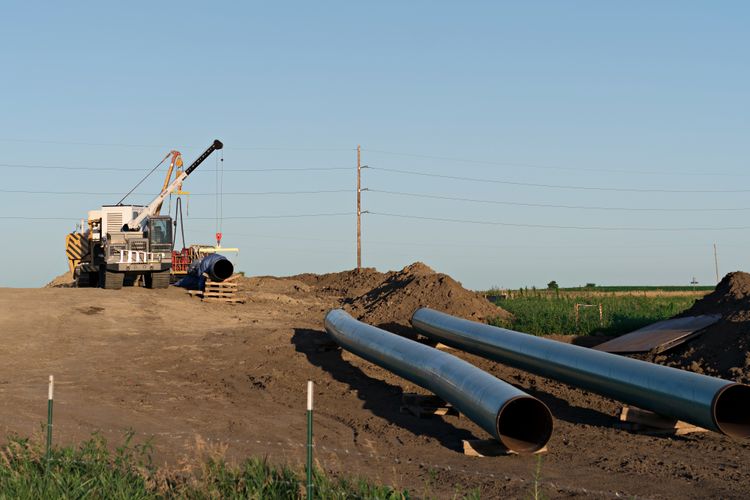
But Newsom backs “carbon management” as a “critical pillar of California’s world-leading efforts to cut climate pollution.” More than a dozen such polluting carbon capture projects are now underway in California (including from oil giant California Resources Corp. whose project may be at risk under Trump). CCS needs stand-alone pipelines to transport compressed carbon—a potentially lethal odorless asphyxiant—to burial in geologic formations. In the Bay Area, a 45-mile long pipeline is already proposed.
In practice, though banned in California, the U.S. oil industry’s primary application for the carbon is to push hard-to-reach oil out of the ground. The broader application of CCS technology is little more than bubblegum and Scotch Tape that comes with enormous costs in public and environmental health. After decades and billions spent, most projects underperform or fail, capture less CO₂ than advertised, and can emit more carbon overall due to fossil fuel energy use and leaks—amounting to oil-and-gas greenwashingfueled by subsidies.
If a pipeline carrying the compressed carbon bursts, the gas displaces oxygen and can injure or kill people, stop cars, and stymie emergency response. The U.K. simulated what the cloud from a rupturing compressed carbon pipeline would look like. You can watch it here. In California, Newsom signed SB 614 (Stern) that lifted a partial moratorium on such pipelines to carry carbon without a two-mile setback advocates demanded while leaving the decision to add an odorant to the Fire Marshal—despite a plea from environmental advocacy groups and Consumer Watchdog that Newsom veto the legislation.
In 2020, the hamlet of Satartia, Mississippi experienced such a carbon pipeline rupture less than half a mile away. Residents could smell the gas due to its contamination, but that didn’t help. Several hundred people were evacuated and at least 45 people were hospitalized, according to NPR. Symptoms included convulsions and unconsciousness. Luckily, no one died. But cars stalled and emergency response vehicles were hobbled. “Even months later the town’s residents reported mental fogginess, lung dysfunction, chronic fatigue and stomach disorders,” reported the Huffington Post. “They said they have trouble breathing, afraid it could happen again.”
An oil producer owning 14 oil fields in Mississippi, Texas, and Oklahoma was the pipeline owner selling CO2 to other producers using it to push more oil out of the ground, according to the Huffington Post. The company had already been responsible for two other blowouts in Mississippi. One required the evacuation of homes and the other befouled the air for six weeks with unsafe levels of carbon gases.
Let’s see if Trump can save us. If Trump can put a stop to oil company CCS projects and the pipelines the technology demands, he’ll be doing California a favor that Newsom, in his current appeasement of the oil industry, just won’t do.