Fort Worth Star-Telegram (Texas)
FORT WORTH, TX — Exxon Mobil might soon learn if it’s possible for a corporation to earn just too much money.
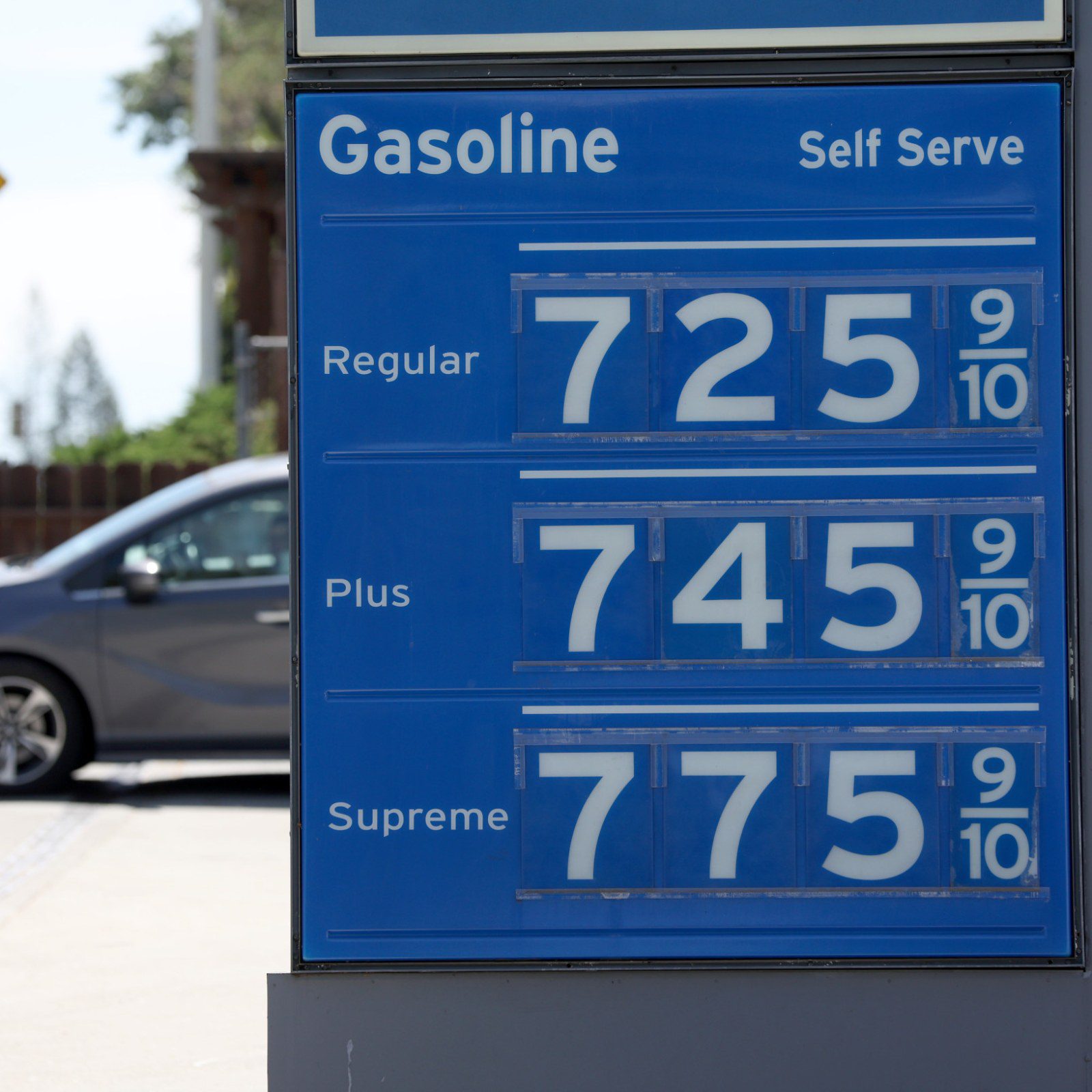
If you’re paying $3 per gallon to fill up your Chevy Suburban you might think oil companies are making too much. But if you’re a shareholder, you might believe the more the better.
The latest flareup over the contentious question of energy company profits occurred Thursday, after Exxon Mobil, based in Irving, Texas, announced $8.4 billion in net profit for the first quarter. Although that fell short of Wall Street’s expectations, and even though Exxon Mobil made more money in its previous two quarters, it didn’t help that the profit report came at a time when motorists are feeling great pain at the gasoline pump.
The profit report also came shortly after the unveiling of a nearly $400 million retirement package, or $141,000 a day, for Exxon‘s former chief executive Lee Raymond.
“It’s very hard to defend (the huge profits) at the bumper-sticker level,” said Dan Short, dean at Texas Christian University’s Neeley School of Business, who disclosed he owns a modest holding of Exxon stock.
“But if you take a step back, and look at it from an economic perspective, it’s impossible for a company to earn too much money,” Short said. “It means they’ll have money for exploration, maintaining inventories.”
Talk continued to circulate in Washington of measures designed to reign in energy industry profits.
Sen. Charles Grassley, a Republican from the ethanol-producing state of Iowa, said his colleagues are concerned about the “record profits and significant executive compensation in the oil and gas industry.” All this amid mutterings of a possible windfall profit tax of the sort pushed by President Carter 26 years ago.
One proposal would have the five largest oil companies pay an additional $4.3 billion in taxes. “I want to make sure the oil companies aren’t taking a speed pass by the tax man,” Grassley, quoted by The Associated Press, said. President Bush also said the government will investigate any reports of price-gouging.
Exxon Mobil has not been standing idle. It has run full-page ads in national newspapers saying that some of the profits would be plowed back into exploration. And other companies in other industries have recorded far higher profit growth on a percentage basis than Exxon‘s 6.7 percent.
“We sympathize with consumers paying high gasoline prices,” Mark Boudreaux, a company spokesman, said. “We are trying to help public policymakers understand what makes prices high.”
Consumer groups still call it profiteering.
“The extreme run-up in pump prices since the beginning of April isn’t even reflected here,” said Judy Dugan of the nonprofit Foundation for Taxpayer and Consumer Rights. “It will almost certainly push profits for Exxon and other refiners to yet another record. The companies need to be held responsible for their excessive refinery profits and their tight control over refinery output, which allows them to get away with this pricing.”
Dugan insists that Big Oil is different from other industry groups dotting the capitalistic landscape.
“These companies have broken the law of supply and demand with their cartel-like behavior at the refining end,” Dugan said.
A new study by the Federal Reserve Bank of Dallas suggests the picture is more complicated.
“In a market economy, oil producers, just like the makers of soft drinks and computers, respond to higher prices and expand capacity and output,” wrote Stephen Brown and Richard Alm. Unfortunately, these oil companies deal with countries that exercise state control over their economies or are politically unstable and corrupt. As a result, decisions to expand oil exploration and production are skewed by garbled economic signals, bureaucratic red tape, and uncertainty that leads to greater risks and higher costs.
To Mel Fugate, an assistant professor at Southern Methodist University’s Cox School of Business, says justifiable opinions on Big Oil’s profits can be all over the place.
“From a capitalist perspective, it’s great — they can’t make too much money. And they should position themselves to take advantage of these opportunities. No one was trying to help these companies when oil was $10 a barrel. Why penalize them when it’s over $70?” Fugate said.
“Shareholders, whose stock is appreciating in value, might well ask what management is doing with the tens of billions the companies have earned. As a shareholder, you can’t earn too much. Some companies declare a special dividend, but I haven’t heard any mention of that.
“Then you have the consumer, who can argue, `Yes, you CAN make too much.’ Big Oil is an oligarchy… You don’t need a Ph.D. to realize gas is over $3 a gallon again and it matters, that people suffer because of it.”
If anyone is to blame under the current system, it’s the political leadership in Washington, which keeps talking about ending the nation’s reliance on oil but then downgrades the issue when pump prices head south again, he said.
“Government shouldn’t be pointing fingers at the industry,” the SMU management professor said. “It should be looking in the mirror. Frankly, they’ve fallen down in their leadership responsibilities, Democrat or Republican, by allowing us to stay so heavily dependent on oil. It’s been nothing but lip service.”
A windfall-profits tax would prompt Exxon Mobil and other oil companies to reduce investment in exploration and discovery, Bloomberg News quoted Raymond as saying last year. What would result would be reduced supplies and higher prices, Raymond warned.
That said, there’s no getting around the public relations mess.
“A corporation exists to produce profits and reward shareholders,” said Michael Shmarak of Chicago-based Sidney Maxwell Public Relations. “But a company like Exxon Mobil has a responsibility to several different stakeholders beyond those who own stock certificates, vis-a-vis employees who performed well, environmental groups, retailers who are selling product.
“Apparently, no one at Exxon Mobil got the memo about corporate social responsibility or ethics, with the top line being that a company be accountable for its actions, and that a company be transparent in its operations,” he added. “In this case, the bottom line might be rosy. But companies should be smart (enough) to craft messages which communicate ethics and social standing as well as those which communicate financial strength.”
Another PR executive, David E. Johnson of Atlanta-based Strategic Vision, said Exxon is in desperate need of a Bill Ford or Sam Walton to build community relations and counter a grass-roots belief that the company is “only interested in making big profits.”
“They could invest in the (hurricane-ravaged) Gulf region,” Johnson suggested. “Instead, they just seem tone deaf.”
————-
Knight Ridder Newspapers correspondent Dan Piller contributed to this
report.