

Consumer Watchdog

Expose. Confront. Change.

Consumer Watchdog

Privacy

Consumer Watchdog investigations and advocacy on data privacy, surveillance, AI, and your right to control your personal information.
California DMV Reveals Details of Self-Driving Car Accidents

California DMV Reveals Details of Self-Driving Car Accidents

<div class="page" title="Page 1"> <div class="section" style="background-color: rgb(100.000000%, 100.000000%, 100.000000%)"> <div class="layoutArea"> <div class="column"> <p><span style="font-size: 12.000000pt; font-family: 'FreeSans'">LOS ANGELES -- California state officials released reports Thursday detailing six accidents that involved self-driving car prototypes, reversing a policy that had shielded details of how the next-generation technology is performing during testing on public roads. </span></p>
FCC Looks Serious About Enforcing Open Internet Rules; Now It Needs To Grant Our Petition

FCC Looks Serious About Enforcing Open Internet Rules; Now It Needs To Grant Our Petition

<p><img class=" alignright size-full wp-image-2877" alt="" src="https://consumerwatchdog.org/wp-content/uploads/2015/06/images_fcc.jpg" style="width: 200px; height: 200px; float: right;" width="300" height="300" />The Federal Communications Commission looks like it means business when it comes to enforcing open Internet rules.  It just <a href="https://www.fcc.gov/document/att-mobility-faces-100m-fine-misleading-consumers">slapped AT&T with a whopping $100 million fine</a>, one of the largest ever, for improperly slowing, or “throttling” Internet speeds for people who purchased what the company had described  as “unlimited” data plans.</p>
Privacy Groups Quit US Talks On Facial Recognition Tech

Privacy Groups Quit US Talks On Facial Recognition Tech

<p class="preParagraph">WASHINGTON - Nine US privacy groups have dropped out of talks on voluntary standards for facial recognition technology, after failing to agree on a code on how it could be deployed.</p> <div class="articlePhotoLeft"> <p>Nine US privacy groups have dropped out of talks on voluntary standards for facial recognition technology, after failing to agree on a code on how it could be deployed</p>
Facial Recognition Talks Break Down Over Marketing Opt-In

Facial Recognition Talks Break Down Over Marketing Opt-In

<p>Facial recognition continues to be a hot-potato topic for consumer advocates, who want stringent rules around how such data can be collected and used. Its use in commercial settings—for recognizing returning shoppers, for instance, to serve them targeted messaging—has kicked off privacy concerns on several fronts.</p>
Privacy Groups Leave Over Dispute on Facial Recognition Software

Privacy Groups Leave Over Dispute on Facial Recognition Software

<p>SAN FRANCISCO—Consumer groups that believe companies like Facebook need to get individuals' permission before their images can be identified using increasingly advanced facial recognition technology have abandoned talks to create a voluntary code of conduct for the controversial software.</p> <p>"This isn't just your anonymous online profile. It's you—they're tracking your face," said Jeffrey Chester with the Center for Digital Democracy, one of the groups.</p>
Push for Privacy Standards for Facial Recognition Falters

Push for Privacy Standards for Facial Recognition Falters

<p><span class="dateline">WASHINGTON</span>, D.C. -- Retailers have the ability to scan your face digitally, and use that identification to offer you special prices or even recognize you as a prior shoplifter. But should they use it? Should they get your permission first?</p>
Consumer Groups Back Out of Federal Talks on Face Recognition

Consumer Groups Back Out of Federal Talks on Face Recognition

<p class="story-body-text" itemprop="articleBody">A central component of President Obama’s effort to give consumers more control over how companies collect and share their most sensitive personal details has run aground.</p> <p class="story-body-text" itemprop="articleBody">Nine civil liberties and consumer advocate groups announced early Tuesday morning that they were withdrawing from talks with trade associations over how to write guidelines for the fair commercial use of face recognition technology for consumers.</p>
Privacy Advocates Quit Talks Over Industry Use of ‘Faceprints’

Privacy Advocates Quit Talks Over Industry Use of ‘Faceprints’

<div class="copy-paste-block"> <div class="article-firstGraf" itemprop="articleBody"> <p>A group of privacy and consumer advocates has pulled the plug after 16 months of negotiations with the data industry over standards limiting the use of consumers' "faceprints" -- facial recognition data that the advocates say are far too sensitive to be governed by anything less than a strict "opt in" standard.</p>
Privacy Advocates Quit Commerce Department Facial Recognition Talks

Privacy Advocates Quit Commerce Department Facial Recognition Talks

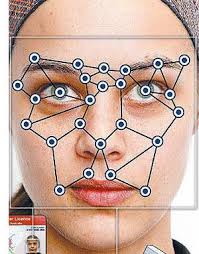
<p><img class=" alignright size-full wp-image-2875" alt="" src="https://consumerwatchdog.org/wp-content/uploads/2015/06/images_facialrecognition.jpg" style="width: 175px; height: 223px; float: right; margin: 3px;" width="199" height="254" />Consumer Watchdog has joined eight other privacy advocates and quit the so-called “multi-stakeholder process” being run by the <a href="http://www.ntia.doc.gov/">Commerce Department’s National Telecommunications Administration</a> to develop a code of conduct for companies using facial recognition technology.</p>
Group Asks FCC to Make Websites Honor Do-Not-Track Requests

Group Asks FCC to Make Websites Honor Do-Not-Track Requests

<div id="drr-container" itemprop="articleBody"> <p>A consumer rights group wants the U.S. Federal Communications Commission to address growing online privacy concerns by requiring websites to honor do-no-track requests.</p> <p>Consumer Watchdog <a href="http://www.consumerwatchdog.org/resources/fccdntpetiton061515.pdf">filed a formal petition</a> on Monday calling for new FCC rules forcing companies like Google, Facebook, Pandora and Netflix to respect do-not-track requests from a visitor’s browser.</p>
FCC Urged To Impose Privacy Rules On Web Publishers, Ad Networks

FCC Urged To Impose Privacy Rules On Web Publishers, Ad Networks

<p>The advocacy group Consumer Watchdog wants the Federal Communications Commission to regulate how Facebook, Google and other Web companies protect consumers' privacy.</p> <p>The organization argues in a petition filed today that Web companies shouldn't be allowed to share data with ad networks about consumers who have activated do-not-track. The group also says that ad networks shouldn't be able to “track” consumers who have turned on their do-not-track settings.</p>