Big business campaign funding, mostly to thwart initiatives, has hit $157 million so far this election
The San Jose Mercury News (California)
SACRAMENTO, CA — Corporations have dominated this fall’s ballot initiative campaign, already
spending more than $157 million to pummel the airwaves with a massive TV and radio advertising assault, a consumer advocacy group asserted Thursday.
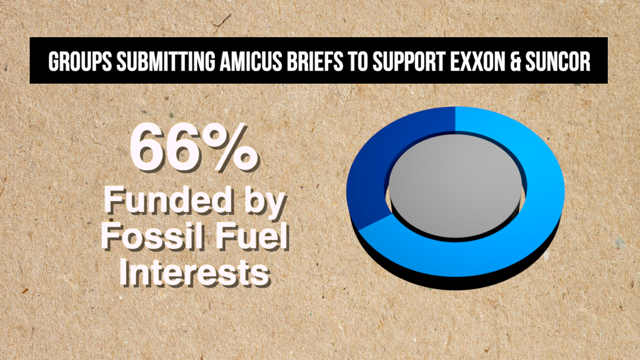
The corporate contributions, led by oil and tobacco companies, represent 61 percent of all money — $255 million and counting — being spent on ballot measures, according to the Foundation for Taxpayer and Consumer Rights. Most of the corporate money has been funneled into the races to defeat propositions 86 and 87, measures that would raise taxes on tobacco and oil companies.
Philip Morris, RJ Reynolds, Chevron and Aera Energy (ExxonMobil and Shell), the top four corporate donors, alone have contributed $108 million.
“The millions spent by oil and tobacco companies are designed to drown out the voices of the other side,” said Carmen Balber, spokeswoman for the Foundation for Taxpayer and Consumer Rights. “And it’s used to overwhelm voters with a barrage of negative advertising.”
By comparison, corporations have outspent unions, another group not shy about putting money into campaigns, by a 12-to-1 ratio in this election.
The top union donors were the California Teachers Association, at $7.1 million, and the California Nurses Association, at $3.7 million. The two unions are pitted against each other in the battle over Proposition 89, the measure that would limit campaign contributions. The CTA opposes it; the CNA backs it.
The top 10 individual donors have put up $55 million — largely on the strength of film producer Steven Bing’s record individual sum of $40 million. Bing is bankrolling the Yes on Proposition 87 oil tax campaign.
Corporations don’t always dominate spending in initiative campaigns. During last year’s special election campaign, for example, the California Teachers Association alone spent $50 million, in addition to tens of millions spent by other unions.
Pharmaceutical companies, though, also spent $80 million last year, helping defeat an initiative to force drug companies to provide discounts to the poor.
Spending money to defeat initiatives that could do significant harm to the bottom line is a good investment for corporations, said David Schecter, a political-science professor at Fresno State University.
“It may seem like a lot of money,” Schecter said, “but that’s a drop in the bucket compared to what would be lost in revenue or what’s needed for courtroom battles later.”
Schecter questioned the impact corporate spending has on voters.
“They can’t necessarily buy these elections,” he said. “A lot of money doesn’t mean they’ll get their way. It depends on the issue.”
But if corporations are outspending their foes — and they’re trying to defeat measures — they will succeed more often than not, said David McCuan, Sonoma State University political-science professor.
“They create problems; they create doubts in voters’ minds,” McCuan said. “As you’re spending on the negative side, you drive voter uncertainty.”
It’s unfair to say corporations are trying to buy elections, said Al Lundeen, spokesman for the No on Proposition 87 campaign, a coalition led by energy companies.
“You need to match the other side or do whatever you can to voice your opinion more than the other side,” Lundeen said. “To conclude one side can drown out the other side because they spend more doesn’t ring true, because voters look at the issue closely. You just get them started in thinking about the issue.”
The anti-tobacco initiative is 38 pages long, said Carla Hass, spokeswoman for the No on Proposition 86 campaign, so voters just need a little guidance.
The easiest and fastest way to let them know the truth,” Hass said, “is by advertising. And the cost of advertising is expensive in California.”
—————-
Contact Steven Harmon at [email protected] or (916) 441-2101.