The San Diego Union Tribune
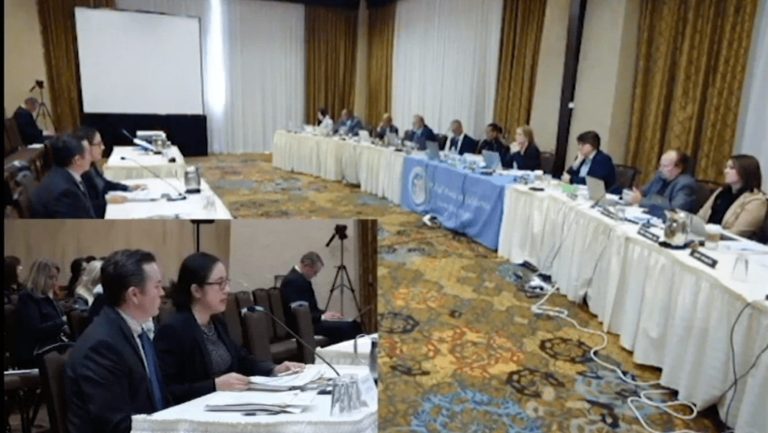
PALO ALTO, CA — California’s stem cell institute yesterday adopted two controversial but key policies that set ethical standards for research and establish a mechanism for taxpayers to recoup some of their $3 billion investment.
“I think you’ll find that (both policies) go above and beyond national and state standards… I believe we are setting a new standard that the rest of the country and the world can follow,” Zach Hall, president of the institute, told its governing committee at a meeting yesterday.
For example, the ethical standards require that women donating eggs for embryonic stem cell research be informed of possible health risks and of how their donations will be used.
The use of the eggs also must be reviewed and approved by two review boards. Also, the physician performing the egg extraction cannot be a principal investigator in the stem cell research.
Despite attempts to make both policies tougher than existing standards, as well as numerous public meetings to discuss both, opposition from the public and from state legislators remains.
The institute’s governing committee has several months to change both policies and will hold further public hearings.
The policy regarding ownership and sale of state-funded discoveries, also known as intellectual property, creates the mechanisms by which cutting-edge science will be dispersed. It also dictates how taxpayers could be reimbursed for approving the stem cell initiative known as Proposition 71.
“The devil is in the details; that’s why people’s eyes glaze over when they hear the term intellectual property,” said John Simpson, a spokesman for the Foundation for Taxpayer and Consumer Rights. “This is really about who has access to cures. Ultimately, these rules could determine whether a person can afford cures or not.”
Overall, the policy adopted yesterday is similar to the federal Bayh-Dole Act of 1980. Under that law, scientists at research institutions nationwide get to keep money they make on discoveries using taxpayer dollars.
But the state policy differs from the federal in directing how a cut of the profits from taxpayer-funded research should be returned to California coffers.
Under the policy, stem cell grant recipients can keep $500,000 of their net revenue from licensing a discovery. After that, the recipient must give 25 percent of net revenue to the state.
The policy also requires broad sharing of institute-funded research. Even if a research institution patents a discovery, it must make that discovery available at no charge to other institute-funded researchers.
But Joydeep Goswami of Carlsbad-based Invitrogen said such broad sharing of discoveries is eliminating avenues for commercialization.
Invitrogen is a major biotechnology tool company that sells to academic research institutions.
—————
Contact the author Terri Somers at: (619) 293-2028; [email protected]